
What Happens When Furniture Blocks a Return Vent
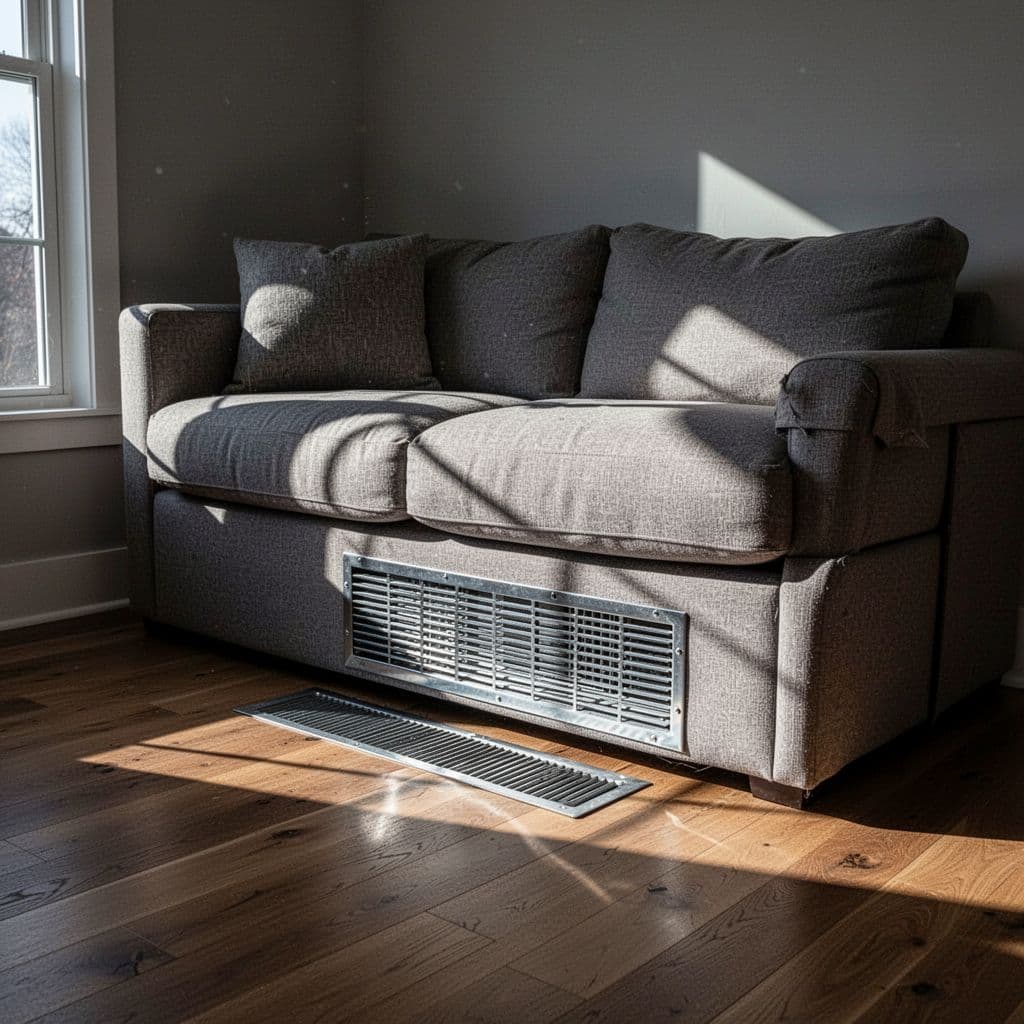
A blocked return vent can make a home feel off in ways that are hard to pin down. One couch, bookcase, or storage bin can slow airflow, throw off room balance, and make the AC work harder than it should.
The problem often starts small. You may notice one room feels stale, another feels warm, or the system seems to run longer than usual. A few simple changes around the vent can fix it, and if they do not, the vent may be pointing to a larger HVAC issue.
How Furniture Disrupts Airflow
Return vents pull air back into the HVAC system so it can be cooled, filtered, and sent out again. When furniture sits too close, that air has to squeeze through a narrow opening. As a result, the system gets less air than it needs.
That small obstruction can create a chain reaction. Airflow drops, pressure changes, and the system may pull air from less ideal places, such as gaps around doors or dusty wall cavities. Over time, that can leave the home feeling uneven and the HVAC system feeling strained.
In Florida homes, this can show up fast because the AC runs often. A blocked return vent may leave one area muggy while the thermostat keeps calling for more cooling. Meanwhile, the furniture near the vent can collect dust because air is trapped and recycled poorly.
When the return vent cannot breathe, the whole system feels the strain.
The issue gets worse when several objects crowd the same wall. A sofa, floor lamp, or storage basket can all limit circulation. Even a curtain panel draped over a vent opening can cause trouble.
Signs a Blocked Return Vent Is Hurting Comfort
The signs are usually easy to spot once you know what to look for. You may not see a broken part, but you will feel the effects.
- One room feels warmer or stuffier than the rest of the house.
- The AC seems to run longer or turn on more often.
- Dust builds up near the vent and around nearby furniture.
- The air feels weak when you stand close to the grille.
- Doors may feel harder to close because of pressure changes.
These symptoms do not always mean the whole system needs repair. Often, the furniture layout is the first place to check.
If you recently moved, it helps to rule out other causes too. A useful next step is inspecting air ducts in a new property , especially if dust, pet hair, or old debris keeps showing up after you clear the vent.
How to Check the Vent and Rearrange Furniture Safely
Start by finding every return vent in the room, not just the one you notice first. Returns are often larger than supply vents, and they can sit low on a wall or high in a hallway.
Hold a tissue near the grille while the system runs. If the tissue barely moves, airflow is weak. That simple test does not tell the whole story, but it can confirm that something is in the way.
A safe furniture fix usually looks like this:
- Pull sofas, chairs, and storage pieces away from the wall enough to open the vent fully.
- Keep tall items from sitting directly in front of the grille.
- Leave space around the vent so air can move in from the room.
- Avoid stacking decor, baskets, or bins where they can drift back over the opening.
A good rule is to treat the vent like a path, not a shelf. Air needs open space just like people do.
If a couch must stay near that wall, shift it a few inches at a time and test the airflow again. You may not need a full room redesign. Sometimes a small move fixes the problem.
While you are there, dust the vent cover and check the filter. A dirty filter can make a blocked return vent feel even worse. If the vent is open but the airflow still feels weak, the issue may be deeper in the system.
For homes that keep having the same airflow trouble, air handler cleaning versus duct cleaning can help you sort out where the buildup sits.
When the Problem Is More Than Furniture
Furniture may start the problem, but it does not always end there. A clogged filter, dirty return grille, dusty ducts, or a struggling air handler can all add to the same symptoms.
That is why a home can feel better for a day after you move a couch, then slide back into the same pattern. Uneven temperatures, extra dust, and higher energy use often point to airflow that still is not moving the way it should.
If that sounds familiar, a closer look can save time. A technician can tell whether the vent is the main issue or whether dust and buildup deeper in the system are part of the problem. If you want a local opinion, Get a Free Estimate and ask about airflow, duct cleaning, or return vent concerns.
Conclusion
A couch in the wrong spot can do more than crowd a room. It can slow airflow, create uneven temperatures, and make the HVAC system work harder than it should.
The fix is often simple. Clear the return vent, open the space around it, and see how the home feels after a full run cycle. If the same dust, odor, or weak airflow keeps coming back, the vent is only part of the story.
A clear return path gives your system room to move air the way it was meant to. Your home usually feels the difference fast.