
What Roof Leaks Can Do to Attic Ductwork

Adkins Duct Cleaning • May 29, 2026

A roof leak can stain a ceiling, but it can also soak the ductwork hidden above it. Once water reaches the attic, it can run along framing, drip onto ducts, and settle into insulation.

That matters because attic ductwork is part of the system that moves air through your home every day. If moisture gets in, you can end up with weak airflow, higher energy bills, and a musty smell that lingers long after the rain stops.

The damage often starts small. The trouble comes when no one looks up into the attic soon enough.

How a roof leak reaches attic ductwork

Water rarely falls in a neat line. It moves along the underside of the roof deck, follows nails or seams, and travels across wood before it ever hits the floor below. That means a leak over one part of the attic can damage ductwork several feet away.

In many homes, ducts sit close to roof framing, insulation, or low spots where water collects. A small opening around flashing, a cracked pipe boot, or a loose shingle can send water into the attic during every storm. Over time, that drip can soak duct tape, loosen joints, and wet the wrap around the ducts.

The HVAC system makes the problem worse if it keeps running while the attic is damp. Cold supply ducts and warm attic air can create more condensation, which adds to the moisture already there. So even a minor roof leak can turn into a larger HVAC issue.

Flexible ducts and metal ducts react differently

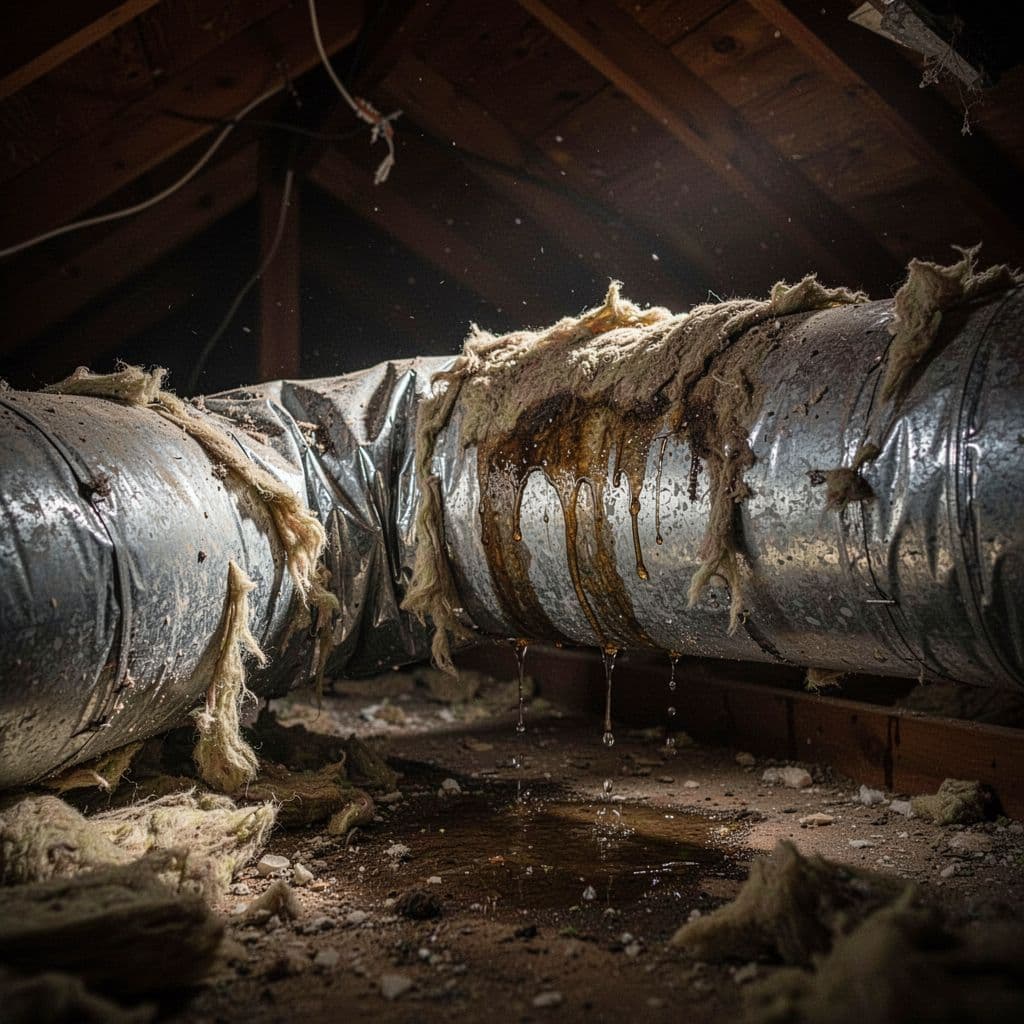
Flexible ducts have a thin inner liner, a layer of insulation, and an outer jacket. When water gets into that outer layer, the duct can sag and lose shape. Airflow slows down, and the duct may start to kink or collapse in spots.

Metal ducts handle direct water a little better at first, but they are not immune. Water can settle around seams, screws, and joints, then leave rust behind. In a hot attic, that corrosion can spread faster than many homeowners expect.

Wet insulation wrapped around either type of duct creates another problem. It loses its insulating value, so cooled air picks up heat before it reaches your rooms. The system runs longer, works harder, and uses more electricity to do the same job.

Wet duct insulation can hold moisture and mold

Fiberglass duct insulation can act like a sponge once it gets wet. Even if the roof dries out, the insulation around the duct may stay damp for days in a shaded attic. That trapped moisture creates a good place for mildew and mold.

A musty smell is often the first clue. Sometimes the odor shows up when the air conditioner starts, because the system moves air past the wet material. In homes with allergies or asthma, that can make the air feel heavy or stale.

Wet insulation also breaks down faster. It can clump, tear, or lose its fit around the duct. When that happens, the duct gains heat from the attic, and the HVAC system has to run longer to cool the house. That raises energy bills and puts extra wear on the equipment.

Signs your attic ductwork has been damaged

Some warning signs are easy to miss because they hide behind ceiling drywall and attic insulation. Others show up in the rooms you use every day.

  • A musty smell when the AC turns on
  • Damp, stained, or sagging duct wrap
  • Rust or orange streaks on metal duct sections
  • Flex duct that hangs low or looks crushed
  • Weak airflow in one or two rooms
  • Rooms that stay warmer than the thermostat setting
  • Longer cooling cycles and higher power bills
  • Water spots near ceiling vents or the attic access

If more than one of these shows up after a storm, the leak may have reached the HVAC system. At that point, the problem is no longer only about the roof. It affects comfort, air quality, and how hard the system has to work.

What to inspect after a roof leak

Drying the attic is only half the job. If the duct system stayed wet, the damage can keep spreading.

A full inspection should start with the roof leak source, because the water has to stop first. After that, the attic needs a careful look at the ducts, insulation, and any areas where water may have pooled or run along framing.

A good inspection usually includes:

  • The roof opening, flashing, or pipe boot that let water in
  • Supply and return ducts along the wet area
  • Duct joints, tape, and mastic seals
  • Wet or compressed insulation around the ducts
  • Registers, grilles, and nearby ceiling surfaces
  • The air handler area, drain pan, and nearby attic surfaces

If you want a closer look at how wet attic systems are handled, Sarasota ductwork repair and inspection services can help you understand what damage may need attention.

The key is to check more than the obvious stain. Water often travels, and the visible spot is not always the only problem.

Repair or replacement after water damage

Small damage can often be repaired if the duct material is still sound and the wet area was limited. Bigger damage usually calls for replacement, especially when moisture has reached the liner, insulation, or metal seams.

Condition Best next step
Small wet spot, duct still intact, no odor Dry the area, seal the roof leak, and inspect again
Wet insulation on a clean metal duct Replace the insulation and check for hidden leaks
Loose connection or torn flex section Repair or replace the affected section
Rust through the metal, mold, or stale odor Replace the damaged run

Repair makes sense when the duct is still in good shape and the moisture did not spread far. Replacement is smarter when the duct has been crushed, rusted, or contaminated. Wet flex duct is a good example, because the outside may look fine while the inside liner has already been damaged.

If mold, repeated leaks, or corroded seams are part of the picture, replacement is usually the safer choice. That keeps the problem from coming back during the next storm season.

Why both the roof and ducts both need attention

Fixing only the roof leaves the HVAC damage behind. Fixing only the ducts leaves the leak ready to soak them again. Both problems have to be handled, or the same moisture cycle starts over.

That matters even more in Florida, where attic heat and humidity can keep damp materials from drying quickly. A wet duct run can keep feeding musty air into the house, while damaged insulation makes the system less efficient. In short, one leak can affect comfort, bills, and indoor air quality at the same time.

If you know water reached the attic and you suspect the ducts were hit, Get a Free Estimate before the next rain. A quick look now can save a bigger repair later.

Conclusion

A roof leak can do far more than spot a ceiling. Once water reaches attic ductwork , it can sag flexible ducts, rust metal runs, soak insulation, and leave behind a smell that spreads through the house.

The fastest way to limit the damage is simple, fix the roof leak, then inspect the ducts and insulation right away. When both problems get attention early, your home keeps better airflow, lower bills, and cleaner air.

By Adkins Duct Cleaning May 30, 2026
A room above the garage can feel like a different climate zone. In Florida, that space gets hit from below, above, and all sides. The garage holds heat, the roof bakes in the sun, and humid air makes the AC work harder. When the rest of the house feels fine but that one room s...
By Adkins Duct Cleaning May 28, 2026
High cooling bills and uneven rooms often point to more than an old AC unit. In Florida, a hidden duct leak can waste cooled air, pull in attic heat, and add humidity where it doesn't belong. A duct leak test in Florida homes makes sense when comfort drops, moisture shows up,...
By Adkins Duct Cleaning May 27, 2026
Yes, they can. If your home has an attached garage, even small duct leaks can help pull air from that space into bedrooms, halls, and living areas. That air may carry carbon monoxide, gasoline vapors, solvent odors, and other pollutants you do not want indoors. The risk grows...