
When a Duct Leak Test Makes Sense in Florida Homes
High cooling bills and uneven rooms often point to more than an old AC unit. In Florida, a hidden duct leak can waste cooled air, pull in attic heat, and add humidity where it doesn't belong.
A duct leak test in Florida homes makes sense when comfort drops, moisture shows up, or the system seems to run nonstop. It also helps when you want answers before spending on repairs that might miss the real problem.
The warning signs are easy to miss at first, so the next step is knowing what to look for.
Signs Your Florida Home May Need a Duct Leak Test
The warning signs usually show up in comfort first. If one room stays hot, the AC keeps running, or your indoor air feels damp, the ducts may be part of the problem. A comprehensive ductwork assessment can show whether the issue starts in the ducts, the insulation, or somewhere else in the system.
| Sign | What it often means | Why it matters in Florida |
|---|---|---|
| Uneven room temperatures | Air may be escaping before it reaches the vents | Hot attic spaces make losses worse |
| AC runs for long cycles | The system is trying to make up for lost air | Cooling costs can rise fast |
| Dust near vents | Return leaks may be pulling in attic debris | Humid air carries more grime |
| Musty smells | Moisture may be collecting near a leak | Mold risk rises in warm, damp spaces |
| Sweating or stains around vents | Condensation may be forming near damaged ductwork | Water problems often show up at ceilings first |
If two or more of these problems keep showing up, the case for testing gets stronger. Florida heat makes every leak work harder against you. The home may still cool, but it does so with more strain and more wasted air.
A duct system can lose cool air and pull humid attic air in at the same time.
That mix is why a small leak can feel like a bigger comfort problem than it looks.
How a Duct Leak Test Works Inside the Home
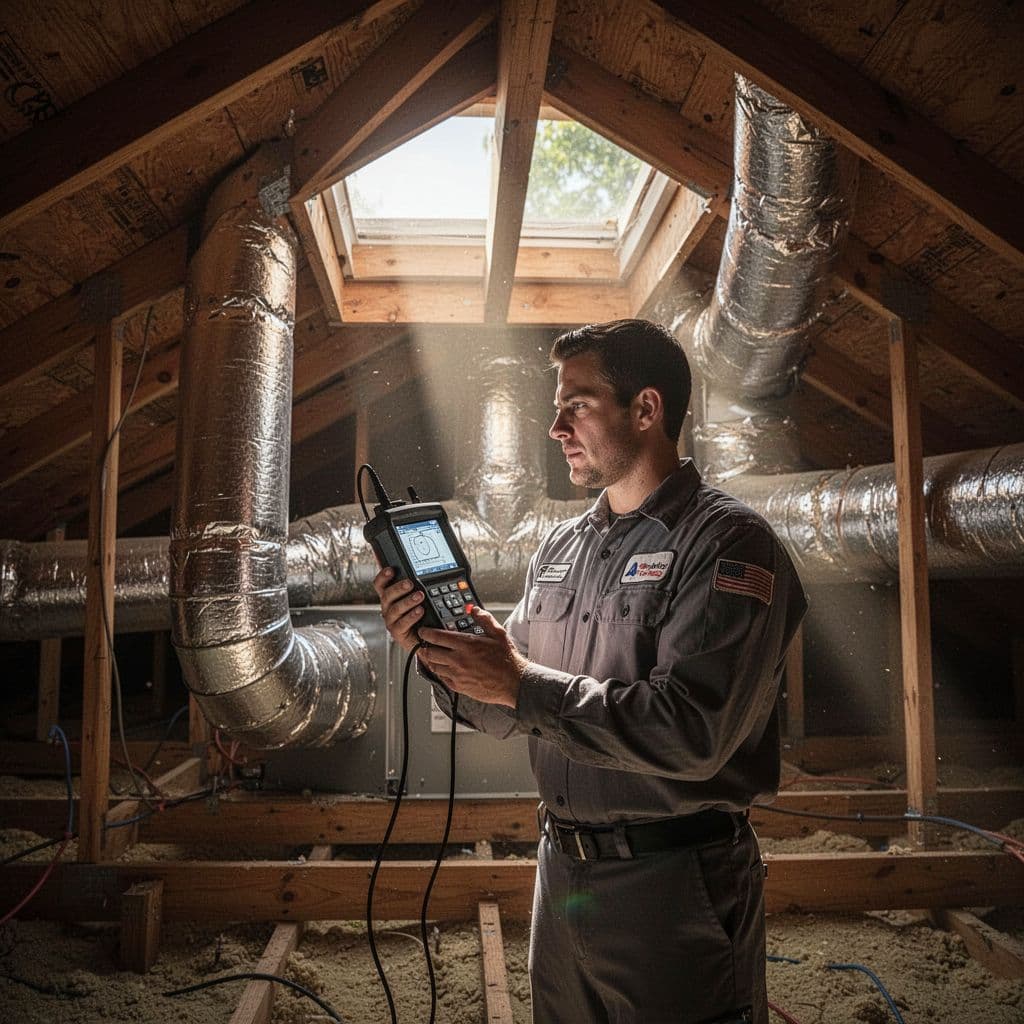
A duct leak test starts with a visual look at the duct layout. The technician checks the air handler, accessible seams, boots, takeoffs, and insulation. Then the system gets set up for pressure testing so leaks show up as measurable air loss.
A close inspection in the attic often reveals the spots that cause the biggest losses.
Homeowners usually don't need much prep. The technician may ask for attic access, space around the air handler, and a little time with the system off. Some tests also pair pressure readings with smoke or thermal checks to spot loose joints faster. After that, the homeowner gets a clear picture of where air escapes and which runs need attention.
The test is simple, but the results can be eye-opening. A few bad joints can waste a surprising amount of cooled air. In a Florida house, that loss adds up quickly during a long cooling season.
What Leaky Ducts Reveal in Florida Heat and Humidity
Florida homes expose bad ductwork fast. A small gap can send cooled air into a hot attic, while humid attic air gets pulled back through a return leak. That mix raises indoor humidity, makes rooms feel sticky, and can leave the AC running longer than it should.
Leaky ducts can also hide other problems. Loose connections, torn insulation, crushed flex duct, and missed sealing at register boots all create weak spots. If you're already seeing drip marks or damp drywall near vents, how loose duct joints cause condensation explains why the issue often starts above the ceiling.
Moisture plus dust gives mold more to work with. It also leaves a stale smell that many homeowners blame on the AC itself. Sometimes the system is fine. The ductwork is what needs attention.
Return leaks can pull attic debris, insulation fibers, and odors into the home. That can make clean rooms feel dusty again within days. In other words, a leak can hurt comfort, air quality, and energy use at the same time.
How to Read Duct Leak Test Results
A good report does more than say there is a leak. It should show where the leaks sit, how serious they are, and whether the system has enough loss to affect comfort or energy use. The worst spots usually tell the story.
Some findings call for simple sealing at joints or boots. Others point to damaged insulation, a loose plenum, or a duct section that needs repair or replacement. Small leaks can be quick to fix. Several weak runs call for a bigger plan.
If dirt or insulation fibers moved through the system, duct cleaning may come after the sealing work. That order matters, because cleaning first won't solve an open leak. Once the leak is sealed, the rest of the system can be cleaned with more purpose.
If the results show real losses, a Get a Free Estimate request can help turn the findings into a clear price and scope. That makes it easier to compare repair options before the next long cooling stretch.
When to Schedule the Test
A duct leak test makes the most sense when the timing lines up with a problem, not just the calendar. It helps before another heavy cooling season, after attic work, or when you move into a home and want a clean starting point.
- The AC runs often, but rooms still feel warm.
- You smell mustiness near vents or in hallways.
- Ceiling vents sweat or leave stains.
- A recent roof repair, storm, or pest issue may have disturbed ductwork.
- The home feels dusty soon after cleaning.
These are the moments when guessing gets expensive. A test gives you a map of the problem instead of another round of trial and error. It also helps you decide whether you need sealing, repair, insulation work, or a mix of all three.
Conclusion
Florida heat magnifies every duct leak. Cool air slips into the attic, humidity sneaks back in, and the system works harder for the same result. That is why a duct leak test makes sense when comfort slips, moisture shows up, or the bills feel out of step with the weather.
If your home feels uneven, damp, or dusty, the ducts deserve a closer look before another long cooling season wears the system down.