Can Air Duct Cleaning Damage Flexible Ductwork?
Flexible ductwork can tear, collapse, or separate when someone cleans it with the wrong tools. However, professional flexible ductwork cleaning usually doesn't damage a properly installed system . The risk comes from excessive pressure, aggressive brushes, careless access work, or technicians who treat flexible ducts like solid metal pipes.
This matters because many Florida homes have flex duct in attics and tight ceiling spaces. Before cleaning, a qualified HVAC professional should inspect the duct material, support straps, connections, insulation, and existing condition. The cleaning method should then match the ductwork.
Key Takeaways
- Flexible ducts need lower-pressure, controlled cleaning methods and soft tools.
- Rotary brushes, sharp equipment, and excessive suction can damage the inner liner.
- Visible tears, loose connections, sagging, and falling insulation indicate possible damage.
- A professional inspection should come before any air duct cleaning service.
- Repair or replacement may make more sense than cleaning severely damaged ductwork.
Can Air Duct Cleaning Damage Flexible Ductwork?
Yes, air duct cleaning can damage flexible ductwork when the work is too aggressive or poorly planned. Flex duct has a different construction than rigid sheet-metal duct. It usually contains a flexible inner liner supported by a wire coil, insulation around the liner, and an outer vapor barrier.
That layered design keeps the duct lightweight and easy to route through an attic. It also makes the material more vulnerable to sharp tools, crushing, heat, and rough handling. A brush designed for metal ductwork can catch the liner or scrape through it. Excessive vacuum pressure can pull on weak sections, especially when the duct already has a tear or loose connection.
Cleaning can also damage the duct when a technician cuts access openings without sealing them correctly. Unsealed openings allow conditioned air to escape into the attic. In humid Florida homes, damaged insulation or an exposed liner can also create conditions for condensation and microbial growth.
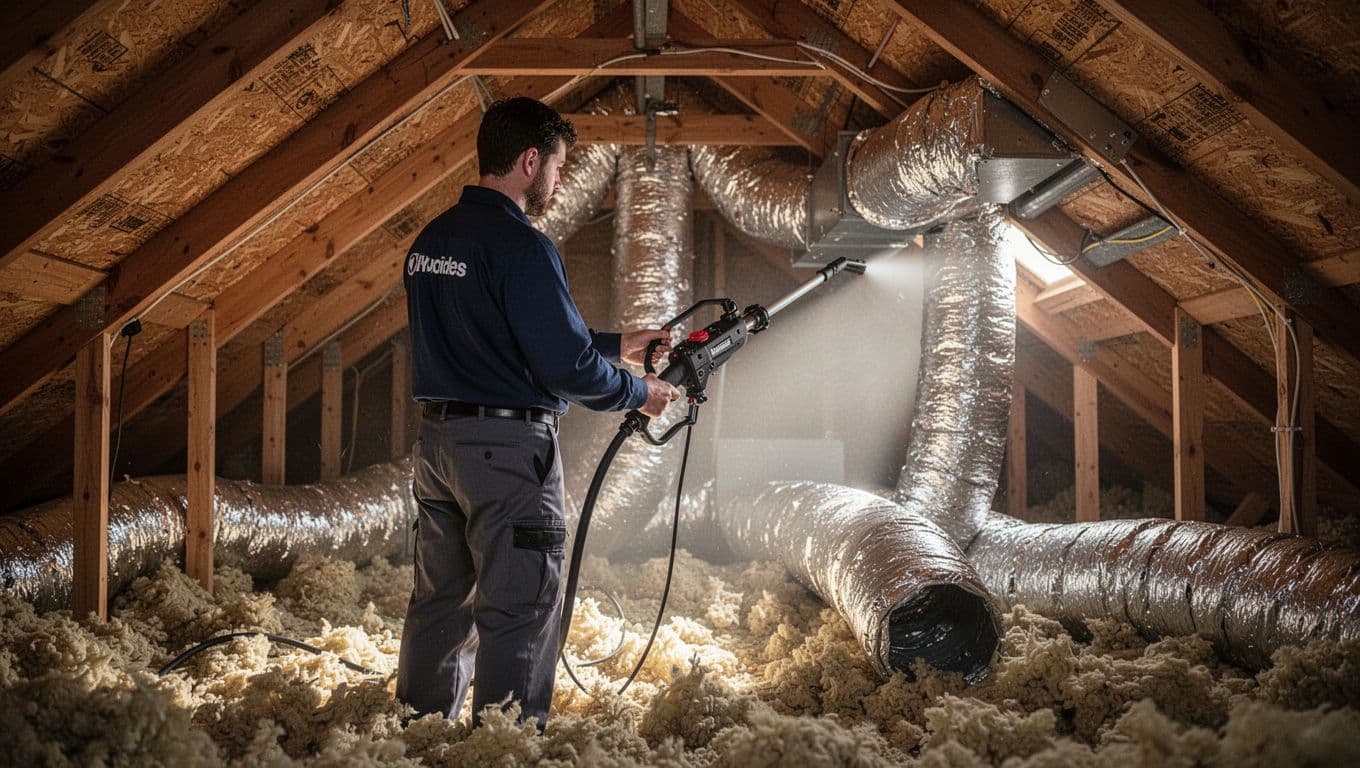
A qualified technician should identify these risks before connecting equipment. A camera inspection, visual check, or careful examination at accessible vents can reveal crushed areas, disconnected runs, pest damage, and deteriorated insulation.
Flexible ducts are built for controlled airflow and careful handling. They aren't suitable for forceful cleaning methods designed for heavy metal ductwork.
The condition of the duct matters as much as the cleaning equipment. Older flex duct may have brittle plastic, flattened sections, weak tape, or damaged insulation before the appointment begins. In those cases, cleaning might expose an existing problem rather than cause it.
Why Flexible Ducts Need a Gentler Cleaning Method
The goal of duct cleaning is to remove dust and debris without harming the duct or spreading contaminants through the home. Technicians often connect a high-powered vacuum near the air handler or main return, then clean selected branches while maintaining controlled negative pressure. The exact process depends on the system layout and duct condition.
Flexible ducts generally require tools that make contact without cutting or stretching the liner. Soft-bristle agitation tools, compressed air used at a controlled pressure, and suitable vacuum equipment can help loosen buildup. A technician should avoid forcing a large brush through bends or pushing equipment beyond a section that can safely accept it.
The duct must also remain supported during cleaning. Flex duct can sag when insulation straps are missing or spaced too far apart. If someone leans on the duct or pulls it sideways while working in an attic, the wire coil can deform. That restriction may reduce airflow even when the liner remains intact.
Connections deserve attention as well. Each branch should connect securely to a collar, boot, or plenum. A careless cleaning process can loosen tape, clamps, or mastic at these points. The result is conditioned air leaking into the attic instead of reaching the room.
Homeowners should ask how the contractor handles flexible ducts before scheduling service. Useful questions include:
- Will you inspect the ductwork before cleaning?
- What tools and pressure settings do you use on flex duct?
- How will you protect the insulation and vapor barrier?
- How do you seal access openings after cleaning?
- Will you document any damaged or disconnected sections?
A contractor who can answer these questions clearly is more likely to protect the system. For local property owners, professional air duct maintenance services in Sarasota can include inspection, repair recommendations, and cleaning based on the type of ductwork installed.
Warning Signs Your Flexible Duct May Be Damaged
Some damage is easy to spot, while other problems appear as changes in comfort or airflow. Check accessible attic areas only when they're safe to enter, and avoid stepping on insulation or ceiling drywall.
Look for tears, holes, or exposed inner liner material . A damaged outer jacket may also expose insulation to attic air and moisture. Small punctures can grow when the duct moves during HVAC operation.
Sagging is another warning sign. A slight curve can be normal, but long sections that hang low may restrict airflow. Kinks and crushed areas are more serious because they narrow the passage and increase resistance.
Loose or separated connections often leave dust marks around the joint. You may also hear a hiss near a connection while the blower runs. Warm or cool air in the attic, rather than at the intended register, can point to a disconnected duct.
Inside the home, watch for:
- A room that receives much less air than before
- New whistling, rattling, or flapping sounds
- Uneven temperatures between rooms
- Rising dust around supply registers
- Weak airflow after a cleaning appointment
- Higher heating or cooling costs without another clear cause
These symptoms can also come from a clogged filter, dirty coil, failing blower, closed damper, or poor system balance. A technician should test the entire HVAC system instead of blaming the ductwork immediately.
Damage may also appear after attic work, roof repairs, pest activity, or insulation installation. Heavy objects, foot traffic, and sharp fasteners can puncture flex duct. If a cleaning company finds damage, ask for photos and a written description before approving repairs.
How Qualified Technicians Protect Flexible Ductwork
Safe flexible ductwork cleaning starts with inspection. The technician should locate the air handler, supply and return paths, accessible branch runs, and any areas hidden under insulation. They should also identify the duct type before choosing equipment.
A careful service usually follows a controlled sequence:
- Inspect the system. The technician checks for tears, crushed sections, loose joints, moisture, pests, and heavy contamination.
- Protect the home. Registers, furniture, floors, and nearby surfaces should receive suitable protection.
- Create controlled access. Any access opening should be placed where it can be sealed properly afterward.
- Use appropriate agitation. Soft tools and controlled air pressure reduce stress on the inner liner.
- Maintain negative pressure. Proper vacuum placement helps keep loosened debris from entering living spaces.
- Check the work. The technician verifies connections, seals openings, and looks for airflow problems.
The service should focus on areas that actually contain debris. Cleaning every surface with maximum force increases risk without automatically improving indoor air quality. A professional may recommend cleaning the return side, supply branches, blower compartment, or other components based on inspection findings.
Technicians should also avoid soaking flexible ducts. Moisture can remain trapped in insulation or seams, especially in a warm attic. If a microbial treatment is appropriate, the product and application method should match the duct material and the contamination issue. Cleaning and treatment are separate steps, and neither should replace repairs for leaks or water intrusion.
After service, ask what the technician found. A useful report should identify damaged sections, disconnected joints, access points, and repairs that may be needed. If the company uses before-and-after photographs, those images can help you decide whether cleaning solved the problem.
Pricing can vary with home size, vent count, access, duct material, and system condition. For budgeting, review this 2026 Florida air duct cleaning price guide before comparing estimates. A low quote may exclude attic access work, repairs, sanitizing, or difficult flex duct sections.
When Cleaning Should Wait for Repair or Replacement
Cleaning should wait when flexible ductwork has major tears, extensive mold-like growth linked to moisture, crushed runs, missing insulation, or loose sections that cannot remain attached. Removing dust from a damaged duct won't correct air leakage or restore proper airflow.
Replacement may also make sense when the liner has become brittle or the insulation has deteriorated across multiple sections. A technician can compare the cost of repairs with replacement and explain which option fits the system.
Homeowners should never tape over a serious problem and assume it's fixed. Foil-backed HVAC tape and approved mastic can help seal certain joints, but ordinary cloth duct tape often fails in hot, dusty attic conditions. Repairs should preserve the duct's shape and insulation rather than compressing the passage.
Preventing damage starts with a few practical steps:
- Keep attic storage, tools, and boxes away from duct runs.
- Ask contractors to protect ducts during roofing, insulation, and electrical work.
- Replace restrictive or overdue air filters according to the system requirements.
- Schedule an inspection when airflow changes or rooms become uneven.
- Choose a contractor with experience cleaning and repairing flexible duct systems.
If your ducts need inspection before service, you can Get a Free Estimate for air duct or dryer vent cleaning. A written evaluation can help separate a cleaning need from a repair or replacement need.
Conclusion
Professional air duct cleaning doesn't have to harm flexible ductwork. The safest results come from inspecting the system first, using controlled suction and gentle tools, protecting the insulation, and sealing every access point.
Homeowners should treat tears, sagging, loose connections, and sudden airflow changes as reasons to stop and request an HVAC inspection. With the right method and a qualified technician, flexible ductwork cleaning can remove buildup while preserving the system that moves conditioned air through your home.