Florida Air Duct Cleaning After Hurricane Season
Hurricane season doesn't end when the wind stops. In many Florida homes, the bigger issue shows up later, when damp air, attic leaks, and storm debris linger inside the HVAC system.
That doesn't mean every house needs duct cleaning after a storm. But if water got into the system, vents smell musty, or airflow changed, it's smart to inspect the ductwork early. A careful check can help you control moisture, prevent mold, and get your AC back to normal.
When post-storm duct cleaning makes sense
Florida homes run air conditioning for much of the year, so the system keeps moving air long after a storm passes. If that air flows through damp ductwork, dirty insulation, or debris, the problem can spread through the house.
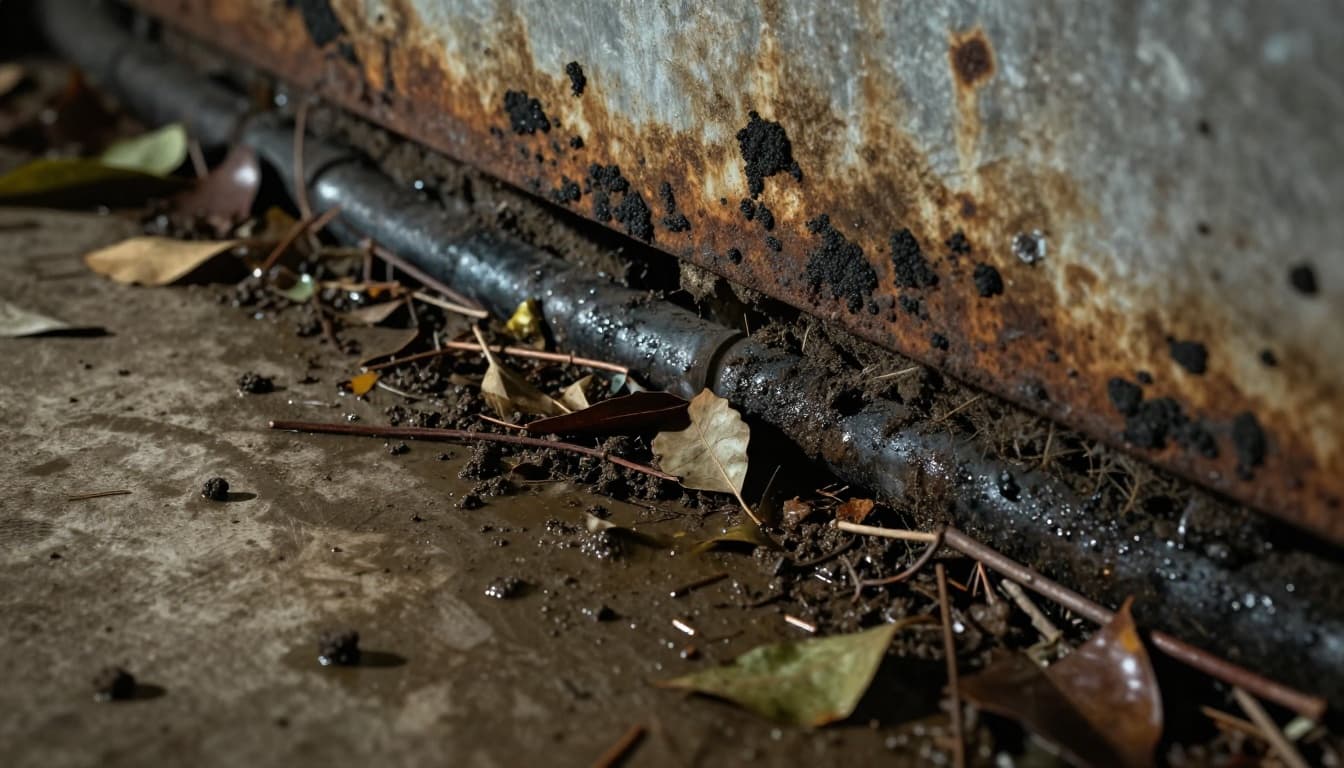
EPA guidance keeps the main point simple: moisture control is the key to mold control. Water-damaged areas should usually be dried within 24 to 48 hours. EPA also warns against using flood-affected HVAC equipment to dry the house. If any part of the air handler, wiring, or ducts was under water, a qualified HVAC professional should inspect it before you turn the system back on.
Many homes don't need full cleaning after hurricane season. Some only need new filters, drain line service, and a close inspection. The right next step depends on what actually happened inside the system.
Here's a quick way to sort that out:
| Situation | Best next step | Why |
|---|---|---|
| High humidity, but no odor or debris | Change filters and inspect system | Cleaning may not be needed |
| Musty smell or visible dust at vents | Schedule duct inspection | Moisture or buildup may be present |
| Floodwater reached ducts or air handler | Keep system off, get HVAC inspection | Damage and contamination are possible |
| Wet or moldy duct insulation | Replace affected material | Insulated duct liner often can't be cleaned well |
If floodwater touched HVAC parts, inspection comes before operation.
That middle ground matters. Air duct cleaning in Florida makes the most sense when you have visible contamination, water intrusion, mold concerns, storm debris, or clear airflow problems.
Warning signs inside vents and registers
Problems after storm season often start with small clues. Maybe the house smells stale when the AC starts. Maybe one room feels weak while another blows dust. In a humid Florida home, those changes deserve attention because the system may be pulling in attic dust or pushing air past damp material.
A musty odor that returns every time the system runs usually points to moisture that still needs to be fixed.
Common warning signs include:
- Musty smells when the AC kicks on
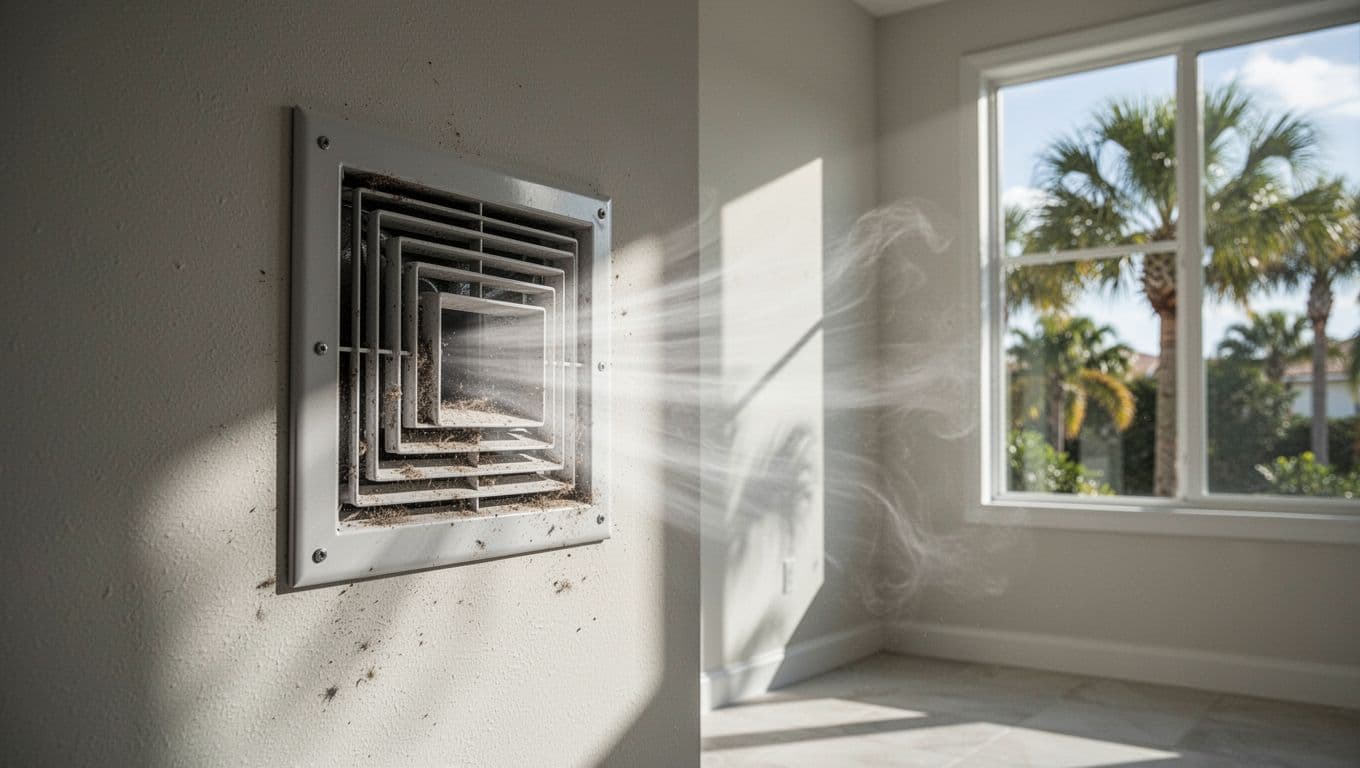
- Dust, dark specks, or debris around supply vents
- Water stains near ceiling registers or attic duct runs
- Filters that clog much faster than usual
- Weak airflow, uneven cooling, or higher power bills
Storm damage isn't always dramatic. A loose attic connection, soaked insulation, or weeks of trapped humidity can be enough. If anyone in the home has asthma or allergies, poor duct conditions may feel worse after storm cleanup. These health benefits of regular duct cleaning help explain why cleaner airflow can make a noticeable difference when contamination is present.
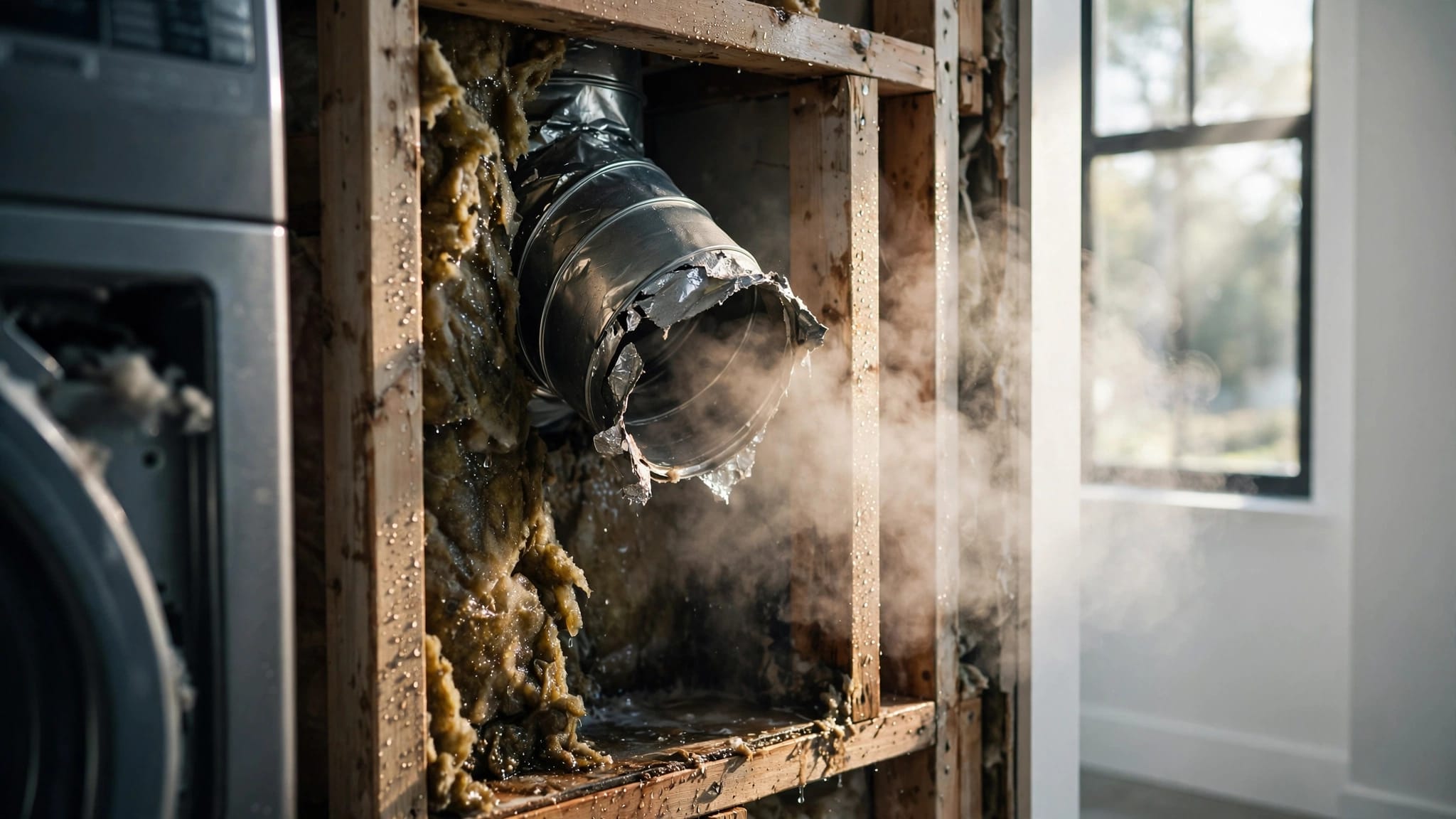
It's also smart to think beyond the ductwork. If the laundry area took on moisture, the dryer vent should be checked too. Wet lint can cling to the vent wall, trap more debris, and slow exhaust airflow.
The cleaning process after storm damage
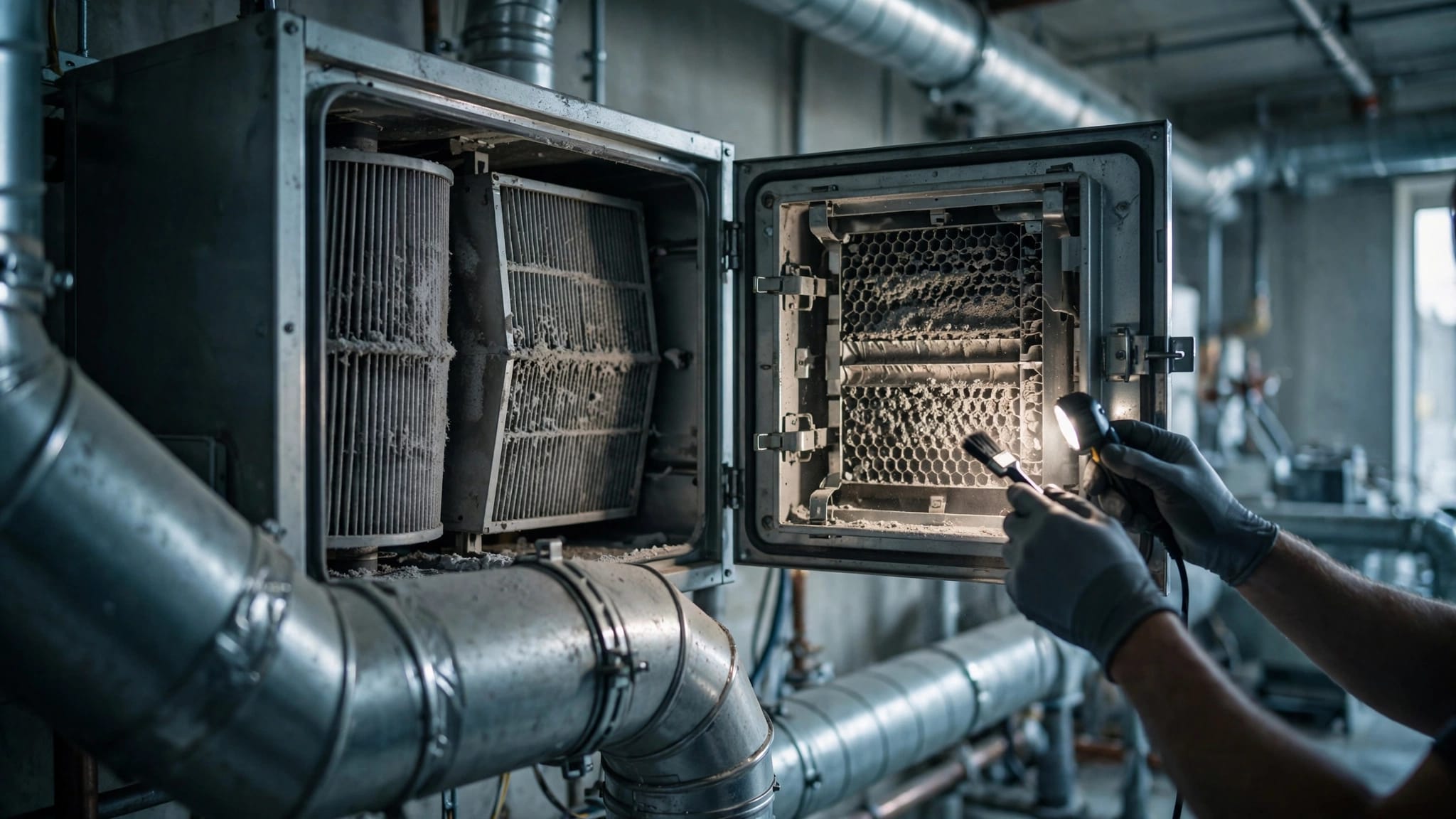
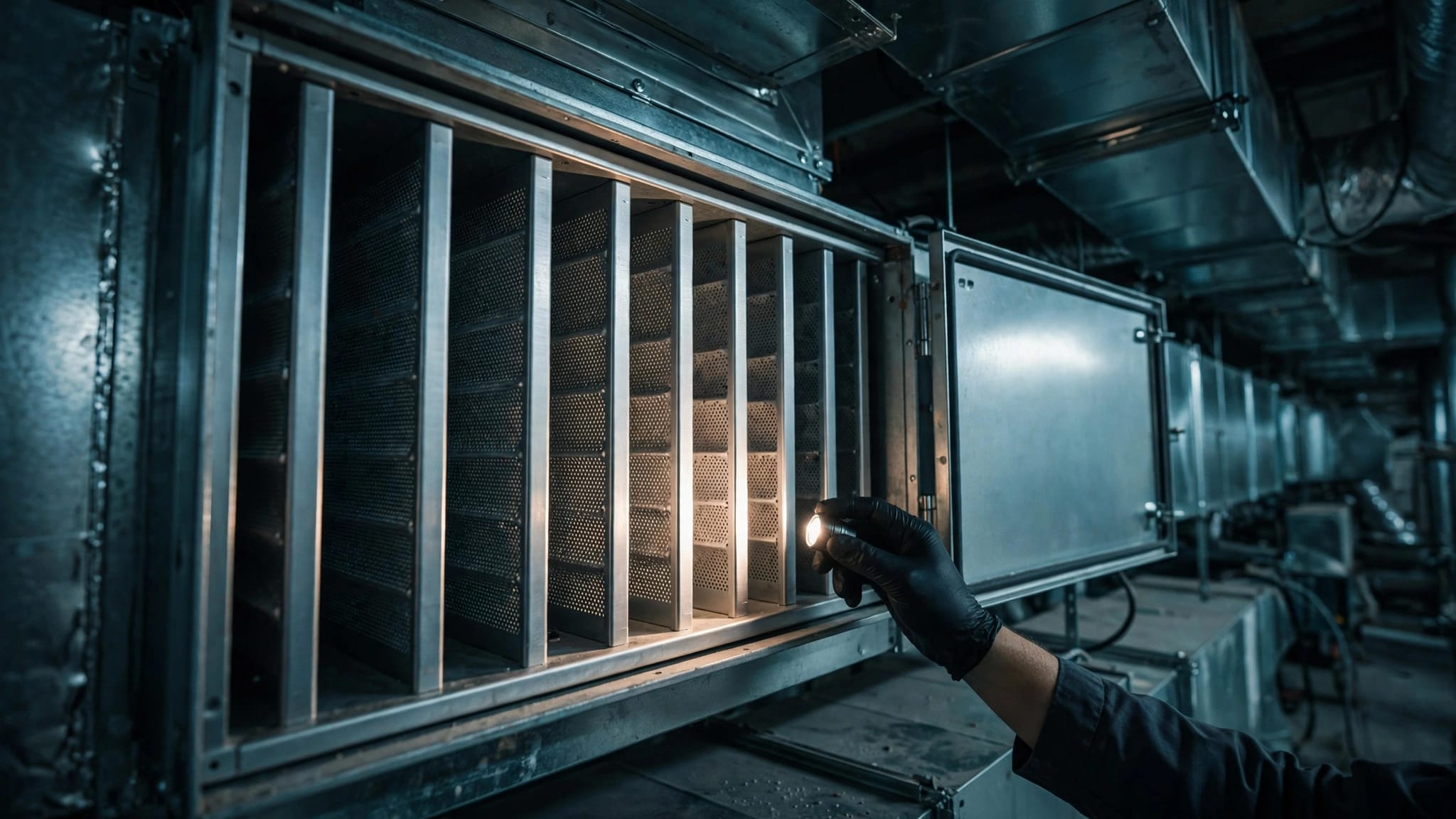
A good post-storm job starts with inspection, not guesswork. The contractor should look at supply and return ducts, the air handler, the blower area, the drain pan, and accessible duct insulation. Before-and-after photos help because you can see whether the issue is ordinary dust, storm debris, mold growth, or damaged material.
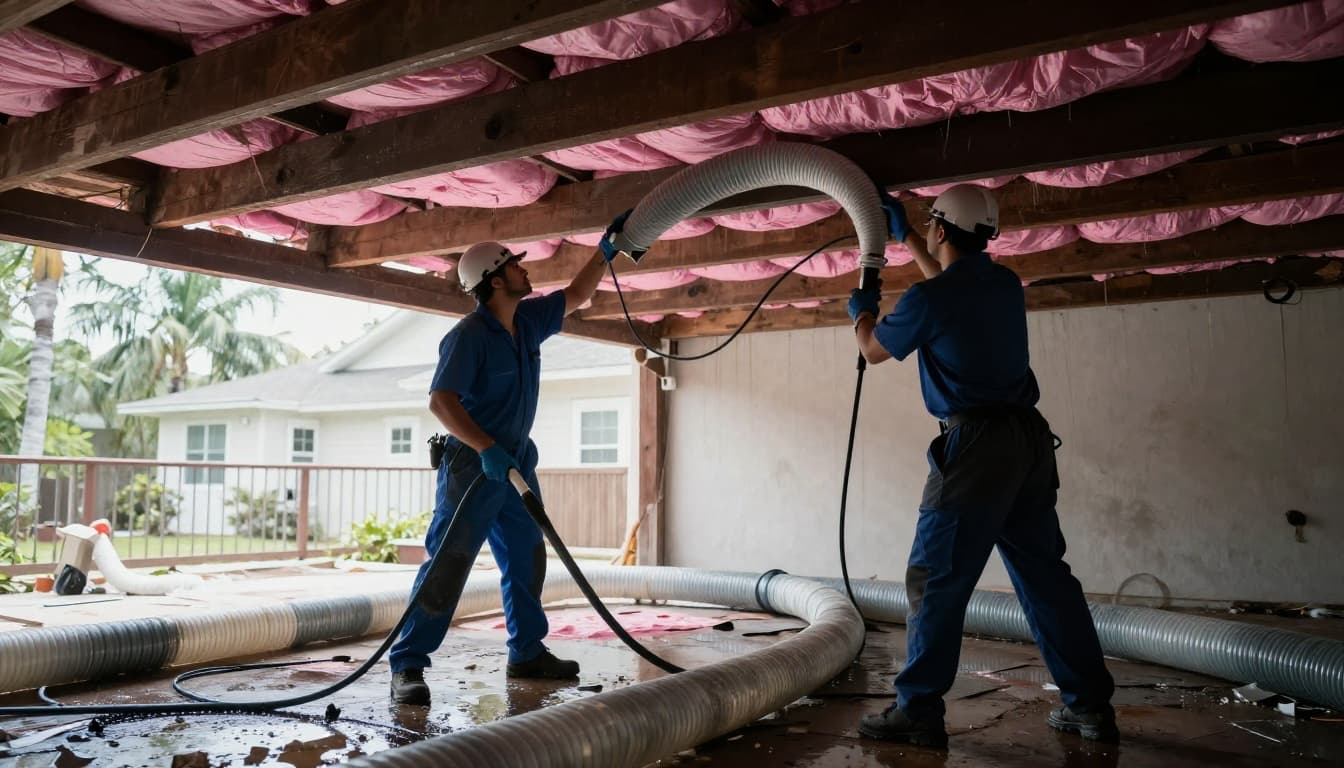
After inspection, the crew should protect the home, place the system under negative pressure, and remove debris with proper tools. If mold is suspected, the moisture source has to be handled first. Spraying scent or sanitizer into a wet system doesn't solve the real problem.
Some materials can't be saved. EPA guidance says wet or moldy insulated duct material often needs replacement because it can't always be cleaned well. The same goes for HVAC parts with flood damage. If the air handler or electrical components were affected, a licensed HVAC contractor should handle those repairs.
Done at the right time, air duct cleaning in Florida can reduce musty odors, cut recirculating dust, and help restore airflow after a rough season. If you're comparing timing and price before calling, this Florida air duct cleaning cost guide gives a useful starting point.
Questions to ask before you hire help
Choosing a contractor after hurricane season is part cleaning decision, part restoration decision. A low price doesn't help if the company skips inspection or ignores wet insulation.
Ask a few direct questions before you book:
- Can you show me the contamination or moisture before cleaning starts?
- Will you inspect the air handler, drain area, and accessible duct insulation?
- What method will you use to contain dust and verify results?
- If you find damaged ducts or flooded HVAC parts, who handles repair or replacement?
- Are you insured, and will I get a written scope of work?
Clear answers matter. So do photos, a defined process, and honest limits. If a company promises the same treatment for every home, keep looking. Florida homes need practical, case-by-case service because hurricane damage doesn't look the same in every attic, crawlspace, or air handler.
Conclusion
After hurricane season, the right move is to look for evidence, not assume the worst. If your home has musty odors, visible debris, water intrusion, or weaker HVAC performance, an inspection can tell you whether cleaning, repair, or replacement makes sense.
That approach protects indoor air and keeps moisture problems from hanging around longer than the storm did. In Florida, the homes that recover best are usually the ones that dry fast, inspect early, and fix the real source of the problem.