What Rust Around Air Vents Means in Florida Homes
Rust around air vents in a Florida home often starts small. A little discoloration on a grille can be nothing more than condensation, but it can also point to a moisture problem hiding nearby.
Humidity, cold AC air, and coastal salt all work against metal vent covers. If the rust keeps spreading, stains the paint, or comes with a musty smell, the source deserves attention before it reaches the ductwork or drywall.
The good news is that you can narrow it down fast if you know what to look for.
Why rust shows up around air vents in Florida
Florida homes put a lot of stress on vent covers. Warm, damp indoor air meets cold metal, and moisture forms on the surface. Over time, that moisture breaks down paint and protective coatings, then rust starts to spread.
That happens more often here because AC systems run for long stretches. The metal grille gets cold, the room air stays humid, and the mix creates a perfect setup for condensation. In coastal areas, salt in the air can speed up corrosion too.
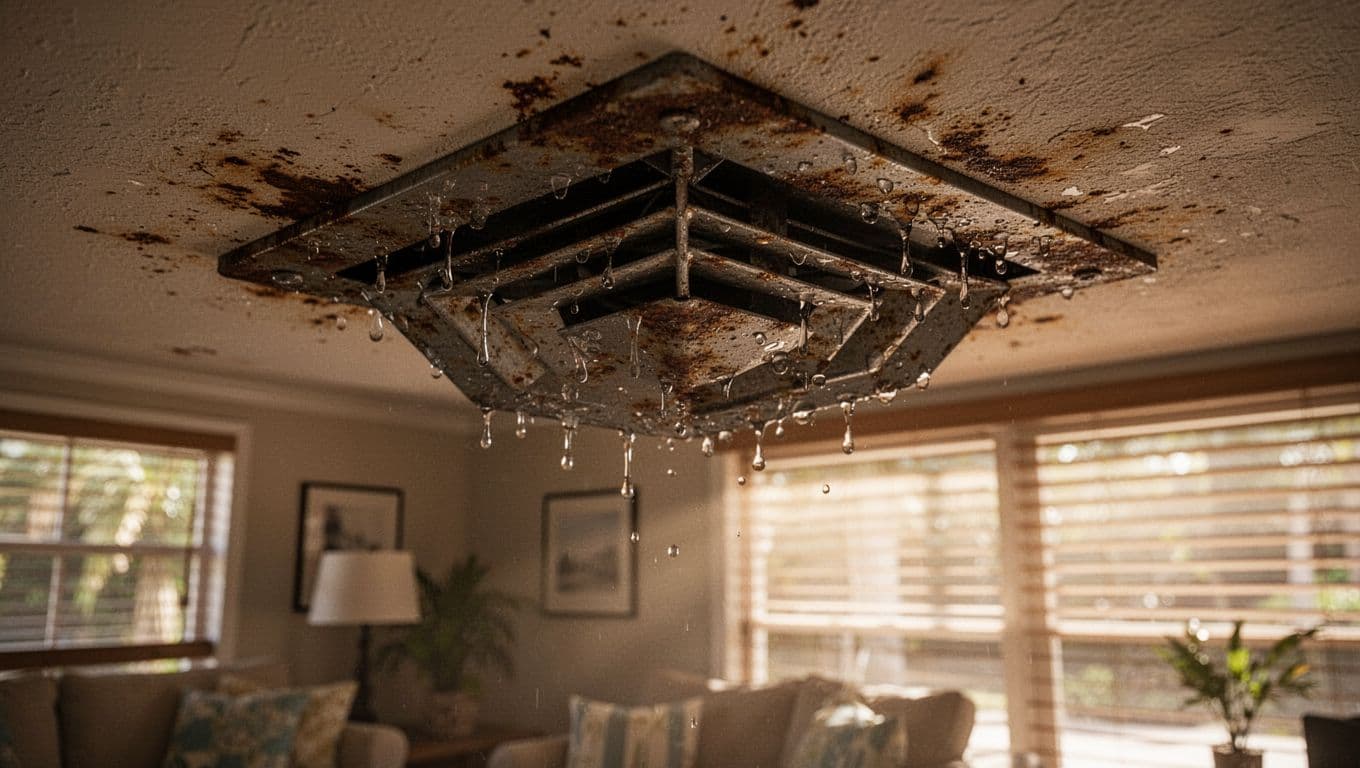
Ceiling vents often show rust first because cool supply air drops through them. Wall registers can rust near bathrooms, kitchens, laundry rooms, or bedrooms that stay closed most of the day. Those rooms trap humidity, so the metal stays damp longer.
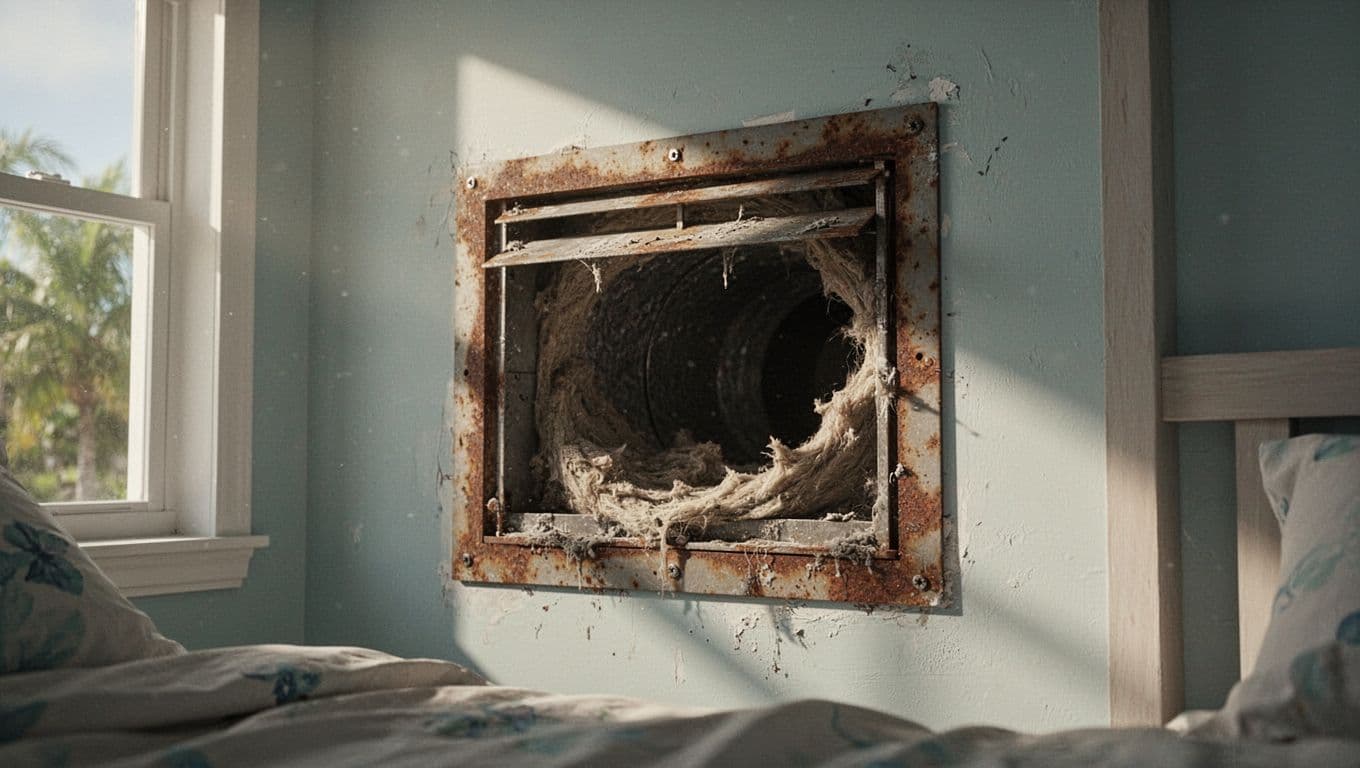
A dusty vent can make the problem worse. Dust holds moisture, which gives rust a place to start. If the grille is already scratched or the paint is thin, rust can appear even faster.
Condensation at the register vs a bigger moisture problem
Not all rust means the same thing. A small patch on the grille, screws, or trim often points to surface condensation. That can happen when the vent is cold and the room air is humid. If you catch it early, cleaning and replacing the cover may be enough.
A bigger issue looks different. Rust that comes back after cleaning, stains around the vent, or damp insulation nearby can point to ongoing moisture intrusion. That may come from duct sweating, a leak above the ceiling, or poor insulation around the duct.
Rust that keeps returning is often a moisture problem first, and a cleaning problem second.
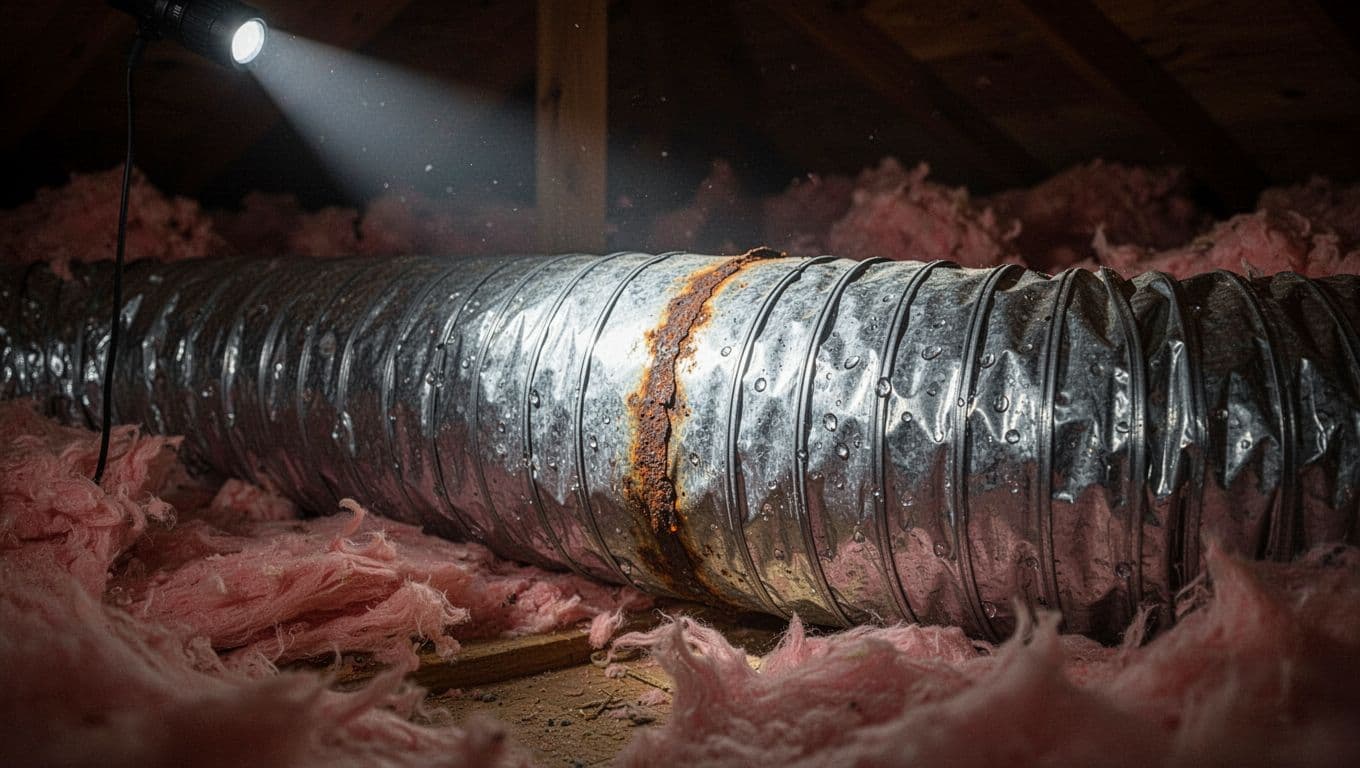
Duct sweating means water is forming on the outside of the duct because the surface is too cold for the surrounding air. In Florida attics, thin or missing insulation can make that worse. Once the duct sweats, nearby metal parts, drywall edges, and vent screws can start to rust too.
Watch for these signs:
- Surface rust usually stays on the grille and fasteners, and the rest of the area looks dry.
- Moisture trouble often leaves stains, peeling paint, soft drywall, or a damp smell.
- System issues may show up as uneven cooling, weak airflow, or rust on more than one vent.
If the rust only appears on a single register, the cause is often local condensation. If it shows up on several vents, the problem may involve airflow, insulation, or humidity control.
What to inspect first in your home
Before you replace a vent cover, check the area around it. A few quick clues can tell you whether you're dealing with a simple surface issue or a larger moisture source.
- Look at the pattern. If only one vent is rusty, start there. If several vents in different rooms show the same problem, the issue is probably in the system or the building envelope.
- Check the ceiling or wall around the register. Brown rings, peeling paint, bubbling drywall, or soft spots point to moisture beyond the grille itself.
- Feel for dampness and look for dust buildup. A cool, wet vent with stuck-on dust often means condensation is forming often enough to keep the metal wet.
- Inspect the nearby room conditions. Bathrooms, kitchens, and laundry areas can load the air with moisture. Poor exhaust fan use can make rust show up faster.
- If it's safe, look in the attic or access panel. Wet insulation, rusty duct seams, or water marks on the duct are signs the problem is not just at the vent opening.
If the vent area feels damp after the AC has been running, pay close attention. That means the surface is staying wet long enough for corrosion to keep moving.
How to prevent rust from coming back
The best fix is to stop the moisture, not just the visible rust. A clean grille can look fine for a while, then rust again if the real cause stays in place.
A few simple steps help a lot:
- Keep indoor humidity in check. Run the AC properly, use bathroom fans, and let the kitchen exhaust fan do its job.
- Replace rusty steel grilles. Powder-coated or rust-resistant registers hold up better in humid Florida homes.
- Change HVAC filters on time. Good airflow helps the system cool evenly and removes some of the moisture stress.
- Seal and insulate ducts in hot attic spaces. This helps prevent duct sweating and cold spots.
- Fix leaks fast. Roof leaks, plumbing drips, and clogged condensate drains can all feed rust.
- Clean the vent and surrounding area gently. Dust and grime trap moisture, so a dirty grille rusts faster.
One common mistake is painting over active rust and hoping it stays hidden. If moisture is still present, the rust usually comes back. In many cases, the cover is only part of the story.
When a vent is near a bathroom or laundry room, good ventilation matters even more. A working exhaust fan can lower humidity enough to slow new corrosion. In a Florida home, that small habit can make a real difference.
When to call an HVAC pro or home inspector
Some rust spots are minor. Others point to a problem that needs more than a new cover. If the rust returns after cleaning, spreads to nearby drywall, or affects more than one vent, a professional should look at it.
An HVAC technician can check airflow, drainage, duct insulation, and signs of duct sweating. If the vent issue comes with dust buildup, musty air, or weak airflow, our air duct cleaning services are a practical next step.
A home inspector makes sense when you suspect a roof leak, plumbing leak, or hidden water intrusion above the ceiling or behind the wall. Rust plus stains, soft drywall, or a persistent odor is a strong reason to get that checked.
If you want help figuring out whether the problem is in the vent, the ductwork, or somewhere else, Get a Free Estimate.
Conclusion
Rust around air vents in Florida homes is common, but it should never be ignored. Sometimes it's just condensation on a cold grille. Other times it points to duct sweating, poor insulation, or a leak that needs attention.
The key is to look at the pattern. A single rusty cover may be a local humidity issue, while repeated rust, stains, or damp insulation often means something bigger is going on.
When you catch it early, you protect more than the vent. You also protect the ductwork, the drywall, and the comfort of the whole home.