What Air Duct Microbial Treatment Actually Does
A musty duct system does not always need a strong chemical fix. In many homes, air duct microbial treatment is used only after cleaning, when there is a real concern about mold, mildew, bacteria, or odor on internal surfaces.
That matters because the spray or fog is not the main job. The main job is source removal, moisture control, and deciding whether the problem is on a hard surface, a porous liner, or somewhere else in the HVAC system.
If you own a home or manage property, the right question is simple: what problem are you trying to solve, and what needs to happen first?
What microbial treatment is meant to do
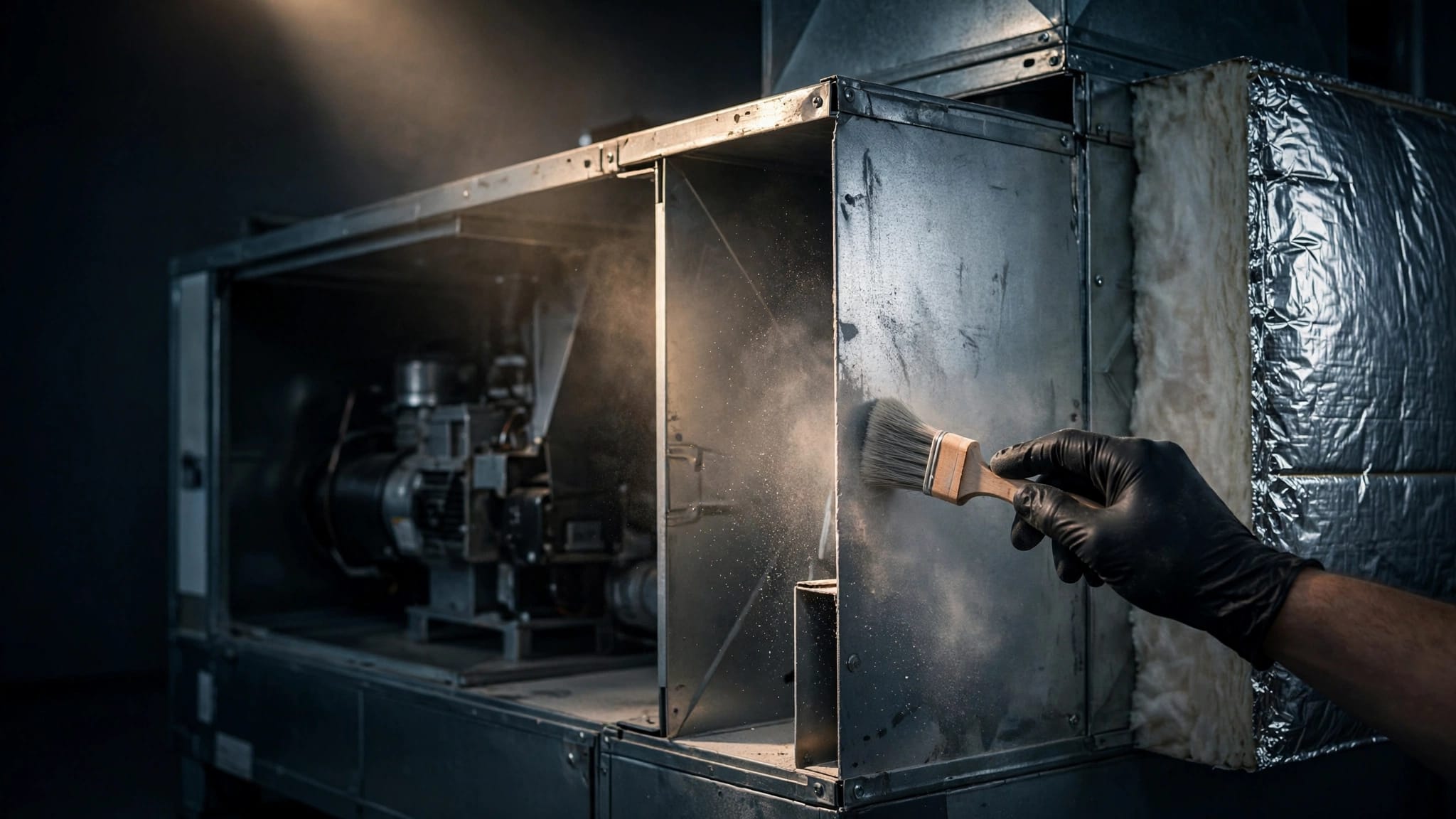
Microbial treatment is used to address suspected growth or odor on the parts of the HVAC system that can be treated safely. That usually means nonporous surfaces inside the ductwork or related components, such as sheet metal surfaces, access panels, or other hard parts that can be reached and cleaned.
Used well, it can help reduce microbial residue after cleaning and may help control lingering odor. It can also give an extra layer of protection when a contractor has identified a limited surface issue. But it does not pull dust out of a system, and it does not replace mechanical cleaning.
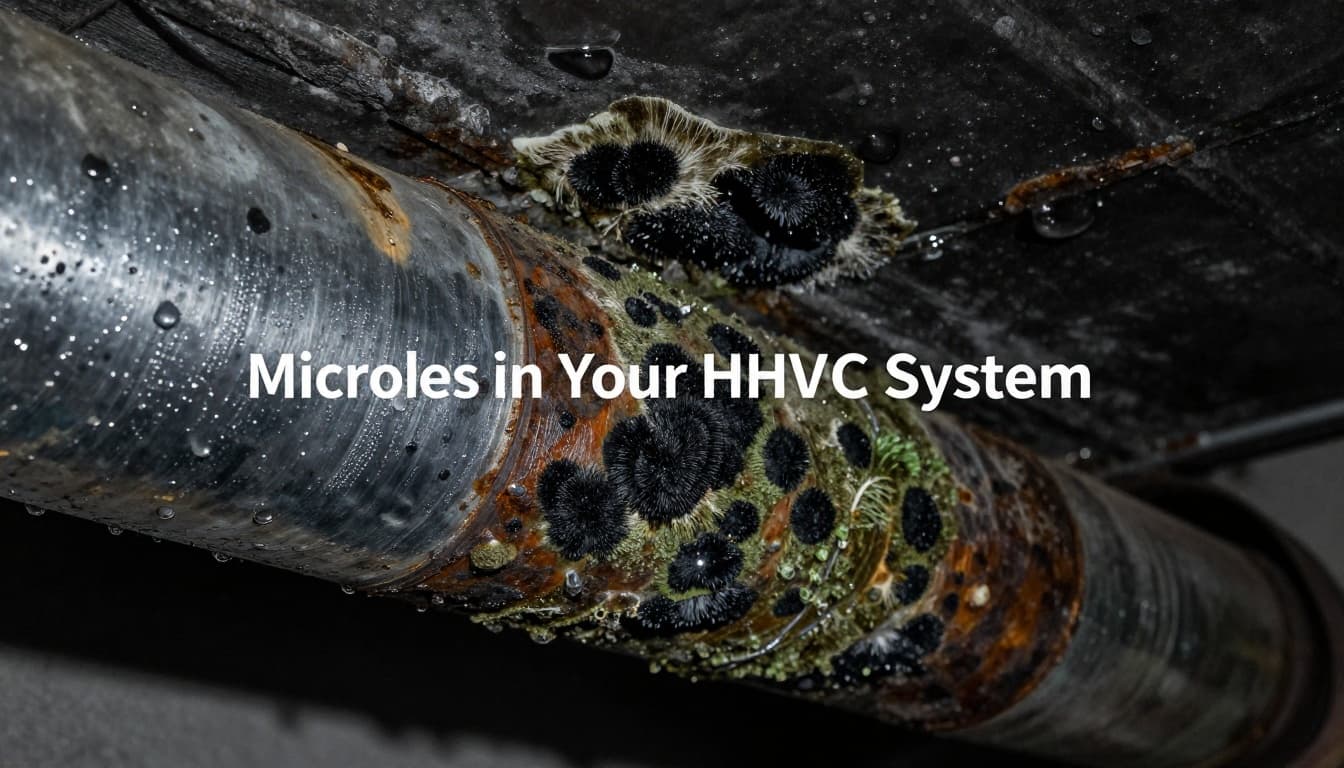
The biggest mistake is treating the product like a cure-all. If moisture is still present, growth can come back. If the source is a leak, a wet drain pan, or damp insulation, the treatment may only buy time.
A treatment can support a clean system, but it can't dry a leak or replace source removal.
Cleaning, sanitizing, disinfecting, and deodorizing are not the same
People often use these words as if they mean the same thing. They do not. The difference matters, because each step has a different purpose and a different limit.
| Term | What it does | Best use | Limits |
|---|---|---|---|
| Cleaning | Removes dust, debris, and film from surfaces | First step for dirty ductwork | Does not kill all microbes |
| Sanitizing | Reduces the amount of microbes on a surface | Light contamination on hard surfaces | Not a substitute for cleaning |
| Disinfecting | Targets a wider range of microorganisms | Selected hard surfaces with a real contamination issue | Not for every material or every system |
| Deodorizing | Helps reduce odor | Musty smells after cleaning or treatment | Does not remove the source of odor |
A good contractor starts with cleaning, then decides whether a treatment is needed. If a company skips straight to fogging, it is worth asking why.
Cleaning is the part that removes the material microbes can live on. Sanitizing and disinfecting are follow-up steps, not the first move. Deodorizing can help with smell, but smell alone does not tell you what is inside the system.
How microbial treatment should be applied inside ducts
The safest and most useful treatment is targeted. It should be used on the right surfaces, in the right amount, and only after the system has been inspected and cleaned as needed. That means the contractor should know what product is being used, what the surface is made of, and why the treatment is necessary.
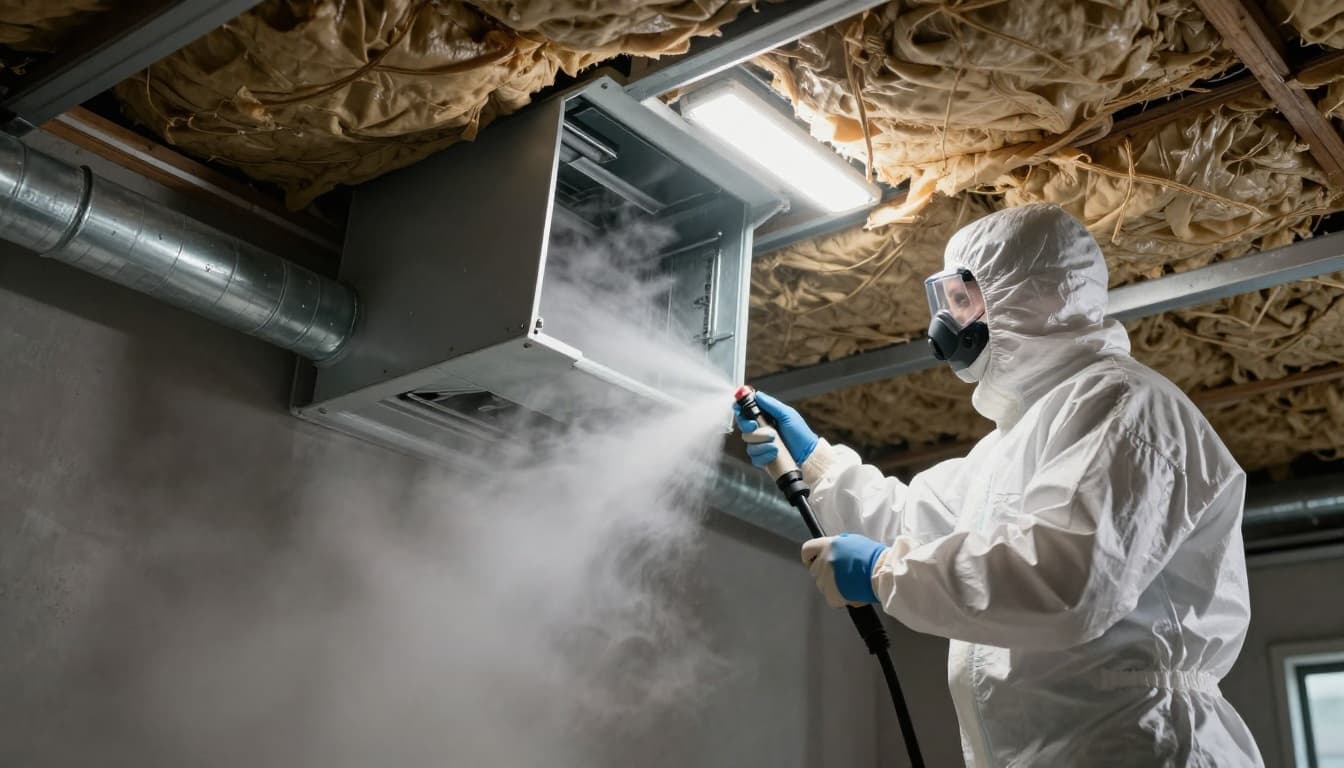
A careful application usually follows these basic ideas:
- The ducts are cleaned first when dust or debris is present.
- The product is chosen for the specific surface and purpose.
- The label directions are followed exactly.
- The system is treated only where the product can reach and work properly.
- The home or building is ventilated as needed before normal use resumes.
The product itself matters too. Ask whether it is meant to sanitize, disinfect, or deodorize, and whether it is appropriate for HVAC use. Also ask how long the space needs to stay vacant, if any, and whether filters, coils, or drain areas need separate attention.
This is also where workmanship matters. A contractor should be able to explain what was found before the treatment started. They should not hide behind vague language like "we sprayed the whole system." That is not a plan. It is a shortcut.
For homeowners in Southwest Florida who need the cleaning step before any treatment, air duct and dryer vent cleaning in Estero is one example of how source removal and follow-up care can fit together.
When treatment may help, and when it won't
Microbial treatment can help when the issue is limited, the surface is suitable, and the moisture problem has already been fixed. It may also help after a water event has been corrected and the system has been cleaned, especially if there is still a stubborn odor on hard surfaces.
It is less useful when the real problem is still active. A leaking roof, a clogged condensate drain, a wet crawlspace, or damp insulation can keep feeding the same issue. In those cases, treatment is only part of the answer.
Porous materials need extra care. Some insulated liners or wet duct insulation may not respond well to treatment alone. If those materials are damaged, replacement may be the better fix. That is one reason a surface-by-surface inspection matters before anyone reaches for a product.
Treatment also does not replace cleaning when the system is packed with dust, pet hair, or debris. A dirty duct can smell stale without having a microbial problem, and a microbial problem can hide inside a duct that looks merely dusty. The distinction matters because each issue calls for a different first step.
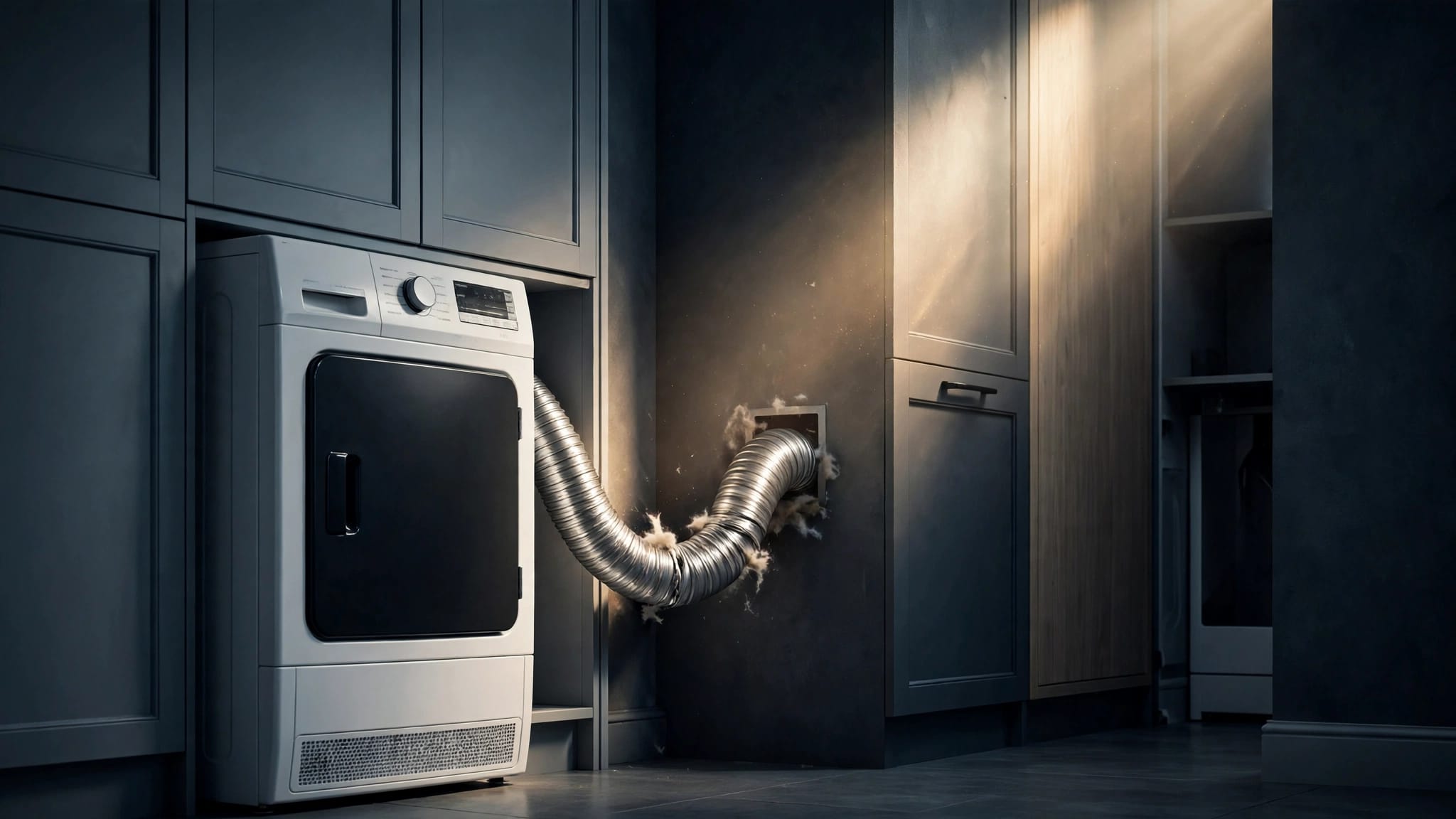
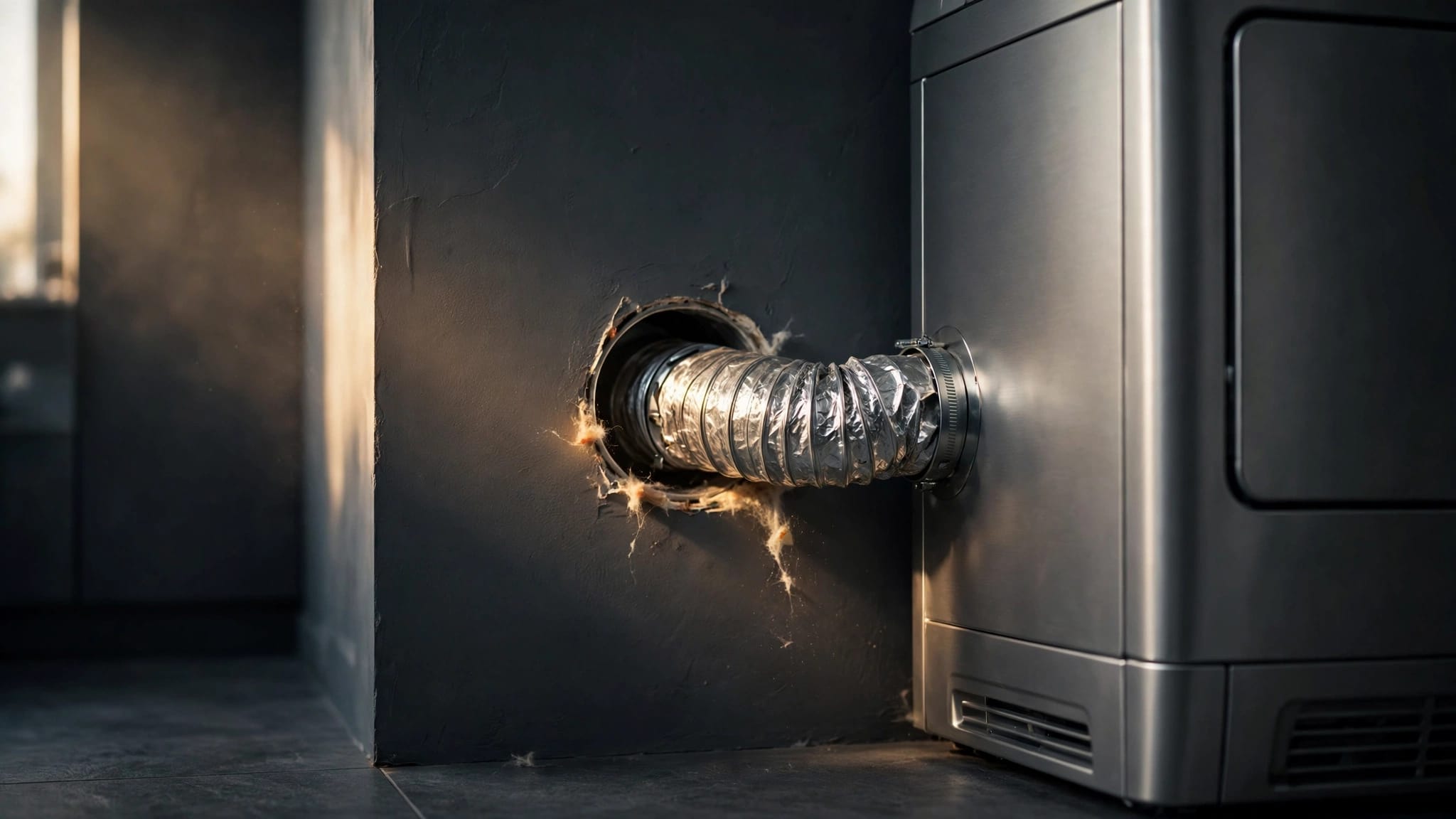
A musty laundry area can create confusion too. Sometimes the smell comes from ducts. Sometimes it comes from a clogged dryer vent or lint buildup, which needs cleaning, not microbial treatment. If you need both kinds of service in one visit, air duct cleaning services in Sarasota County can be the better starting point for nearby properties on the Gulf Coast.
When inspection or testing should come first
Inspection should come first when the cause is unclear. That includes recurring odors, visible spotting inside registers, recent water damage, or a system that keeps having the same problem after cleaning. If the issue comes back, the moisture source may still be there.
Testing can also make sense when the situation is disputed or when the scope is not obvious. You may not need lab work for every odor complaint, but a closer inspection can help if the contractor sees visible growth, damp insulation, or suspect contamination around coils, returns, or drip pans.
This is the point where the contractor's questions matter more than the product label. Ask what was observed, where the moisture may be coming from, and which parts of the system need cleaning before any treatment. Ask whether the product is being used according to its label directions and any applicable regulations. A careful contractor should answer without hesitation.
If you're still comparing options, Get a Free Estimate and ask for an inspection first. That keeps the job grounded in what the system actually needs, not in a sales pitch.
Choosing the right approach for your system
The best results usually come from a simple order of operations. First, find the source. Next, clean the system. Then, if the conditions call for it, apply a microbial treatment to the right surfaces.
That approach is practical, not dramatic. It respects the fact that ducts are only one part of the indoor air picture. Moisture control, source removal, and proper cleaning still do most of the work.
Microbial treatment has a place, but it is a tool, not a cure-all. When you know what it can do, and what it cannot do, it becomes much easier to judge whether a contractor is solving the problem or just masking it.