How to Spot a Crushed Flex Duct in the Attic
A crushed flex duct can steal air from a room long before anyone notices a big problem. The attic hides the damage, but the signs often show up in comfort, noise, and energy use.
If one room feels weak while the rest of the house seems fine, the ductwork above it may be pinched or flattened. That matters because flex duct needs open, even space to move air the way it should.
The good news is that you can spot many warning signs without tearing into anything. You just need to know what to look for, and what not to touch.
What a crushed flex duct looks like
Flex duct is supposed to stay round and supported. When it gets crushed, the shape changes in ways that are easy to miss at first glance.
Look for these visual clues:
- Flattened sections where the round duct looks squeezed into an oval or ribbon shape
- Sharp bends that pinch the line instead of making a gentle curve
- Wrinkles and folds that bunch up in one spot
- Hanging duct that sags between supports and gets pinched by insulation or framing
- Loose insulation wrap that exposes the duct or makes it look lumpy
- Disconnected joints where the duct has slipped off a collar or torn near the end
A healthy flex duct usually has a smooth path. A damaged one looks tired, bent out of shape, or pressed into the attic floor or joists. If the outer jacket is wrinkled and the inner liner has collapsed, airflow is usually restricted.
Severe damage may also leave tear marks, gaps at the seams, or crushed spots near elbows and takeoffs. In those cases, the problem is bigger than a simple visual wrinkle. The duct may be leaking air as well as losing space.
If the duct looks flat, torn, or loose at a connection, stop there and document it.
Airflow clues that point to a hidden problem
A crushed flex duct often shows up in the room before you find it in the attic. That is why performance clues matter so much.
Start with the supply vent in the room tied to that duct run. If air from that vent feels weak compared with other rooms, the duct may be pinched somewhere above. Uneven temperatures are another clue. One bedroom may stay warm while the hall cools quickly, or the opposite.
Listen too. Whistling, hissing, or a rush of air from one small area can point to restriction. So can a system that seems to run longer than usual without reaching the set temperature. The blower works harder when the path is blocked, and the room still does not get what it needs.
Watch for these signs in day-to-day use:
- The room takes a long time to heat or cool
- One vent moves far less air than nearby vents
- The HVAC system cycles often but the room stays uncomfortable
- The vent grille feels cold in summer or weak in winter
- Humidity feels higher in one part of the house
These clues do not prove the duct is crushed, but they make the attic check more important. If the same room has a weak vent and the attic run above it looks flattened, the case gets stronger fast.
How to inspect the attic without making things worse
A careful inspection can save a lot of guesswork. A careless one can crush the duct more.
Before you go up, wear gloves, a mask, and shoes with good grip. Use a flashlight or headlamp so you do not need both hands all the time. If the attic has joists, step on them only. Never step on the flex duct or the insulation covering it.
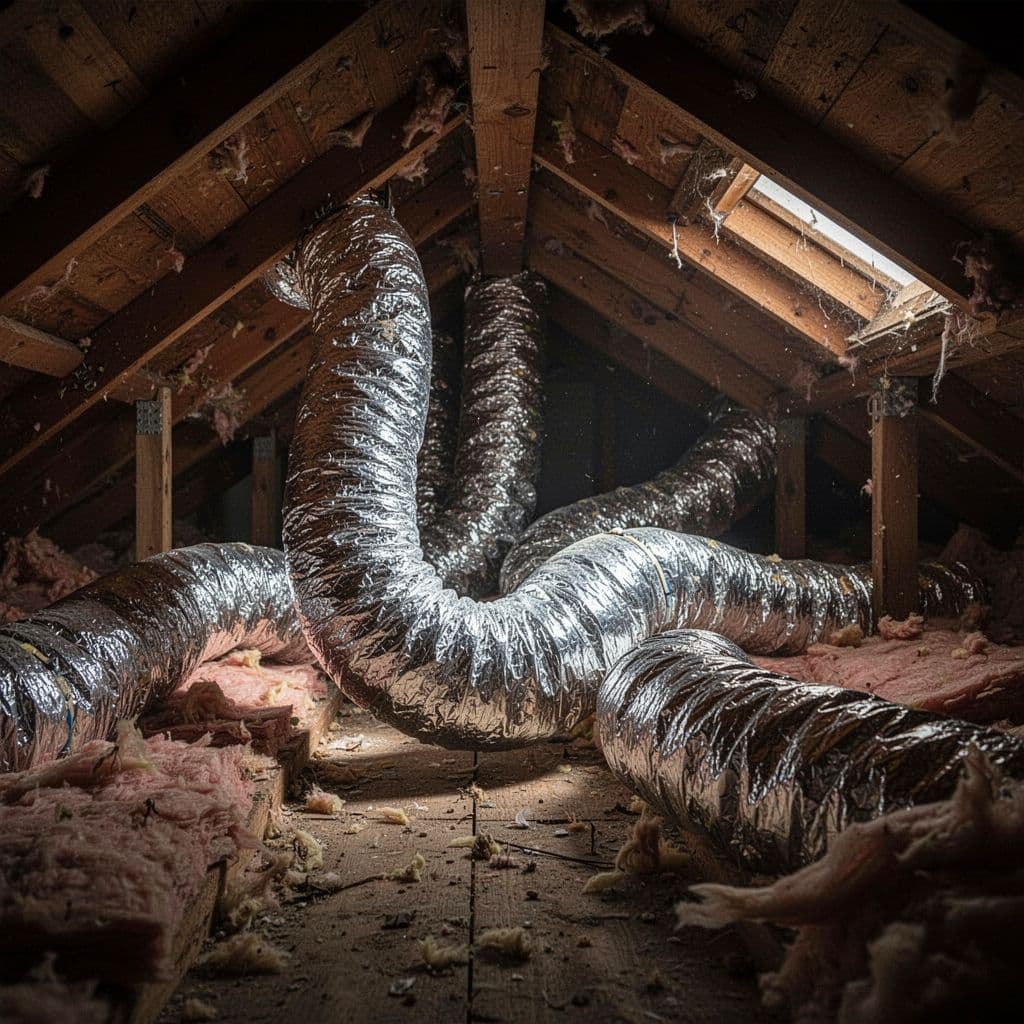
Take your time as you scan each run. Look for flat spots, tight turns, kinks, and places where the duct is pressed under storage items. Boxes, plywood, and holiday decorations can crush a run without much force.
A few smart habits help a lot:
- Start at the vent location in the house and trace the likely path into the attic.
- Check the duct supports to see whether straps are loose, broken, or missing.
- Photograph anything suspicious before moving insulation or touching the area.
- Compare nearby runs so you can spot one line that looks flatter or lower than the rest.
- Avoid pulling on the duct because old tape and stretched liner can fail fast.
Property managers should document the room, date, and symptom as well. A simple note like "guest room vent weak, attic duct flattened near truss" helps when you hand the issue off to an HVAC tech.
If a section is buried in insulation, move the insulation gently by hand. Do not dig with a sharp tool. The goal is to see the duct, not disturb it more than needed.
What usually causes flex ducts to get crushed
Most crushed flex duct problems start with support, pressure, or bad placement. The attic is a rough place for ductwork, especially in hot climates.
Common causes include boxes stored on top of duct runs, poor hanging straps, and ducts stretched too tight between two points. A flex line also gets damaged when installers make sharp turns instead of broad curves. Over time, the outer jacket can sag, then the inner liner starts to collapse.
Heat plays a part too. In a hot attic, tape and fasteners can age faster. Once the support fails, the duct drops lower and becomes easy to step on or press against a truss.
Pest activity can add to the damage. Rodents sometimes chew the outer wrap, which weakens the line and makes crushing more likely later. Water damage can do the same by breaking down insulation and tape.
The main point is simple. A duct rarely becomes crushed for just one reason. It usually starts with one weak spot, then gets worse.
When a pro should take over
Some attic finds are safe to note. Others need repair, not more inspection.
Call an HVAC professional if you see severe crushing, torn insulation, disconnected duct sections, or long runs that hang unsupported. Those problems can affect airflow across more than one room, and they often need more than a quick adjustment. A technician can check the full line, test airflow, and fix the cause instead of the symptom.
That matters even more if your system already struggles with dust buildup or uneven delivery. In that case, it can help to see our complete list of duct and vent cleaning services and compare what the whole system may need.
If you also have a dryer line in the attic or nearby closet, pay close attention there too. A restricted dryer duct can trap lint and heat, so understanding the process of professional dryer vent maintenance is worth a look.
Severe crushing is a repair issue, not a DIY cleanup job.
When you are unsure, a professional visit is the safer move. If you want a second set of eyes, you can Get a Free Estimate and explain what you saw in the attic and which rooms feel weak.
Conclusion
A crushed flex duct often leaves two trails, one in the attic and one in the room it serves. The attic clue is the shape of the duct, while the room clue is weak or uneven airflow.
If you spot flattening, sagging, torn insulation, or disconnected ends, stop and document it. The sooner the problem gets checked, the less likely it is to drag down comfort and waste conditioned air.
A careful look, a steady step, and a clear note can save a lot of guesswork later. That is usually enough to turn a hidden attic problem into a fix that makes sense.
FAQ
How can I tell if a flex duct is crushed or just sagging?
A sagging duct still keeps most of its round shape. A crushed one looks flattened, pinched, or folded in one spot. If airflow is weak in the room too, the clue is stronger.
Can I push a crushed flex duct back into place?
You can gently move loose insulation out of the way, but do not press hard on the duct itself. Old flex duct tears easily, and a small problem can turn into a bigger one.
Does a crushed duct affect energy bills?
Yes. Restricted airflow can make the system run longer to reach the set temperature. That usually means more wear on the equipment and higher energy use.
What should I do if the duct insulation is torn?
Mark the spot, take a photo, and leave it alone. Torn insulation can hide leaks or a failing connection, so an HVAC professional should inspect it.