How to Tell if Duct Insulation Is Falling Apart

Adkins Duct Cleaning • May 22, 2026

Duct insulation rarely fails all at once. More often, it starts with a loose edge, a dusty patch, or a room that never seems to stay comfortable.

When duct insulation breaks down, your HVAC system works harder, and your home can start feeling stuffy, damp, or uneven. In Florida homes, heat and humidity can speed up the wear, so the signs often show up faster than people expect.

The good news is that many warning signs are easy to spot with a simple walk-through. A careful look can tell you a lot before the problem turns into higher bills or bigger repairs.

Visible signs your duct insulation is breaking down

Healthy duct insulation should look snug, dry, and intact. It wraps the duct like a fitted jacket. When it starts failing, the damage usually shows up in plain sight.

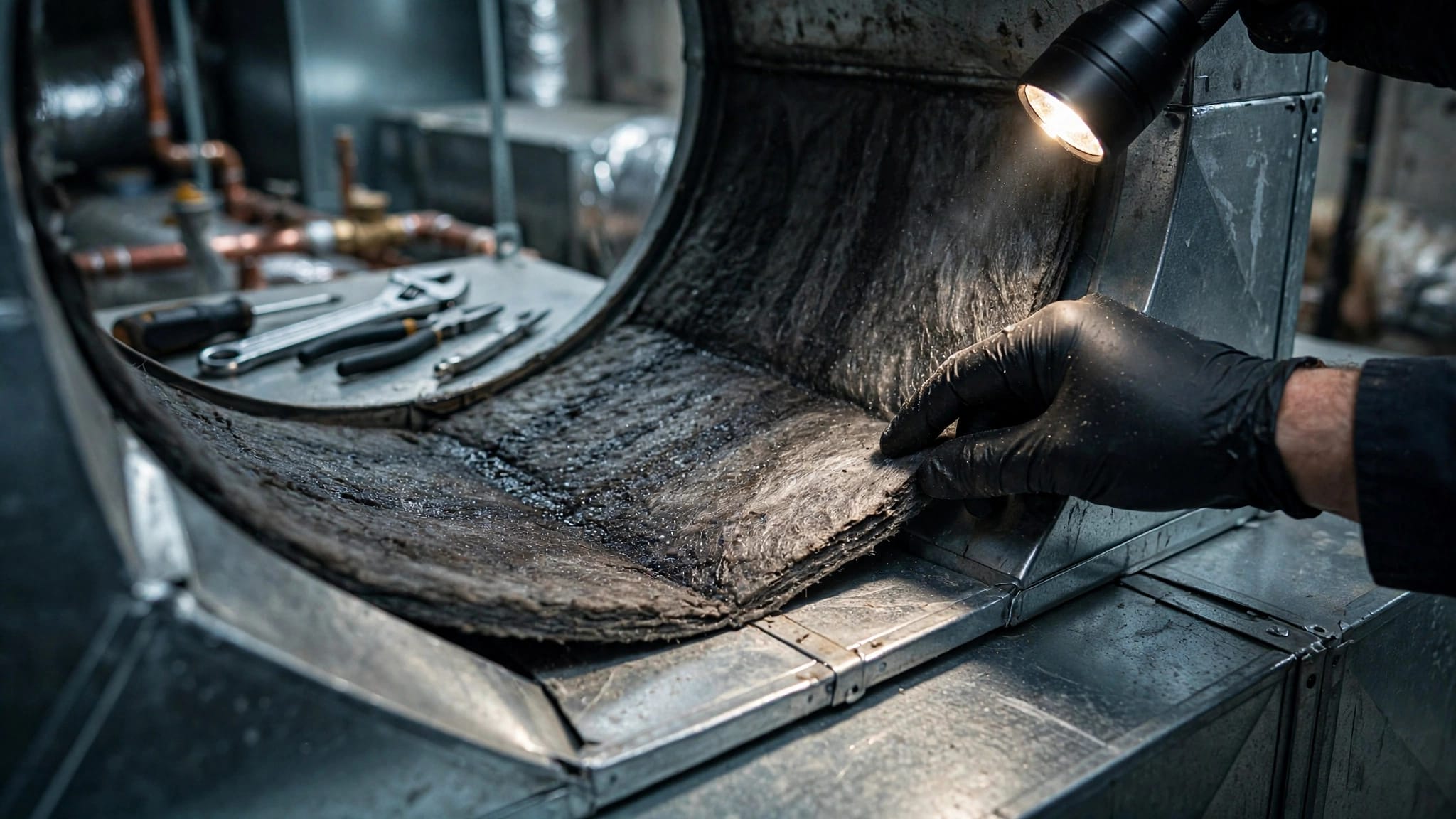
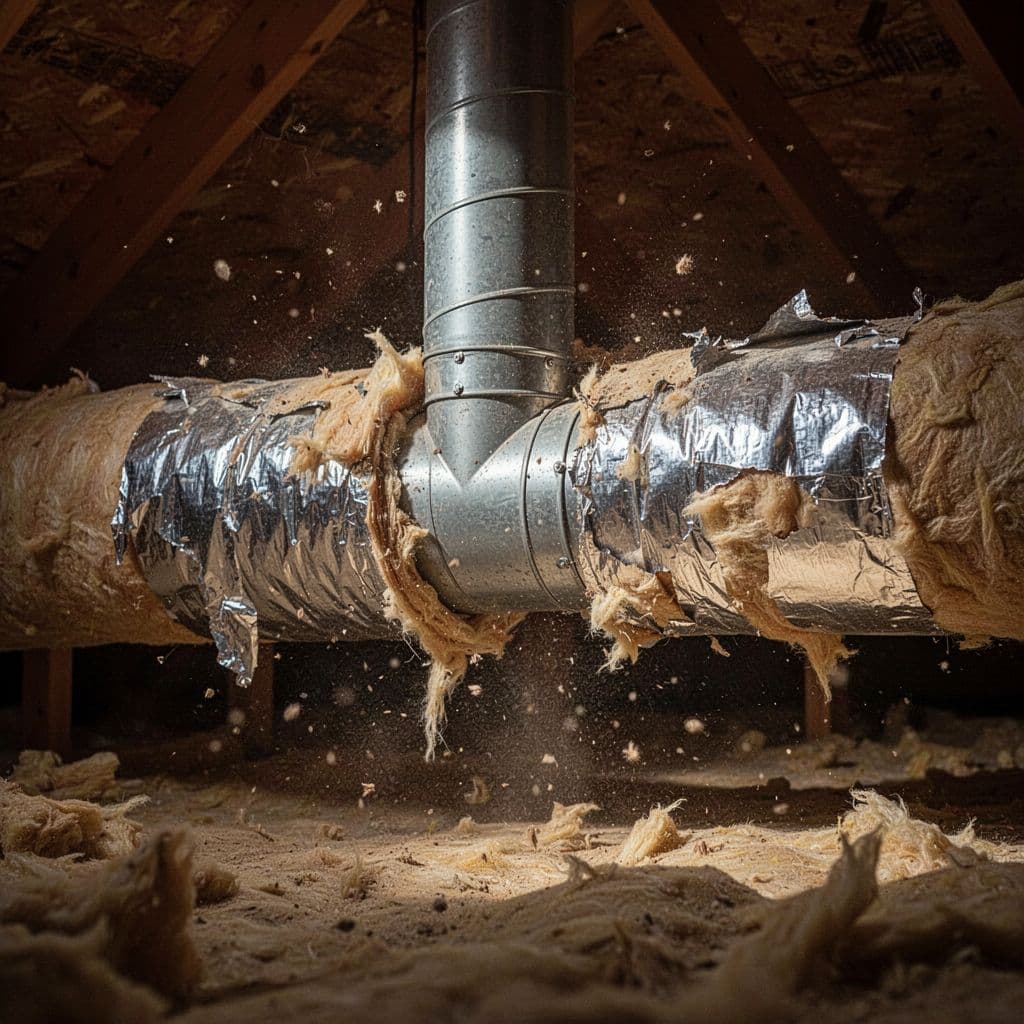
Look for crumbling fiberglass that sheds when touched, or foil facing that peels back at the seams. Sagging wrap is another common clue. If the insulation hangs loose, splits open, or slides away from the duct, it's no longer doing its job.

A few signs stand out right away:

  • Crumbling material that leaves dust or fibers behind
  • Torn foil backing or open seams along the duct wrap
  • Sagging insulation that droops instead of staying tight
  • Wet spots or stains on the wrap or nearby surfaces
  • Loose pieces on the attic floor, crawlspace floor, or near vents

You may also notice dark spots, greenish patches, or a musty film on the surface. That can point to moisture or mold. In a humid home, that matters because damp insulation loses shape fast and stops insulating well.

If the wrap looks patchy in one section and solid in another, that uneven wear is a clue too. Insulation often breaks down where heat, moisture, or past repairs hit it first.

What your home tells you before the ductwork does

Sometimes the first sign isn't visual. Your house may start giving hints through comfort problems.

Uneven room temperatures are a big one. If one bedroom stays hot while the rest of the house cools fine, damaged insulation may be letting attic heat into that run of ductwork. The system may still move air, but the air loses the battle with the surrounding heat.

Higher energy bills can point in the same direction. When insulation thins out or falls apart, the HVAC system has to run longer to reach the set temperature. That extra runtime adds up.

Moisture is another clue. Condensation around ducts, damp insulation, or sweat on exposed duct surfaces means the system is dealing with more than dry wear. In a humid climate, cold air inside the duct can meet warm attic air and leave water behind. Once that happens, the insulation can flatten, stain, and break down faster.

A musty smell is worth paying attention to as well. It often shows up near supply vents, in the attic access area, or in rooms that use a damaged duct run. Dusty air can follow, especially when the insulation is shedding fibers into nearby spaces.

If a duct feels cold and damp where it should feel dry and firm, the insulation needs a closer look.

Duct insulation damage vs duct leaks

A lot of homeowners mix these two problems together. They can happen at the same time, but they are not the same issue.

Insulation damage means the wrap around the duct has failed. Duct leaks mean the duct itself has openings, loose joints, or holes. One can cause comfort problems, and the other can make them worse.

Use this quick comparison to sort out what you're seeing:

Clue More likely failing insulation More likely duct leak or duct damage
Crumbling fibers or loose wrap Yes No
Torn foil facing Yes Sometimes, if a seam is open
Sagging material hanging off the duct Yes No
Hissing or whistling air No Yes
Dust streaks at a joint Sometimes Yes
Visible hole in metal duct No Yes
Wet, flattened wrap Yes Yes, if moisture came from a leak or heavy condensation

If you spot both problems, the insulation may have broken down because the duct is leaking, or the leak may have ruined the wrap. That is common in older systems. In that case, fixing only one part leaves the job half done.

A damaged duct can waste air. Damaged insulation can let heat or moisture attack that duct. When both are present, the system usually needs a full inspection instead of a quick patch.

Safe ways to inspect without making the problem worse

A quick DIY check is fine when the ductwork is easy to reach and the area looks dry. You do not need to touch every inch.

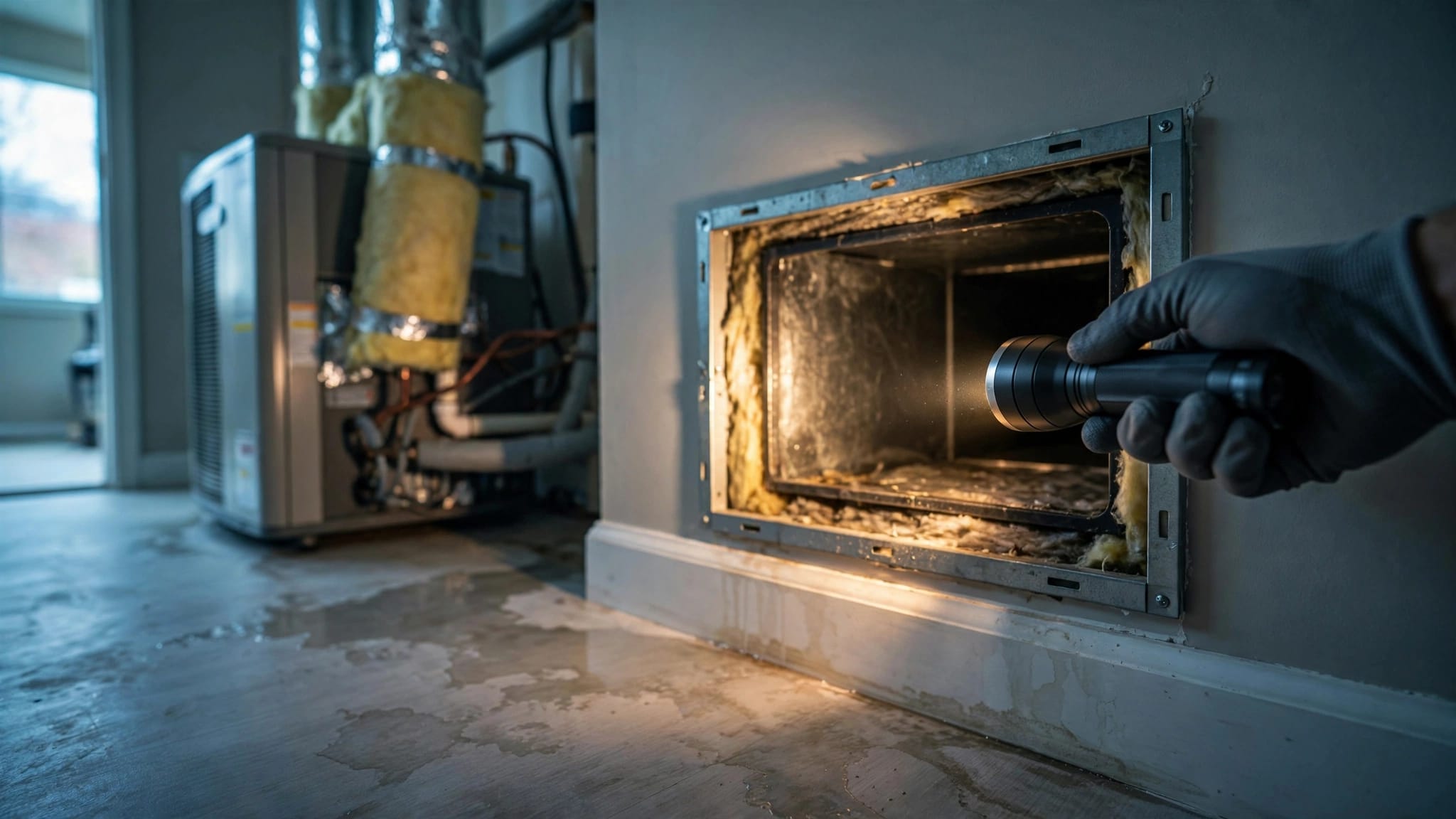
Start with the HVAC system turned off. Then use a flashlight and look at the visible ducts, seams, and wrap. Check the attic, garage, basement, or crawlspace if those areas are safe and accessible.

A simple inspection works best when you keep it low-risk:

  1. Look first, touch second. Use your eyes before you put a hand on anything.
  2. Feel gently. If the wrap flakes off or feels soggy, stop.
  3. Check nearby surfaces. Look for water stains, dust piles, or loose fibers under the ducts.
  4. Stay out of unsafe spaces. Skip cramped areas, weak flooring, and any spot with active moisture or pest activity.

Do not peel back insulation to "see better." That small tear can turn into a much larger problem. Also, do not brush off anything that looks like mold. If you see dark growth or smell a strong musty odor, leave it alone until a professional checks it.

DIY inspection is appropriate when the damage looks minor, the area is dry, and the ducts are easy to see. If the insulation is hidden behind a lot of debris, or if the space feels unsafe, it's better to stop there.

When an HVAC professional should step in

A licensed HVAC professional should evaluate the system if the insulation is falling apart in several places, if it's wet, or if mold keeps coming back. The same applies when the wrap has dropped away from long sections of ductwork.

Professionals can tell whether the problem is old age, moisture, pests, or a hidden leak. They can also inspect the duct seams, which helps separate insulation trouble from duct damage. That matters because replacing the wrap without fixing the source won't hold up for long.

If your ducts are shedding loose debris, a cleanup may be part of the repair plan too. After the damaged material is handled, professional air duct cleaning services can help remove dust, fibers, and other buildup that may have spread through the system.

In humid Gulf Coast homes, this kind of wear can show up faster than people expect. Homeowners who want a closer look from local HVAC cleaning experts in Sarasota County can get help from a team that knows how attic heat and moisture affect ductwork.

If you're seeing crumbling insulation, condensation, or smell issues, Get a Free Estimate before the damage spreads.

Conclusion

Failing duct insulation usually gives itself away in small ways first. Loose fibers, torn foil, sagging wrap, and damp spots are the clearest visual signs.

When those clues show up alongside musty odors, uneven temperatures, or rising bills, the problem deserves attention. A quick, safe inspection can tell you whether you're looking at insulation wear, duct leaks, or both.

The main thing to remember is simple, healthy duct insulation should stay dry, tight, and intact . Once it starts falling apart, your home often feels it before you do.

By Adkins Duct Cleaning May 20, 2026
Dust that keeps coming back fast usually has a source. When leaky return ducts pull air from the attic, they can carry insulation fibers, dirt, and other debris straight into your living space. That hidden airflow problem does more than make shelves dusty. It can hurt indoor a...
By Adkins Duct Cleaning May 19, 2026
In Florida, your AC works hard for months at a time, so airflow matters more than most homeowners realize. When one room feels sticky and another feels icy, the problem may be hiding in the vents. The difference between a supply vent vs return vent is simple, but it affects co...
By Adkins Duct Cleaning May 18, 2026
Salt air doesn't need a direct hit from the ocean to cause trouble. In Gulf Coast homes, tiny salt particles ride in on humid air, settle on metal, and keep surfaces damp longer than they should stay wet. Over time, that mix can wear down duct joints, stain registers, and make...