
Signs Rodents or Insects Are Hiding in Your Ductwork
A strange scratching sound at night isn't always coming from the wall. Sometimes it's traveling through the vents above you.
Hidden pests can stay out of sight for weeks. Meanwhile, rodents in ductwork or insects inside vents can leave droppings, smells, nests, and debris that affect your home's air and HVAC performance.
The good news is that most infestations leave clues early. Once you know what to watch for, it's easier to act before the problem spreads.
The first warning signs usually show up around your vents
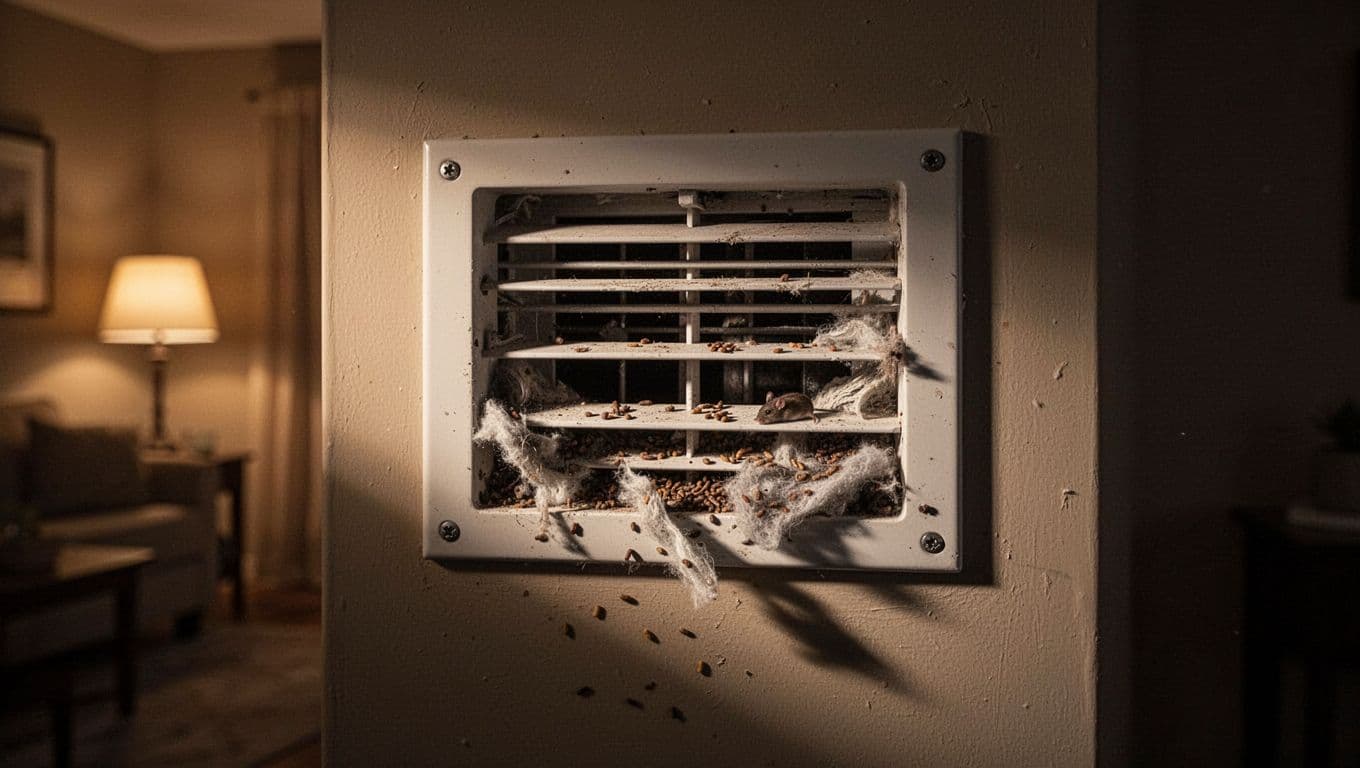
One of the clearest signs is debris where it shouldn't be. You might spot droppings near a floor register, bits of insulation around a vent cover, or dark smudges near an opening. Rodents often drag nesting material into hidden spaces, so paper, fabric, pet hair, or chewed fiberglass near a vent deserves attention.
Noise also matters. Light scratching, scurrying, or tapping in the ceiling can point to pests moving through nearby duct runs, especially at night. If the sound seems strongest when the house is quiet, don't brush it off as "the house settling."
Odors are another clue. A musty smell can come from insect debris or damp buildup. A sharp, stale, or urine-like odor is more common with rodents. If one room smells worse when the AC kicks on, the duct serving that area may need a closer look.
You may also notice the house getting dustier than normal. That happens because pests leave behind fine debris that airflow can stir up. If you're already wondering does air duct cleaning make a difference , recurring dust and odor are two strong reasons homeowners decide it does.
Rodent signs and insect signs are a little different
Some clues overlap, but the pattern often points in one direction. This quick comparison helps separate common signs.
| What you notice | More common with rodents | More common with insects |
|---|---|---|
| Night noises | Scratching, scurrying, gnawing | Light buzzing or faint movement |
| Debris near vents | Larger droppings, shredded nesting material | Webbing, shed wings, husks, tiny specks |
| Damage | Chewed flex duct, torn insulation | Little physical damage, more residue |
| Odor | Urine-like, sour, or dead animal smell | Musty, stale, or dusty smell |
| Airflow issues | Blocked runs from nests or torn ducts | Dusty buildup and light obstruction |
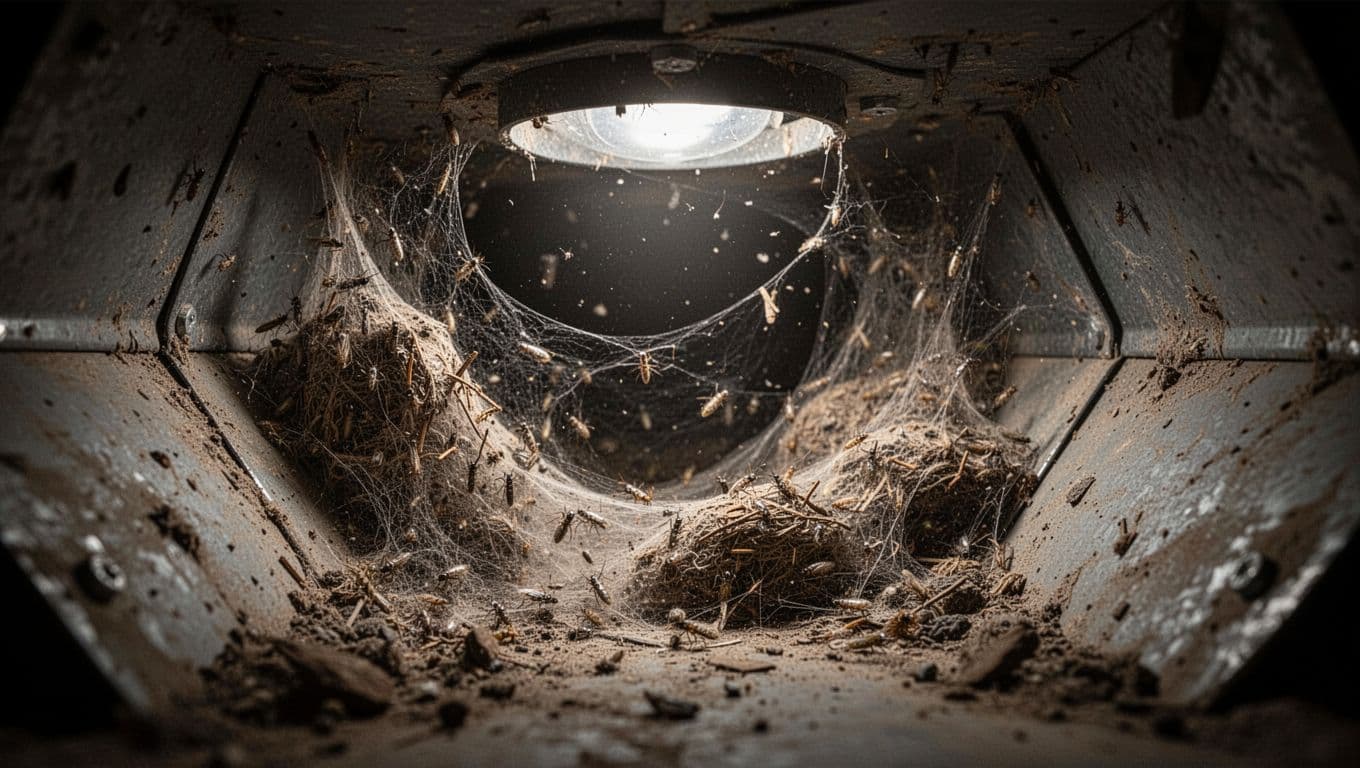
Rodents tend to leave heavier evidence because they chew and nest. Mice and rats can tear flex duct, widen small openings, and track dirt into the system. Insects usually leave lighter signs, such as webs, egg cases, shed body parts, or clustered debris near vent edges.
In Florida homes, heat and humidity can make attics and crawlspaces appealing to bugs. Roaches, ants, and other pests may stay near dusty duct sections or around vent boots. Rodents, on the other hand, often use those same attic paths to get into the system. Because signs can overlap, a professional inspection helps sort out whether you need pest removal, duct cleaning, duct repair, or all three.
Why hidden pests can hurt air quality, cleanliness, and HVAC efficiency
Even a small infestation can cause a bigger mess than most homeowners expect. Rodents can leave droppings, urine, hair, and nesting scraps inside the duct system. Insects can leave webs, bodies, and fine particles that collect over time. Then your blower starts, and some of that contamination moves through the house.
That affects air quality first, but it rarely stops there. Rooms may smell stale. Furniture may collect dust faster. People with allergies may notice more irritation when the system runs. If pests have damaged duct seams or insulation, the system can also pull dirty air from attics or crawlspaces into the air stream.
Reduced airflow is another common problem. A nest inside one branch line can make a room feel weak or uneven. Chewed flex duct can leak conditioned air before it reaches the vent. Then the HVAC system runs longer, filters clog faster, and energy use can rise.
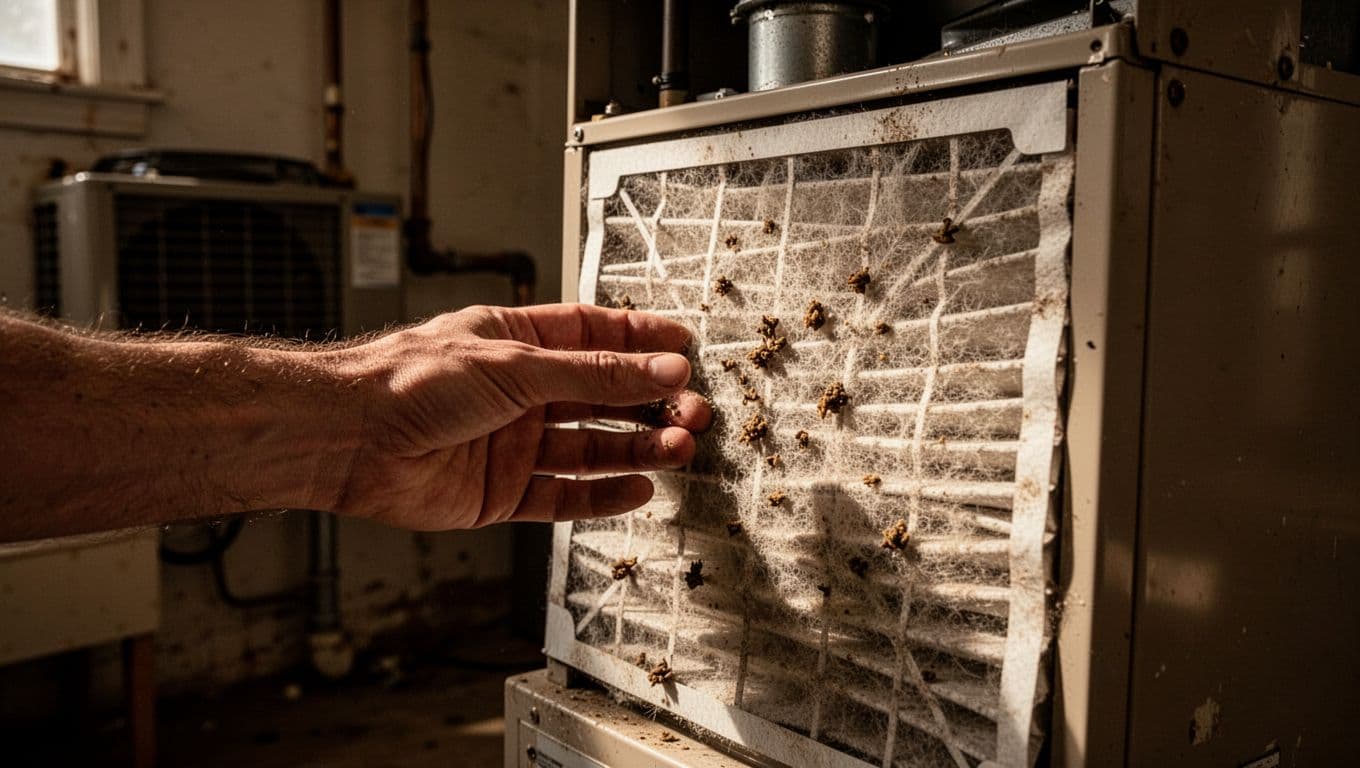
A filter that gets dirty unusually fast can point to a hidden duct problem, not only a dusty home.
That is one reason why regular air duct maintenance matters. The longer pest debris sits inside the system, the harder it is to keep the house feeling clean and the HVAC system working the way it should.
What to do next, and how to help keep pests out
Skip the urge to spray products into vents or poke around inside duct runs. That can spread contamination, damage duct material, or make the problem harder to inspect. A better next step is a professional evaluation, especially if you've noticed more than one sign at the same time.
If live pests are present, pest removal usually comes first. After that, duct cleaning and repair can address the mess they left behind. If you want to set up an inspection or cleaning visit, you can Get a Free Estimate. If budget is part of the decision, this air duct cleaning cost guide Florida can also help you plan.
Prevention is simple, but it works best when you stay consistent:
- Seal small gaps around roof lines, utility openings, and attic access points.
- Replace HVAC filters on schedule, or sooner if they load up fast.
- Keep attics and crawlspaces clean, dry, and free of loose paper or food sources.
- Schedule routine HVAC service so damaged duct sections don't go unnoticed.
- Keep other vent systems maintained too, especially if lint or blockages are building up. This guide on how often to clean dryer vents is a helpful place to start.
Small signs usually show up before a pest problem gets out of hand. Droppings near vents, odd smells, weak airflow, webbing, and night noises all tell part of the story.
When a few of those clues appear together, it's smart to take them seriously. A clean, sealed duct system supports better air quality , steadier airflow, and a home that feels cleaner every day.