

Why One Room Feels Humid Even With the AC On

Adkins Duct Cleaning • May 23, 2026

When one room feels humid, the AC may be running but not doing enough there. The air can feel sticky, heavy, or slightly warm while the rest of the house feels fine. That usually points to a local airflow, moisture, or duct problem, not a total system failure.

A single damp room is frustrating because the cause is often hidden in plain sight. A closed vent, a weak return, or a leaky window can throw off comfort fast. The good news is that you can narrow it down with a few simple checks before calling for help.

Start with the easy airflow problems in the room

Rooms that stay muggy usually have one thing in common, air is not moving the way it should. If supply vents are blocked by furniture, curtains, or rugs, the room never gets enough dry air from the AC. A closed door can make it worse if the room has poor return airflow.

Dirty filters can also play a part. When the filter is clogged, the whole system works harder, and some rooms feel the drop first. Bedrooms, bonus rooms, and upstairs spaces often show the problem early because they sit farther from the air handler.

Humidity can also come from inside the room itself. A bathroom nearby, an aquarium, a humidifier, a laundry area, or a dryer vent that leaks warm air can all raise moisture levels. Even a small drip from a window frame can keep one space feeling clammy.

If one room feels damp while the rest of the house feels normal, start with airflow before blaming the thermostat.

How the AC can make one room stay muggy

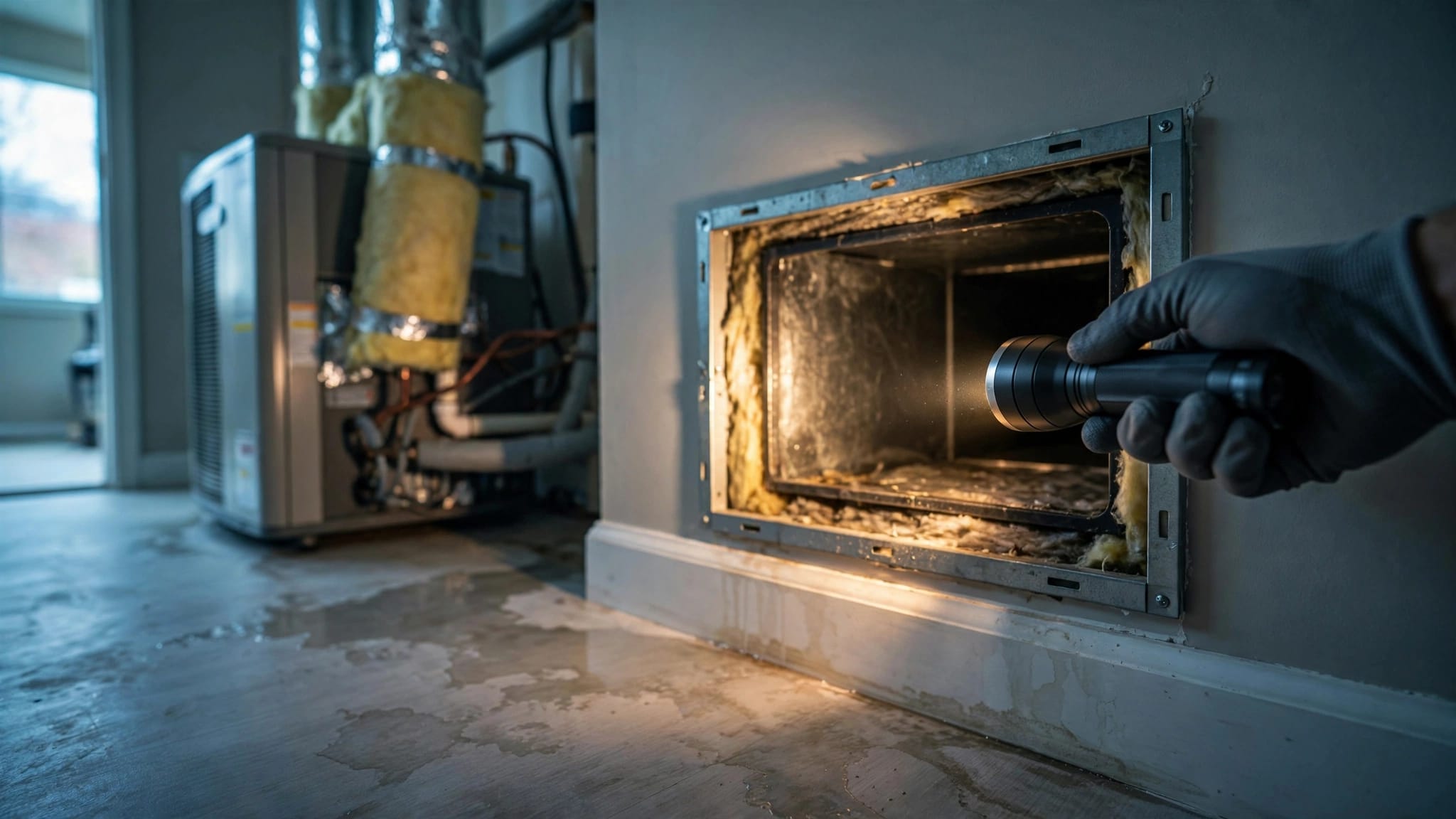
The AC may be cooling the house, but that does not mean every room gets equal treatment. Long duct runs, loose duct joints in the attic, or a weak return can leave one space starved for dry air. In Florida homes, that problem shows up fast because humid air sneaks into any weak spot.

This quick comparison helps sort the clues:

What you notice What it often points to
Only one room feels sticky Local airflow or duct issue
The whole house feels damp System sizing or humidity control problem
Condensation on windows or vents Warm air leak or poor insulation
Musty smell near a closet or air handler Coil, drain, or moisture issue

If the room improves when the door is open, the return path may be too weak. If the problem gets worse on hot afternoons, warm attic air may be leaking into the duct run. If the issue seems tied to the indoor unit, comparing air handler and duct cleaning can help you sort whether the coil, blower area, or ducts need attention.

Simple checks that can lower humidity fast

Before you assume the AC is failing, work through a few practical steps. They take little time and often point you toward the real cause.

  1. Open the supply vent fully and clear the area around it.
    A vent buried behind a dresser or drape can't send air where it needs to go.
  2. Replace the filter if it looks dirty.
    If it clogs again quickly, that can point to dust in the ducts or a dirty return path.
  3. Check the return grille.
    Make sure it isn't blocked, and keep the room door open for a while to see if airflow improves.
  4. Inspect windows, doors, and attic access panels.
    Warm outdoor air can creep in through worn seals, loose trim, or thin insulation.
  5. Cut off local moisture sources.
    Run bath fans, use the dryer properly vented outdoors, and keep lids on hot cooking pots near the room if possible.

If the room feels better after these changes, you've likely found a local issue. If it changes only a little, the problem may be deeper in the ductwork or the air handler.

Warning signs that point to HVAC service

Some clues mean it's time to call a pro instead of guessing. Weak airflow from one register, repeated condensation , and a moldy smell are strong signs that something inside the system needs attention. If the humidity problem shows up in more than one room, the issue may be bigger than a single vent.

Persistent uneven cooling matters too. A room that stays muggy day after day can have a leaking duct, poor insulation, or a drain problem at the indoor unit. In homes with older ductwork, dust buildup and loose joints can make the AC work harder without solving the moisture issue.

A professional can check the coil, drain pan, blower area, duct sealing, and return airflow. That matters because a room that keeps feeling sticky is often reacting to a hidden problem, not a surface one. If you want a local inspection, Get a Free Estimate and have the system checked before the moisture spreads.

Conclusion

When one room feels humid with the AC on, the answer is usually closer than you think. Start with vents, filters, returns, and simple moisture sources in the room.

If those checks don't fix it, look at the ducts, the indoor unit, and any place warm air can sneak in. A dry room should feel like the rest of the house, not like a pocket of sticky air that never clears.

By Adkins Duct Cleaning May 22, 2026
Duct insulation rarely fails all at once. More often, it starts with a loose edge, a dusty patch, or a room that never seems to stay comfortable. When duct insulation breaks down, your HVAC system works harder, and your home can start feeling stuffy, damp, or uneven. In Florid...
By Adkins Duct Cleaning May 20, 2026
Dust that keeps coming back fast usually has a source. When leaky return ducts pull air from the attic, they can carry insulation fibers, dirt, and other debris straight into your living space. That hidden airflow problem does more than make shelves dusty. It can hurt indoor a...
By Adkins Duct Cleaning May 19, 2026
In Florida, your AC works hard for months at a time, so airflow matters more than most homeowners realize. When one room feels sticky and another feels icy, the problem may be hiding in the vents. The difference between a supply vent vs return vent is simple, but it affects co...