
Can a Dirty Evaporator Coil Mimic Duct Problems?

Adkins Duct Cleaning • June 20, 2026

When your AC starts losing strength, the ducts are not the only thing worth suspecting. A dirty evaporator coil can cause weak airflow, uneven temperatures, longer run times, poor cooling, and higher energy bills, all of which can look like a duct problem.

That mix-up matters because the wrong fix can waste time and money. In Florida homes, heat and humidity can make the indoor unit work harder, so coil issues show up fast.

The simplest way to sort it out is to compare the symptom pattern, then look at where the restriction really starts.

How a dirty evaporator coil changes airflow

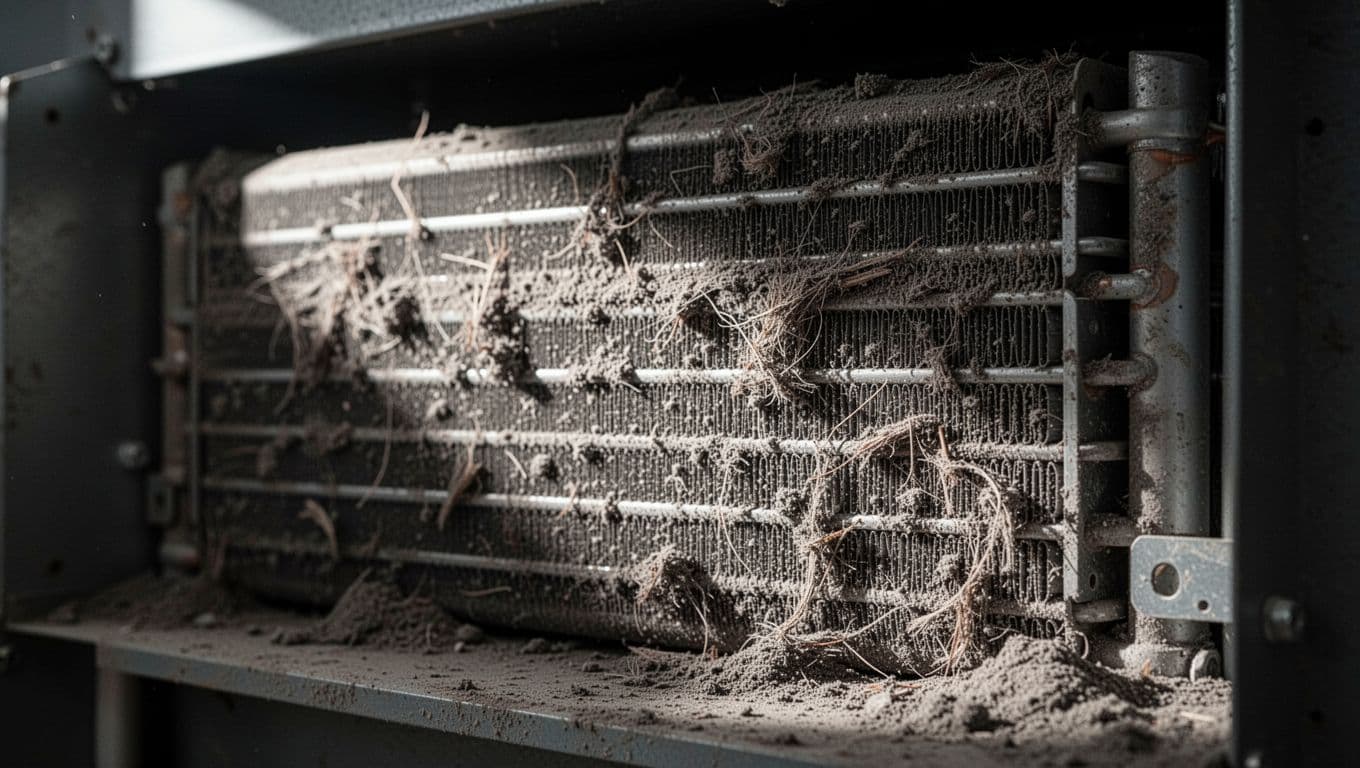
The evaporator coil sits inside the indoor unit. It pulls heat out of the air before that air moves through your home. When dust, lint, and sticky grime coat the fins, air has a harder time crossing the coil.

That slowdown affects the whole system. The blower pushes air, but the coil blocks part of the path, so rooms may cool unevenly and the system may run longer to catch up.

A dirty coil can also lead to ice formation . If airflow drops far enough, the coil gets too cold and moisture in the air freezes on it. Once ice builds up, cooling gets worse and airflow falls even more.

That chain of events feels a lot like duct trouble. From the thermostat, it can look like the home is starved for air, even when the ducts are fine. The air may be moving, but it is not moving well enough to cool the house the way it should.

In humid weather, the problem can show up even faster. The system has to remove heat and moisture at the same time. When the coil is dirty, both jobs get harder.

Dirty coil vs duct problem: a simple symptom check

Weak airflow and uneven cooling do not point to one part by themselves. The pattern gives you the best clue.

When airflow feels weak in every room, the indoor unit deserves a close look before the ducts get blamed.

Symptom Dirty evaporator coil more likely Duct problem more likely
Weak airflow in every room Coil is coated, iced over, or tied to a weak blower Main trunk is blocked, crushed, or leaking
One or two rooms feel off Possible, but less common Branch duct, vent, or damper issue is more likely
Long run times System cannot move heat well across the coil Air loss or poor duct layout slows delivery
Higher energy bills System works harder to cool air through the coil Leaky or poorly insulated ducts waste cooled air
Dust at vents Less direct, unless the return side is dirty too Strong sign of duct contamination or return leaks
Ice on the indoor unit Strong sign of airflow or refrigerant trouble Rare, unless a duct problem starves the coil of air

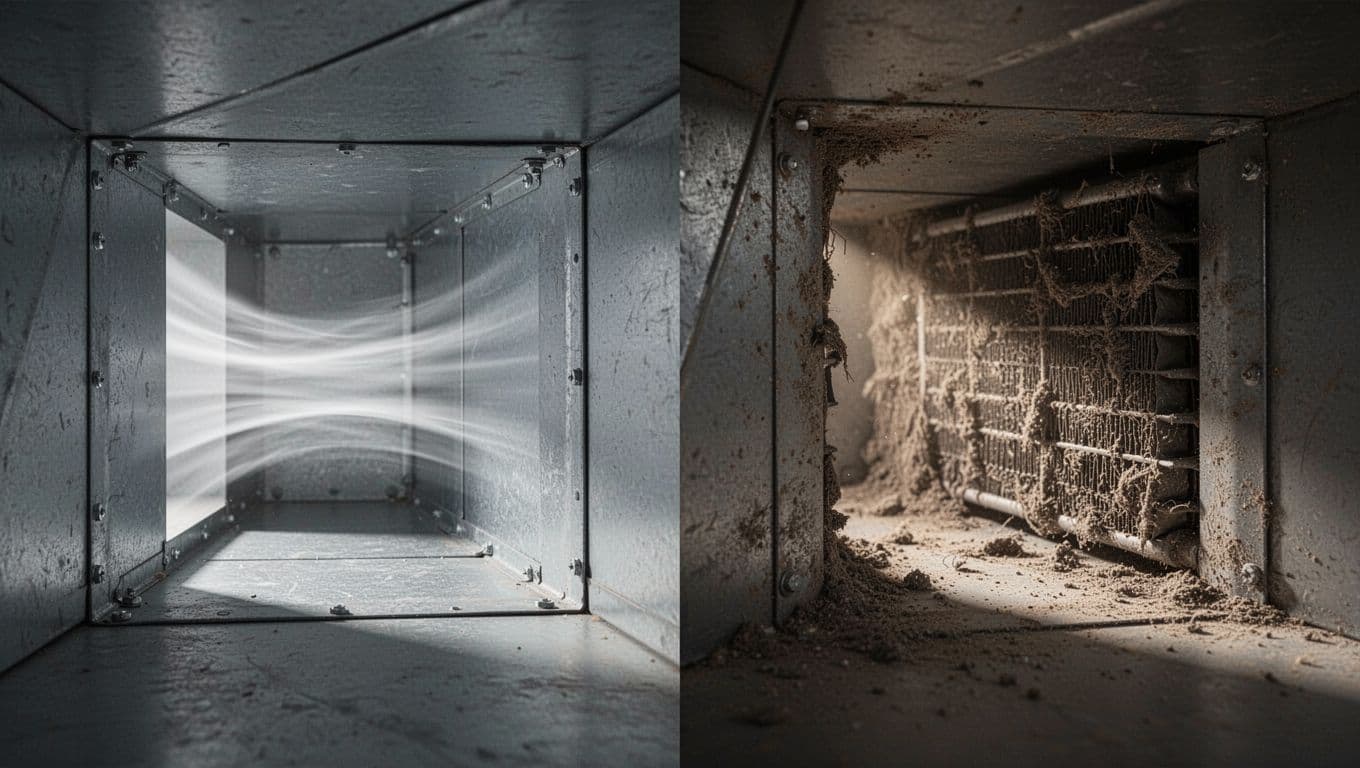
Use that table as a guide, not a verdict. A dirty evaporator coil usually affects the whole system, while duct trouble often shows up in one part of the house. If the front bedrooms are hot but the back rooms feel fine, ducts rise on the list. If every register feels weak, the coil and blower need attention.

Dust at the vents is also a useful clue. It does not prove the ducts are the only problem, but it does point you toward the duct runs and return side more often than the coil itself.

Other HVAC problems can blur the picture

Several other HVAC issues can copy the same symptoms. That is why a home can feel undercooled even after the wrong part gets cleaned.

  • Clogged filter : A filter packed with dust cuts airflow before it reaches the coil. It can make the coil dirty faster, and it can also trigger ice.
  • Blower issues : If the blower motor or wheel is weak, air moves slowly across the coil and through the ducts. The whole home can feel underfed.
  • Refrigerant problems : Low refrigerant can make the coil run too cold and freeze, even when the ducts are in decent shape.

A frozen coil can leave more clues behind than many homeowners expect. The filter may come out damp after thawing, and the system may seem better for a short time before the same problem returns. If that sounds familiar, what a wet AC filter usually means can help connect the dots.

A clogged filter is one of the easiest issues to miss because it looks so ordinary. Yet it can start a chain reaction that ends with weak cooling, high bills, and a coil that ices over. A blower problem can do something similar, since the air never gets a strong push through the system.

Refrigerant trouble is different, but the symptom list can look the same from inside the house. The air feels warm, the run time gets longer, and the indoor unit may freeze. That is why symptom checks matter more than guesses.

When to clean ducts, the coil, or both

The right fix depends on where the buildup starts. If the indoor unit has heavy dust on the coil, dirty blower parts, or a drain pan coated with grime, the air handler needs attention. If the vents and branch runs hold visible debris, the ducts may be part of the problem too.

A good starting point is a service that separates the indoor unit from the ductwork. The air handler cleaning vs duct cleaning guide can help you understand which side of the system matches the symptoms you see.

If the issue keeps coming back, pay attention to timing. Does the cooling fade soon after the filter is changed, or only in certain rooms, or right after the system starts? Those clues matter more than one hot afternoon. A dirty coil often causes whole-house weakness, while duct problems usually create room-to-room imbalance.

When the coil is the cause, vent cleaning alone will not restore airflow. When the ducts are the cause, coil cleaning alone will not fix hot and cold spots. Sometimes both sides need attention, especially in homes with heavy dust, long run times, or humidity that stays high for much of the year.

If you want a closer look at the cause of the problem, Get a Free Estimate before small airflow issues turn into bigger repairs.

Conclusion

A dirty evaporator coil can absolutely mimic duct problems. It can create weak airflow, uneven temperatures, longer run times, poor cooling, higher energy bills, and ice formation that points people in the wrong direction.

The key is to look at the pattern. Whole-house airflow trouble often starts at the indoor unit, while room-specific problems more often point to the ducts.

When the symptoms overlap, a proper diagnosis saves guesswork and gets the right part of the system cleaned first.

By Adkins Duct Cleaning June 23, 2026
A filter that faces the wrong way can slow an HVAC system fast. The thermostat may keep calling for air, but rooms feel flat, stuffy, or slow to recover. A backward air filter often hides in plain sight because the unit still runs. The fix starts with the arrow on the frame. T...
By Adkins Duct Cleaning June 22, 2026
A dark spot on a vent cover often starts with moisture, not neglect. In Florida, that moisture shows up fast because cool indoor air meets hot, humid outdoor air all the time. That mix makes vent cover mildew a common sight in homes across the state. Dust gives it something to...
By Adkins Duct Cleaning June 21, 2026
A bedroom that feels fine with the door open can turn muggy once you close it. In Florida, that often points to air pressure, not just a weak AC. A jump duct in Florida homes can help, but only when the room and the system are a good match. Closed doors, tight weatherstripping...