Can Air Vents Spread Cooking Odors Through the House?
Yes, air vents can spread cooking odors through the house, especially when the kitchen airflow is weak or the HVAC system is pulling that air into other rooms. A pan of onions, fish, or bacon can leave a smell trail that moves well past the kitchen.
That usually happens because the smell never stays in one place. It gets pulled into return-air pathways, sticks to greasy dust inside the system, or rides along when the hood and filters are doing less than they should.
The fix is usually practical. Start with airflow, then check filters, leaks, and the way your kitchen venting is set up.
How cooking odors travel through vents
Cooking smells are made of tiny particles and vapor. Some of those particles hang in the air, and some mix with grease. Once they're airborne, they move easily.
Return vents are the biggest reason odors spread. They pull indoor air back to the HVAC system, so if the kitchen air is heavy with smell, the system can carry it to bedrooms, hallways, and living rooms. Supply vents can also push odor around after the air has already mixed inside the system.
Grease makes the problem worse. It sticks to filters, blower parts, and dust inside ducts. Over time, those surfaces hold smells like a sponge holds water.
A strong kitchen smell does not always mean dirty ducts. Often, the main issue is that the kitchen never gets enough exhaust outside.
If the smell shows up in more than one room, airflow is part of the problem.
Signs the smell is coming through the HVAC system
Some odors stay near the stove. Others travel fast and show up in places that seem unrelated. That difference matters.
Watch for these signs:
- The smell gets stronger when the air conditioner or heat turns on.
- Bedrooms or hallways smell like last night's dinner.
- The odor returns even after you open windows.
- Filters look dirty or greasy sooner than expected.
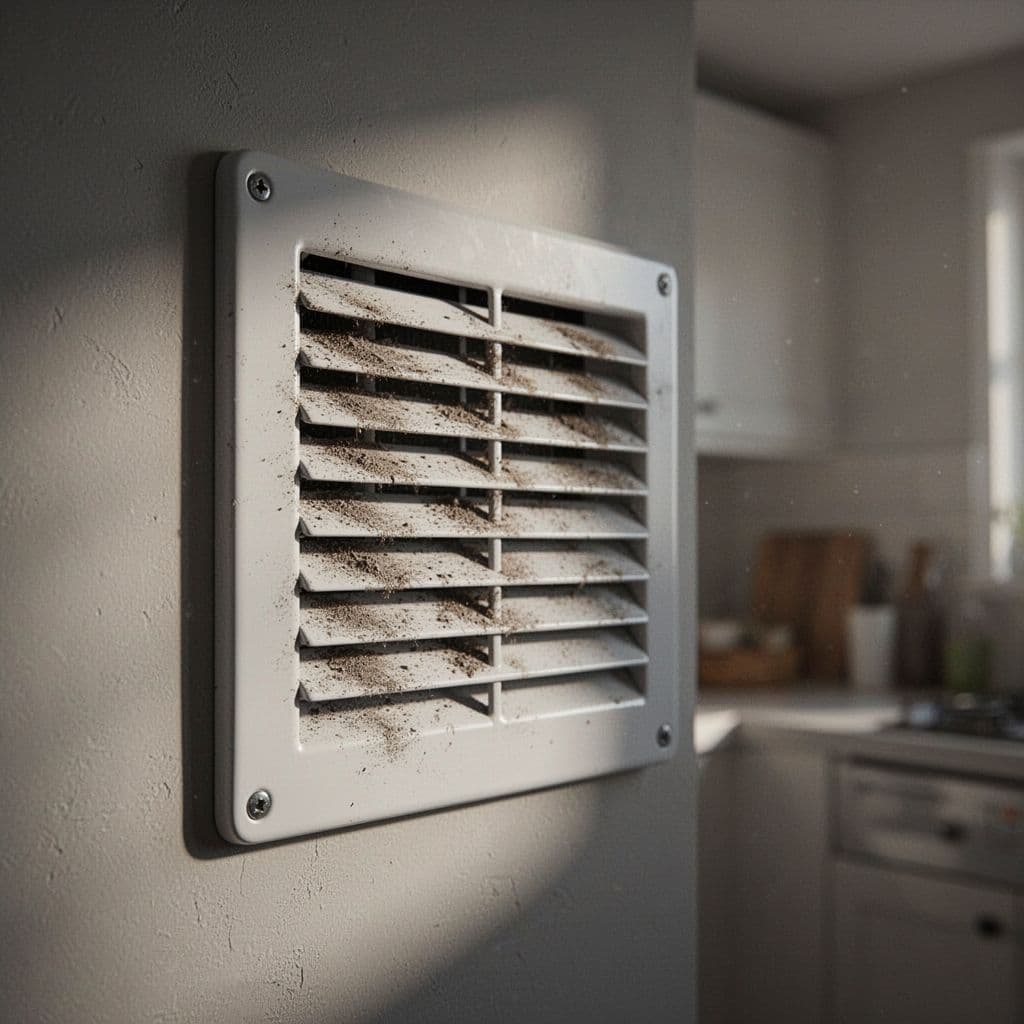
- Return grilles near the kitchen seem dusty or sticky.
If that pattern sounds familiar, the system is probably moving the odor instead of clearing it. In that case, cleaning the kitchen alone won't solve it.
A recirculating range hood can also fool people. It traps some grease, but it doesn't send air outdoors. So the smell may fade slowly, then spread again once the HVAC kicks back on.
Practical fixes that cut down lingering kitchen smells
Start with the easiest changes first. They often make the biggest difference.
- Use the range hood early
Turn it on before you start cooking, not after the kitchen already smells. Let it run for a few minutes after you finish, too. - Check the hood filter
Metal grease filters should be washed on a regular schedule. If your hood uses charcoal filters, replace them when they stop doing their job. - Replace the HVAC filter more often
A clogged filter can hold odor and grease particles. During heavy cooking seasons, check it more often than usual. - Seal duct leaks and gaps
Small leaks let air move where it shouldn't. They can pull kitchen odor into wall spaces or spread it through the return side. - Look at return-air pathways
If a return vent sits too close to the kitchen, it may pull in odor-heavy air before the hood can remove it. That layout can make smells travel faster. - Improve kitchen ventilation
Open a window when weather allows, run a fan if you have one, and keep the hood clean. Better airflow keeps smells from settling in.
A simple example helps here. If you sear fish on the stove, the hood should catch most of the smell right away. If the odor ends up in the family room, the house is moving air in the wrong direction.
When duct cleaning becomes part of the solution
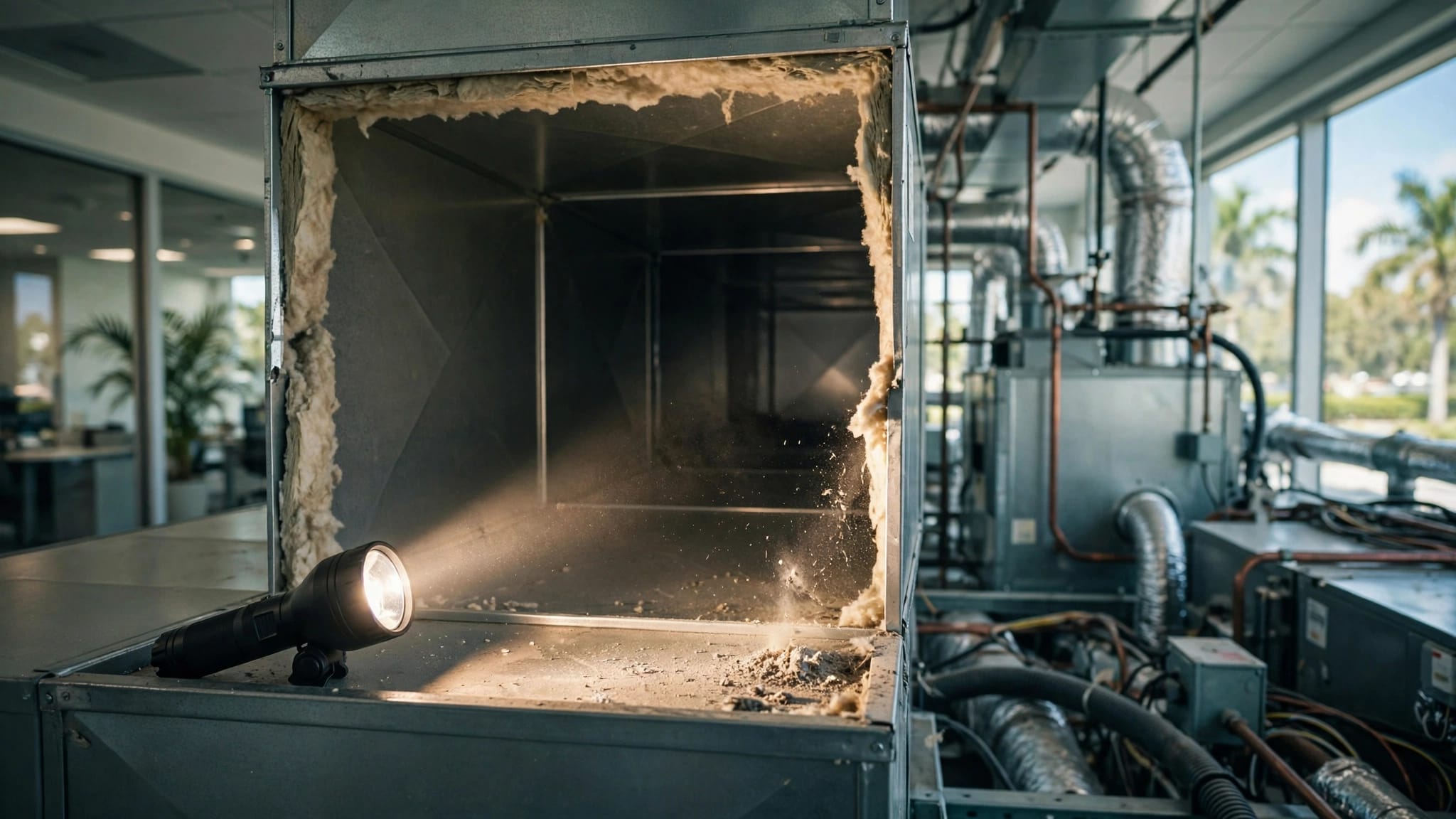
If you've already cleaned the hood, changed the filter, and still smell food in other rooms, the HVAC system may need a closer look. Grease and odor can collect in ducts, the air handler, or both.
That is when a full system check starts to make sense. Sometimes the ducts are the dirty part. Other times the air handler is the main source. This air handler vs duct cleaning guide can help you tell the difference.
Duct cleaning is most helpful when the smell keeps coming back, filters load up fast, or dusty vents have a stale kitchen odor. It's not a cure-all, but it can remove the buildup that holds smells in place.
If the odor is persistent, unexplained, or severe, bring in an HVAC professional. That's especially smart if the smell is smoky, musty, or chemical-like instead of food-related. Those odors can point to a different problem.
For homeowners who want a closer look at the system, Get a Free Estimate and ask about air duct and dryer vent cleaning.
Conclusion
Cooking smells should leave the kitchen, not take over the house. When they spread room to room, the cause is usually airflow, not the recipe.
The best fixes are simple and practical. Use the range hood, keep filters fresh, seal leaks, and check return-air paths. If the smell still lingers, the ducts or air handler may need attention.
A house should carry dinner from the stove to the table, not from the stove to every bedroom.