
Signs Your Duct Boots Are Leaking Above the Ceiling
A ceiling vent should be boring. When the paint around it starts to stain, peel, or collect dust in a dark ring, something above the drywall may be leaking. In many homes, the problem is leaking duct boots , the metal connectors that join the ductwork to the ceiling register.
That small gap can cause bigger trouble than most homeowners expect. It can waste cooled air, pull humid attic air into the ceiling area, and leave behind moisture marks that keep spreading. If you know what to look for, you can catch the issue before it turns into damaged drywall or mold growth.
Ceiling stains and dusty rings around vents are the biggest clue
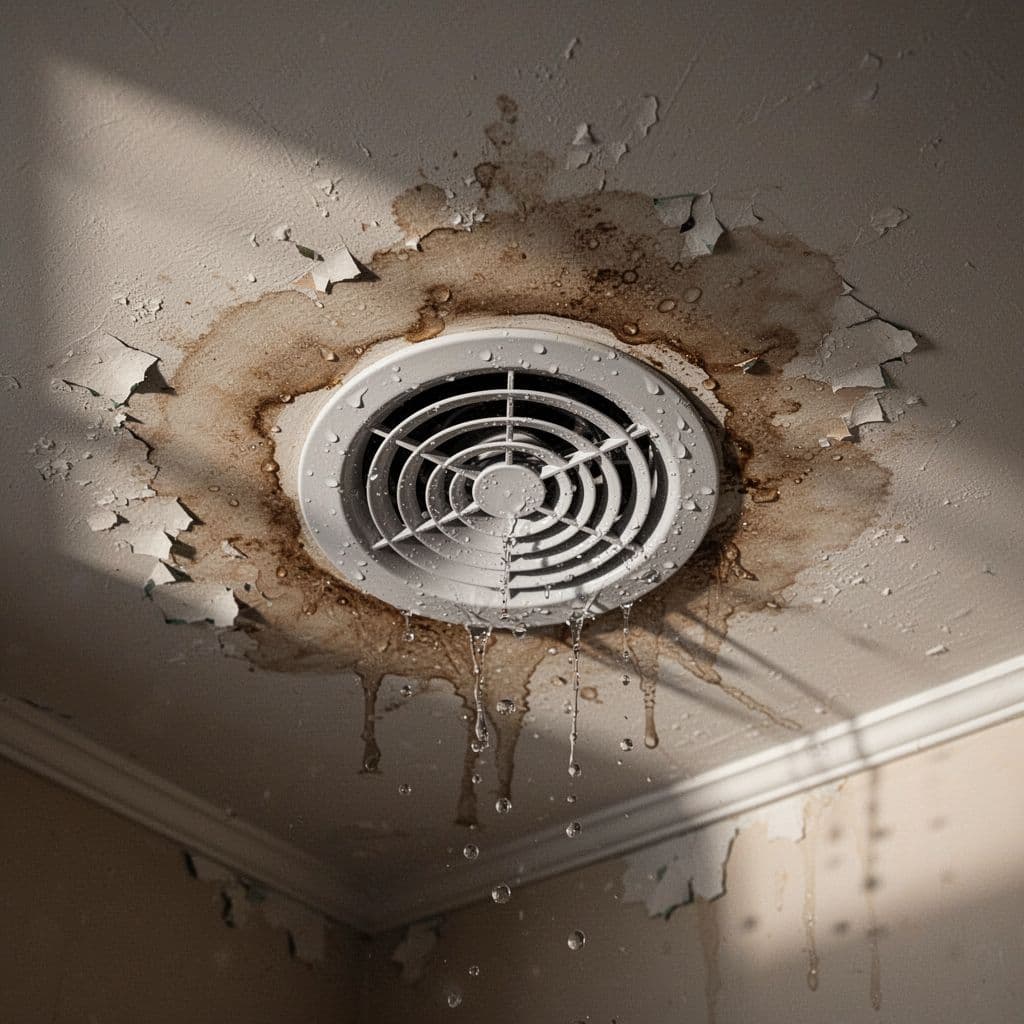
The first sign is often the easiest to miss because it looks like plain dirt. A leaking boot can leave a brown, yellow, or gray stain around the ceiling vent. In many homes, the stain forms in a ring because air escapes at the edges and carries dust with it.
You may also see paint that starts to bubble, peel, or crack near the register. That usually means moisture has been there for a while. Even a small leak can leave enough condensation to change the finish on the ceiling.
Look closely at the area right around the grille and the nearby drywall. If the vent looks clean but the ceiling around it is discolored, the problem may be above the surface. Dust that keeps coming back in the same spot is another clue.
A stain near a vent is often a sign of air movement, not just dirt.
That matters because air movement is what pulls moisture into the problem. In a humid place, that can happen fast.
Why leaking duct boots cause moisture problems above the ceiling
A duct boot is the part that connects the round or rectangular duct to the ceiling opening. It should be sealed tightly to the drywall and ductwork. When that seal fails, air escapes into the ceiling cavity.
Here's where the moisture starts. Cool air from the supply duct can hit warmer, humid attic air. The temperature change can create condensation on the metal boot, nearby insulation, or the back side of the drywall. Over time, that moisture leaves marks and can soften building materials.
In Florida homes, this is even more common. Hot, damp attic air is always looking for a cooler surface. If your AC runs often, the boot and nearby ceiling area can become the perfect spot for water to collect.
That's why a boot leak may show up as a water stain even when there is no plumbing leak at all. The moisture is coming from the air itself.
A leak can also let dust and attic debris enter the ceiling opening. As a result, the area may look dirty, smell stale, or feel damp after the AC runs. If the insulation above the boot gets wet, it can hold that moisture longer and make the problem worse.
Other signs you may notice in the room
Not every leaking boot leaves a stain right away. Sometimes the room gives you other hints first. Weak airflow is a common one. If the vent used to push air well and now feels soft, the leak may be stealing some of that pressure before the air reaches the room.
Uneven temperatures are another clue. One bedroom may stay warm while the hallway feels fine. A leaking boot can throw off how the system delivers air, so the thermostat says one thing and the room feels like another.
Drafts around the vent can also point to a problem. Stand below the register and feel for air leaking from the edges of the trim or grille. If air seems to blow into the ceiling instead of the room, the seal may be loose.
A musty smell is worth paying attention to as well. Moisture trapped around the boot can start to smell stale, especially after the AC cycles on. That smell may show up before you see visible damage.
Higher energy bills can follow. When cooled air leaks into the ceiling cavity, your system has to run longer to do the same job. The change may be small at first, but over a month it adds up.
Common room-level warning signs
- Drafts around the register that feel stronger than normal
- Poor airflow from one room or one vent
- Hot or cold spots that don't match the thermostat
- Musty odors after the AC runs
- Bills that creep up without a clear reason
If you notice several of these at once, the boot deserves a closer look.
A safe inspection checklist you can do from the room below
You do not need to climb into the attic or remove ceiling material to spot many of the warning signs. Start with a simple, safe check from the room below.
- Look at the ceiling around the vent. Check for stains, bubbling paint, soft spots, or peeling edges.
- Feel for stray air. Hold your hand near the vent trim and the surrounding ceiling. Air should come through the grille, not the drywall seam.
- Watch the dust pattern. If dust keeps collecting in the same ring, the vent area may be leaking.
- Listen for whistling or hissing. Those sounds can mean air is escaping where it should be sealed.
- Notice how the room feels. Pay attention to uneven cooling, humidity, or a musty smell after the system runs.
- Check the grille, not the attic. Make sure the register is open, clean, and not blocked by furniture or heavy dust buildup.
Do not cut into the ceiling or try to seal a hidden leak yourself from below. That can turn a manageable repair into drywall damage.
If the ceiling is sagging, soft, or wet, skip the inspection and call a pro.
That kind of damage means the problem has likely been there long enough to spread beyond the boot itself.
What to do when the signs point to a leak
Once the signs line up, the next step is to fix the cause, not just the stain. A technician can check the duct boot seal, the duct connection, and the insulation around the opening. If the boot is loose, damaged, or poorly sealed, it needs proper repair or replacement.
In some homes, the boot leak is part of a bigger issue. Ducts may have weak connections, crushed sections, or loose insulation nearby. Dust buildup inside the system can also make airflow problems worse. That's why a full look at the vent, ductwork, and nearby ceiling area matters.
If you see stains, smell moisture, or feel weak airflow, don't wait for the damage to grow. A small leak can stay hidden for months, then show up all at once as peeling paint or a wet ceiling spot. If you want a professional look at the problem, Get a Free Estimate before the damage spreads.
Conclusion
A vent opening should not leave a ring on the ceiling, smell musty, or create a draft around the trim. When those signs show up together, leaking duct boots are a likely cause.
The leak may be small, but the effects are not. Moisture, dust, uneven airflow, and higher bills can all trace back to that one sealed connection above the ceiling. Catch it early, and the repair is usually much simpler.