Laundromat Dryer Vents: A Commercial Maintenance Checklist
A dryer that needs extra cycles can hold up customers while restricted exhaust traps heat and lint. Commercial dryer vent maintenance helps prevent those problems by keeping routine staff checks separate from full-system cleaning and repairs.
Your lint screen is only the first line of protection ; buildup can collect farther along the exhaust route.
Start with clear staff responsibilities, then track each machine's performance and the condition of its vent.
Key Takeaways for Laundromat Operators
- Keep lint collection, accessible housekeeping, and performance observations on the staff's routine checklist.
- Leave machine movement, duct disassembly, concealed exhaust cleaning, and technical airflow testing to trained professionals.
- Schedule cleaning around equipment use, duct layout, and documented buildup rather than applying a residential interval.
- Remove a dryer from service when burning odors, overheating, smoke, or electrical problems appear.
A clean-looking laundry room doesn't prove the exhaust system is clear. Your checklist needs to cover both visible conditions and changes that suggest a hidden restriction.
Set Safe Boundaries Before Maintenance Starts
What operators can safely handle
Staff can clean operator-accessible lint screens, remove loose surface lint, and observe safely visible exhaust outlets. These tasks should follow the machine's operating instructions, without dismantling equipment or reaching into moving parts.
Before cleaning accessible areas, stop the dryer and let hot surfaces cool. Keep clothing, boxes, and cleaning chemicals away from the machines. Use suitable vacuum attachments only where staff can reach without disturbing connections.
Don't pull a gas dryer forward or reach behind it to disconnect ductwork. Machine movement can damage exhaust connections or disturb gas and electrical supplies. Trained technicians should handle internal access and the required energy isolation.
When routine checks must stop
A burning odor, repeated overheating, or unexplained shutdown requires taking the affected dryer out of service. Mark it clearly so another employee or customer doesn't restart it.
If smoke or fire appears, evacuate and call 911. Don't approach smoking equipment to complete a checklist. If anyone smells gas, leave the area without operating switches or equipment, then call emergency services from a safe location.
For non-emergency defects, record the problem and arrange qualified service before returning the dryer to use.
Build Commercial Dryer Vent Maintenance Into Daily Rounds
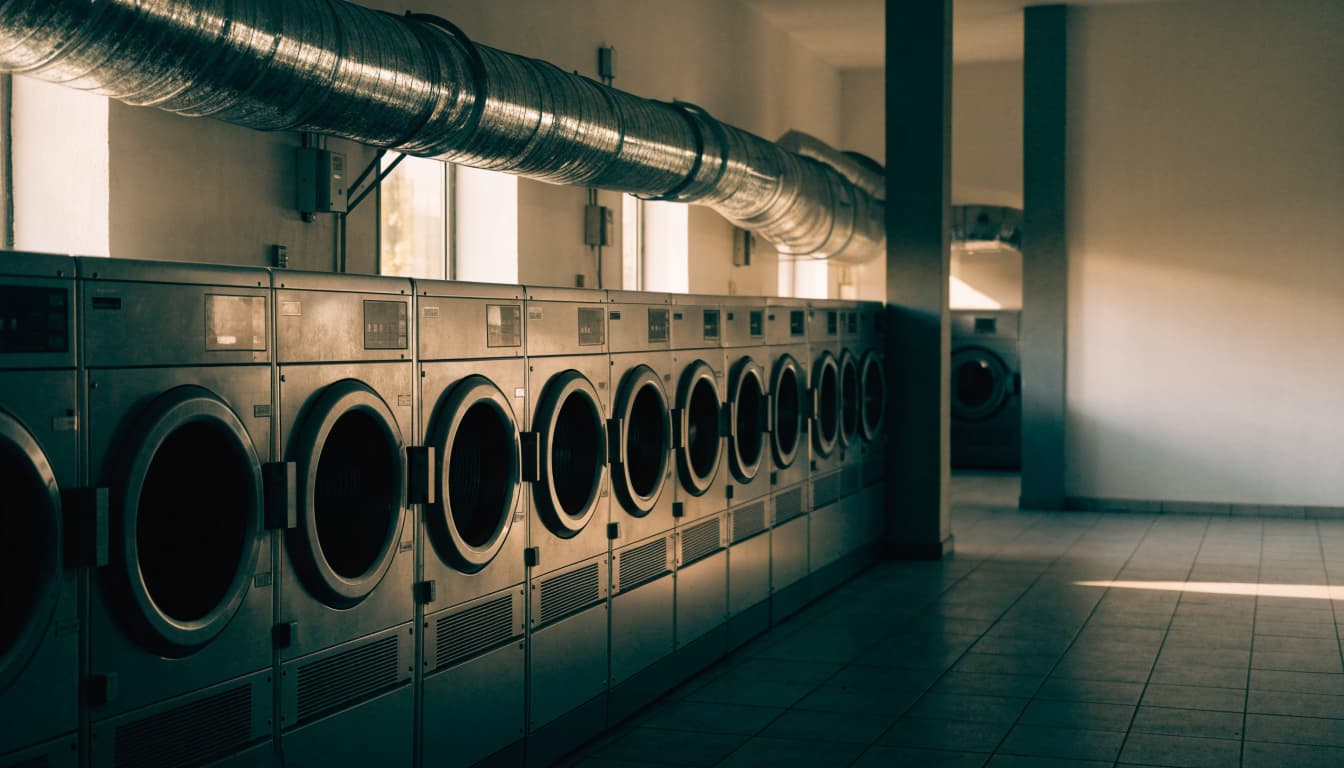
Remove lint from operator-accessible areas
For machines with per-load lint screens, clean the screen before each load. Other commercial lint-collection systems need care according to their prescribed operator schedule. Never run a machine with its required screen missing or damaged.
Include these actions in staff rounds:
- Stop the machine before opening its operator-accessible lint compartment.
- Remove collected lint without pushing debris into the air passage.
- Inspect the screen for tears, poor seating, or persistent residue.
- Clean loose lint around the accessible opening and nearby floor.
- Reinstall the screen correctly and close the compartment before operation.
Dispose of collected lint promptly. Don't leave it piled behind machines or beside heat-producing equipment.
Watch drying performance throughout the shift
Record repeated complaints about damp loads, extra cycles, or unusual cabinet heat. Compare performance with the machine's established behavior under similar load conditions, rather than treating every slow load as a vent blockage.
Overloading and poor water extraction can also increase drying time. However, persistent changes deserve inspection, especially when they occur alongside weak exhaust or excessive room heat.
A clean filter doesn't clear the dryer of suspicion. Lint can pass the collection system and settle in concealed duct sections, particularly along long routes or bends.
Inspect Visible Connections Without Moving Machines
Look for damage and escaped lint
During scheduled rounds, inspect connections that are visible from a safe position. Look for crushed sections, loose joints, tears, corrosion, or lint collecting where the exhaust connection meets the dryer.
Fresh lint around a joint can indicate leakage rather than normal housekeeping dust. Similarly, a flattened connector can restrict airflow even when the rest of the duct is clean.
Photograph accessible defects and identify the affected machine. Don't tape over damaged ductwork or force a connector back into shape. Cleaning removes debris; damaged connections need repair.
Treat shared exhaust as a system
Some laundromats use purpose-designed common exhaust systems. In those installations, individual dryers can affect one another, and a problem may involve the common duct, exhaust fan, controls, or air supply.
Staff shouldn't add connections, bypass fan controls, or change dampers to improve one machine's performance. A qualified commercial technician should assess the complete arrangement.
If several dryers lose performance together, record that pattern. It gives the technician useful information that a single-machine complaint may miss.
Check Airflow and the Exterior Termination
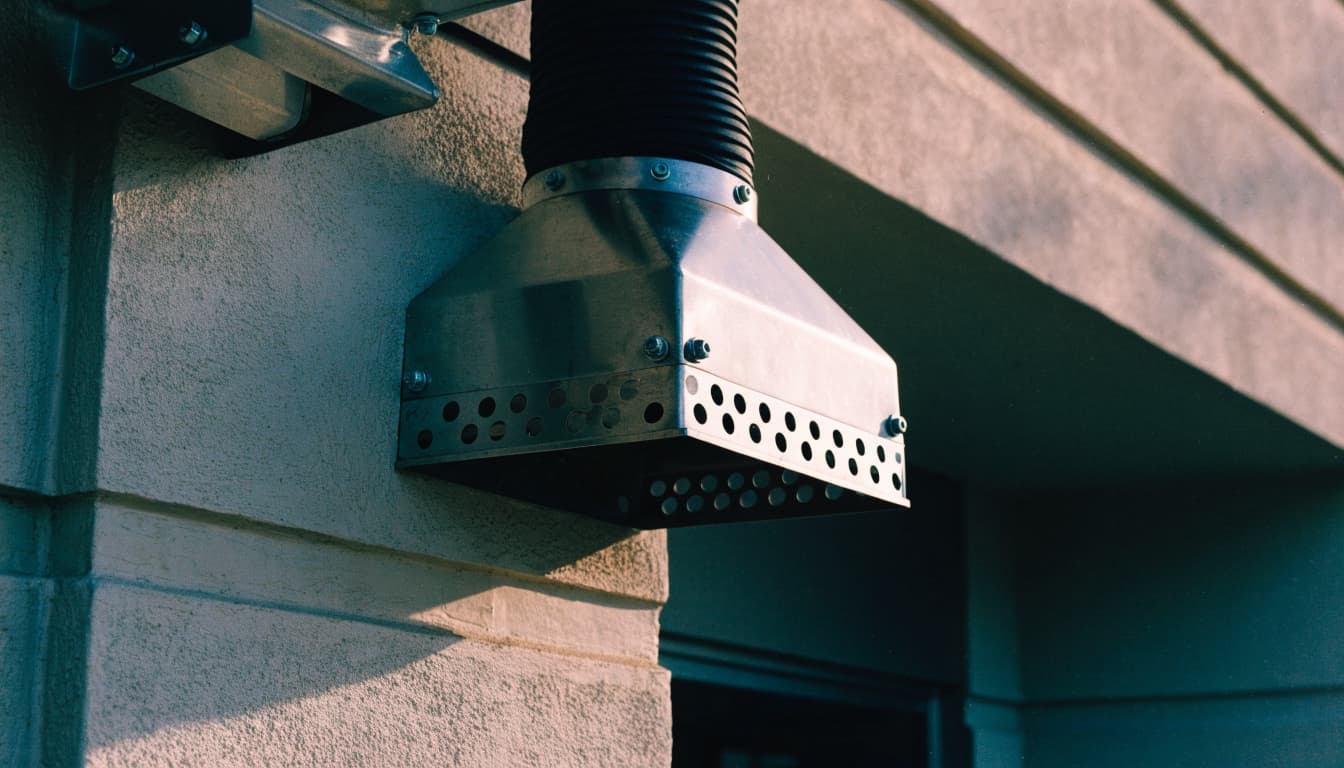
Observe the exterior outlet during normal dryer operation when it is safely visible from the ground. Where the termination has a movable flap or damper, watch for normal opening and closing without reaching into it.
Look for lint accumulation, leaves, plant growth, storm debris, nesting material, and damage around the outlet. Remove only loose surrounding debris that staff can reach safely without dismantling the termination. Leave roof access, high-wall work, and lodged obstructions to professionals.
Also note unusual warmth or dampness in the laundry room. Florida's humidity can make moisture problems less obvious, so compare conditions with the room's normal behavior.
An open exterior flap doesn't prove the entire exhaust route is clear. A partial restriction can remain farther inside the duct.
Operators should record noticeable airflow changes, not assign a pass or fail based on hand feel. Technical airflow assessment requires appropriate instruments and the equipment's operating requirements.
After cleaning or repair, the technician should evaluate airflow with the system correctly connected and operating. Our guide to professional dryer vent inspection covers problems that may remain hidden during surface checks.
Set Cleaning Frequency Around Actual Use
There isn't one cleaning interval that fits every laundromat. A dryer running throughout the day places different demands on its exhaust system than one used occasionally.
Build the cleaning plan around operating hours or load counts, duct length, bends, previous lint accumulation, and service findings. Follow the equipment's prescribed maintenance schedule, then shorten the interval when documented buildup or performance changes warrant it.
Don't apply a household cleaning schedule to commercial equipment. Daily filter care, periodic inspection, and full exhaust cleaning are separate tasks. Completing one doesn't replace the others.
Arrange a professional inspection when taking over a location with an undocumented service history. This establishes the vent condition, identifies access limitations, and provides a starting point for future scheduling.
Reassess the plan after appliance replacement, exhaust repairs, renovations, changes in laundry volume, or storm damage. These changes can alter the route or operating conditions.
Most importantly, don't wait for a scheduled appointment when warning signs appear. Longer cycles, recurring overheating, or declining exhaust performance call for earlier attention, even after a recent cleaning.
Know When a Qualified Technician Is Needed
Symptoms that warrant inspection
Repeated slow drying, unusually hot cabinets, weak exterior exhaust, and recurring safety shutdowns need investigation. Lint escaping at connections or moisture appearing near ductwork also warrants service.
These symptoms don't establish the cause by themselves. The problem may involve accumulated lint, a damaged duct, inadequate air supply, an exhaust fan, or an appliance fault.
Our overview of the signs of a clogged dryer vent explains common warning patterns. For commercial equipment, a trained technician should assess the machine and its exhaust arrangement together.
What professional service should cover
The service scope should include the dryer connection, accessible exhaust route, bends, exterior termination, and any associated exhaust equipment. It should also identify sections that require special access or further investigation.
Cleaning methods must suit the duct construction and layout. The objective is to extract lint and debris, not force it farther into the system.
Afterward, the technician should secure connections and assess operation. Cleaning alone won't fix crushed sections, disconnected joints, or unsuitable routing. Our explanation of cleaning versus vent replacement helps distinguish debris removal from repairs.
Internal dryer service may require an appliance technician in addition to an exhaust-cleaning professional.
Keep Records That Support the Next Service Visit
Assign each dryer a permanent machine ID. Connect that ID to its make, model, exhaust route, operator manual, and maintenance history. Where machines share an exhaust system, identify the common system as well.
A useful log captures observations and the action taken.
| Record | What to include |
|---|---|
| Staff rounds | Date, machine ID, lint condition, visible defects, and performance changes. |
| Service visit | Company, technician, work completed, and sections accessed. |
| System findings | Buildup, duct damage, termination condition, and airflow assessment. |
| Follow-up | Repairs needed, responsible person, completion date, and return-to-service status. |
The most useful entry connects a complaint to its resolution. "Dryer cleaned" provides less guidance than a record showing where lint collected and whether performance improved afterward.
Save invoices, repair records, and technician photographs with the log. Pictures of accessible connections and terminations add context, but they don't document every concealed section.
At Adkins Duct Cleaning, we provide dryer vent cleaning for homes and businesses along Florida's Gulf Coast. If your laundromat has warning signs or needs professional attention, Get a Free Estimate for dryer vent cleaning.
Keep Fire Prevention at the Center of the Checklist
A practical laundromat checklist makes problems visible before another customer starts a load. Routine lint removal and clear staff responsibilities support fire prevention , while professional inspections address the hidden exhaust route.
Keep daily care within safe limits. Use performance records and service findings to guide cleaning, and take affected machines out of service when warning signs appear.