Fire Dampers and Duct Service: An Owner's Checklist
A duct-cleaning invoice doesn't prove your building's fire dampers work. Although both services involve ductwork, fire damper inspection checks a life-safety component that needs its own testing and records.
If you're scheduling duct or dryer vent service, confirm who handles each task before approving the estimate. Cleaning crews, HVAC technicians, and damper specialists may have different responsibilities.
Start with the equipment inventory, then check access, testing procedures, and the paperwork that proves unresolved problems received attention.
Key Takeaways
- Confirm which dampers protect fire-rated construction and which only control airflow.
- Verify inspection intervals against locally adopted requirements, building use, and the authority having jurisdiction.
- Keep damper locations and service openings identifiable and reachable.
- Request component-specific test results, documented deficiencies, and evidence of corrective work.
- Treat duct cleaning, dryer vent cleaning, and fire damper testing as separate scopes unless a qualified provider explicitly covers each.
Separate Fire Protection From Airflow Control
Before reviewing proposals, establish what equipment your building contains. The word "damper" alone doesn't identify its purpose.
Identify fire, smoke, and combination dampers
Fire dampers help protect openings where ducts penetrate certain fire-rated assemblies. Smoke dampers restrict smoke movement, while combination fire/smoke dampers perform both functions.
The ICC's damper guidance identifies UL 555 for fire dampers and UL 555S for smoke dampers. Combination dampers meet both standards.
Ask the provider to record the damper type, location, and available manufacturer or model information. A listing under one standard alone doesn't establish compliance with the other.
Keep comfort controls and cleaning separate
Balancing and zoning dampers regulate everyday airflow. They aren't interchangeable with fire or smoke dampers, even when they have similar-looking blades or actuators.
Understanding duct service for zoned HVAC systems helps distinguish comfort-related checks from life-safety testing.
Likewise, cleaning removes accessible contamination; it doesn't establish that a damper closes correctly. Review what air duct cleaning can remove when deciding whether dust, odors, or weak airflow call for cleaning, repair, or another assessment.
Verify Your Fire Damper Inspection Schedule Locally
Don't accept a universal interval without checking the building's governing requirements. Adopted code editions, amendments, occupancy, and directions from the authority having jurisdiction (AHJ) can affect the answer.
Depending on the issue, the AHJ may be a fire official, building department, or another designated authority. Ask which standards and editions apply.
NFPA's inspection and testing summary describes acceptance testing after installation and a first periodic inspection and test one year later. It then describes four-year intervals, with six-year intervals after the first periodic test for buildings containing hospitals.
That hospital provision doesn't automatically cover every clinic, medical office, or healthcare-related property.
NFPA 80 addresses fire dampers and combination fire/smoke dampers; NFPA 105 addresses smoke dampers. Have your qualified provider confirm the applicable provisions rather than relying solely on a summary.
For an existing building, compare the last completed test date with the applicable schedule. Missing records require investigation, not an assumption that testing occurred.
Confirm Dampers Are Reachable Before Service
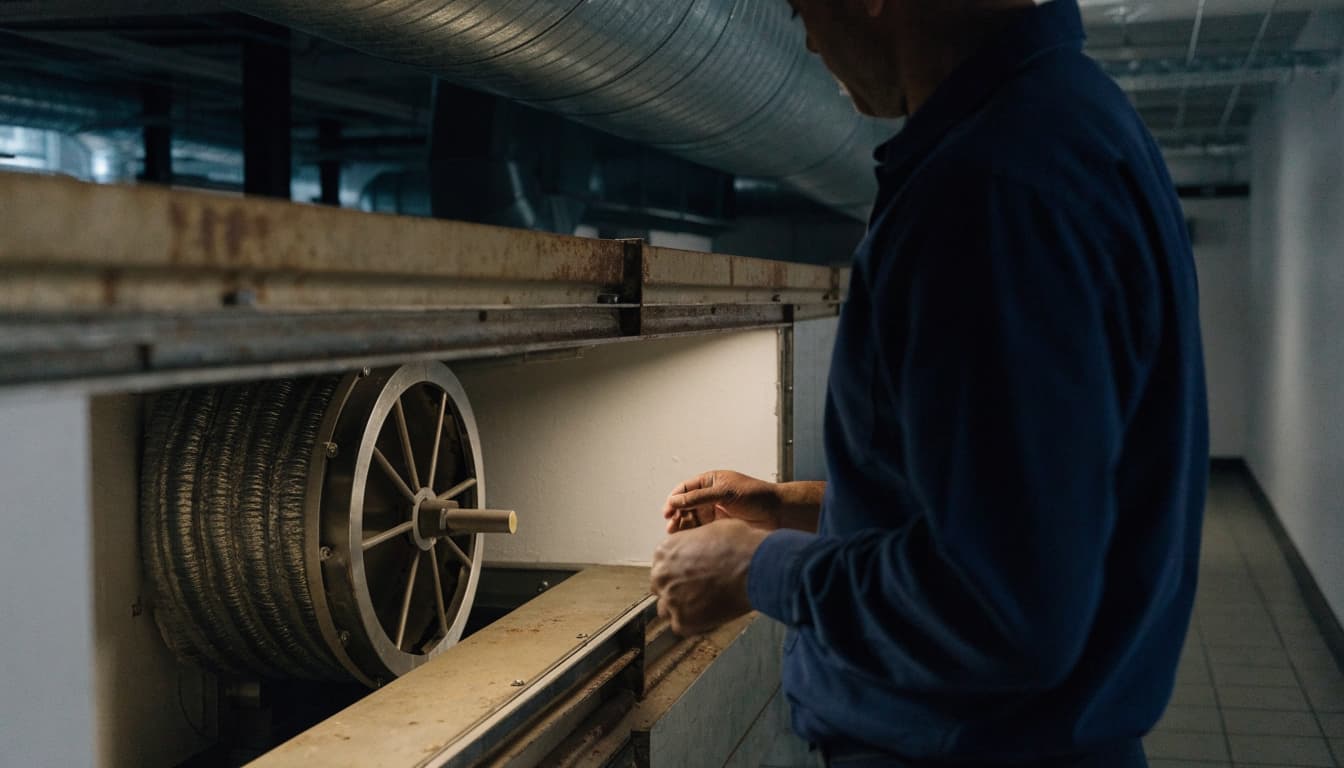
Access on a drawing doesn't guarantee practical access in the building. Walk the planned service route with the provider before scheduling disruptive work.
Check both the building panel and duct opening
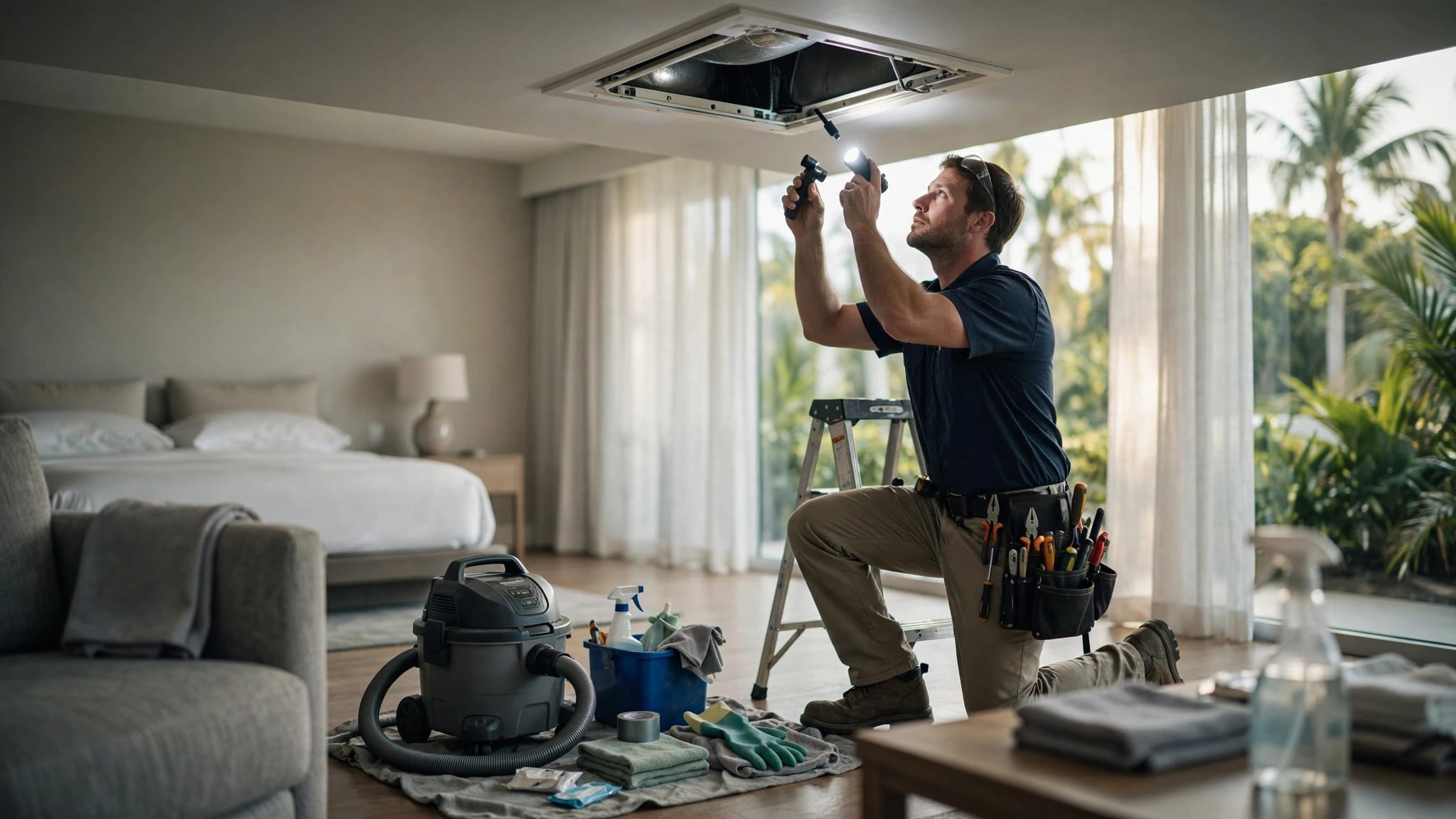
A removable ceiling or wall panel provides access to the surrounding space. A duct access door provides entry to the duct itself. Technicians may need both.
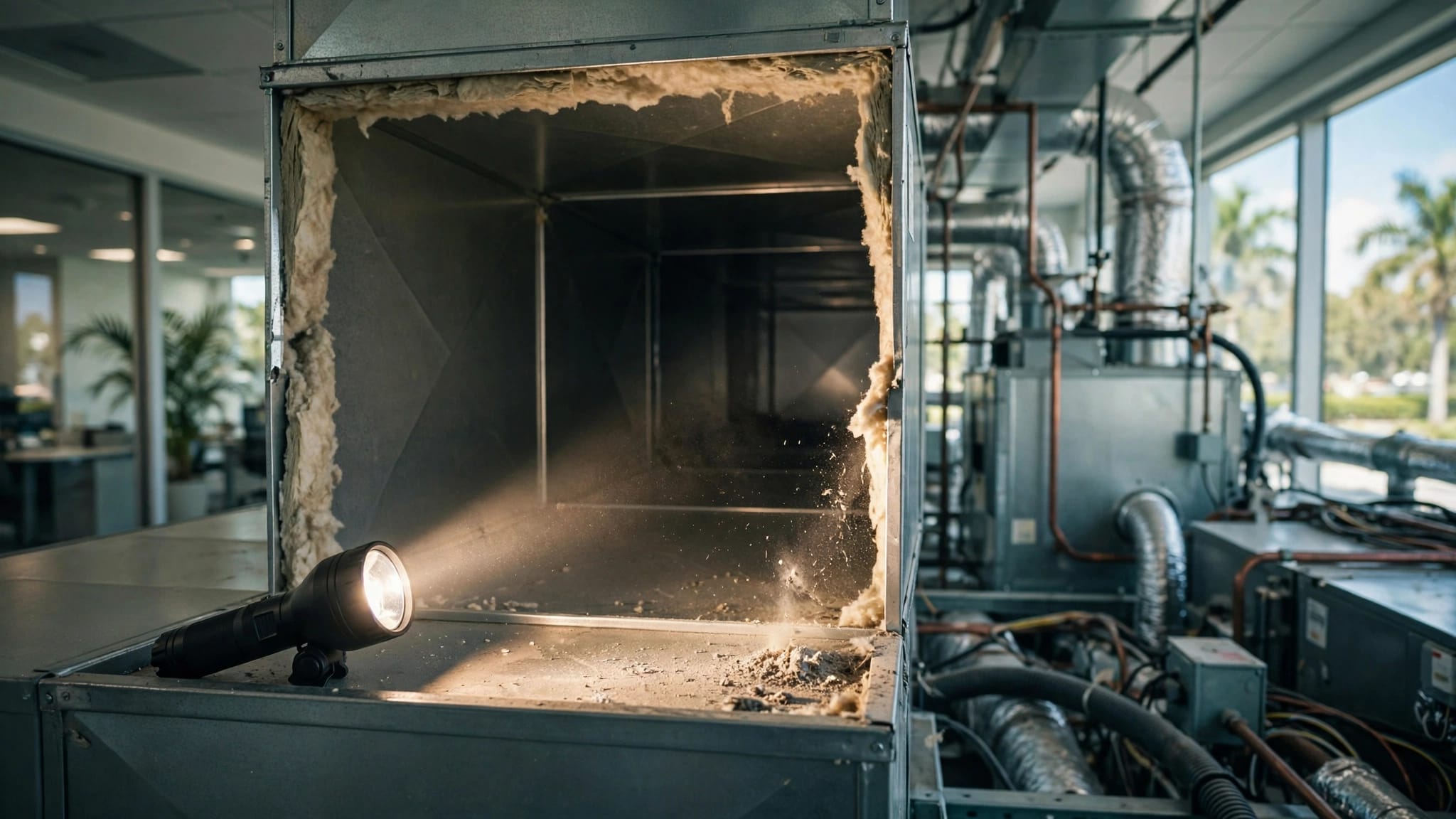
Confirm that openings allow the required inspection, testing, and maintenance for the installed damper. Storage, shelving, hard ceilings, and permanent finishes can obstruct otherwise useful openings.
Ask about safe working height, equipment needs, and tenant access. A panel above a fixed cabinet may be visible but difficult to use.
Protect future access during renovations
Before insulation, ceiling, or remodeling work begins, identify damper locations and photograph existing service openings. Don't let spray foam, glued trim, or built-in furniture bury them.
If new access is necessary, have qualified personnel select the location and restoration method. Cutting near a damper or rated assembly needs more planning than an ordinary cleaning opening.
Afterward, verify that covers close securely and remain removable. Repairs should suit the duct material, insulation, damper installation instructions, and applicable local requirements.
Confirm What Testing and Maintenance Include
A visual check can reveal damage or obstruction, but it doesn't demonstrate operating performance. Ask the provider to explain the procedure for each installed damper type.
Require an appropriate operational test
Testing methods depend on the damper design, manufacturer instructions, and applicable standard. Some units use fusible links; others involve actuators and controls.
For actuated dampers, NFPA's summary describes checking the required starting position, observing movement to the required position, and verifying return to the original operating position.
Ask whether the proposal includes actual functional testing or only a survey. Photos of an open damper aren't evidence that it operated correctly.
Owners shouldn't release links, force blades, disconnect actuators, or bypass safety controls themselves.
Coordinate shutdowns and restoration
Testing may require HVAC shutdowns or coordination with fire alarm personnel. Confirm those arrangements beforehand, especially where tenants or critical operations depend on ventilation.
Have the provider explain how normal operation will be restored and verified afterward. Also establish who handles any system impairment procedures required locally.
Maintenance should follow the installed equipment's instructions. Don't authorize improvised lubrication, replacement parts, or coatings without checking compatibility.
The report should distinguish inspection, testing, cleaning, repair, and any work deferred to another specialist.
Review the Inspection Records Before Closing the Job
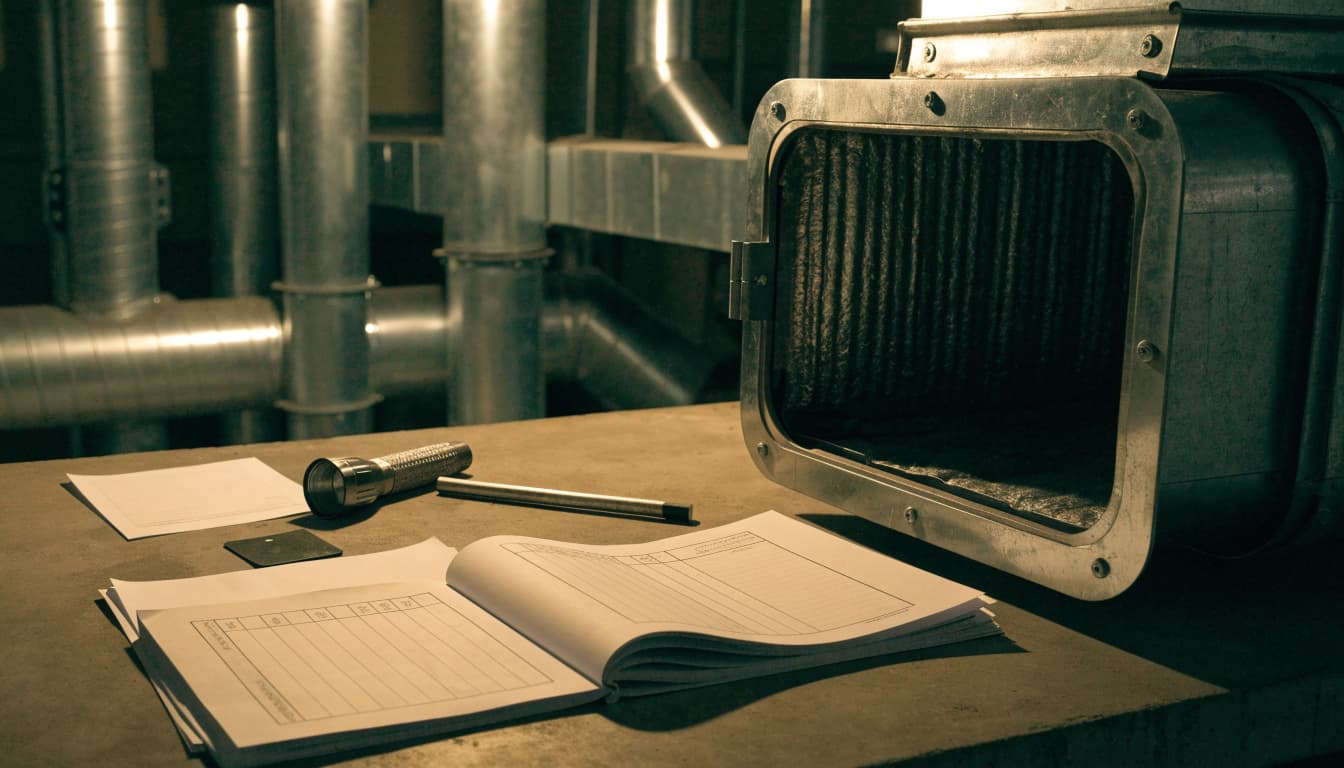
A useful report lets another qualified technician locate the same component and understand its service history. A single statement that "all dampers were checked" leaves too much unanswered.
Use this checklist when reviewing the paperwork:
- Match each damper identifier to a location, drawing reference, or clear description.
- Confirm the inspection date and the inspector's name.
- Check that the report identifies completed tests and results for each component.
- Look for access limitations, untested units, and reasons testing couldn't proceed.
- Require a description of each deficiency and its corrective action.
- Record when repairs occurred and how follow-up testing confirmed the outcome.
NFPA's summary calls for location, dates, inspector identity, deficiencies, and details of their correction. It also describes keeping records for at least three test cycles. Verify retention requirements against the applicable edition and local rules.
Store reports with the damper inventory, photographs, repair invoices, and next scheduled inspection date. Keep older records accessible when management companies or service providers change.
Track Deficiencies Until Correction Is Verified
An inspection report should start corrective work when it identifies a problem. It shouldn't disappear into a maintenance folder.
Assign each deficiency a responsible party and a follow-up date. Ask the qualified provider and AHJ, when appropriate, about required timing and any interim precautions.
An inaccessible damper is an unresolved inspection limitation. A contractor's visit alone doesn't establish that the component passed.
Possible findings include obstructed movement, damaged components, failed actuators, or missing access. Repair decisions must match the installed assembly and its instructions.
After corrective work, obtain documentation showing what changed and what follow-up testing occurred. An invoice describing a replacement part doesn't establish successful operation by itself.
For recurring problems, investigate the cause. Construction debris, repeated moisture exposure, or blocked service openings may require coordination beyond the damper contractor.
Update the inventory whenever repairs, replacements, or renovations change component details or access routes.
Coordinate Qualified Providers and Duct Cleaning
The estimate should identify who performs each service and what their qualifications cover. Experience cleaning ducts doesn't automatically establish competence in fire damper testing.
Verify qualifications and responsibility
Ask about relevant licensing where required, technician training, insurance, and experience with the installed damper types. Confirm who handles controls, electrical work, and rated-assembly repairs.
Make subcontracted responsibilities clear. The owner should know who issues the test report, corrects deficiencies, and verifies restoration.
Also compare what full-system duct service includes with the cleaning proposal. Register cleaning, whole-system cleaning, and damper inspection cover different tasks.
Protect duct materials and keep exhaust separate
Before cleaning, identify sheet metal, fiberglass duct board, lined ducts, and flexible sections. Tools should suit the material; aggressive brushing can damage fragile liners or deteriorated facing.
Cleaning won't restore failed duct board. Moisture damage or damaged insulation may need repair or replacement.
Tell the crew where dampers and controls are located. Agree on protected components and access limits.
Dryer exhaust is a separate system. Its cleaning records should identify the serviced route, access limitations, damage, and airflow concerns without implying that HVAC fire dampers were tested.
Frequently Asked Questions
Does duct cleaning include fire damper inspection?
Only when the written scope explicitly includes that service and qualified personnel perform the appropriate procedures. Ordinary duct cleaning focuses on contamination removal.
Ask for a separate description of damper testing and a component-specific report. Also confirm whether controls coordination, repairs, and follow-up testing are included or priced separately.
What if the building has no damper records?
Gather available drawings, previous inspection reports, renovation documents, and equipment information. Then ask a qualified provider to establish or reconcile the inventory and identify missing tests.
Check the applicable schedule with the AHJ. Missing paperwork doesn't prove that dampers are absent, functional, or overdue by a particular amount.
Avoid moving controls or opening concealed assemblies yourself to fill those gaps.
Confirm the Work, Not Just the Visit
A completed service appointment is only useful when its scope and results are clear. Keep damper testing and duct cleaning distinct, even when you coordinate them together.
Verify local requirements, preserve access, and retain records that identify each component. Then track deficiencies through documented correction and follow-up testing.
That gives you a reliable maintenance history instead of an invoice that leaves safety questions unanswered.