Hotel Air Duct Cleaning Between Florida Guest Stays
A vacant guest room gives your maintenance team access, but it doesn't automatically provide enough time for duct cleaning. Effective hotel air duct cleaning starts with system-level planning , especially when several rooms share an air handler.
In Florida, humidity adds another concern: cleaning dust won't correct wet insulation, drainage trouble, or condensation. The practical goal is to inspect first, reserve the right work window, and return rooms only after cleanup and operating checks.
Start by separating ordinary turnover maintenance from work that needs a professional crew.
Key Takeaways for Hotel Managers
- Base duct cleaning on documented conditions, rather than treating it as a task between every reservation.
- Reserve rooms according to the HVAC areas affected, including shared equipment and connected spaces.
- Coordinate technicians, housekeeping, and the front desk before confirming availability for incoming guests.
- Address moisture sources and damaged ductwork separately, then verify cleanup and system operation before releasing rooms.
When Hotel Air Duct Cleaning Is Appropriate
A dusty grille, a warm room, and a musty odor can have different causes. Maintenance should document the location and pattern before selecting a service.
Keep routine HVAC maintenance on its own schedule
Routine work includes filter replacement, accessible grille cleaning, condensate-drain checks, and equipment servicing. Follow the equipment manufacturer's instructions and your property's maintenance plan.
If the system is clean, dry, and operating normally, those tasks may be enough. Dust on a register doesn't establish that the entire duct network needs cleaning.
Similarly, poor cooling may involve airflow balance, controls, or equipment performance. Ask an HVAC technician to diagnose recurring comfort complaints instead of assuming duct cleaning will solve them. Track repeat complaints by room and serving unit so the pattern is clear.
Use inspection findings to justify professional cleaning
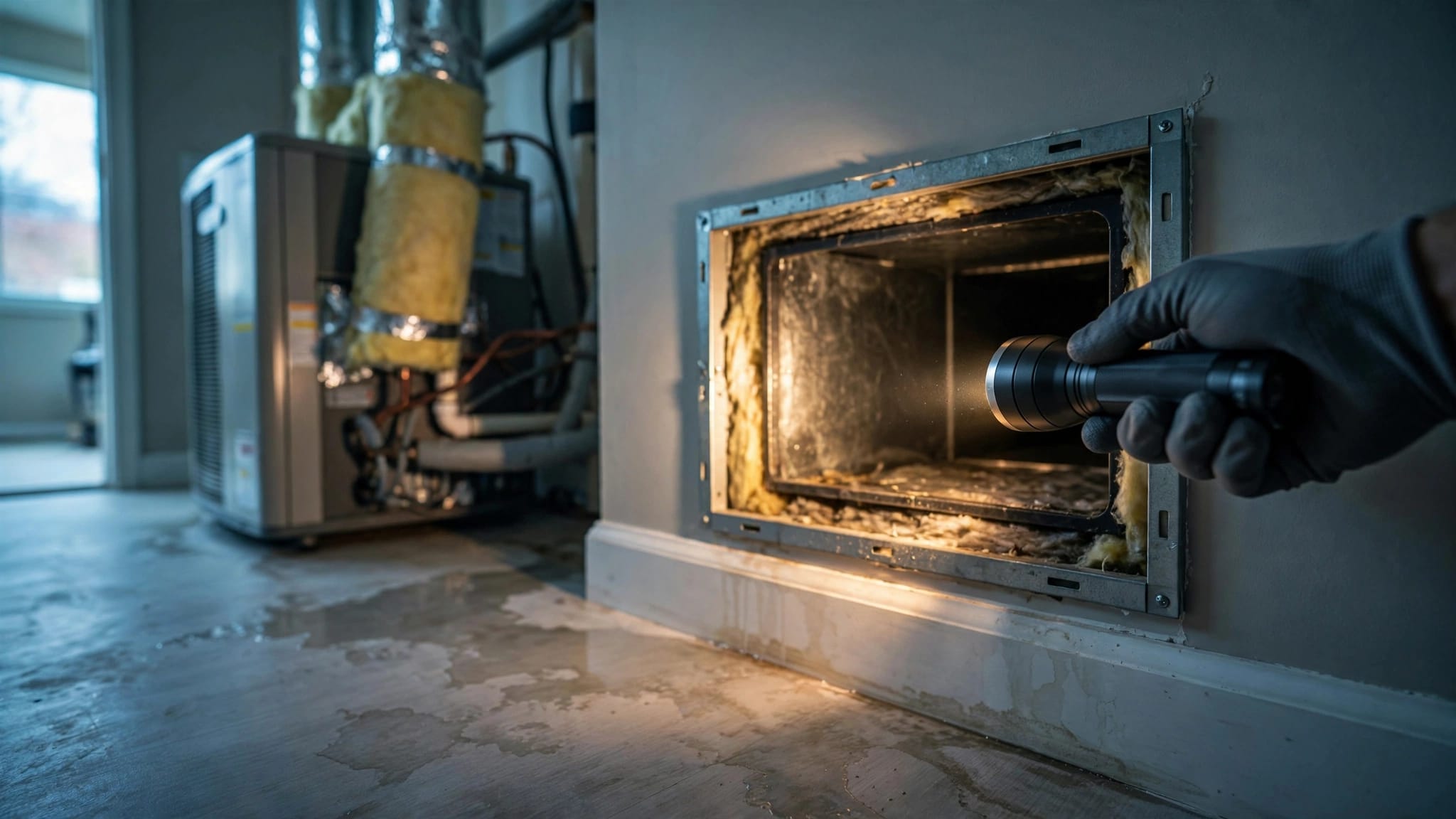
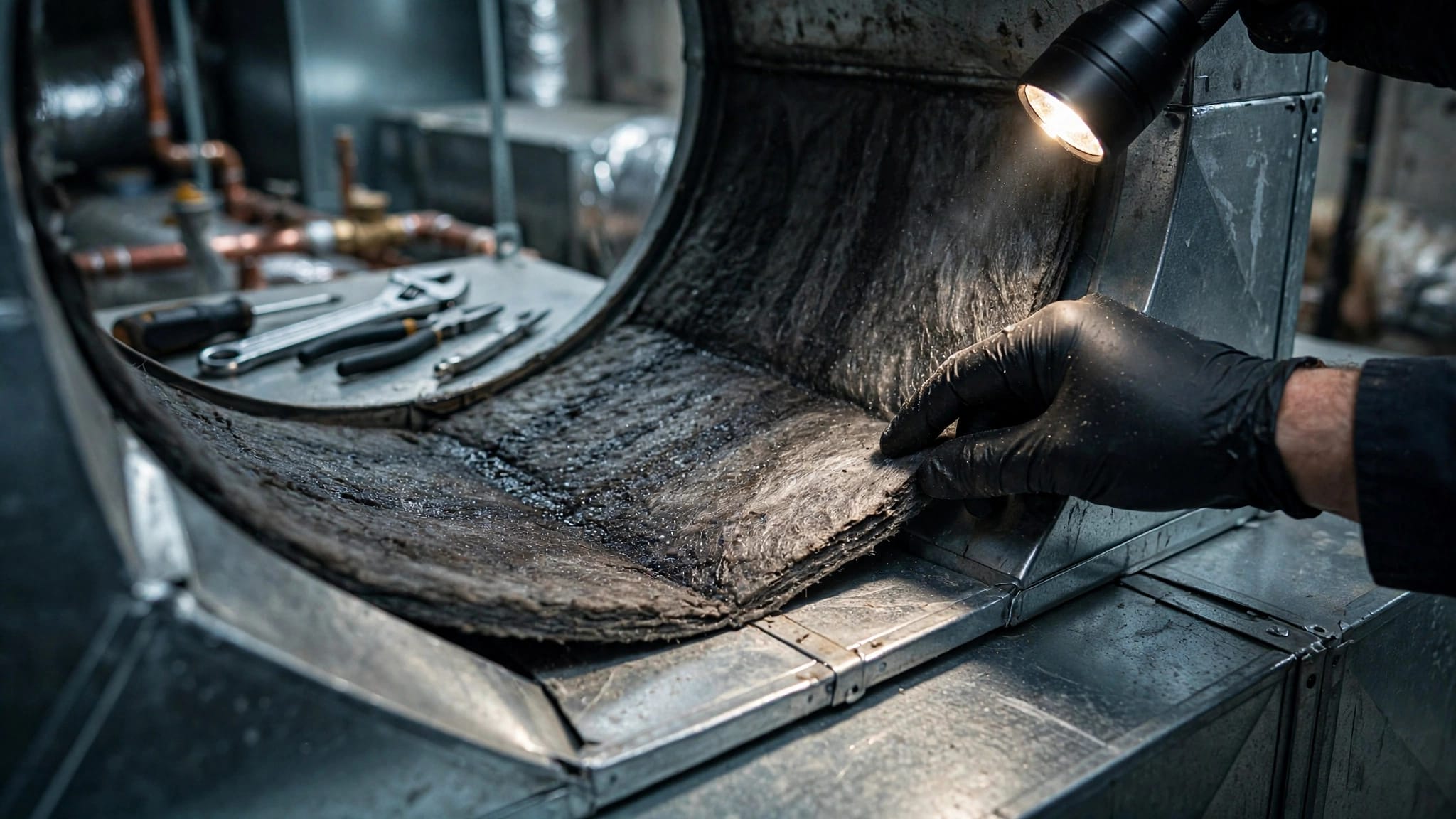
Accumulated debris inside ducts, renovation residue, or pest-related material can support a professional cleaning recommendation. Record findings with photographs and identify the affected supply or return sections.
Suspected microbial growth needs further evaluation. Color, staining, or an odor alone doesn't establish what is present.
Also distinguish duct cleaning from sealing, repairs, and replacement. Adkins' explanation of commercial HVAC duct service outlines these separate scopes. A proposal should connect each recommended service to an observed condition, rather than grouping every concern into one cleaning package.
Build the Work Window Around the HVAC System
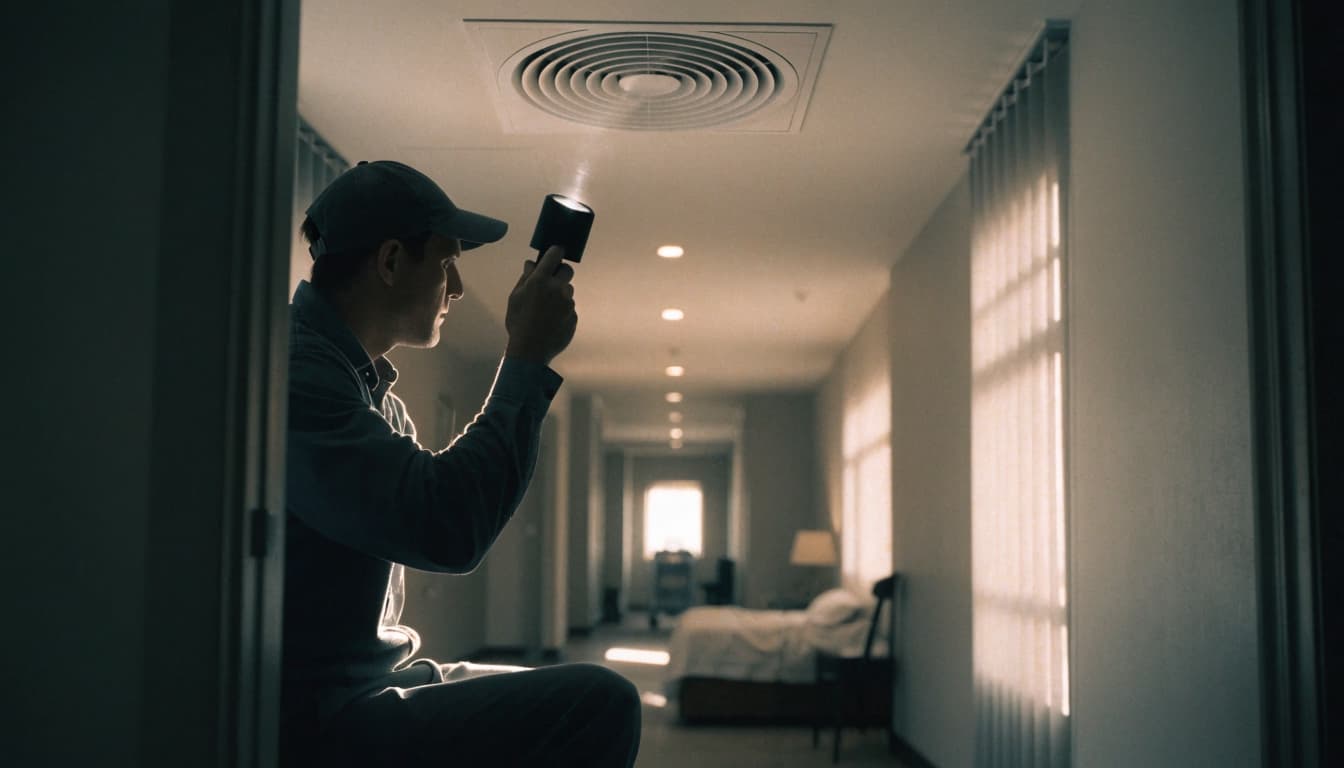
The reservation calendar shows room availability. Mechanical drawings and an on-site inspection show which rooms the work could affect.
Identify every connected room before blocking inventory
Hotels may have central ducted systems, separate air handlers, or packaged terminal air conditioners (PTACs). A PTAC without distribution ducts requires equipment maintenance rather than conventional room-duct cleaning.
For ducted systems, map the serving air handler, return paths, and connected rooms. An empty guest room may share equipment with occupied rooms or a corridor.
A vacant room doesn't create an isolated work zone when its ducts connect to occupied spaces.
Have maintenance and the contractor agree on the shutdown boundary before the front desk blocks inventory. Include mechanical closets and ceiling access locations, not just guest-room doors.
Leave room for preparation and reopening
Don't assume the normal checkout-to-check-in gap will accommodate a full cleaning project. Duration depends on access, duct layout, system size, condition, and the agreed scope.
Ask the contractor for a property-specific schedule that includes setup, cleaning, reassembly, and cleanup. Then protect time for housekeeping and maintenance checks before the next arrival.
If the work won't fit, reserve a longer vacancy or phase it by independent HVAC system. Also identify a backup inventory plan for late checkouts, inaccessible ducts, or repair findings. Overnight work needs equal care because guests may be sleeping nearby.
Give Housekeeping, Maintenance, and Reception Clear Roles
A shared work order prevents conflicting room-status updates. Include room numbers, serving equipment, access instructions, expected shutdowns, and the person authorized to release the rooms.
Assign ownership before the appointment.
| Team | Before work | Before room release |
|---|---|---|
| Front desk | Block affected inventory and flag early arrivals. | Wait for the designated release approval. |
| Housekeeping | Report odors, stains, or visible debris; clear access. | Complete final room cleaning and inspect surfaces. |
| Maintenance | Confirm system boundaries, controls, and access. | Check reassembly, drainage, and operation. |
| Contractor | Confirm scope, containment, and equipment routes. | Document completed work and unresolved findings. |
The key handoff is between contractor completion and hotel approval. Those are separate events.
Schedule final housekeeping after technicians finish. Protect beds and furnishings during work, then clean exposed surfaces before making the room guest-ready.
For cramped utility spaces, review duct cleaning in tight HVAC closets. Access restrictions can change equipment placement and preparation needs.
Meanwhile, keep hoses, cords, carts, and collection equipment out of guest routes and exits. Arrange service-elevator use where available. Tell nearby guests about expected noise or cooling interruptions through the hotel's usual communication process, without making unverified air-quality claims.
Treat Florida Humidity as a Separate Maintenance Issue
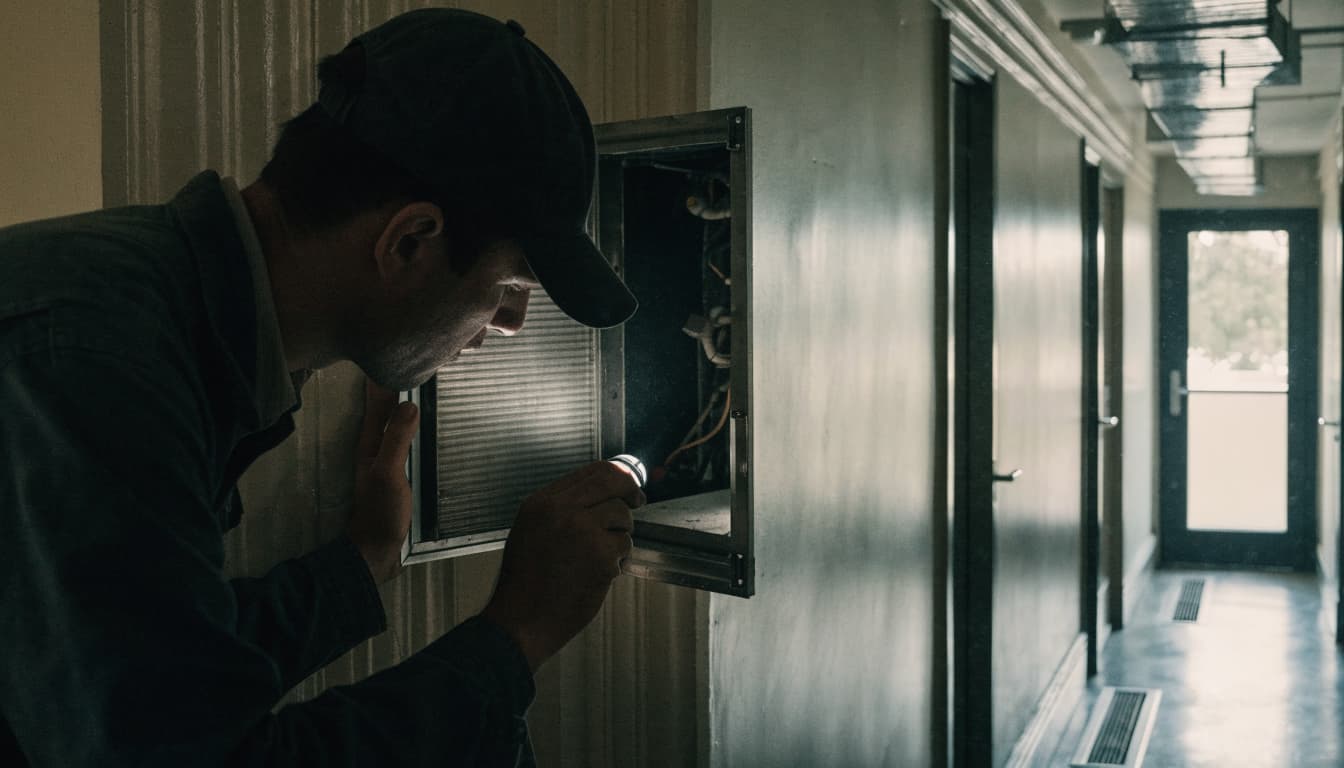
Long cooling seasons make moisture checks important along Florida's Gulf Coast. However, humid weather alone doesn't establish a need for duct cleaning.
Find the moisture source before approving treatment
When a room repeatedly smells musty or feels damp, inspect more than its vent cover. Relevant areas include the air-handler cabinet, evaporator coil, drain pan, condensate line, and nearby insulation.
Condensation can form when a duct surface falls below the surrounding air's dew point. Drainage problems, air leaks, and damaged insulation also need investigation.
Cleaning won't repair those conditions. Have the appropriate technician correct the cause and assess wet or deteriorated materials before proceeding. Otherwise, the same moisture problem can remain after debris removal. Record repair recommendations separately so they don't disappear into the cleaning invoice.
Manage cooling interruptions carefully
Agree on shutdown procedures with maintenance before technicians begin. Avoid leaving affected areas without their planned moisture-control strategy longer than necessary.
Keep exterior doors closed during equipment staging where practical. Also account for rain when contractors need roof access or outdoor equipment placement.
After work, restore approved control settings and check cooling and drainage. Don't approve sanitizers, inhibitors, or microbial treatments automatically. Ask what finding supports the product, where it will go, and whether its label permits that use. Treatment decisions should follow inspection and moisture correction.
Specify Cleaning Methods, Access, and Quote Inclusions
A useful hotel air duct cleaning proposal identifies the systems and components included. Room count alone doesn't describe the work.
Ask whether the scope covers supply and return ducts, main trunks, branches, plenums, registers, and diffusers. Coils, blower components, drain pans, and air-handler housings aren't automatically included in every duct-cleaning quote.
NADCA's professional guidance considers connected HVAC components as part of a system-wide approach. Still, the written agreement must state what this particular job includes.
For properties with rooftop units, rooftop HVAC duct cleaning involves additional access and component-planning questions.
The contractor should explain debris collection and containment. Controlled negative pressure helps capture loosened particles, while cleaning tools should suit the duct material. Fragile flexible ducts and damaged internal lining need careful assessment before agitation.
Also confirm how technicians will create and close access openings. Request documentation of inaccessible sections, damage, and work excluded from the price.
Compare estimates by scope, including setup, access work, cleanup, and any separately priced components. A lower total may cover fewer areas.
Adkins Duct Cleaning & Dryer Vent Service serves Gulf Coast customers near Naples, Fort Myers, and Tampa. You can Get a Free Estimate for air duct and dryer vent cleaning and discuss room blocks, mechanical access, and the proposed service scope.
Plan Laundry Dryer Vents Separately
Hotel laundry often continues while guest rooms turn over. Its exhaust system therefore needs a separate service plan, even when the same contractor handles both jobs.
HVAC ducts and dryer vents are different systems. Cleaning guest-room ducts doesn't remove lint from laundry exhaust.
Coordinate dryer shutdowns with the laundry supervisor and protect enough linen capacity for occupied rooms. Before booking, identify each dryer, its exhaust route, and the outdoor termination.
Longer drying cycles, unusual heat, or restricted exhaust warrant investigation. Airflow testing can help assess the vent path, but a single reading doesn't explain every dryer problem.
Include accessible lint removal and equipment checks in the laundry maintenance plan. Professional vent service should have its own documented scope and return-to-service check. If both services occur together, confirm that their equipment routes won't interfere with housekeeping's linen deliveries.
Release Rooms Only After a Documented Handoff
Technicians leaving the floor doesn't mean the rooms are ready for guests. Use a short release sequence so the next shift knows what remains.
- Have the contractor identify completed areas, exclusions, damage, and repair recommendations.
- Ask maintenance to verify secured panels, reinstalled grilles, appropriate filters, and restored controls.
- Run the affected equipment and check for unexpected noise, drainage trouble, or remaining comfort complaints.
- Let housekeeping finish cleanup, then authorize reception to return the rooms to inventory.
Keep before-and-after photographs with the work order. Record which air handler and duct sections received service, rather than filing a generic note that the floor was cleaned.
If a moisture or mechanical problem remains, route it to the appropriate technician before release. Cleaning completion doesn't close a separate repair issue.
Use these records to guide future inspections. Schedule additional duct cleaning when documented conditions support it, rather than adopting a universal interval. Also review the actual room-block duration so the next project has a more reliable operational window.
A Reliable Turnover Starts With the Right Scope
Hotel air duct cleaning fits between guest stays when the work window matches the connected HVAC system. Inspection, clear responsibilities, and verified room release keep that window realistic.
Florida hotels also need moisture problems and equipment faults addressed separately from dust removal. Reserve the necessary inventory before booking, and protect time for the final handoff. A room is ready when the agreed work and operating checks are complete.