Commercial Air Duct Cleaning for Rooftop HVAC Systems
A rooftop HVAC unit can be easy to spot and difficult to service beyond its cabinet. Commercial air duct cleaning requires access to the connected supply and return pathways, not just the equipment above your building.
For property managers, the main concern is scope : which areas need cleaning, how technicians will reach them, and what remains separate maintenance work. Start with the system layout before approving a cleaning proposal.
Key Takeaways
- Rooftop access doesn't replace access to ductwork inside the building, including main trunks, returns, and branches.
- Duct cleaning and rooftop-unit maintenance are separate services, so the estimate should identify which components each contractor will handle.
- Inspection findings should guide cleaning decisions. Roof safety, debris containment, and documented completion matter more than promises about health benefits or energy savings.
How Rooftop Units Change Duct-Cleaning Access
Trace each unit to its connected spaces
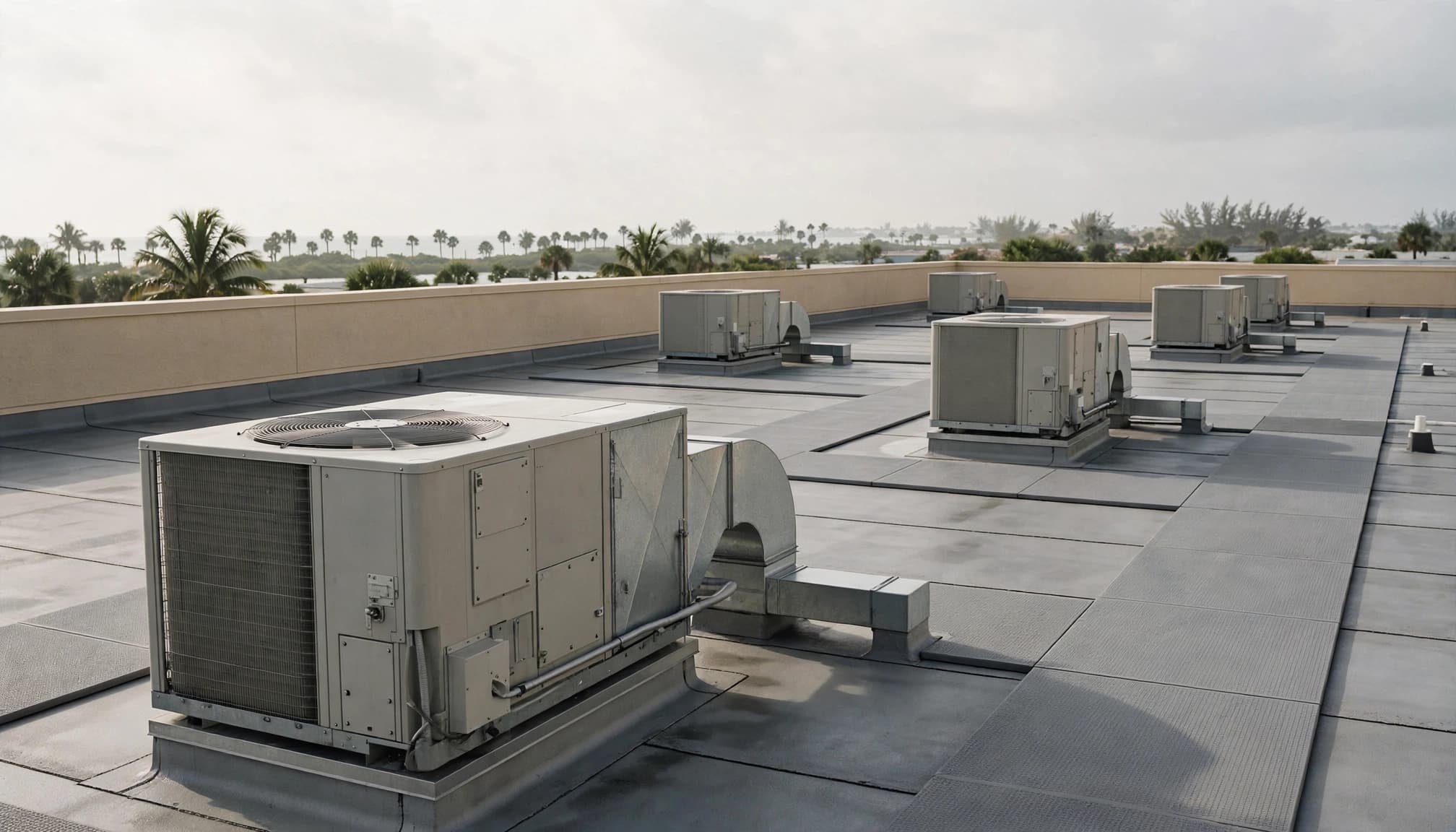
Packaged rooftop units, often called RTUs, contain major heating, cooling, and air-moving components in an outdoor cabinet. Many connect to supply and return ducts through a roof curb. Others use horizontal connections.
However, a building with several rooftop units may have separate systems serving different tenants or operating zones. Technicians need to identify which unit connects to each duct network before opening access points.
Commercial layouts can also include variable air volume boxes, large return systems, and long trunk lines. Understanding commercial HVAC systems and duct cleaning helps clarify why equipment counts alone don't define the job.
Plan for roof and interior access
Opening an RTU cabinet doesn't give a technician unrestricted access to every connected duct. Turns, dampers, transitions, and long branches can limit how far tools reach.
As a result, the crew may need access above suspended ceilings or through existing duct-service panels. Additional openings in suitable metal ductwork may require approval.
The inspection should identify both routes: how technicians reach the rooftop equipment and how they reach the indoor distribution system. It should also flag inaccessible sections before work begins, rather than treating them as completed areas.
What Commercial Air Duct Cleaning Covers
Ductwork needs a defined cleaning scope
Commercial air duct cleaning addresses accumulated debris in the air-distribution system. The written scope should identify supply ducts, return ducts, trunks, branches, plenums, registers, grilles, and diffusers.
NADCA's professional guidance takes a system-wide approach that also considers connected components, including coils, drain pans, blower components, and air-handler housing. However, those items aren't automatically included in every duct-cleaning quote.
Ask who will address each component and whether a separate HVAC technician is needed. Also confirm how the provider will document areas that cannot be reached.
Wiping visible vent covers is a narrower service. Comparing register cleaning versus full-system duct cleaning can help you evaluate whether a proposal matches the findings.
Rooftop maintenance addresses equipment operation
Routine RTU maintenance checks operating condition and follows the equipment manufacturer's guidance. Depending on the unit, it may involve filters, coils, condensate drainage, electrical components, belts, and ventilation controls.
Duct cleaning doesn't repair refrigerant leaks, diagnose electrical faults, or correct a failed blower. Likewise, an equipment tune-up doesn't necessarily remove debris throughout the connected duct system.
Coil cleaning requires methods suited to coil fins, drainage, and nearby electronics. Therefore, it should appear as an identified task rather than an assumed extension of duct vacuuming.
When both services are necessary, coordinate them so their scopes don't leave gaps or duplicate work.
When Inspection Supports Cleaning
The presence of rooftop equipment doesn't create an automatic need for duct cleaning. Inspect the system when you see persistent debris discharge, evidence of pests, contamination after construction, or water-related damage.
Dust on the roof or outside a duct connection doesn't prove that debris entered the air pathway. Technicians should examine the interior of affected ducts and connected components before recommending cleaning.
Meanwhile, weak airflow or uneven temperatures can have several causes. A loaded filter, damaged duct, faulty damper, or dirty coil may require maintenance or repair.
Musty odors also deserve investigation. Cleaning alone won't correct roof leaks, recurring condensation, or wet insulation. Address the moisture source and determine whether affected materials can be cleaned or need replacement.
A rooftop-unit inspection and a duct inspection answer different questions. One checks the equipment; the other establishes what is inside the connected air pathways.
If inspection finds no meaningful buildup or contamination, continue normal equipment maintenance rather than scheduling cleaning solely because time has passed.
Plan Access, Shutdowns, and the Written Estimate
Before booking, gather equipment records, available duct drawings, tenant schedules, and previous service reports. Mark areas with odors, visible debris, water damage, or airflow complaints so the inspection stays focused.
Then agree on the shutdown plan. Different zones may need different service windows, especially when some tenants operate after normal business hours. Also identify spaces that cannot tolerate an extended cooling interruption.
For occupied offices, after-hours duct service can reduce disruption. However, evening appointments still require authorized roof access, lighting, security coordination, and suitable weather.
A useful written estimate should explain:
- Which rooftop units, duct networks, and connected components the contractor will inspect and clean.
- Where technicians will enter the system, including any proposed access openings and how they will seal them.
- How the crew will contain debris, protect occupied areas, and document the results.
- Which repairs, treatments, equipment services, or inaccessible sections fall outside the price.
Pricing depends on the actual layout, access requirements, condition, and included work. Compare proposals by scope rather than a building-wide price with no explanation.
Finally, confirm who can authorize additional work. Finding damaged insulation or contamination shouldn't turn into an unapproved expansion of the job.
Roof Safety Comes Before Cleaning Equipment
Roof access needs a separate safety plan. The contractor should assess ladders or roof hatches, walking surfaces, skylights, roof edges, and the route for moving equipment.
Fall-protection requirements depend on the work and conditions. A parapet or convenient hatch doesn't automatically make every rooftop task safe. Ask how the crew will meet applicable requirements and protect the roof surface.
On Florida's Gulf Coast, heat, rain, lightning, and wind can interrupt rooftop work. Establish weather-related stopping conditions and a rescheduling plan before the appointment.
The team must also coordinate equipment shutdown and applicable lockout/tagout procedures. A building automation schedule shouldn't restart equipment unexpectedly while someone is working inside it.
Older systems require caution around deteriorated insulation, duct wrap, and suspect asbestos-containing materials. Technicians should pause before disturbing questionable materials and refer assessment to an appropriate asbestos professional.
Duct cleaning doesn't identify asbestos or replace regulated removal work. Likewise, wet electrical areas, exposed wiring, or unstable access conditions need assessment before cleaning proceeds.
Keep hoses and equipment clear of exits, and protect roof membranes from concentrated loads and dragged equipment.
How the Cleaning Process Should Work
Contain debris and clean each approved pathway
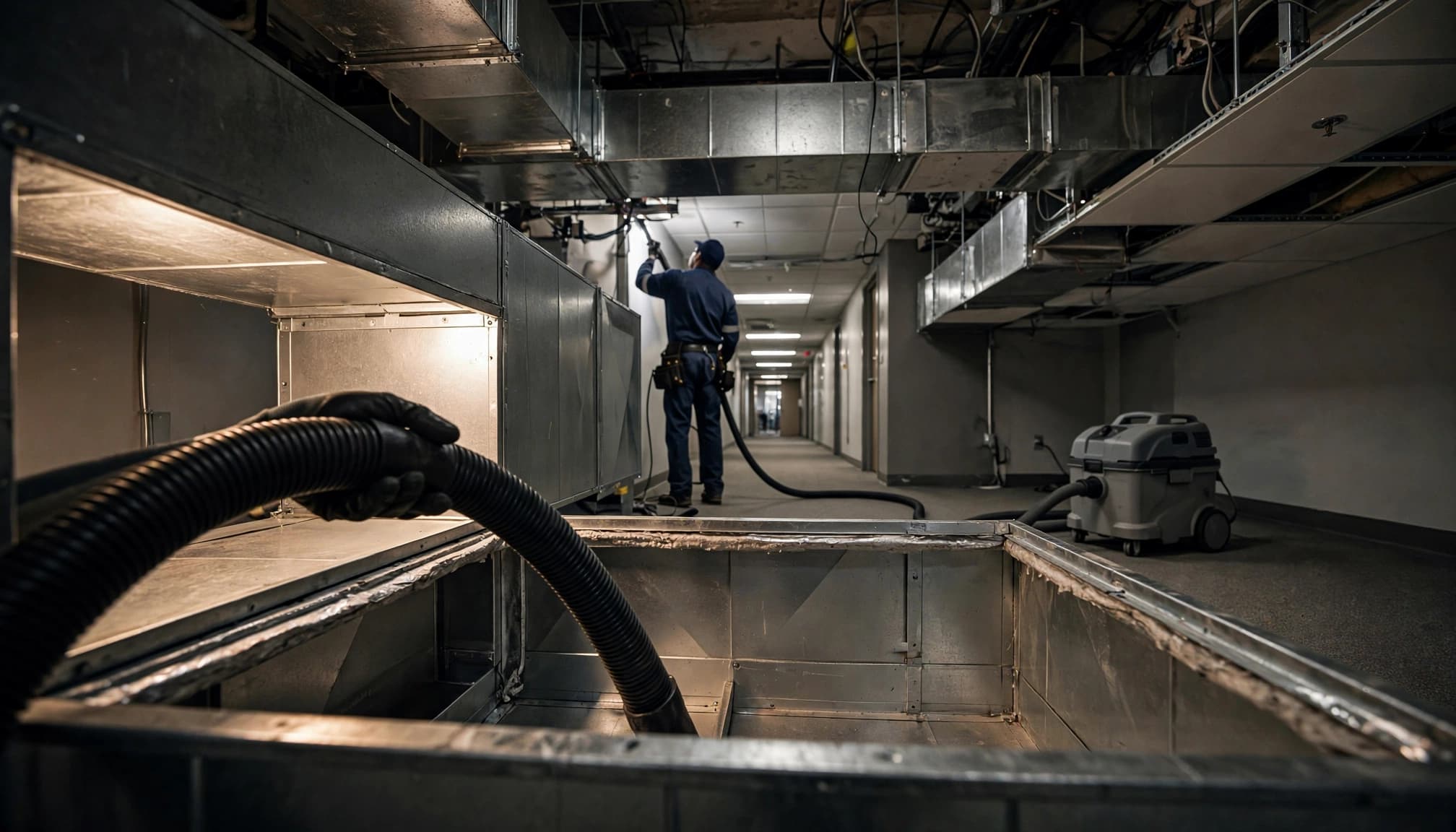
The visit should begin with confirmation of the inspection findings, access points, and approved scope. Next, technicians protect nearby surfaces and establish debris collection before agitating duct interiors.
Professional source-removal methods use negative-pressure collection with suitable mechanical agitation. Brushes, air whips, and other tools must match the duct material and condition.
Sheet-metal ducts may tolerate methods that would damage flexible ducts or deteriorated internal lining. Therefore, the crew should adjust its approach instead of forcing the same tool through every section.
Each independent duct network needs an appropriate collection setup. Supply and return pathways require deliberate coverage, including branches beyond the most visible openings.
Verify results and restore the system
After cleaning, technicians should inspect accessible areas and provide photographs where practical. Documentation should distinguish completed sections from exclusions or areas needing repair.
Temporary openings must be closed and sealed appropriately. The crew should also reinstall registers, secure access panels, and restore insulation disturbed by approved work.
Then the responsible technician can restore equipment operation and check for obvious problems, such as loose panels or unusual noise. Cleaning doesn't replace any required mechanical testing or air balancing.
Ask for a completion record identifying the units served, components cleaned, unresolved findings, and any products applied. Keep it with the building's HVAC maintenance records for future inspections.
Maintenance After the Cleaning Visit
Continue rooftop-unit maintenance according to manufacturer guidance and the building's operating conditions. Filter inspections and replacements should reflect actual loading, equipment requirements, and occupancy.
Use the correct filter size and an efficiency rating compatible with the system. Installing a more restrictive filter without checking equipment requirements can create airflow problems.
Also watch for recurring dust entry through poorly sealed return connections, damaged ducts, or gaps around filter racks. Correcting those defects helps prevent the same contamination from returning.
In Florida's humid conditions, condensate drainage, roof penetrations, and duct insulation deserve attention. Wet or deteriorated porous material may require replacement rather than repeated cleaning.
Sanitizers, inhibitors, and microbial treatments shouldn't be automatic additions. Ask what finding supports the product, where it will be applied, and whether its label permits that use.
Set future duct inspections around documented conditions rather than a universal cleaning interval. If the property has dryers, remember that dryer exhaust is a separate system carrying lint outdoors. HVAC duct cleaning doesn't clean those vents.
Choose Service That Matches the Findings
Rooftop HVAC units make access and scope central to a successful cleaning plan. Inspect the connected air pathways and separate debris removal from equipment repairs and routine maintenance.
Adkins Duct Cleaning & Dryer Vent Service serves businesses along Florida's Gulf Coast, including Naples, Fort Myers, and Tampa. You can Get a Free Estimate to discuss system access, inspection findings, and the work your building needs.