School Air Duct Cleaning During Florida's Summer Break
An empty classroom doesn't mean the school building has stopped working. Summer programs, custodial projects, and Florida's humidity still shape the maintenance schedule, so school air duct cleaning needs a coordinated plan.
Summer break offers easier access when inspection confirms a need, but an open calendar isn't a reason to clean every duct. The priority is condition-based maintenance that fits your campus, protects occupied areas, and keeps moisture under control.
Start by identifying which systems need attention, then build the work around the school's summer operations.
When school air duct cleaning is warranted
Look for evidence inside the system
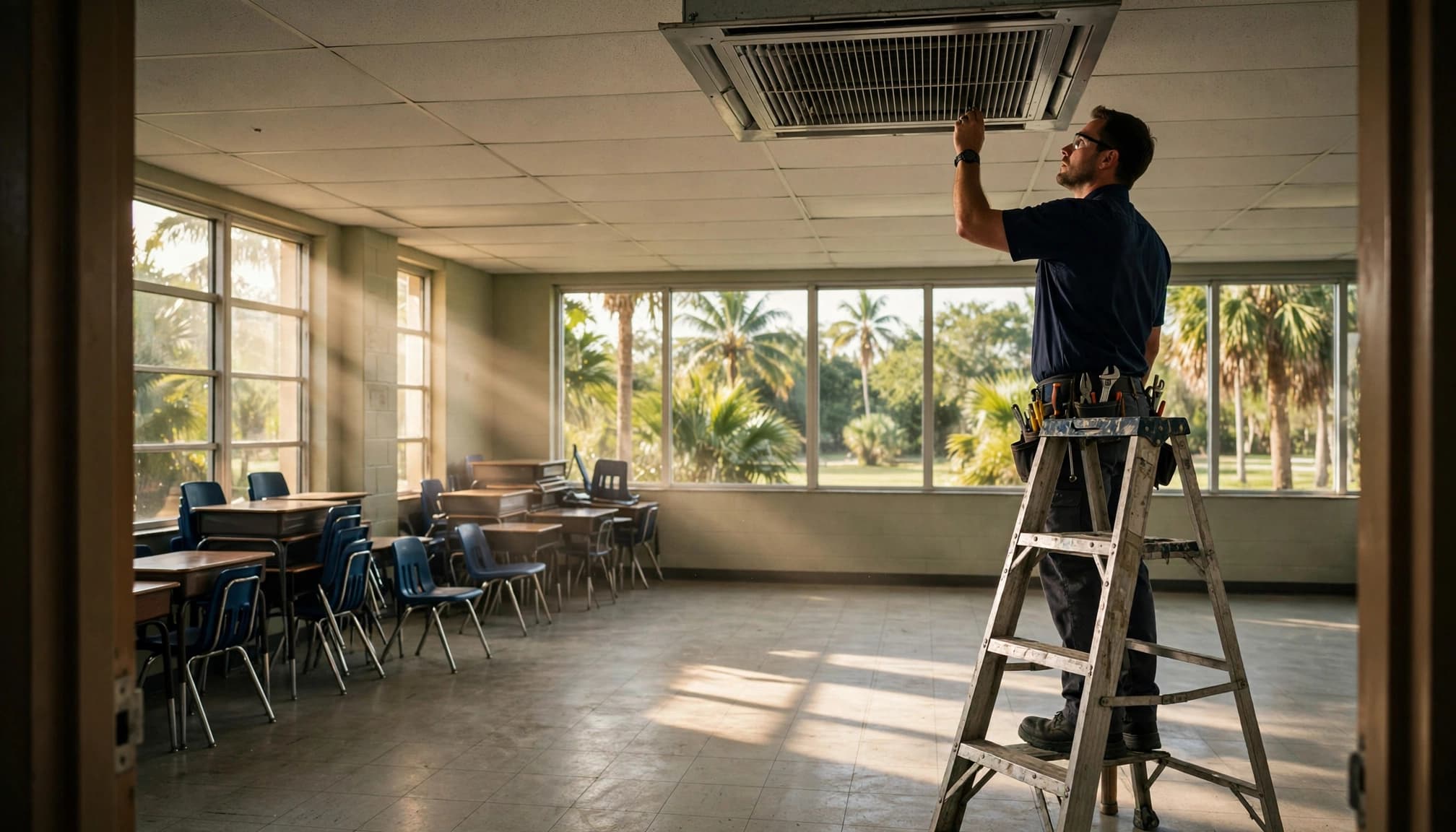
A dusty grille alone doesn't establish that the connected duct network needs cleaning. Facilities staff should review filter condition, maintenance records, and accessible supply and return sections before requesting a cleaning scope.
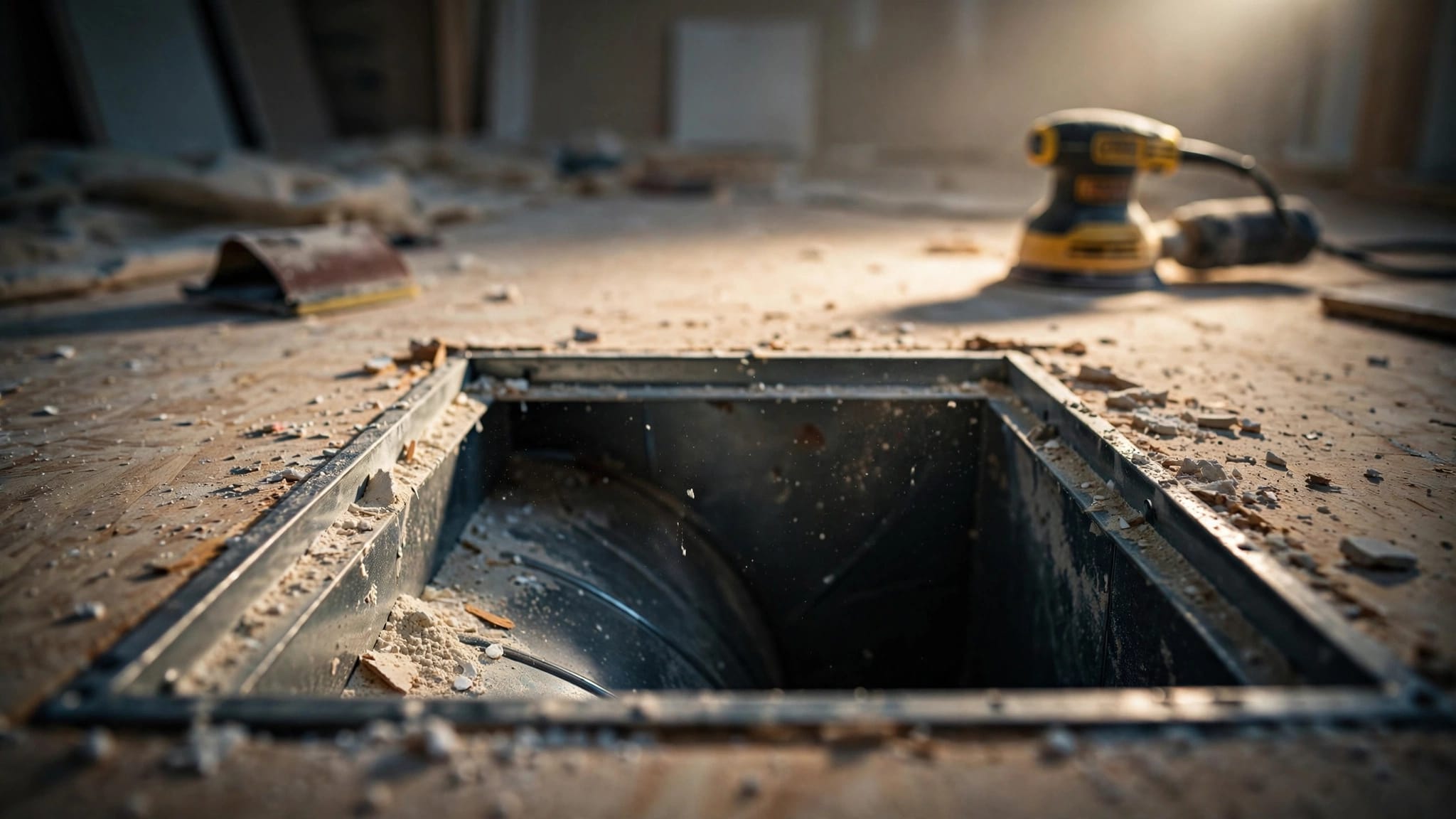
Renovation debris, pest activity, substantial deposits inside ducts, or particles blowing from registers despite proper filtration justify closer inspection. Record the location and photograph the finding so the contractor can trace the affected system.
Meanwhile, repeated complaints about one classroom deserve an HVAC assessment. Poor airflow can result from damaged ducts, control settings, or balancing problems. Cleaning won't correct those causes.
Separate cleaning from routine maintenance
A system that's dry, intact, and operating normally may need filter replacement and scheduled HVAC service rather than duct cleaning. Adkins' guidance on duct cleaning versus filter changes helps distinguish these tasks.
Check whether filters fit their racks correctly, because gaps allow dust to bypass the filter. Also inspect return paths for obstructions and review recurring drainage problems.
Keep findings tied to specific buildings and air handlers. Evidence in one portable classroom doesn't establish a need across the entire campus.
Build the schedule around actual summer occupancy
Map programs, projects, and access
Before booking, gather the calendars for summer school, camps, administrative offices, and custodial work. Include flooring projects, painting, roof repairs, and classroom renovations that could affect access or introduce new debris.
Assign one facilities contact to coordinate keys, security clearance, mechanical-room access, and contractor arrivals. That person should also confirm who can authorize HVAC shutdowns and restore normal operation.
For occupied offices or program areas, after-hours duct service planning offers useful guidance on access and cleanup. Confirm whether evening or weekend work is available rather than assuming it is.
Coordinate the sequence with other trades
Cleaning before dusty construction ends can leave the system exposed to fresh debris. Schedule necessary cleaning after the relevant construction work, with time remaining for inspection and HVAC restart.
However, don't wait until the final day before teachers return. Leave room for findings that require repairs, replacement materials, or a follow-up visit.
Prepare a building-by-building schedule that identifies affected rooms, equipment, and occupied spaces. If several areas share an air handler, the outage plan must account for every connected room.
Also confirm equipment loading routes, parking, and weather contingencies before the crew arrives. Florida summer storms can complicate outdoor access and equipment placement.
Keep Florida humidity in the maintenance plan
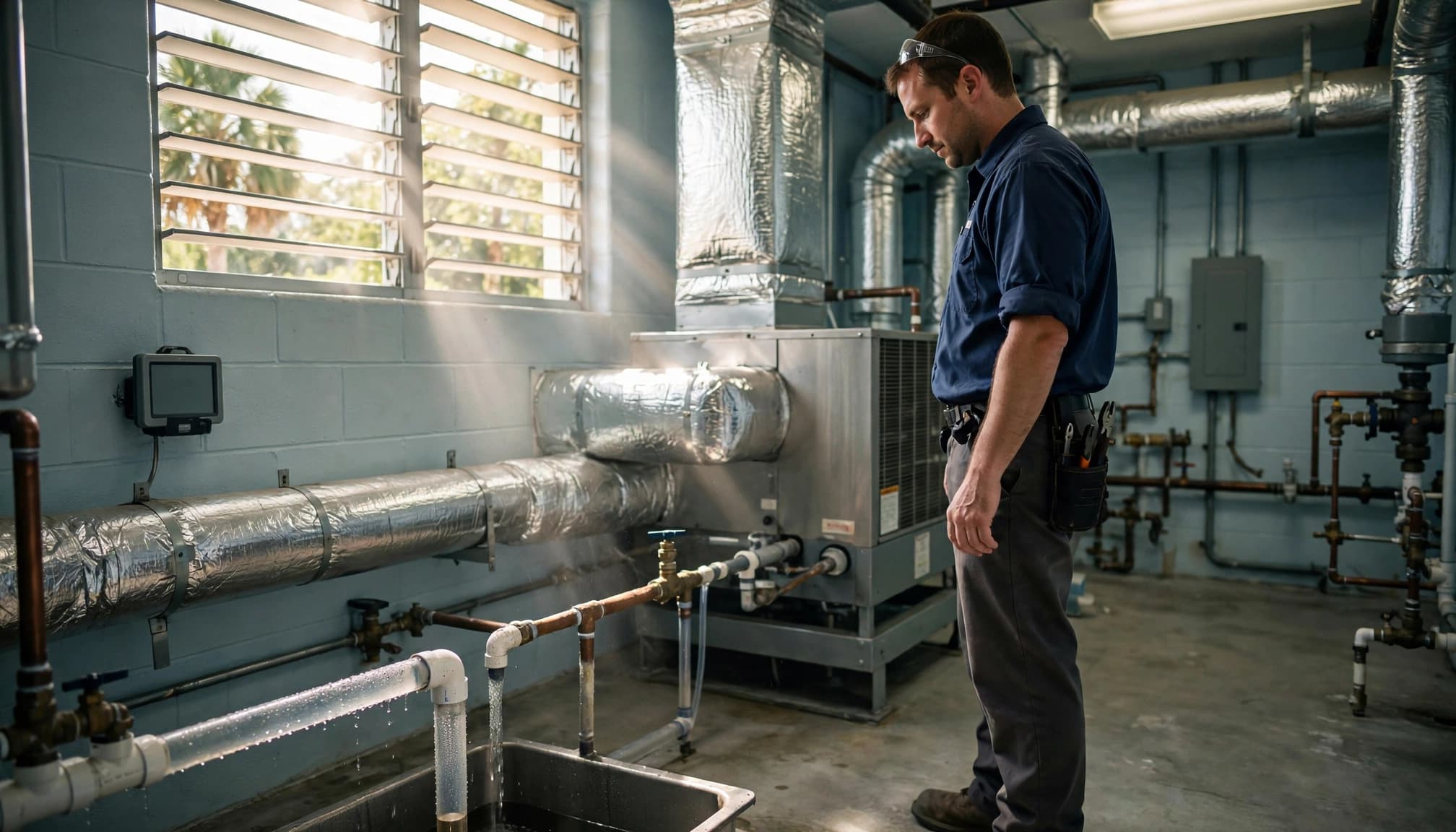
Plan shutdowns with the HVAC team
Reduced occupancy doesn't eliminate the need for moisture control. A long cooling shutdown can allow indoor humidity to rise, depending on weather, ventilation, and building conditions.
Facilities staff and the HVAC contractor should agree on shutdown duration, approved setback settings, and any temporary moisture-control measures. Don't let a cleaning crew independently change building automation schedules.
Monitor conditions during extended work and after restart. Pay attention to damp ceiling tiles, condensation near registers, and rooms that remain humid despite cooling.
A planned shutdown needs a restart plan that restores moisture control as well as the thermostat schedule.
Address water problems before cleaning
A musty odor doesn't prove mold inside ducts. Inspect the suspected source before choosing treatment or expanding the cleaning scope.
Possible causes include roof leaks, overflowing drain pans, blocked condensate lines, plumbing leaks, or damaged insulation. Cleaning dust out of ducts won't repair any of these problems.
Wet or deteriorated insulated duct materials need professional evaluation. Some damaged materials require replacement rather than aggressive cleaning.
If staff observe suspected growth or repeated moisture, document the location and arrange an appropriate assessment. Keep moisture repairs separate from promises about sanitizers or odor treatments. A fragrance or surface treatment can't correct an active leak.
Define the cleaning scope by system and component
Identify every connected air handler
A school may have separate systems for classroom wings, offices, cafeterias, and portable buildings. The estimate should identify which air handlers and connected duct runs the proposed work covers.
Ask the contractor to list supply ducts, return ducts, plenums, registers, grilles, and accessible return paths. Any inaccessible sections or exclusions should appear in writing.
These commercial HVAC cleaning considerations matter because access and occupancy differ from a residential job. A register count alone doesn't describe the full scope.
Match building names and equipment identifiers to the district's maintenance records. That makes findings easier to track after the contractor leaves.
Distinguish related services
Duct cleaning, air-handler cleaning, condensate service, and dryer vent cleaning address different parts of the building. Don't assume one price includes all four.
Clarify whether the contractor will inspect or clean the blower compartment, coil area, and drain pan. Identify drainage repairs and mechanical work that require coordination with the HVAC contractor.
If the school operates clothes dryers, their exhaust ducts need a separate assessment and service scope. Dryer exhaust isn't part of the classroom air-distribution system.
Also ask which cleaning methods suit the existing duct material. Metal ducts, flexible ducts, and fiberglass duct board require different handling. Damaged insulation or failing internal facing may change whether cleaning is appropriate.
Protect classrooms and contain the work area
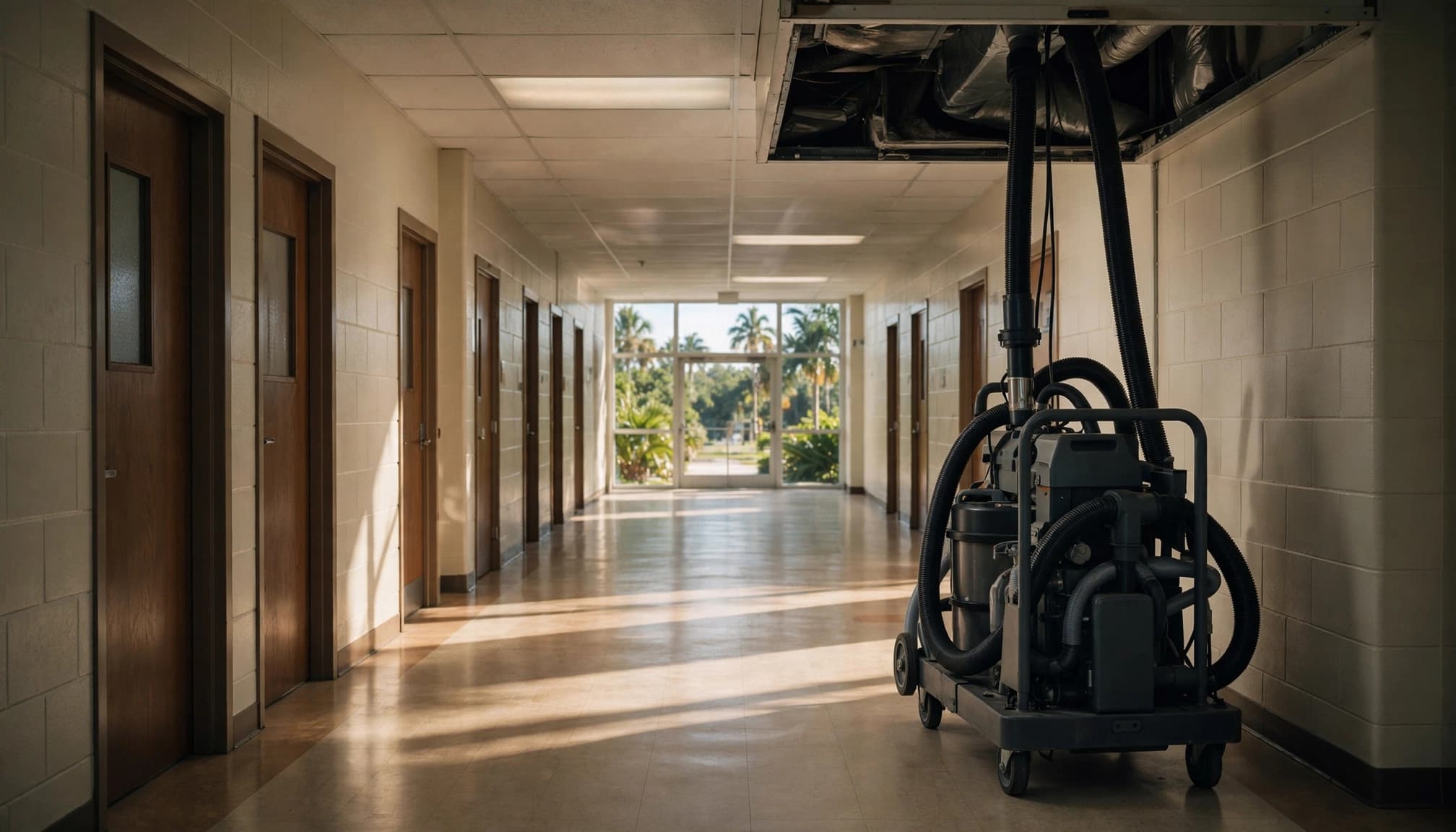
Discuss dust control before equipment enters the building. The contractor should explain how debris will be collected, how connected openings will be managed, and how nearby surfaces will be protected.
Controlled vacuum collection and suitable agitation should remove material without spreading it through classrooms. Equipment selection must account for duct condition and the building layout.
Facilities staff can prepare rooms by clearing access beneath grilles and protecting instructional materials, electronics, and stored supplies. However, crews must keep exits, corridors, and emergency equipment accessible.
Review working around limited HVAC access when mechanical closets or crowded utility spaces restrict equipment placement. Agree on access-panel locations and closure methods before work starts.
In older schools, flag suspect materials before cutting or disturbing them. Routine cleaning shouldn't proceed through an unresolved asbestos concern or damaged material that needs specialist evaluation.
Finally, separate active work zones from occupied rooms. Notify custodial supervisors about daily cleanup and room-release expectations so nobody reopens an area prematurely.
Compare estimates without relying on a flat price
School air duct cleaning costs depend on the actual system, access, and scope. A small portable building and a multi-wing campus shouldn't share the same pricing assumptions.
Request a site-specific written estimate. It should distinguish cleaning from repairs, component replacement, specialty assessment, and any optional treatment.
Use the same requirements when comparing proposals:
- Ask each contractor to identify the systems, components, and exclusions covered by the quoted price.
- Require an explanation of containment, material-compatible cleaning methods, and access-panel closure.
- Confirm insurance documentation, campus access procedures, and who handles unexpected findings.
- Request completion records and representative before-and-after photographs of accessible areas.
Don't accept guaranteed allergy relief, illness prevention, or energy savings as substitutes for a clear scope. Cleaning decisions should rest on observed conditions.
Adkins Duct Cleaning & Dryer Vent Service serves commercial customers along Florida's Gulf Coast, including Naples, Fort Myers, and Tampa. You can Get a Free Estimate to discuss the campus layout, summer schedule, and inspection findings.
Before approving work, confirm service availability for your location and any district purchasing requirements.
Verify completion before classrooms reopen
Inspect the work and restart the system
The job isn't complete when the vacuum equipment leaves. Facilities staff should review cleaned areas, access-panel closures, and any damage or unresolved findings with the contractor.
Then have authorized personnel restore HVAC operation and confirm the approved control schedule. Install the correct filters and check that they fit securely.
Check airflow at registers, listen for unusual equipment noise, and confirm condensate drainage. If a room remains uncomfortable, request HVAC diagnosis rather than assuming additional cleaning will solve it.
Where dryer vent service was included, verify that exhaust operation has also been checked. Keep that confirmation separate from the air-conditioning system inspection.
Keep a usable maintenance record
Save the invoice, service date, system identifiers, photographs, and contractor findings in the facilities record. Include filter specifications, repairs completed, inaccessible areas, and recommended follow-up work.
Before-and-after images help document accessible conditions, but they don't verify every hidden duct section. Ask the contractor to explain what each photograph shows.
Finally, schedule unresolved repairs before regular occupancy when possible. Share room restrictions and remaining concerns with administrators and custodial staff.
A documented handoff helps the next maintenance team understand what was cleaned, what was repaired, and what still needs attention.
Key takeaways for the summer facilities plan
Summer break provides access, but inspection should determine whether cleaning is necessary. Tie the work to specific systems and observed conditions.
The strongest plan coordinates construction, campus occupancy, HVAC controls, and moisture management. It also includes containment, clear exclusions, and a documented restart.
Treat duct cleaning as one part of facilities maintenance. Filtration, drainage, damaged insulation, and mechanical problems need their own attention.
Reopen With a Verified HVAC System
A quiet campus gives facilities staff room to investigate and complete justified work. Use that opportunity to correct documented problems without adding unnecessary cleaning.
Successful summer maintenance depends on a coordinated handoff : clear scope, controlled access, moisture management, and verified operation.
Before students return, the school should have usable classrooms and a record of both completed work and unresolved needs.