After-Hours Duct Service for Florida Offices
A busy office can't pause meetings, customer calls, or production for HVAC cleaning. After-hours duct service gives Florida businesses a practical way to schedule air duct and dryer vent work when employees and visitors are gone.
The best results come from more than choosing an evening appointment. Building access, HVAC controls, parking, tenant notices, weather, and post-service cleanup all need attention. A clear plan helps the technician work safely and lets your team return to a clean, usable office.
Key Takeaways
- Schedule duct cleaning when the HVAC system, building, and office areas are available.
- Confirm access, security procedures, parking, alarm settings, and on-site contacts before the appointment.
- Florida humidity, rain, storms, and building design can affect timing and preparation.
- Ask for a written scope that identifies vents, air handlers, returns, dryer vents, and any optional treatments.
- Plan a final walkthrough before staff return the next morning.
How to Plan After-Hours Duct Service for Florida Offices
Start by identifying the work areas and the systems that serve them. A small professional office may have one air handler and a limited number of supply vents. A larger office, medical suite, retail office, or multi-tenant building may have several zones, rooftop units, shared returns, or restricted mechanical rooms.
Ask the building manager for HVAC drawings, equipment locations, and any rules for contractors. These details help the service company estimate the work and avoid opening the wrong access panel. If the building uses a central system, confirm whether the technician can clean only your suite or must coordinate with property management.
An evening appointment may begin after employees leave, but the usable service window should include setup and cleanup. For example, a 6:00 p.m. start might provide enough time for a small suite, while a larger office could require several hours or more than one visit. The provider should explain the expected duration after reviewing the property.
For offices in Sarasota County, 24/7 air duct services in Sarasota may help businesses compare scheduling options outside normal office hours. Businesses along Florida's Gulf Coast can also ask about service availability in their city and the distance required for evening appointments.
Before booking, collect these details:
- Number of offices, conference rooms, restrooms, and shared areas
- Number of air handlers, rooftop units, returns, and supply vents
- Location of mechanical rooms and roof access points
- Presence of security alarms, keycards, elevators, or locked gates
- Required arrival and departure procedures
- Preferred completion time for the next business day
A written scope prevents confusion. It should state what the technician will clean, what equipment is included, whether access panels are needed, and how debris will be contained.
Choose the Right Evening or Weekend Window
After-hours service works best when the appointment matches the building's normal activity. Some offices become quiet after 5 p.m., while others operate late, host evening classes, or share hallways with other tenants. Weekend access may provide more time, but it can also involve different security rules and limited building support.
Use the table below as a starting point when comparing scheduling windows.
| Service window | Works well for | Main planning concern |
|---|---|---|
| Weekday evening | Small offices with predictable closing times | Staff must leave before equipment setup begins |
| Early morning | Offices that close late or need evening security coverage | Technicians need access before employees arrive |
| Saturday | Larger projects with several HVAC zones | Building management may use separate weekend procedures |
| Sunday | Projects requiring a long uninterrupted window | Confirm elevators, parking, and emergency contacts |
| Holiday closure | Major cleaning or multi-area work | Verify building access and reschedule plans |
A weekday evening often suits a compact office with one system. A weekend appointment may be better for a larger building, especially when technicians need to move equipment through shared corridors or reach multiple mechanical rooms.
Florida weather also affects outdoor work. Rooftop equipment can become difficult to access during heavy rain, lightning, or high winds. Ask how the provider handles weather delays and whether the appointment can move to another evening without losing the service window.
The building's air-conditioning schedule matters, too. Turning off a system for several hours may affect temperature and humidity, especially during a hot Gulf Coast afternoon or overnight period. Coordinate the shutdown with the property manager and ask when the system should restart.
A service window is only useful if the technician has uninterrupted access to every area included in the written scope.
For multi-tenant buildings, schedule around neighboring suites when possible. Shared returns, hallway grilles, and central air handlers may require advance notice. In high-rise properties, freight elevator reservations can determine whether an evening appointment stays on schedule.
Prepare Building Access, Security, and Staff Notices
Access problems cause many avoidable delays. The office manager should name one primary contact and one backup contact who can answer questions during the appointment. Give both contacts the technician's arrival range, company name, vehicle information, and work description.
Security teams may need a contractor list, identification details, insurance documents, or a temporary access code. Never assume an employee can leave a door unlocked. Instead, confirm how the technician will enter, which rooms are approved, and who will secure the building after departure.
A useful pre-service checklist includes:
- Confirm the date, arrival window, estimated completion time, and areas included.
- Notify property management, security, cleaning staff, and affected tenants.
- Reserve loading zones, parking spaces, freight elevators, or roof access.
- Move fragile items, stored materials, and desk accessories away from vents.
- Identify outlets and water sources if the provider needs them.
- Set the alarm and access instructions with the building's approved process.
- Confirm who will inspect the office after the work is complete.
Staff notices should use plain details. Tell employees which rooms may be unavailable, when they should clear desks, and whether they need to remove personal items near vents. If the office handles sensitive records, relocate confidential files before the crew arrives.
The provider should protect work areas with suitable coverings and containment methods. Ask how technicians will protect flooring, furniture, walls, computers, and shared corridors. You can also ask whether the crew will take before-and-after photos for the property file, provided the building permits photography.
Some offices have special operating needs. A clinic, school office, data room, or food-related business may require additional controls for access and equipment protection. Share those requirements during the estimate, not when the crew arrives.
Define the Scope for Air Ducts, Returns, and Dryer Vents
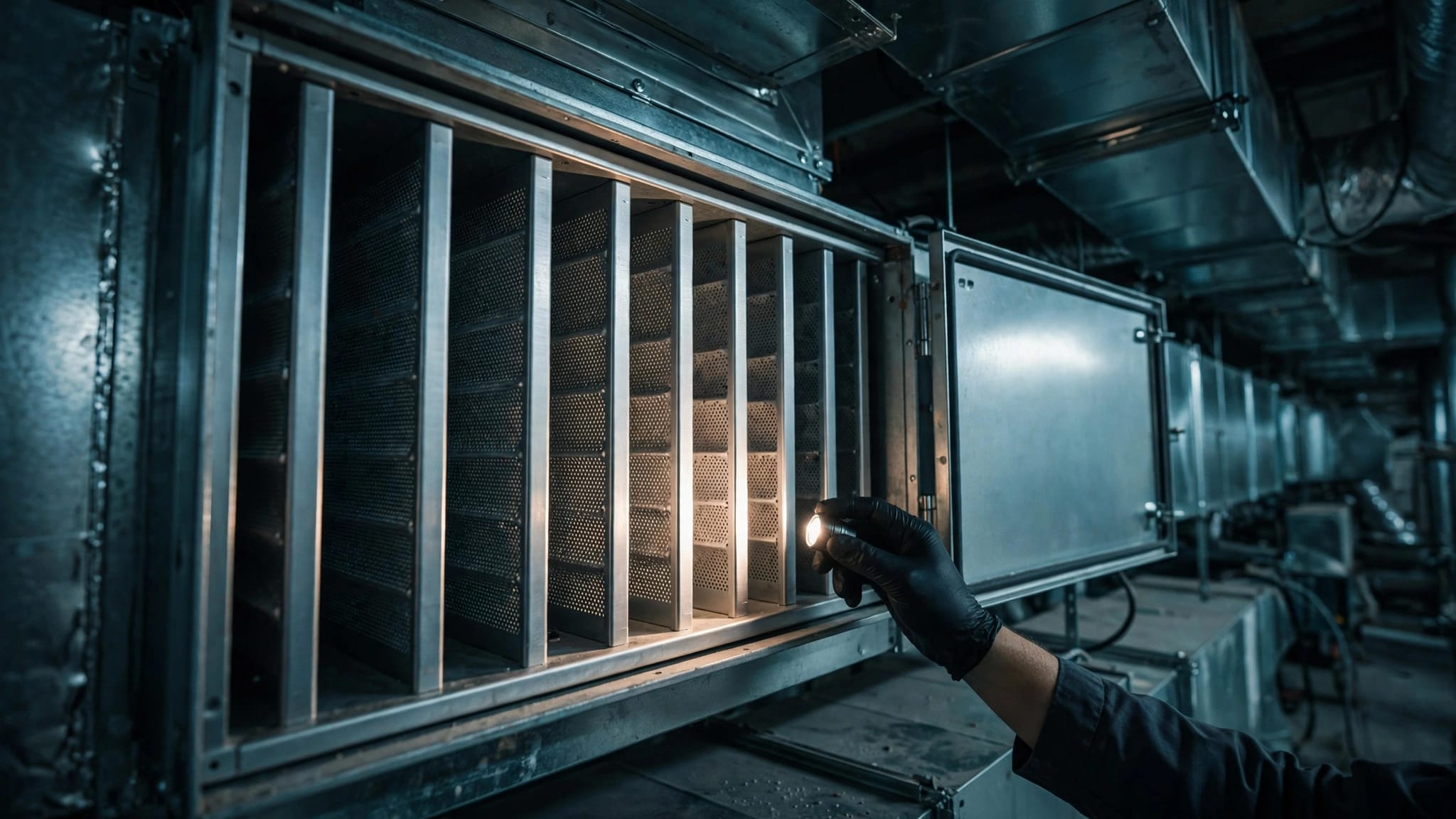
A complete quote should identify the actual components included in the visit. Supply vents alone may not represent the full system. Ask whether the work covers return grilles, supply branches, plenums, blower compartments, accessible duct sections, and air-handler interiors.
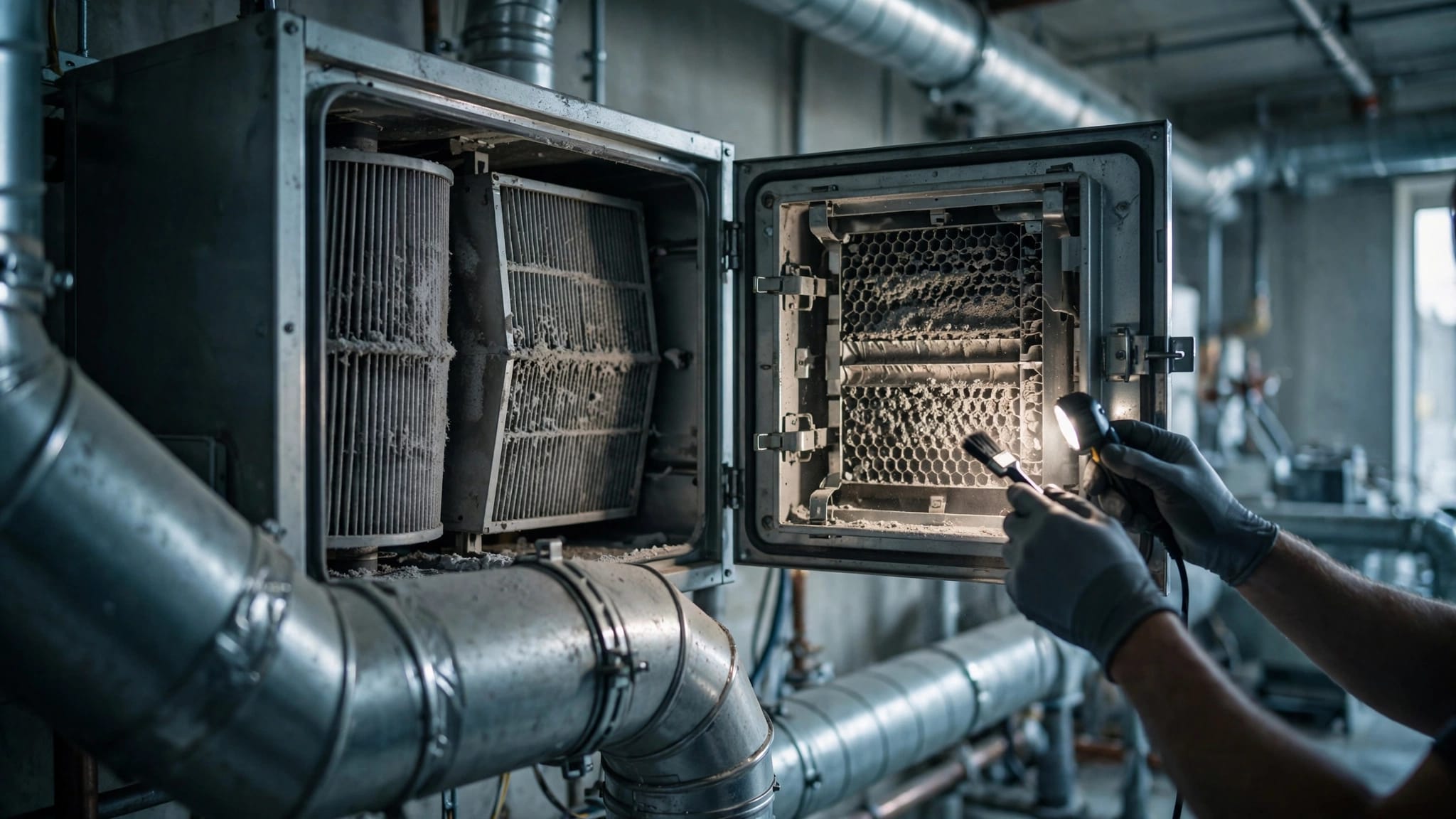
The condition of the system determines the cleaning approach. Heavy dust, construction debris, pest evidence, or visible moisture may require a different plan than routine buildup. A technician should inspect accessible areas and explain findings before adding work.
Commercial offices sometimes contain equipment that needs separate attention. Rooftop units, ceiling-mounted air handlers, and shared ductwork may have access limits. The service company should state whether those areas are included, excluded, or subject to building approval.
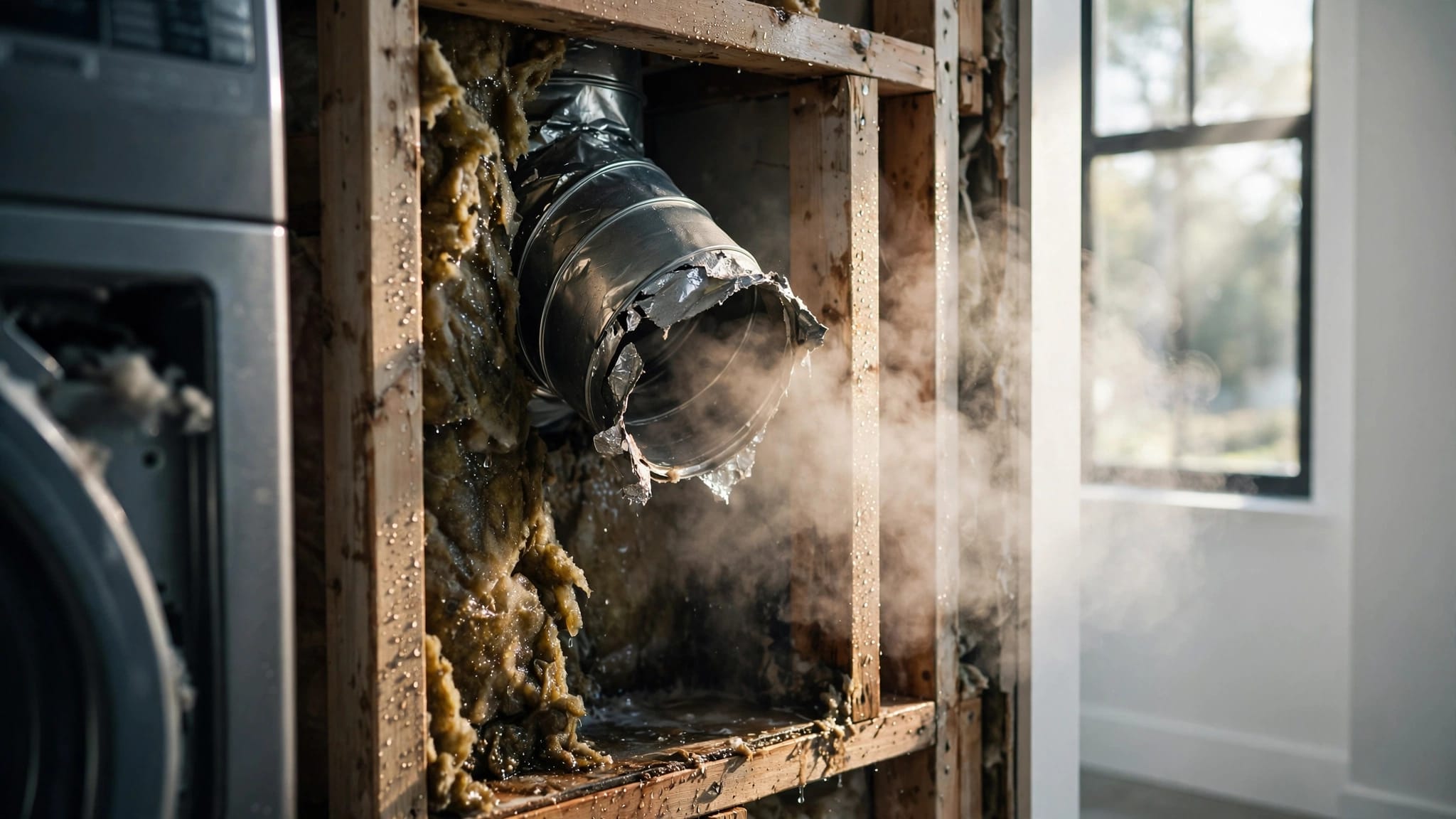
Dryer vent cleaning belongs on the schedule when an office includes a laundry room, salon, hotel operation, assisted-living area, apartment component, or other commercial laundry equipment. A standard office may not have a dryer vent, but mixed-use buildings often do. The vent route, termination point, and access location should be identified in advance.
Optional services also need clear boundaries. Microbial treatments, sanitizers, inhibitors, UV lights, air purification systems, and cigarette-odor removal address different concerns. They shouldn't be added automatically because a technician finds dust. Ask what condition supports the recommendation, which product or equipment is proposed, and what preparation the building needs.
No cleaning company can promise that duct work will remove every odor or prevent future dust. Conditions inside the building, filtration, moisture, construction activity, and occupant habits all affect what happens after service.
For offices with a specific odor or moisture concern, request documentation that separates observed conditions from recommended options. That approach gives the property owner a usable record and avoids paying for an unclear package.
Check the Quote, Work Plan, and Closeout Details
Commercial duct service pricing depends on the system size, number of vents, number of air handlers, access difficulty, equipment type, travel distance, and requested treatments. A low initial price may exclude rooftop access, additional zones, difficult duct sections, or post-service repairs.
Request a written estimate that includes:
- Areas and HVAC components covered
- Number of systems or zones
- Labor, equipment, travel, and after-hours charges
- Access panels, repairs, or replacement parts
- Optional treatments and their separate prices
- Expected service duration
- Cancellation or weather-rescheduling terms
- Documentation provided after completion
Ask whether the company is insured and whether technicians have experience in commercial buildings. Adkins Duct Cleaning & Dryer Vent Service is based in Fort Myers and serves businesses along Florida's Gulf Coast, including communities near Naples and Tampa. Its services include air duct cleaning, dryer vent cleaning, odor removal, microbial treatments, UV light installation, and air purification systems.
The closeout process matters as much as the appointment. Before staff return, the office contact should walk through the serviced areas. Check that grilles are secure, access panels are closed, furniture is in place, and no tools or protective materials remain.
If the work involved an air handler or rooftop unit, ask whether the system was restarted and checked. Confirm that thermostats, access doors, and alarms are in their normal settings. The technician should explain any condition that needs building maintenance attention.
A short completion report can include service date, systems cleaned, areas excluded, photos, observed concerns, and recommendations. Keep it with the property's maintenance records, especially when the building has multiple tenants or rotating facility managers.
When you're ready to compare the scope and schedule, Get a Free Estimate for office air duct or dryer vent cleaning.
Keep Florida Offices Ready After Service
After-hours duct service is easiest to manage when the office treats it as a facilities project, not a last-minute cleaning visit. The right appointment accounts for building access, HVAC controls, weather, security, tenants, and the time needed for a proper closeout.
Florida offices also need a plan for changing conditions. Construction dust, renovations, water intrusion, HVAC repairs, and new tenants can affect when another inspection makes sense. Keep filters, service records, and building notices organized so the next scheduling decision starts with accurate information.
The strongest plan is straightforward: define the work, choose a realistic service window, prepare the building, and confirm the results before reopening the office. With those steps in place, an evening appointment can fit the operation without turning the next morning into a cleanup problem.
Conclusion
After-hours duct service helps Florida offices protect working hours while addressing air duct, return, air-handler, and dryer vent needs. Success depends on planning the building details as carefully as the cleaning itself.
Confirm the scope, access rules, weather plan, and closeout process before the crew arrives. When the office opens the next morning, the work should be documented, the equipment returned to normal operation, and the agreed service areas ready for use.