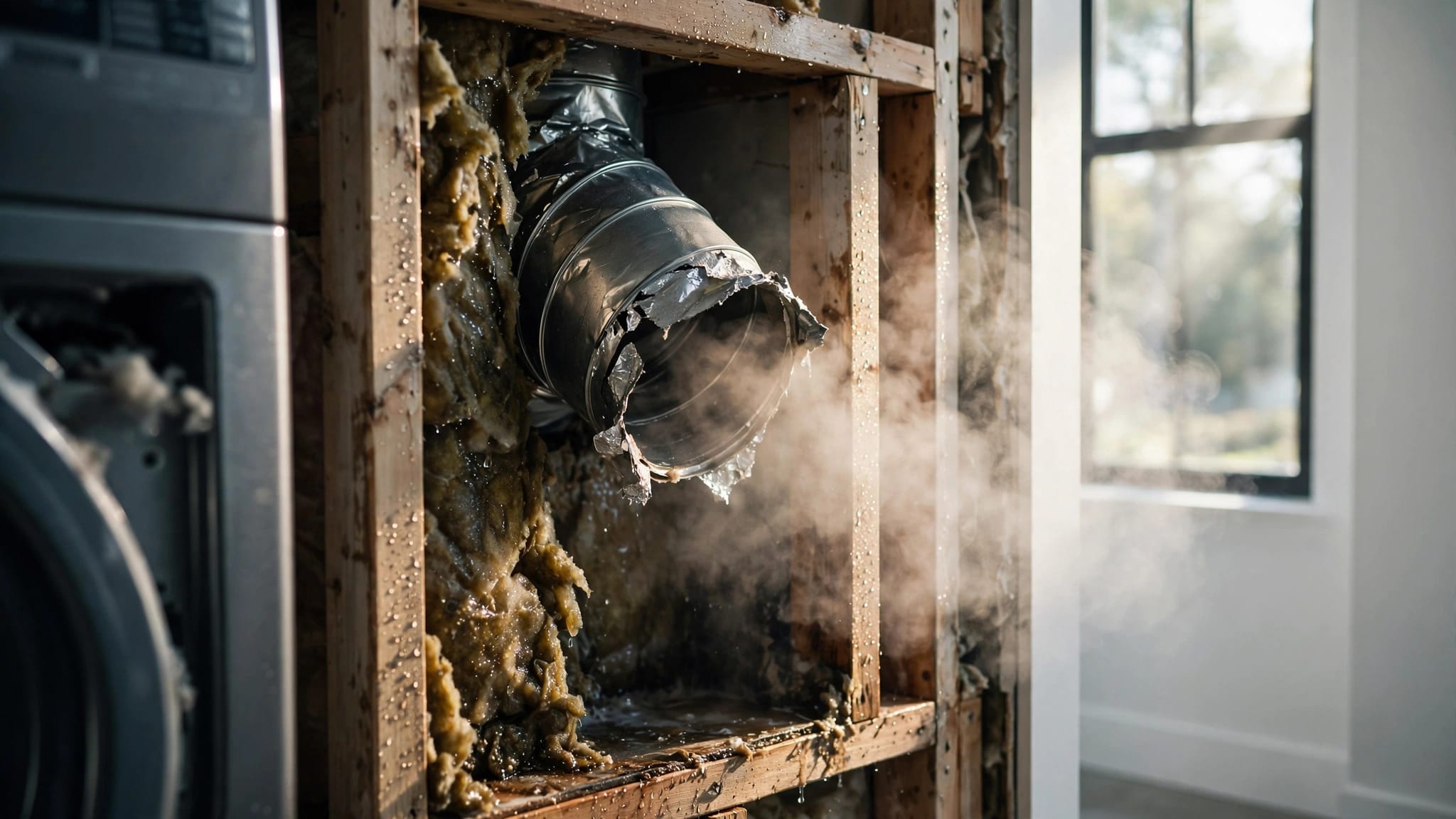
Can Sound Attenuators Be Cleaned During HVAC Duct Service?
The answer depends on the attenuator's construction, condition, and manufacturer guidance. HVAC sound attenuators need a separate assessment because the methods used on surrounding ductwork don't establish how their acoustic components should be treated.
For homeowners and building managers, the important distinction is component-specific care . A duct-cleaning visit should identify the attenuator, document its condition, and separate routine debris removal from work requiring specialized handling.
That decision starts with understanding what's inside the assembly.
Key Takeaways
- Construction and manufacturer guidance determine the appropriate service approach for an attenuator.
- Inspection should distinguish loose dust from damaged materials, moisture, and suspected microbial growth.
- General duct-cleaning equipment doesn't establish compatibility with acoustic components.
- Repairs, replacement, or specialist assessment may fall outside routine duct cleaning.
Why HVAC Sound Attenuators Need a Separate Assessment
Sound attenuators reduce noise traveling through an air distribution system. Their internal construction matters because an exterior metal housing doesn't reveal every material inside.
Construction affects the service decision
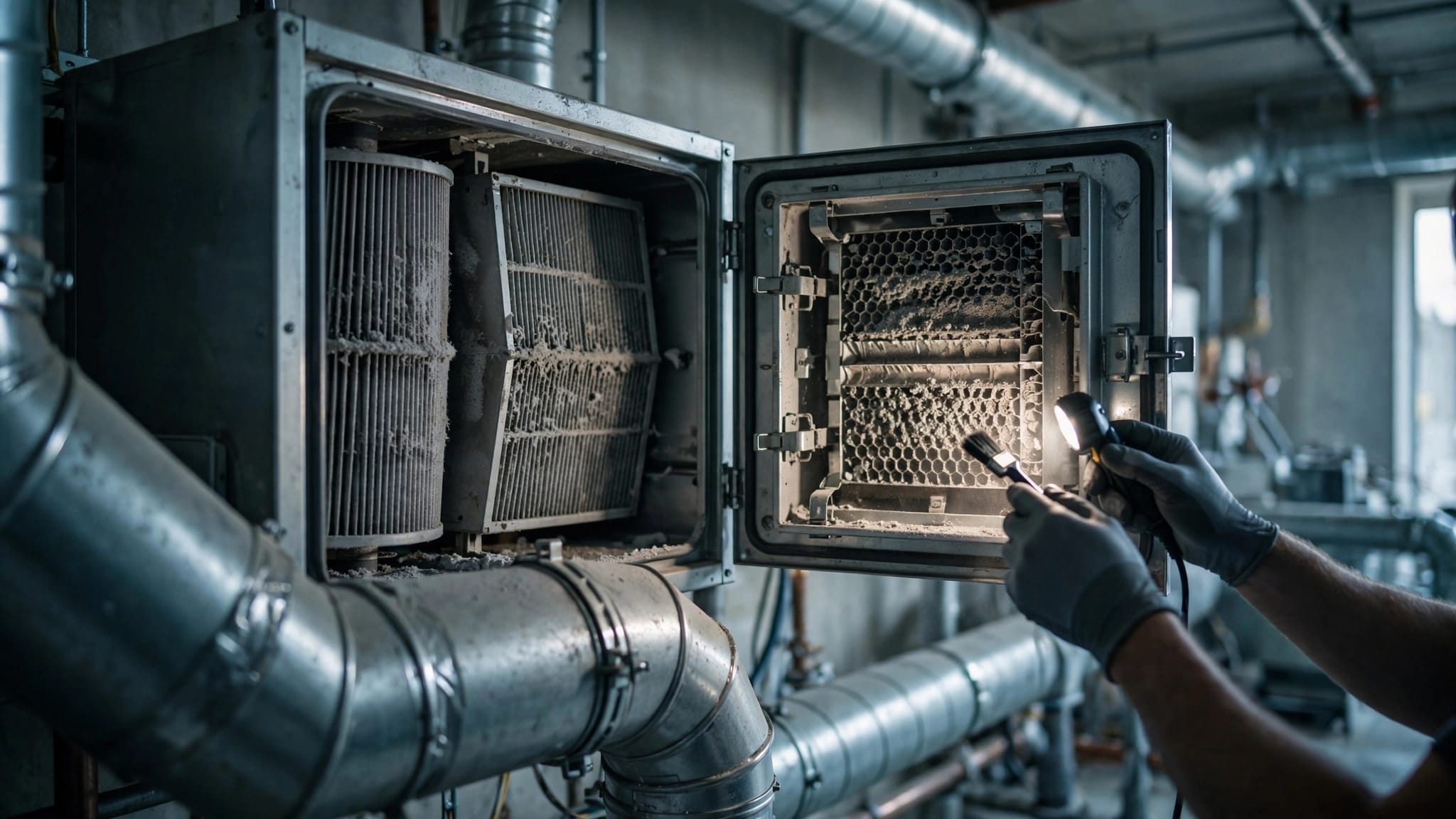
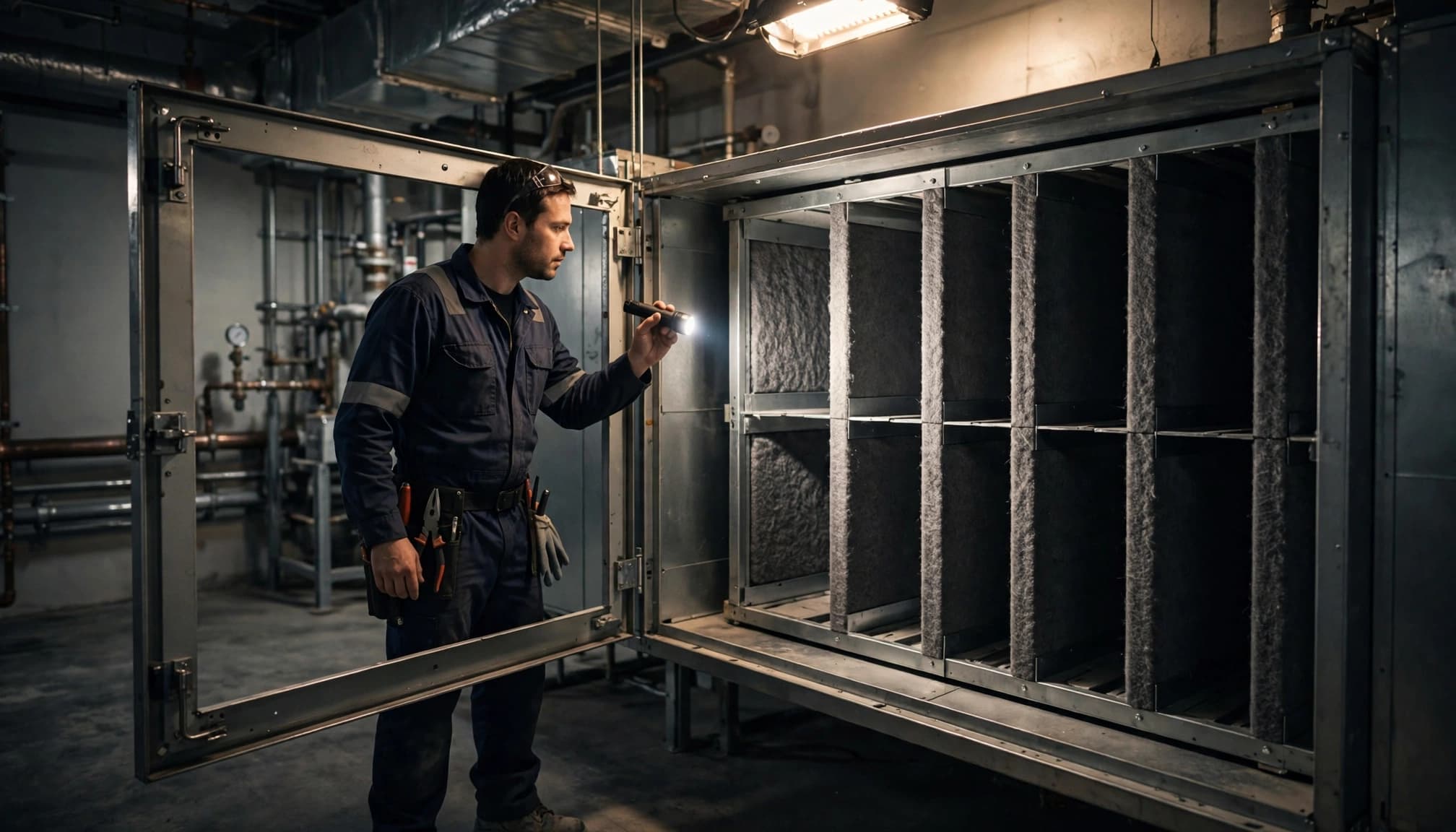
An attenuator may contain internal passages, baffles, and acoustic materials that differ from the surrounding duct surfaces. Accessible sheet metal and enclosed acoustic components require separate consideration.
The inspection should identify the assembly and distinguish its exposed surfaces from any protected or concealed materials. Otherwise, a technician could select equipment based on the duct's appearance rather than the component's actual construction.
Manufacturer guidance defines the limits
Manufacturer guidance is the basis for a component-specific service plan. General duct-cleaning practices don't replace it, and instructions for another HVAC component don't establish compatibility.
The proposed scope should distinguish surrounding ductwork from the attenuator itself. That distinction also prevents a broad description such as "whole-system cleaning" from obscuring which components receive attention and which require separate HVAC service.
What Inspection Should Cover Before Service
Inspection should establish the location, accessible surfaces, condition, and contamination present before cleaning equipment enters the area.
Separate debris from material damage
Loose household dust presents a different problem than deteriorated lining, pest waste, or construction residue. A technician should document those differences rather than recommend the same treatment for every finding.
Photos can establish the visible condition before work begins. However, dark staining alone doesn't prove mold, and removing surface debris won't restore damaged material. Our explanation of what duct cleaning can remove describes those broader service limits.
Identify moisture and access problems
Dampness calls for investigation before treatment. Possible sources include condensation, roof leaks, an overflowing drain pan, or poor condensate drainage.
Access matters, too. Equipment cannot clean a section it cannot reach. Any proposed opening should have a defined purpose, an approved location, and a plan for proper closure. Cutting into finished ceilings and opening ductwork are separate tasks with different repair responsibilities.
Safe Duct Cleaning Requires Material-Specific Methods
Professional duct cleaning generally combines debris removal with controlled collection. Negative-pressure equipment draws loosened material toward the collection system rather than allowing it to enter occupied rooms.
Meanwhile, technicians select agitation tools for the duct material and its condition. Controlled brushing may suit certain rigid surfaces, while fragile or damaged sections require a different decision. Our guide to negative-pressure duct cleaning explains the general containment process.
Those practices don't establish an appropriate cleaning method for an attenuator's acoustic components. In particular, moisture compatibility must never be assumed . A metal housing doesn't establish that enclosed acoustic media tolerates washing or chemical exposure.
A clean-looking exterior doesn't establish the condition of concealed acoustic material or authorize treatment inside the assembly.
Sanitizers and antimicrobial products also shouldn't be automatic additions. Physical contamination, moisture sources, and material condition need separate attention.
When a Qualified HVAC Professional Should Take Over
An attenuator that requires disassembly, restricted access, repair, or replacement needs a qualified HVAC professional. Routine duct cleaning shouldn't expand into component modification without a defined plan.
Wet or deteriorated insulation, persistent HVAC-related odors, and suspected microbial contamination deserve more than ordinary dust removal. Heavily contaminated porous material may require replacement or specialized remediation rather than repeated surface treatment.
If an older assembly contains unidentified insulation or material suspected of containing asbestos, stop disturbance and involve an appropriate specialist.
Replacement also requires attention to system performance. The professional should account for airflow and acoustic requirements when selecting a replacement. Removing internal parts or substituting an unrelated component can affect how the system operates.
Frequently Asked Questions
Does a whole-system cleaning quote include the attenuator?
The phrase alone doesn't establish coverage. A written scope should identify the duct sections and accessible components included, along with exclusions and separate repair work. An attenuator needs explicit consideration rather than an assumption based on its location inside the air path.
Will cleaning solve recurring dust or odors?
Cleaning addresses accessible contamination, but recurring problems can have other causes. Filter bypass, return-duct leaks, and ongoing moisture can introduce new debris or sustain odors. Correcting those defects matters more than repeating cleaning without addressing the source.
Plan Service Around the Actual Findings
HVAC sound attenuators deserve a component-specific decision , supported by inspection and manufacturer guidance. General duct-cleaning methods alone don't establish how an acoustic assembly should be handled.
For duct-cleaning needs in your Florida home or business, Get a Free Estimate from Adkins Duct Cleaning. The service scope should distinguish debris removal from any separate HVAC repairs or specialist work.