Can a Dryer Vent Leak Moisture Into a Wall Cavity?

Adkins Duct Cleaning • October 25, 2026

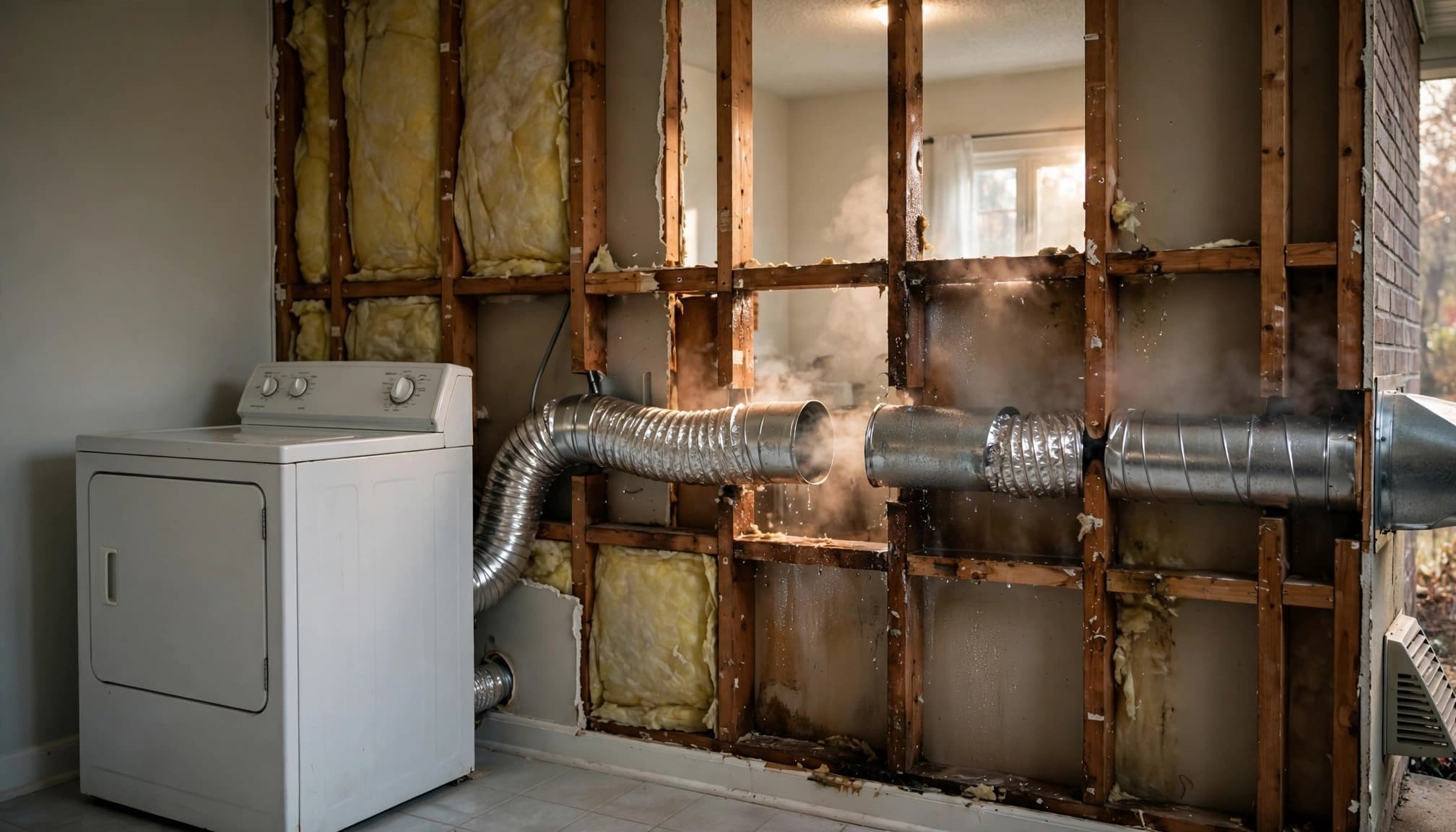
Yes. A disconnected, damaged, or poorly sealed dryer vent can release warm, moist exhaust into a wall cavity. The moisture can then collect on cooler surfaces and dampen drywall, insulation, or framing.

However, condensation inside an intact duct is a different problem, and a wall stain alone doesn't identify the cause. The first step is understanding where moisture escapes and which warning signs call for stopping the dryer.

Key Takeaways

  • A loose joint or damaged duct can release moisture and lint behind finished walls.
  • Condensation can form inside an intact vent when humid exhaust cools.
  • Cleaning removes lint, but damaged connections and wet building materials need separate attention.

How Dryer Vent Moisture Reaches a Wall

Disconnected joints and damaged ductwork

A dryer pushes moisture removed from clothing through its exhaust duct. That exhaust should travel through a continuous duct to an outdoor outlet.

If a concealed connection separates, develops holes, or has poorly sealed joints, exhaust can enter the surrounding cavity. Warm, humid air then contacts cooler building materials, where water can collect.

A loose connector behind the dryer may instead discharge into the laundry room. Whether moisture reaches the wall depends on the leak's location and surrounding construction.

Condensation inside an intact vent

An intact duct can contain water without leaking exhaust into the wall. When warm, humid exhaust cools against a colder duct surface, water vapor turns into droplets.

Restricted airflow and duct sections passing through cooler spaces can contribute to this problem. Our explanation of the causes of dryer vent condensation covers those conditions.

Internal condensation doesn't automatically mean a wall-cavity leak. Moisture must escape the duct, or reach building materials through another route, to wet the surrounding wall.

Warning Signs Around the Laundry Room

Look for changes that occur around laundry use. A room that becomes unusually muggy, fresh lint near the connection, or dampness around the wall penetration deserves attention.

Other clues include longer drying times, clothes remaining damp after a normal cycle, and a dryer cabinet that feels hotter than usual. A sticking exterior flap or weak exhaust can also point to restricted airflow.

Musty odors, peeling paint, discoloration, or softened drywall may indicate an ongoing moisture problem. These overlap with the signs of a disconnected vent, but they don't establish the source.

Plumbing leaks and exterior water entry can produce similar damage. Also, visible airflow outdoors doesn't rule out a partial separation elsewhere.

Why a Hidden Leak Needs Attention

Repeated wetting can damage drywall and insulation. If wood stays damp, deterioration and mold growth can follow. Painting over a stain won't stop moisture from returning.

Escaping exhaust also carries lint. Deposits inside a cavity add combustible material, while restrictions in the vent can trap heat and increase fire risk.

A gas dryer adds another concern because its exhaust contains combustion products. A disconnected exhaust path can allow those gases, including carbon monoxide, into the home.

Carbon monoxide has no smell. An unusual odor deserves attention, but the absence of an odor doesn't establish that a gas dryer is safe.

What to Do About a Suspected Leak

Stop use and limit checks to accessible areas

If you find a disconnected duct, burning smell, scorching, or significant moisture damage, stop using the dryer until a qualified professional evaluates it.

For a basic visual check, turn the appliance off and let it cool. Look at accessible connections without pulling on the duct, moving a gas dryer, or opening finished walls.

Don't run another load to reproduce a suspected hidden leak. Avoid pushing brushes or improvised tools through an unknown route; they can damage ductwork or worsen a separation.

If a carbon monoxide alarm sounds or you smell gas, leave immediately. Call 911 or the gas utility from outside. Don't operate switches or troubleshoot indoors.

Inspect the exhaust path and address damage

A professional dryer vent inspection should cover the dryer connection, accessible duct sections, route, exterior outlet, and airflow. Concealed defects may require additional access.

Lint removal can restore restricted airflow, but damaged sections and loose joints need correction. Afterward, airflow testing helps assess whether exhaust reaches the outdoor termination.

Cleaning can remove a blockage, but it can't reconnect a separated duct or repair moisture-damaged drywall.

Wet insulation, drywall, or framing also needs assessment and appropriate drying or replacement. Repairing the exhaust route doesn't automatically resolve existing wall damage.

Frequently Asked Questions

Can a dryer keep working with a disconnected vent?

Yes. The drum and heater may continue operating while exhaust escapes indoors or behind a wall. Clothes drying doesn't establish that the vent is connected safely.

Will dryer vent cleaning fix moisture in a wall?

Only if lint restriction contributes to the problem, and even then, cleaning may be only part of the solution. A separated joint, damaged duct, or wet wall materials requires separate work.

Should I open the wall myself?

Avoid cutting into a finished wall without knowing the location of wiring, plumbing, and ductwork. A qualified professional can determine whether access is necessary.

Keep Dryer Exhaust Outside the Wall

A dryer vent can send moisture into a wall when its exhaust path loses its seal or continuity. However, finding the source matters because condensation and unrelated leaks can produce similar symptoms.

Stop using a dryer with a known exhaust defect. For help with dryer vent cleaning, Get a Free Estimate. A clear vent and sound connections work together to carry moisture outdoors.

By Adkins Duct Cleaning • October 24, 2026
Energy recovery ventilator cleaning addresses contamination in the ERV equipment and any connected areas included in the written service scope. It doesn't automatically include every duct, the building's air handlers, mechanical repairs, or dryer exhaust cleaning. For commerci...

By Adkins Duct Cleaning • October 23, 2026
HVAC service in senior living communities should follow residents' care routines, room-access needs, and comfort requirements. A workable plan identifies affected rooms, assigns staff contacts, and prepares a temperature backup plan before equipment shuts down. Maintenance can...
By Adkins Duct Cleaning • October 22, 2026
Indoor pool HVAC ducts face a steady mix of humid air, temperature changes, and airborne pool-treatment compounds. Moisture can condense on cool duct surfaces, dampen insulation, and contribute to corrosion or microbial growth. Cleaning can remove dust and debris, but it won't...