Indoor Pool HVAC Ducts: Moisture, Corrosion, and Service
Indoor pool HVAC ducts face a steady mix of humid air, temperature changes, and airborne pool-treatment compounds. Moisture can condense on cool duct surfaces, dampen insulation, and contribute to corrosion or microbial growth.
Cleaning can remove dust and debris, but it won't stop new moisture from reaching the system. Good service starts by finding the source, then matching cleaning or repairs to the condition of the ducts.
How moisture reaches indoor pool HVAC ducts
Pool water continually adds moisture to the air. When humid air contacts a duct surface that is cooler than the surrounding air, water can form on the exterior. Condensation may also occur inside or around the system when drainage, airflow, or insulation problems leave surfaces damp.

Why cold surfaces matter
Supply ducts carry cooled air, so their surfaces can be cooler than the pool room. If humid air reaches an inadequately insulated section, a seam, or a damaged connection, condensation can collect there. Repeated dampness matters more than a single brief instance because it gives materials less time to dry.
The source isn't always the duct itself. A leak, poor insulation, drain issue, or airflow imbalance can contribute to moisture problems elsewhere in an HVAC system. Persistent humidity in an occupied room can have several possible causes, as described in our guide to duct leaks and uneven room humidity.
Where moisture can collect
Pay attention to joints, fasteners, duct supports, and transitions between different materials. These areas can hold moisture or show damage before a larger duct section does. Nearby air-handler components, including the coil and condensate drain area, may also be relevant when investigating ongoing dampness.
How pool chemicals contribute to duct corrosion
Pool-treatment compounds and other airborne contaminants can reach the surfaces of ductwork. In a persistently humid enclosure, moisture and chemical exposure together may increase corrosion risk for susceptible metals, coatings, fasteners, and joints. The rate and extent of damage depend on the materials and conditions, so a visual inspection is more useful than assuming every indoor pool has the same issue.
Seams and fasteners deserve attention
Corrosion may first appear as discoloration or surface spotting near a seam, screw, hanger, or connection. If damage progresses, metal can pit or lose strength. A weakened joint may leak conditioned air, while a corroded support may no longer hold the duct securely.
A small spot alone doesn't establish how far the damage extends. However, recurring dampness, loose connections, or visible deterioration are reasons to look beyond routine cleaning and assess whether a repair is needed.
Chemical exposure is not a cleaning problem
Duct cleaning removes accumulated debris from accessible system surfaces. It doesn't restore a corroded duct, renew a damaged coating, or correct ongoing exposure to moisture. If the metal or a connection has deteriorated, an HVAC contractor may need to assess repair or replacement options.
What damp insulation can mean for service
Duct insulation helps limit heat transfer and can help keep duct surfaces from reaching conditions that encourage condensation. When insulation becomes wet, damaged, or displaced, it may lose some of its insulating value. It can also retain moisture against nearby surfaces.
Check the insulation, not only the metal
Look for wet or matted sections, gaps, tears, sagging, and water staining around accessible ductwork. A damp area may point to condensation, a nearby leak, or another source that needs attention. Insulation can also hide the duct surface beneath it, so the metal may require a closer inspection if the outer layer shows signs of water damage.
Flexible and lined ducts call for care. Their inner surfaces or insulation can be damaged by rough handling, and cleaning cannot repair a torn liner or restore material that has deteriorated. The service plan should account for the duct type and condition.
Odor can help locate a concern
A musty smell near a supply or return grille may come from duct materials, but the source could also be an air handler, drain pan, or another damp area. Odor alone doesn't prove there is mold inside the duct. Track when and where it occurs, then include those details in an inspection.
Mold risk depends on moisture and material
Humidity by itself doesn't prove that mold is growing in a duct system. The concern rises when moisture persists on a surface with dust or other material that can support growth. Insulation and porous duct liners need particular care because contamination may be harder to remove fully from material that has absorbed moisture.
A dark mark is not a diagnosis
Staining, dust, residue, and biological growth can look similar. A dark spot on a grille or duct surface doesn't identify the material or show how far it extends. Damp insulation, recurring condensation, and persistent odors are useful clues, but an informed evaluation is needed to determine the cause.
If mold remediation and HVAC cleaning both become necessary, coordinate the work. Cleaning before the moisture source is corrected can leave the system exposed to the same conditions. See our advice on cleaning ducts after the moisture source is fixed.
Treatment has a limited role
An antimicrobial product can't repair a leak, dry wet insulation, or remove damaged material. Treatment may be appropriate in some situations after cleaning, but it shouldn't replace moisture control or physical removal of contamination where that is needed. Our guide to the limits of antimicrobial duct treatments explains why the source of the problem matters.
How moisture-related damage affects system performance
Wet or damaged ductwork can affect how air moves through a building. A loose connection may let conditioned air escape, while a crushed or deteriorated section can restrict airflow. Poor insulation can also allow heat transfer that reduces the air's cooling effect before it reaches a room.
Comfort changes can point to a larger issue
Uneven temperatures, weak airflow, or a room that feels persistently damp can have several causes. Duct cleaning may remove buildup, but it won't correct an airflow imbalance, failing HVAC component, or damaged duct. Filters, the coil, blower, drain system, and duct connections may all matter to the diagnosis.
Dust may return if the source remains
If a return connection draws unfiltered air into the system, or if a moisture problem continues, debris can build up again after cleaning. A service visit should distinguish contamination that can be removed from defects that need repair. Learn more about what duct cleaning can and cannot remove.
What to inspect before scheduling duct service
Start with accessible areas and note any visible changes. Avoid entering a tight or unsafe space to inspect ductwork. A qualified HVAC or duct cleaning professional can assess areas that aren't safely accessible.
Look for moisture and material damage
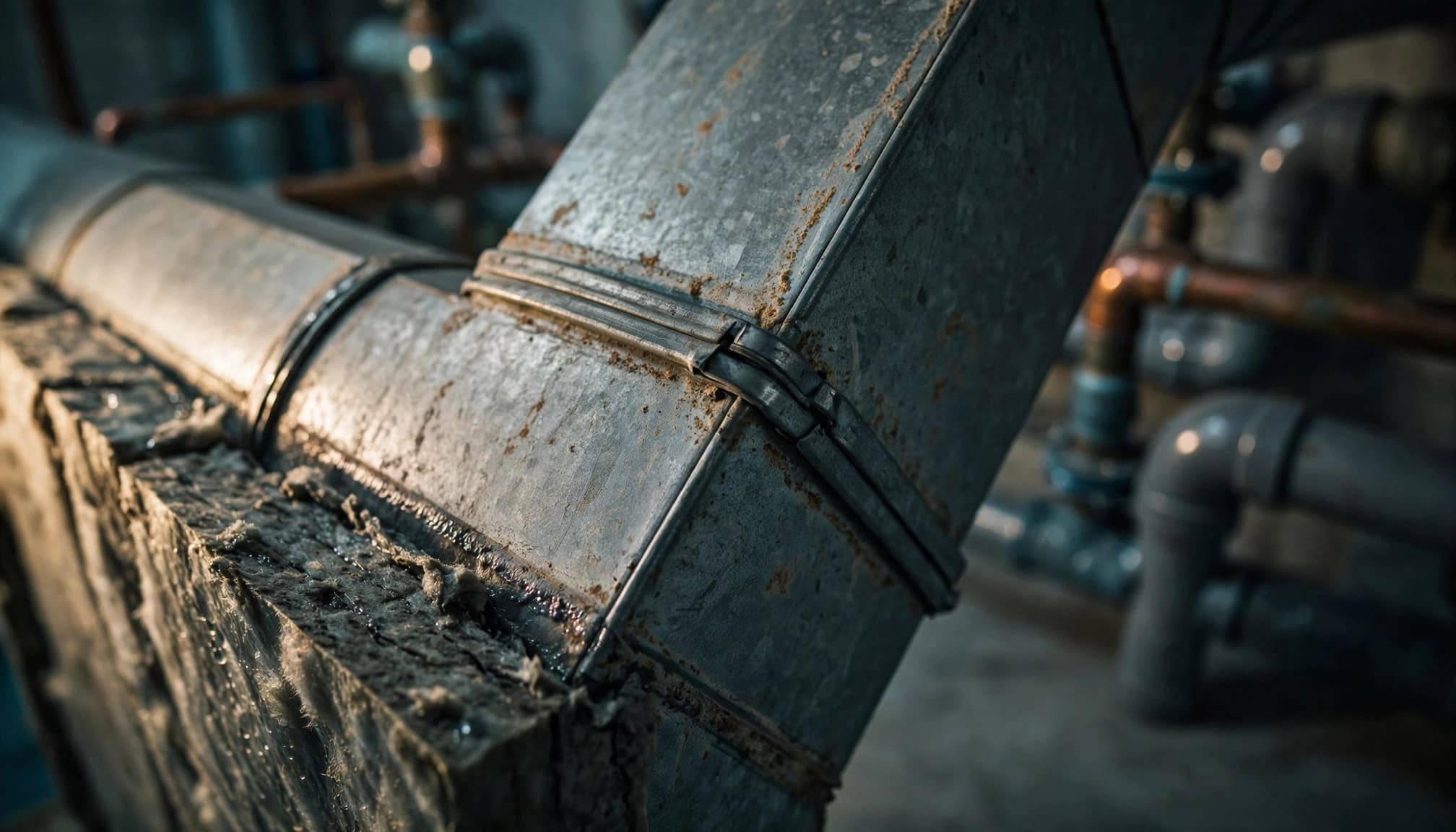
At visible duct runs and grilles, note recurring condensation, stains, corrosion, loose joints, damaged insulation, sagging sections, or a musty odor. Record whether the signs appear in the same area or change over time. Photos can help describe what you noticed, but they don't confirm the cause.
Inspection may also include the air handler, filter cabinet, coil area, drain pan, return grilles, and accessible supply runs. This broader view helps separate duct contamination from a problem at the equipment or elsewhere in the building.
Describe changes in airflow and odor
Tell the service provider which areas feel different and when the odor or condensation appears. A change that follows HVAC operation may point toward a system-related source, although it doesn't identify the cause on its own. Share any recent water leaks, repairs, or visible insulation damage as well.
Cleaning and repairs have different jobs
A useful service plan identifies the affected components, the visible condition, and whether the need is cleaning, repair, remediation, or a combination. Duct cleaning can remove debris from suitable, accessible parts of the system. It cannot correct a leak, replace deteriorated insulation, or fix a drainage problem.
Fix the moisture source first
If an active leak or drainage issue is keeping ductwork wet, address that condition before cleaning. When suspected mold is involved, coordinate the HVAC work with the remediation process. Otherwise, cleaning may remove existing debris without changing the conditions that caused the problem.
Repairs may require an HVAC contractor, especially when the issue involves duct connections, airflow, the air handler, or condensate drainage. Cleaning and mechanical repair are related services, but they are not interchangeable.
Request a clear scope of work
Before service, ask which parts of the system will be inspected and cleaned, how the provider will access them, and whether any sections appear damaged or unsuitable for cleaning. Negative-pressure methods can collect loosened debris, but they don't repair damaged ducts or prevent new contamination from an ongoing moisture problem. Read how negative-pressure duct cleaning works.
For indoor pool facilities on Florida's Gulf Coast, we can discuss duct and dryer vent cleaning needs and provide a Get a Free Estimate.
Key takeaways for indoor pool HVAC maintenance
- Persistent humidity can lead to condensation on cool duct surfaces, especially around seams, connections, and damaged insulation.
- Pool-treatment compounds may add to corrosion concerns when duct surfaces stay damp.
- Musty odors and dark marks warrant attention, but neither alone confirms mold inside the duct system.
- Cleaning removes suitable debris; repairs and moisture control address the underlying conditions.
- A clear inspection and service scope help distinguish cleaning from HVAC repair or remediation.
Frequently asked questions
Can duct cleaning stop condensation?
No. Cleaning removes debris, but it doesn't correct the conditions that allow condensation, such as ongoing moisture, inadequate insulation, or a mechanical issue. The source needs to be addressed separately.
Does a musty smell prove there is mold in the ducts?
No. A musty odor can come from damp insulation, the air handler, a drain pan, or another part of a building. Inspection can help identify the source. Odor alone is not proof of mold.
Should ducts be cleaned after water damage?
It depends on whether water affected the HVAC system and what inspection finds. Wet or damaged materials may need repair or replacement, while suitable contaminated surfaces may need cleaning. Fix the water source before deciding on duct service.
Can antimicrobial treatment prevent moisture problems?
No. Treatment doesn't stop leaks, condensation, or poor drainage. It may have a limited role after cleaning when an evaluation supports its use, but it is not a substitute for correcting moisture conditions.
Keep moisture control at the center of service
Indoor pool HVAC ducts need attention when condensation, corrosion, damaged insulation, odor, or airflow changes appear. The right response depends on what inspection finds, because cleaning, repair, and remediation solve different problems.
Addressing the moisture source first gives cleaning a clear purpose and helps prevent the same conditions from affecting the system again.