High-Velocity HVAC Systems: What Professional Duct Cleaning Requires
High velocity duct cleaning calls for more than vacuuming the small vents you can see. These systems use narrow duct runs, so a professional needs to understand the layout, inspect the materials, and control debris as it's loosened.
If you're weighing a cleaning, the main question is whether the service reaches the connected ductwork safely, not just the register faces. Here's what a careful process involves and what it can and can't accomplish.
Key Takeaways
- High-velocity systems need an inspection before anyone chooses tools or cleaning methods.
- Professional cleaning uses controlled negative pressure to pull loosened debris into collection equipment.
- Flexible duct liners can be damaged by excessive force or unsuitable tools.
- A full-system service may cover supply and return ducts, accessible plenums, registers, and agreed air-handler areas.
- Cleaning removes loose debris, but it won't repair damaged ducts or solve an ongoing moisture problem.
How high-velocity HVAC systems differ
A high-velocity system distributes conditioned air through a network of narrow ducts, often routed through spaces where large conventional ductwork wouldn't fit. Small outlets connect those runs to the rooms. That compact layout can make access and tool selection more important than they are in an open, straight section of rigid metal duct.
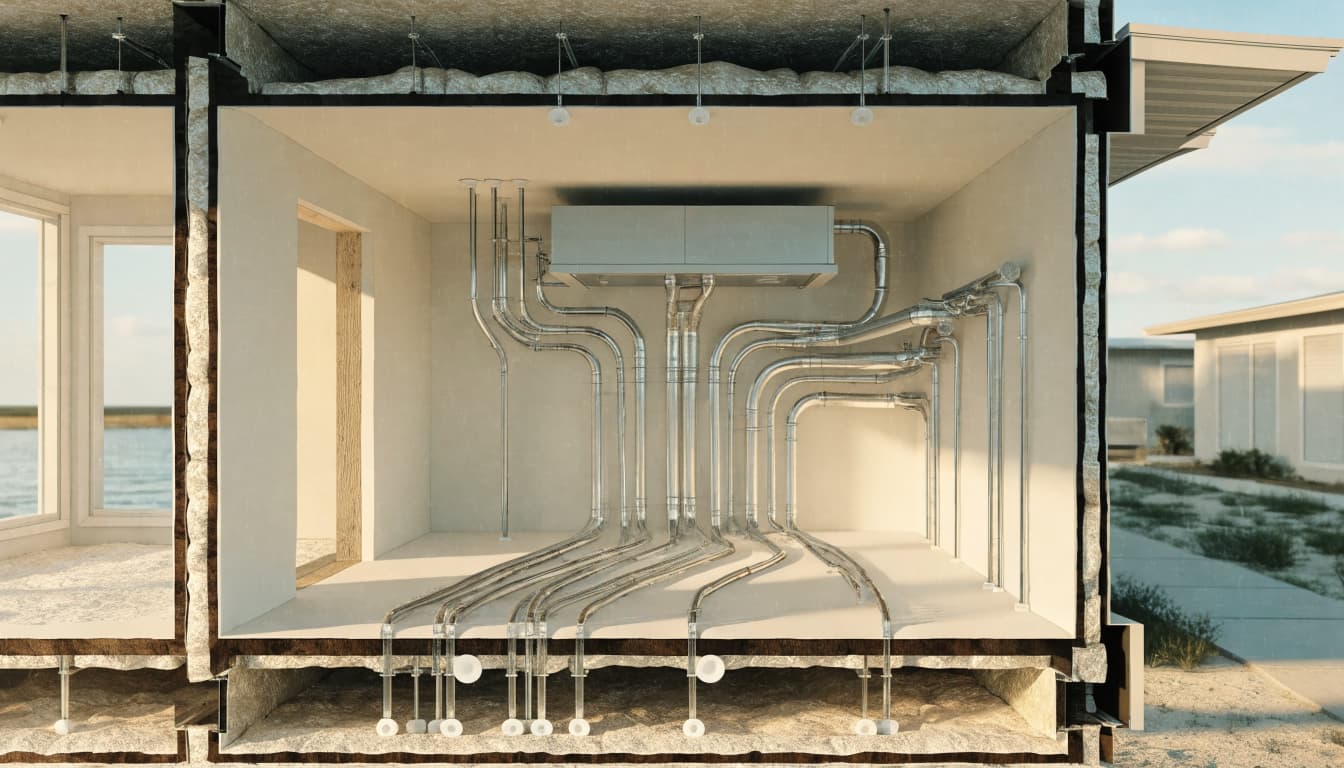
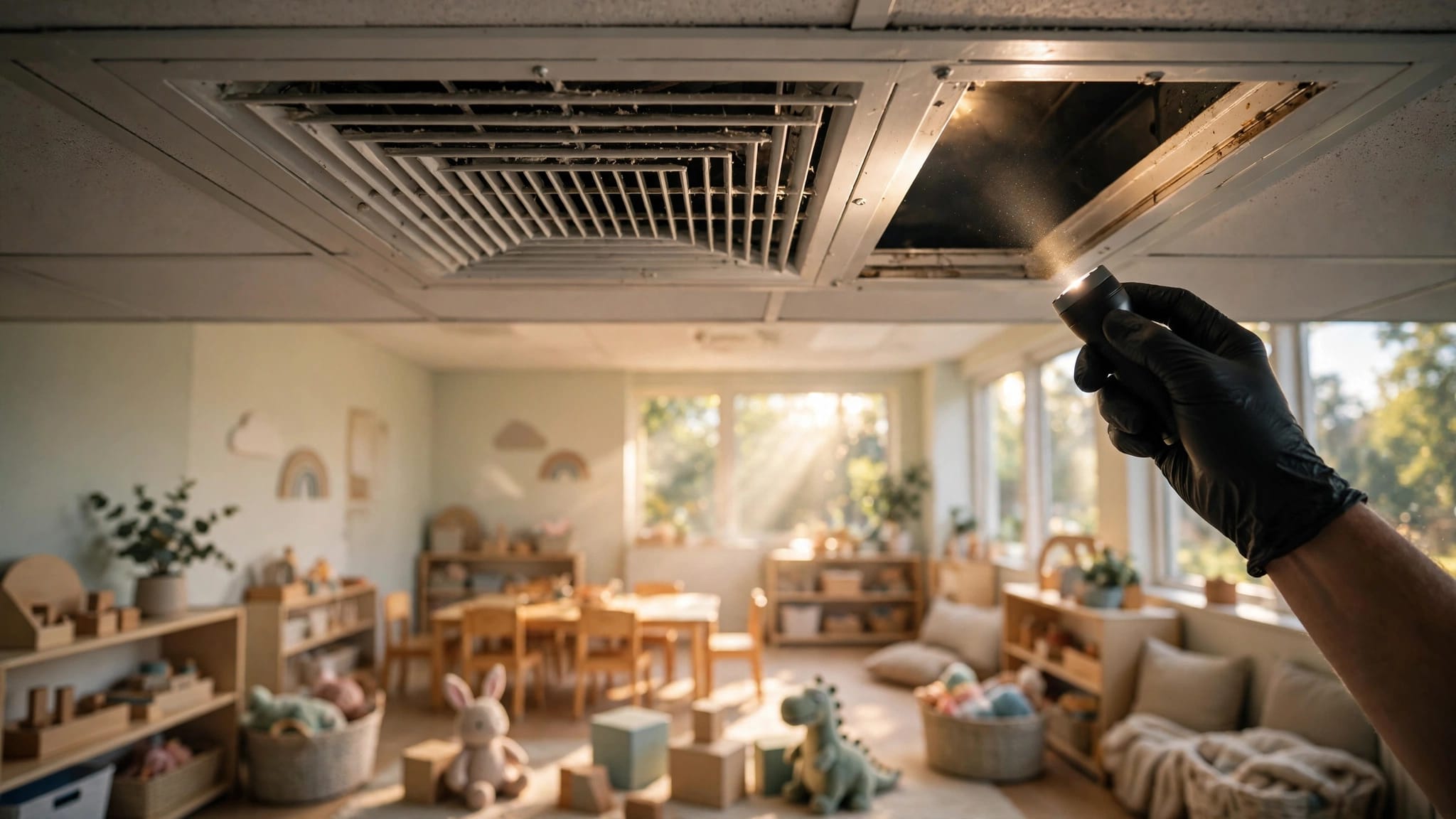
The visible outlet is only the endpoint of a longer path. Dust on a grille may be limited to the surface, or it may be connected to buildup farther inside the branch. Cleaning only the outlet can improve its appearance, but it doesn't automatically clean the duct run, return path, or air-handler area.
That's why high velocity duct cleaning should start with a system-specific inspection. The technician needs to understand which parts are accessible and what the duct material can tolerate before selecting equipment.
What a professional inspection should cover
A careful inspection gives the crew a basis for choosing the scope and method. It also helps separate ordinary settled dust from conditions that need repair or another response.
Trace the accessible supply and return paths
The technician should identify the air handler, supply branches, return openings, registers, and accessible connections. The layout matters because a tool that works in a straight metal trunk may not suit a narrow run with bends or a flexible liner.
Access is part of the assessment, too. Sections behind finished ceilings, inside walls, or within closed chases may not be reachable through a register. A clear scope distinguishes accessible areas from sections the equipment cannot reach.
Look for material and condition concerns
Duct construction, age, visible debris, and signs of moisture all affect the cleaning plan. Flexible ductwork has an inner liner that can tear, collapse, or separate from its fittings if a tool is forced through a tight bend. A technician should also notice damaged insulation, disconnected sections, pest evidence, or water-related problems.
If the system shows a condition that makes cleaning unsafe or ineffective, the work may need to pause while the issue is addressed. Cleaning over a damaged or wet section won't restore it.
How vacuum containment controls the work
Professional cleaning relies on removing loosened material, not simply moving it around. Negative pressure helps direct debris toward a collection unit instead of letting it drift into the home.
Keep the system under controlled suction
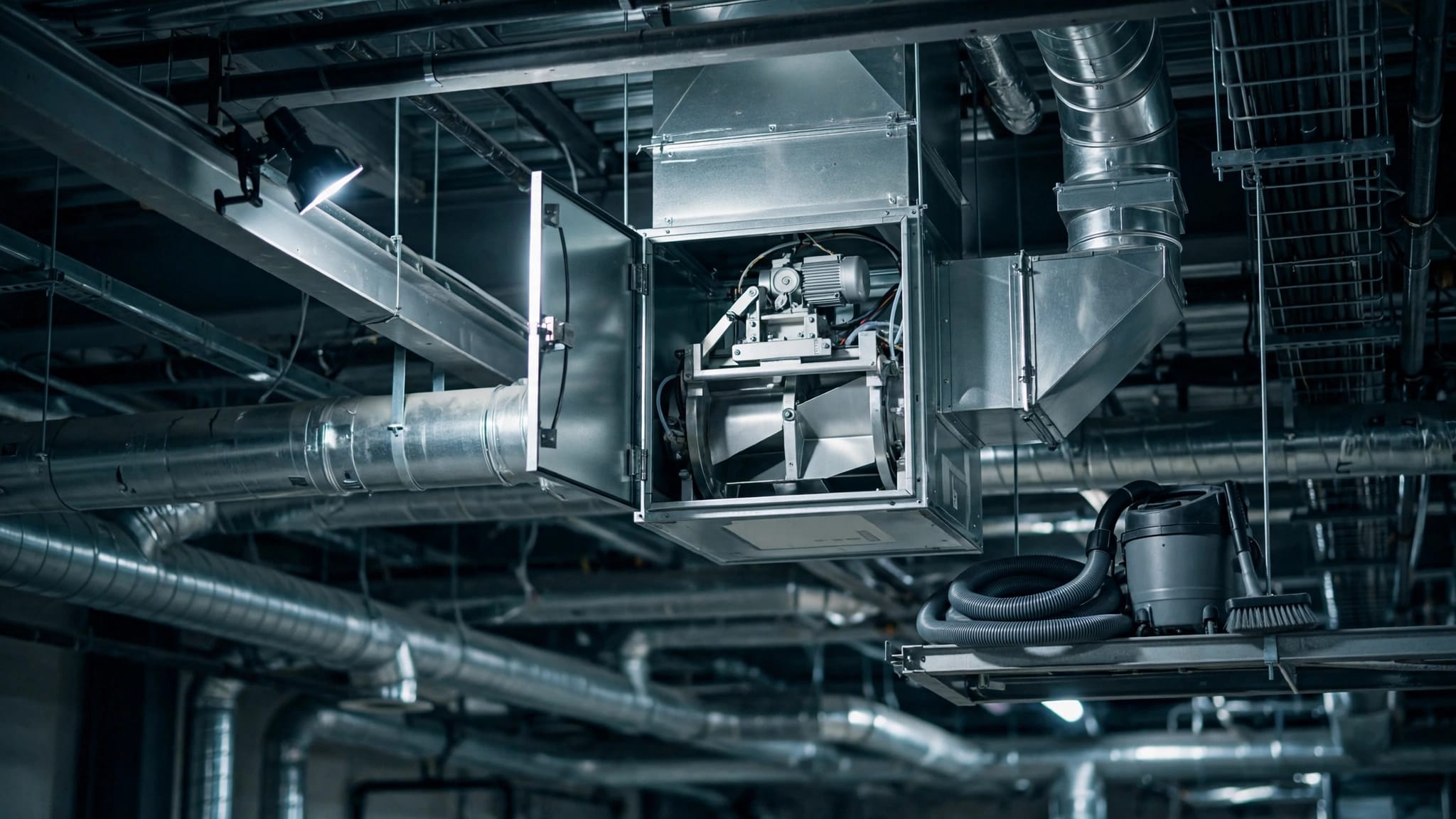
A high-powered vacuum connects to an appropriate access point in the duct system. As the technician agitates an interior surface, the vacuum pulls the loosened material toward the collection equipment. Protected registers and sealed connections help keep dust contained.
Without vacuum containment, compressed air or brushing can send debris into rooms or deeper into the system. The difference between controlled removal and a quick blow-through is the collection setup, along with methodical work through the areas included in the service.
For a closer look at this approach, see how negative-pressure duct cleaning works.
Work through the agreed scope, then review the system
The crew should protect nearby floors and furnishings before work begins. They then clean accessible sections while maintaining suction, rather than treating the visible openings as the entire job. At the end, access openings need to be properly closed and the system checked.

A final inspection helps identify whether the accessible areas were addressed and whether the crew found any damage or moisture concerns. Photos can make hard-to-see conditions easier to understand.
Choose cleaning tools for the duct material
No single agitation tool fits every duct. The material, shape, condition, and type of debris should guide the choice.
Flexible ducts need a gentle approach
Flexible ductwork can be more vulnerable than a sturdy metal trunk. An aggressive brush or forced tool can damage the inner liner, distort the duct, or pull at a connection. Narrow branches and tight turns also limit how equipment can move.
The technician should adjust the tool and pressure to the particular run. A household vacuum isn't a substitute: it lacks the reach, power, filtration, and containment setup needed for duct cleaning, and its hose can snag flexible material.
Rigid sections may allow different agitation
Controlled brushing or air-whip agitation can loosen debris in suitable sections. A rotating brush may work on an accessible, durable surface, while an air whip can reach branches where a large brush won't move freely. Either method still requires effective vacuum containment.
The goal is to loosen material without harming the duct. Read more about duct cleaning agitation methods, including why tool choice depends on system conditions.
What a full-system service may include
A full-system cleaning covers more than grille faces. Its exact scope depends on the system design and access, so the written estimate should describe the areas included.
Supply, return, and accessible components
A service may address supply branches and trunks, return ducts and grilles, accessible plenums, and registers. These parts form connected paths, but they don't all collect the same material. Return ducts draw air back toward the equipment, while supply ducts carry conditioned air out to rooms.
Accessible air-handler surfaces may also be included when they contain debris and fall within the agreed scope. However, a coil is a separate component that needs an appropriate cleaning method and protection for its fins, drain system, and nearby electronics. Don't assume every internal component is included simply because a service is described as full-system.
Register cleaning has a narrower purpose
Register cleaning focuses on covers, grilles, and nearby accessible surfaces. It can make sense when dust is limited to the visible face and the connected ductwork doesn't show signs of buildup. It won't remove heavy debris farther inside a branch or return path.
Understanding the difference between air duct register cleaning and full-system service helps match the work to the actual condition. The right scope depends on where contamination is found, not just what's visible from across the room.
What duct cleaning can't fix
Cleaning removes loose contamination from accessible surfaces. It doesn't repair a crushed, disconnected, or leaking duct, and it can't correct an undersized return or a failing blower motor.
Treat mechanical and moisture problems separately
A damaged duct can restrict airflow even after nearby surfaces are clean. Likewise, moisture intrusion needs a source-focused response. Wet insulation, damaged liners, or substantial suspected microbial growth may require another kind of assessment before ordinary cleaning proceeds.
Cleaning also won't stop new dust from entering through duct leaks, a dirty filter, open windows, or ongoing work in the home. If contamination keeps returning, the source matters as much as the debris already inside the system.
Avoid promises about health or airflow
A cleaning may reduce settled debris available for the system to move, but it doesn't remove every airborne particle or guarantee a change in symptoms. Indoor air quality also depends on filtration, moisture, household activity, and other sources of particles.
A clear service description should focus on the areas cleaned and the material removed. It shouldn't present duct cleaning as a repair or a cure for every odor, airflow concern, or health complaint.
When microbial treatment may be appropriate
A musty odor or suspected growth calls for identifying the cause, not automatically adding a spray. Microbial treatment may be considered after cleaning when there's a specific concern about mold, mildew, bacteria, or odor on internal surfaces.
Treatment doesn't replace source removal or moisture control. If water continues to enter the system, applying a product won't resolve the underlying problem. The product and intended use should also fit the condition and surface involved.
Our overview of air duct microbial treatment explains why treatment is a targeted option rather than a routine step for every duct-cleaning visit.
Dryer vent cleaning is a separate service
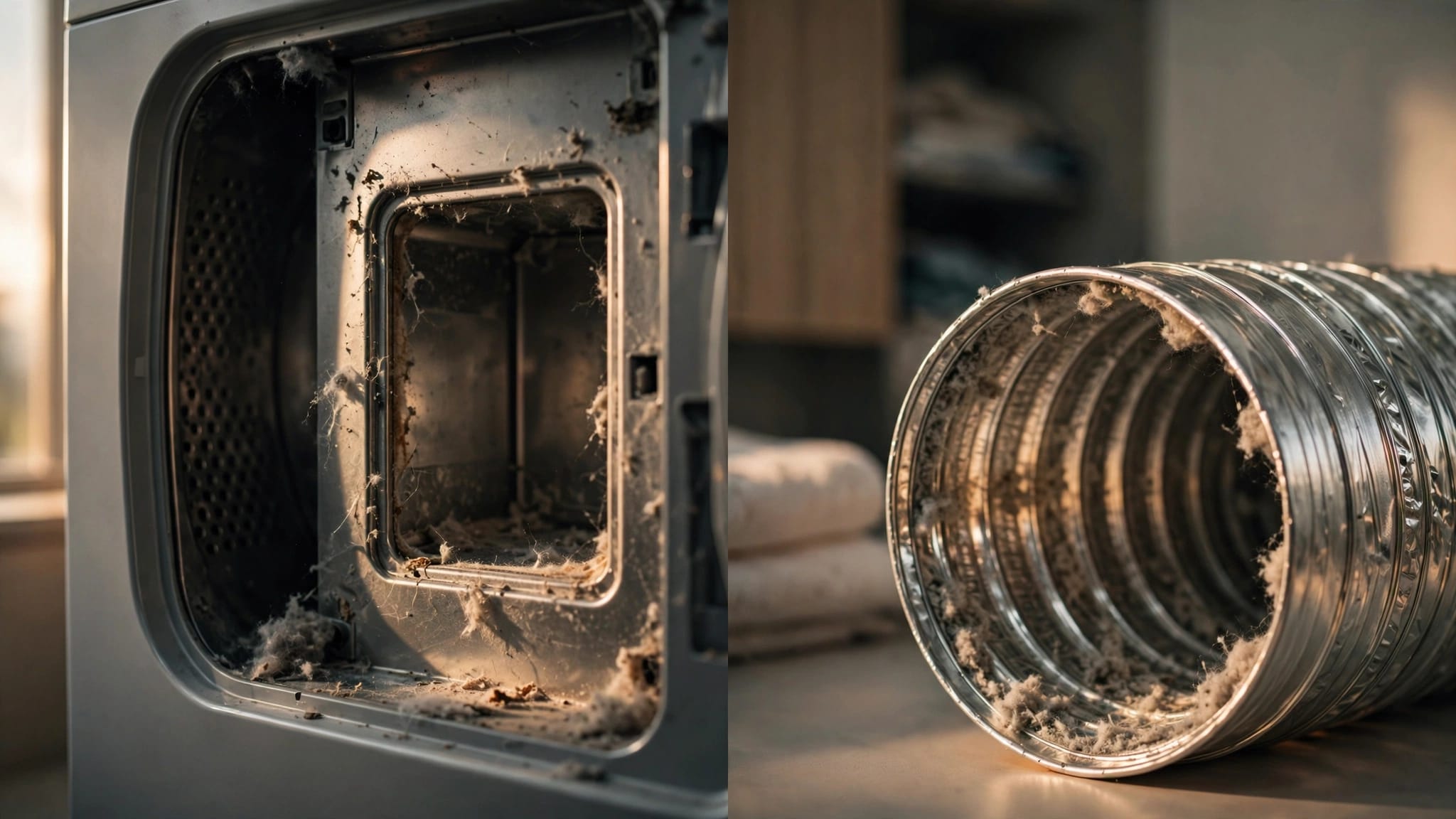
A dryer exhaust vent isn't part of the HVAC duct network. It carries exhaust from the dryer to the exterior, so cleaning the air-conditioning ducts doesn't clean the dryer vent.
If you're arranging both services, the estimate should list them separately and describe the scope for each. For background on dryer vent cleaning safety, see how this work differs from HVAC duct cleaning. Homeowners along Florida's Gulf Coast can Get a Free Estimate for air duct or dryer vent cleaning.
Frequently asked questions
Can a technician clean high-velocity ducts through the small outlets?
The access method depends on the system layout and the equipment available. A register is an entry point, but cleaning only its nearby surfaces doesn't necessarily reach the connected branch. The technician should identify which sections are accessible and include them in the scope.
Is a rotary brush always the right choice?
No. A brush may suit some rigid, accessible duct sections, while flexible branches and tight bends may call for gentler agitation. The duct's condition and material should determine the tool, and cleaning should take place under negative pressure.
Does a duct cleaning include the air handler or coil?
Not automatically. The agreed scope may include accessible air-handler areas, but detailed coil cleaning is a separate task that requires appropriate handling. The estimate should distinguish ductwork from additional HVAC components.
Clean the system with care
High-velocity HVAC systems need a cleaning plan based on their layout, material, access, and condition. Controlled negative pressure captures loosened debris, while careful tool selection protects narrow and flexible runs.
A thorough service is defined by what it reaches and how it contains debris. Cleaning can address buildup, but repairs and moisture control remain separate parts of keeping the system in good condition.