Rotary Brush vs Air Whip Duct Cleaning in Florida Homes
Dust returning through a clean filter can make homeowners search for rotary brush vs air whip duct cleaning methods. Both tools loosen dust and debris inside ductwork, but they don't work the same way or suit every Florida home.
The right choice depends on the duct material, its age, interior condition, access points, and the type of buildup present. A thorough residential air duct cleaning provider will inspect the system first, then choose agitation tools that remove contaminants without damaging the duct lining to protect your indoor air quality.
Key Takeaways
- Rotary brush cleaning scrubs buildup from sturdy duct surfaces, especially accessible sheet-metal sections.
- Air whip cleaning uses compressed air to loosen debris in areas where brushes may be too aggressive.
- Flexible ductwork and internally lined ducts need controlled pressure and careful tool selection.
- Negative pressure should pull loosened debris into collection equipment instead of sending it into living spaces.
- Homeowners should ask how the provider will protect ducts, document the work, and handle damaged or contaminated sections.
Understanding the Mechanics of Duct Cleaning
Professional air duct cleaning usually combines two actions, which are agitation and collection. Agitation breaks dust, pet hair, construction debris, and other buildup away from the duct surface. A powerful vacuum system then captures that material.
A rotary brush has bristles attached to a rotating shaft. The technician guides it through accessible duct sections while controlling the speed and contact against the surface. During rotary brush cleaning on durable sheet-metal ductwork, the tool can remove compacted dust that air alone may leave behind.
An air whip uses compressed air from an air compressor to flex and strike the duct walls. Air whip cleaning can reach bends, branches, and sections that do not allow a large rotating brush to move easily. It also works well when the technician needs to loosen lighter dust and debris without prolonged brushing against the surface of an hvac ductwork system.
Neither method should operate without proper containment. A professional setup places the entire system under negative pressure. In plain terms, a high powered vacuum pulls air and loosened debris toward a collection unit while the technician agitates the interior.
That distinction matters. A technician who blows compressed air through an open register without controlling the vacuum can move dust into the home. You should expect protected registers, sealed connections, and a final inspection. The professional duct cleaning process in Florida includes these preparation and removal steps.
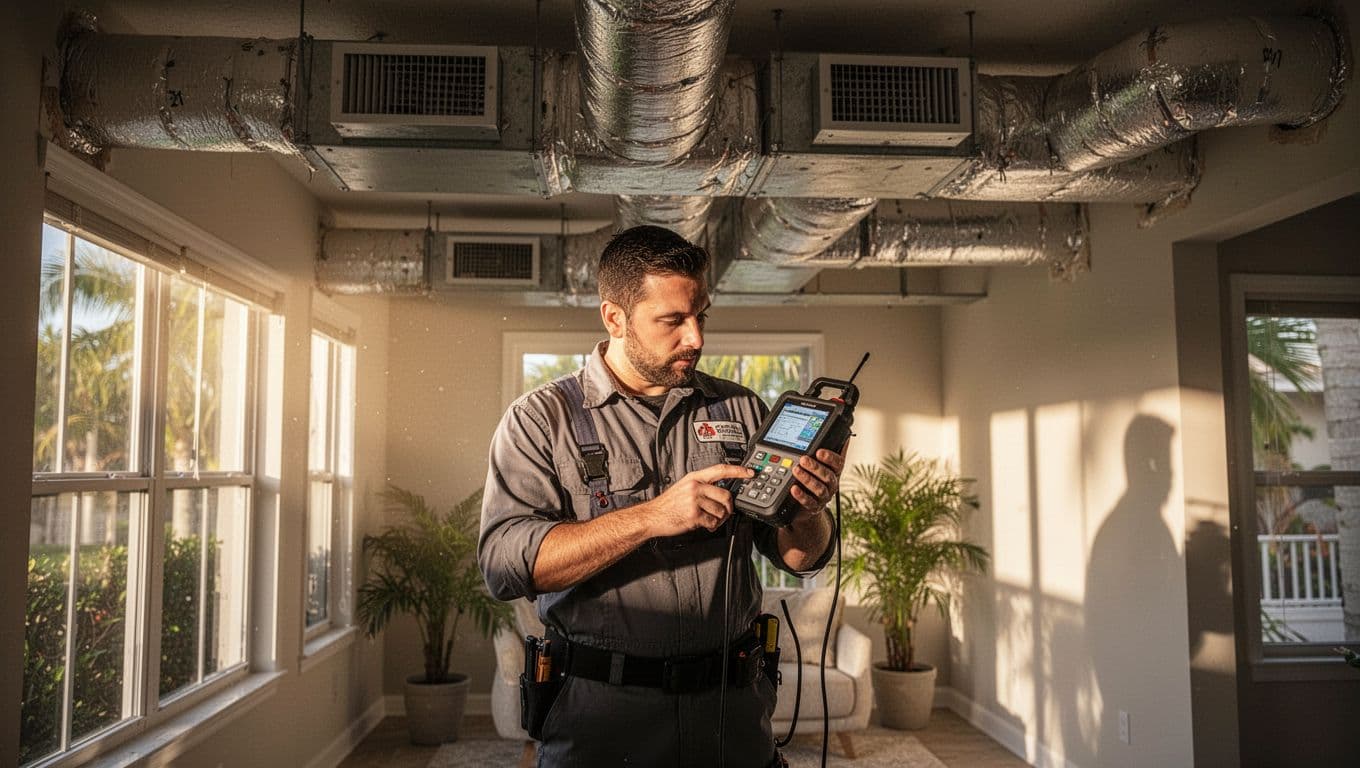
The condition of the ductwork determines how much force the technician can safely apply. A newer metal trunk line may tolerate firm brushing. A decades-old flex duct may need gentler agitation because its inner liner can tear, separate, or collapse.
The tool isn't the full cleaning method. Safe results depend on agitation, negative pressure, access, and protection of the duct material.
Rotary Brush vs Air Whip Duct Cleaning: How They Compare
When homeowners research rotary brush vs air whip duct cleaning, they often want one clear winner. In practice, each method has a different job.
| Factor | Rotary brush | Air whip |
|---|---|---|
| Main action | Scrubs debris from the duct surface | Loosens debris with compressed-air movement |
| Strongest fit | Accessible, durable sheet-metal ductwork | Branches, bends, and areas with limited brush access |
| Heavy buildup | Often effective against compacted material | May need repeated passes or another tool |
| Flexible ductwork | Requires careful pressure and tool control | Often easier to control in delicate sections |
| Risk if misused | Can damage liners, seams, or fragile ducts | Can spread debris without proper vacuum containment |
| Best use | Targeted mechanical cleaning | Controlled agitation in hard-to-reach areas |
Rotary brush cleaning is useful when the buildup has bonded to the surface. Florida homes can collect dust buildup and fibers over time, especially when filters fit poorly, renovation work creates debris, or supply and return sections haven't been cleaned for years. A brush can provide direct contact where compressed air might only move the material around.
However, direct contact creates a risk. A rigid brush can scrape internal insulation, disturb a damaged liner, or puncture thin materials. The technician must know whether the duct is bare metal, insulated metal, flexible ductwork, or another construction type before selecting the brush for reliable air duct cleaning.
Air whip cleaning offers more flexibility. Its shorter, moving strands can reach around corners and into smaller branch lines. The tool can also help loosen light or moderate dust from surfaces that don't need aggressive scrubbing.
Air whips aren't automatically safer. Excessive air pressure can damage fragile ductwork, and poor containment can spread loosened particles. The collection vacuum must run at the same time, with openings sealed except for the area being cleaned.
The best service may use both tools during a thorough air duct cleaning project. A technician could brush a sturdy main trunk, then use an air whip in connected branches. The choice should follow the inspection, not a company-wide rule that applies to every house.
How Florida Conditions Affect Ductwork
Florida's climate creates duct-cleaning concerns that differ from those in dry regions. Air-conditioning systems often operate for much of the year, and that extended use moves large volumes of air through filters, plenums, supply ducts, and return ducts.
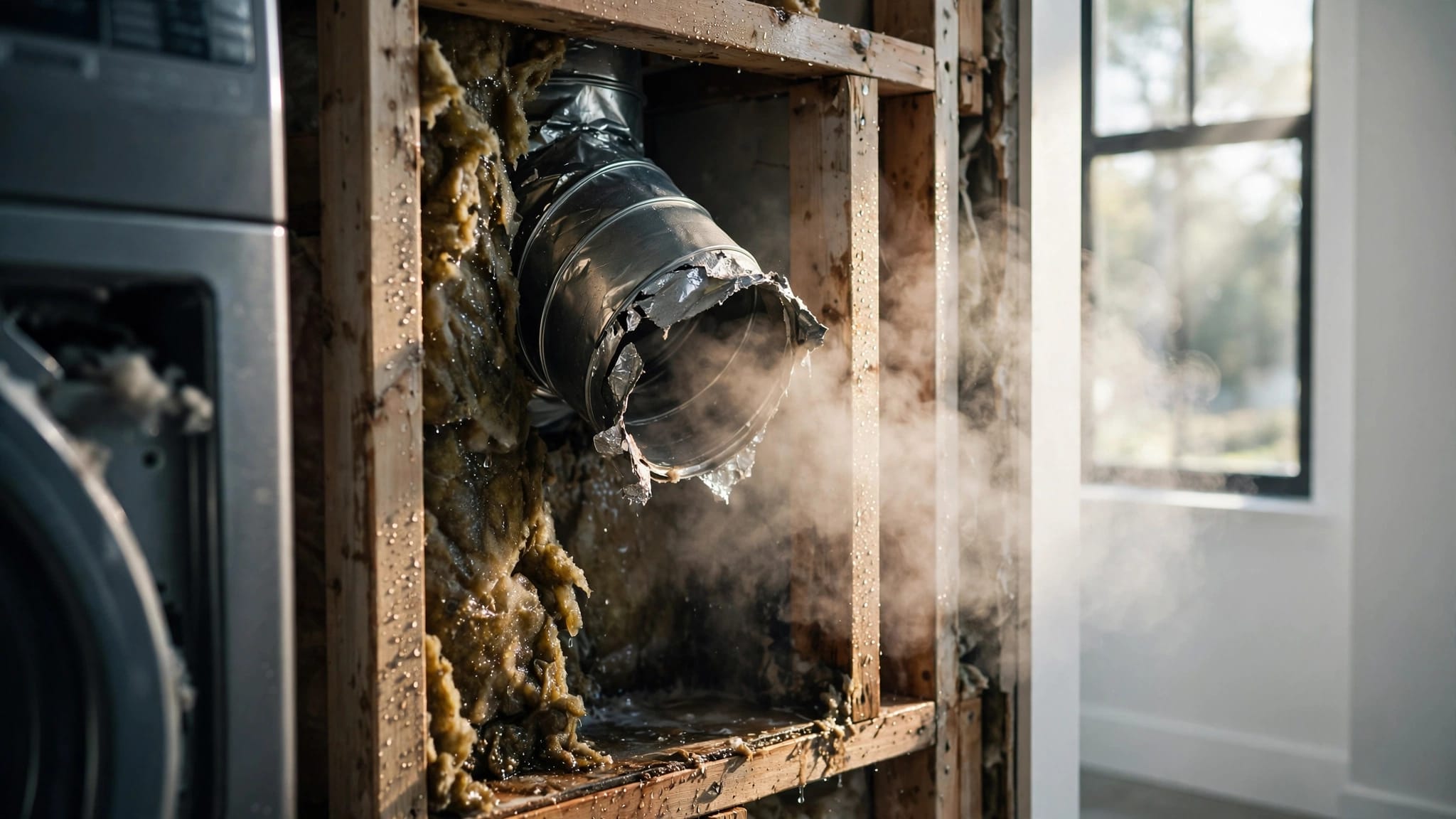
Humidity also matters. Moisture problems can develop when insulation becomes wet, drain pans overflow, condensate lines clog, or duct surfaces fall below the surrounding air's dew point. High humidity heavily impacts indoor air quality and can foster the growth of mold spores. Professional air duct cleaning won't correct an active leak or drainage problem. Those issues require repair before cleaning makes sense.
Many Florida homes use flexible ductwork in attics and tight spaces. Flex duct has a wire-supported outer jacket, insulation, and an inner air barrier. A technician who pushes a rotating brush too forcefully can stretch or tear that inner layer. The result may be leakage, reduced airflow, or a section that needs replacement.
Older homes may contain a mix of materials. One system can include sheet-metal trunks, fiberglass-lined sections, flex branches, and custom transitions. Age can make the materials brittle, while previous repairs may create unusual access points or damaged seams.
Debris type affects the decision too. Loose household dust may respond well to an air whip and vacuum. Caked construction dust, rodent nesting material, or heavy dust buildup near a register may need targeted brushing and removal. Depending on the overall contamination level within your hvac ductwork system, a thorough cleaning using HEPA filtration might be necessary. If the duct contains wet material, visible microbial growth, or deteriorating insulation, cleaning alone may not be the right answer.
A filter change is also different from air duct cleaning. Filters protect the HVAC equipment and reduce new particles entering the system. They don't remove contamination already sitting inside ducts or an air handler. Routine maintenance includes changing filters, but you should review when to clean air ducts versus changing filters before scheduling service based only on a calendar.
What to Ask Before Hiring a Duct Cleaner
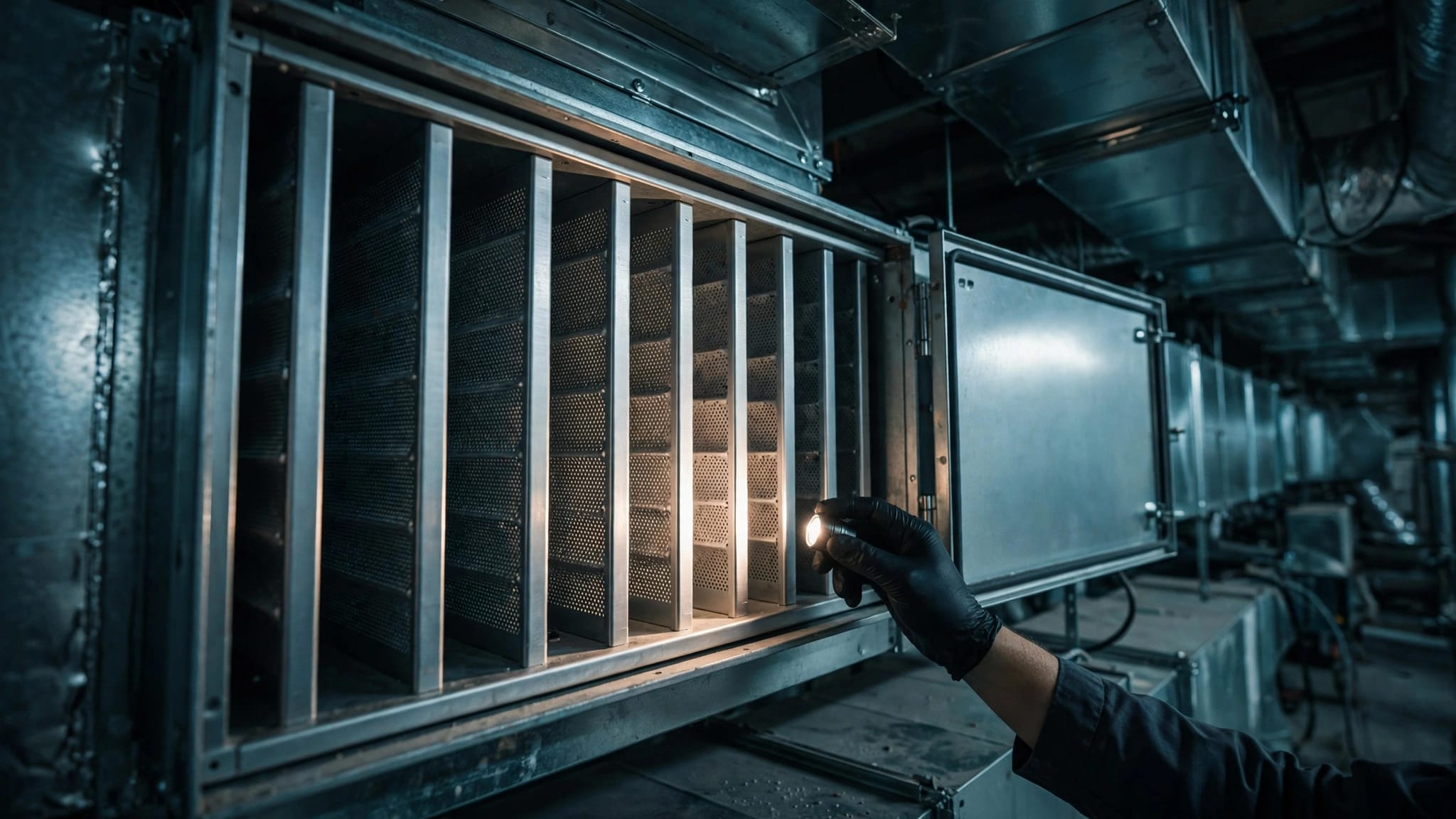
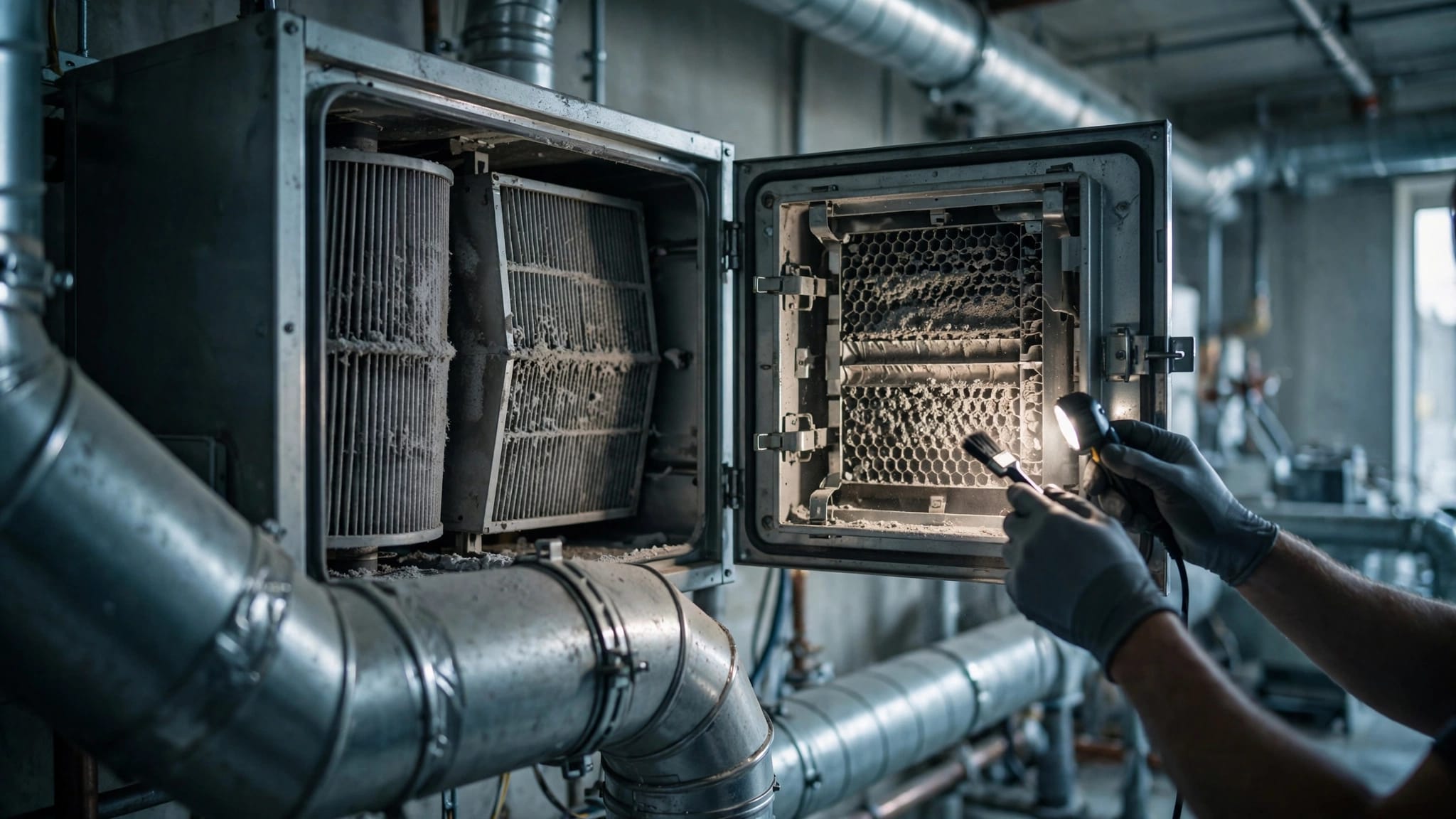
A trustworthy provider should explain the planned method in plain language. Ask for an inspection before agreeing to a price or treatment. The technician should identify duct materials, access locations, visible buildup, and any signs of damage.
Use these questions during any residential air duct cleaning estimate:
- Will you inspect both supply and return ducts before choosing a tool?
- Is my system made of sheet metal, flex duct, internally lined duct, or a combination?
- Where will you connect the vacuum, and how will you maintain negative pressure?
- Which areas will receive a rotary brush, air whip, or another agitation tool to clear out accumulated dust and debris?
- What specific air pressure from your air compressor will you use on flexible or lined ductwork?
- How will you protect registers, floors, furniture, and HVAC components?
- What happens if you find torn flex duct, wet insulation, pest debris, or damaged seams?
- Will you show photographs or explain what the equipment removed?
- Are sanitizers, a chemical cleaning method, UV light cleaning, or other treatments optional, and what problem would each address beyond routine maintenance?
- Does the estimate include the air handler, plenums, accessible branches, and cleanup?
The provider should also explain what the service can't do. Duct cleaning doesn't repair leaks, replace failed insulation, correct poor filtration, or solve an active moisture source. A company that promises to eliminate every allergy, odor, or respiratory problem is making a claim no cleaning method can guarantee.
Price alone isn't a reliable way to compare companies. A low quote may cover only a few registers, while a higher estimate may include the air handler, main trunks, branch lines, access panels, containment, and cleanup. Ask for the scope in writing.
For a Florida property owner, local experience helps when the system includes attic flex duct, older sheet metal, tight mechanical closets, or Gulf Coast moisture exposure. If you want to compare the scope of work for your home, you can Get a Free Estimate for air duct or dryer vent cleaning.
Choosing the Right Cleaning Method for Your Home
The phrase rotary brush vs air whip duct cleaning suggests a simple either-or decision. Your duct system may require a combination of approaches, including the air sweeping method or a traditional vacuum cleaning method, and some sections may need no aggressive agitation at all.
Choose a provider that matches the tool to the material. Sturdy, accessible metal can often handle controlled rotary brushing when buildup is attached to the surface. Flexible or lined sections may call for an air whip, lower pressure, or careful manual access to protect the integrity of the ducts.
Access also shapes the result. A technician can't clean a sealed section properly without reaching it. The provider may recommend access panels, but those openings should be sealed correctly after the work. Cutting unnecessary holes can create more problems than it solves.
The debris itself deserves attention. Dry dust, pet hair, and loose fibers differ from wet insulation, pest waste, or post-renovation material. When a high contamination level is present, the technician may pair a high powered vacuum featuring HEPA filtration with routine maintenance to protect your indoor air quality. If mold or bacteria are discovered, a specialized chemical cleaning method or sanitizing treatment might be necessary. If the duct material has deteriorated, replacement may be more appropriate than cleaning.
Look for clear communication, insured service, careful containment, and a detailed review at the end. Good workmanship is visible in the preparation, not only in the final vacuum hose.
Frequently Asked Questions
Can a rotary brush damage flexible ductwork in Florida homes?
Yes, rigid rotary brushes can easily tear, puncture, or separate the delicate inner lining of flexible ductwork. Because many Florida homes rely on flex ducts in attics, technicians must carefully evaluate duct materials before selecting a mechanical brush.
Is an air whip safer for all types of duct systems?
While air whips provide great flexibility around bends and branches, excessive compressed-air pressure can still damage fragile or aged duct walls. Proper pressure control and continuous negative-pressure vacuum containment are essential to prevent spreading debris through the home.
Do I need to choose between a rotary brush and an air whip?
Not necessarily, as many thorough duct-cleaning projects utilize a combination of both tools. A technician might use a rotary brush on durable main sheet-metal trunks and an air whip in delicate branch lines to ensure safe and effective cleaning.
Conclusion
Rotary brushes and air whips can both support effective air duct cleaning, but neither tool fits every Florida system. Material, age, access, condition, and debris type should guide the decision.
A careful technician uses controlled agitation with negative pressure to safely capture accumulated dust and debris, protects the home, and explains any damage or moisture problem found along the way. When comparing rotary brush vs air whip duct cleaning, choose the provider with the clearest inspection and scope of work, not simply the strongest-sounding equipment.