Does Your Daycare Need HVAC Duct Service Before the School Year?
A new school year brings more children, staff, and daily activity into your daycare. A daycare HVAC duct service assessment can help you decide whether the ductwork needs cleaning before rooms fill up again, or whether another HVAC issue needs attention first.
The calendar alone doesn't mean ducts need cleaning every year. Look for specific signs, separate duct cleaning from routine equipment maintenance, and plan any work around the children's safety and your operating schedule.
Key Takeaways
- Consider duct cleaning when an inspection finds substantial dust or debris, pest evidence, moisture concerns, or contamination after renovation or water intrusion.
- Dust around a vent can have several causes. A dirty filter, loose return connection, or HVAC equipment problem may need a different fix.
- Duct cleaning and HVAC maintenance are separate services. An inspection can help identify which one fits the problem.
- Schedule assessment and any needed work when affected rooms and access routes are clear, ideally before children return.
- Cleaning may remove debris inside ducts, but it can't solve every indoor air quality concern or guarantee health benefits.
Does a Daycare Need Duct Service Before the School Year?
A daycare may benefit from a duct assessment before reopening if there's a clear reason to look inside the system. A recent renovation, water intrusion, pest activity, visible debris, or persistent dust from supply vents can make an inspection timely.
However, a yearly cleaning isn't automatically necessary. The condition of the ductwork, the building's history, and the HVAC system's performance matter more than the date on the calendar.
Why a calendar date alone isn't enough
Daycare schedules often make summer or pre-opening periods convenient for maintenance. That's a good time to arrange access, but it doesn't prove the ducts need cleaning. A technician should assess the system and explain what they find before recommending work.
If the ducts look clean and the system is operating normally, routine HVAC inspection and filter care may be the more appropriate priorities. If an issue does appear, addressing it before rooms are occupied can reduce disruption.

Warning Signs That May Warrant an Assessment
A single dusty register doesn't establish that an entire duct system needs cleaning. Still, several clues together, or a known building event, can justify a closer look.
Dust, debris, moisture, or odor
Pay attention to visible material inside accessible vents, dust repeatedly appearing near supply registers, and musty odors that return after ordinary cleaning. These observations don't identify the source by themselves, but they give a qualified professional a useful starting point.
A renovation can send drywall dust or other debris toward open ductwork. Pest activity and water intrusion also raise questions about what entered the system and whether moisture remains. In humid areas such as Florida, moisture around the air handler deserves attention because excess humidity can support microbial growth.
The assessment should distinguish debris inside ducts from dust entering through a loose return connection or another pathway. For more examples, see what air duct cleaning can remove.
Check for simpler HVAC explanations
Before assuming the ductwork is responsible, consider the filter and the equipment. A loaded filter can restrict airflow and make the system work harder. A dirty coil, malfunctioning blower, crushed duct, or disconnected section may also affect airflow or contribute to dust.
Those conditions call for the appropriate inspection or repair, not automatically a full duct cleaning. When the cause isn't clear, signs your ducts need cleaning can help frame what to discuss during an assessment.
What a Professional Duct Assessment Should Include
A qualified professional should inspect accessible areas before recommending cleaning. That can include looking for visible debris, moisture concerns, damaged insulation, disconnected duct sections, and signs that dust is entering rooms through supply registers.
The assessment should also take the daycare's layout into account. A building may have more than one air handler or separate HVAC zones, so a problem in one area doesn't necessarily mean every duct system needs the same work. Ask for a clear explanation of which system or components have evidence of a concern.

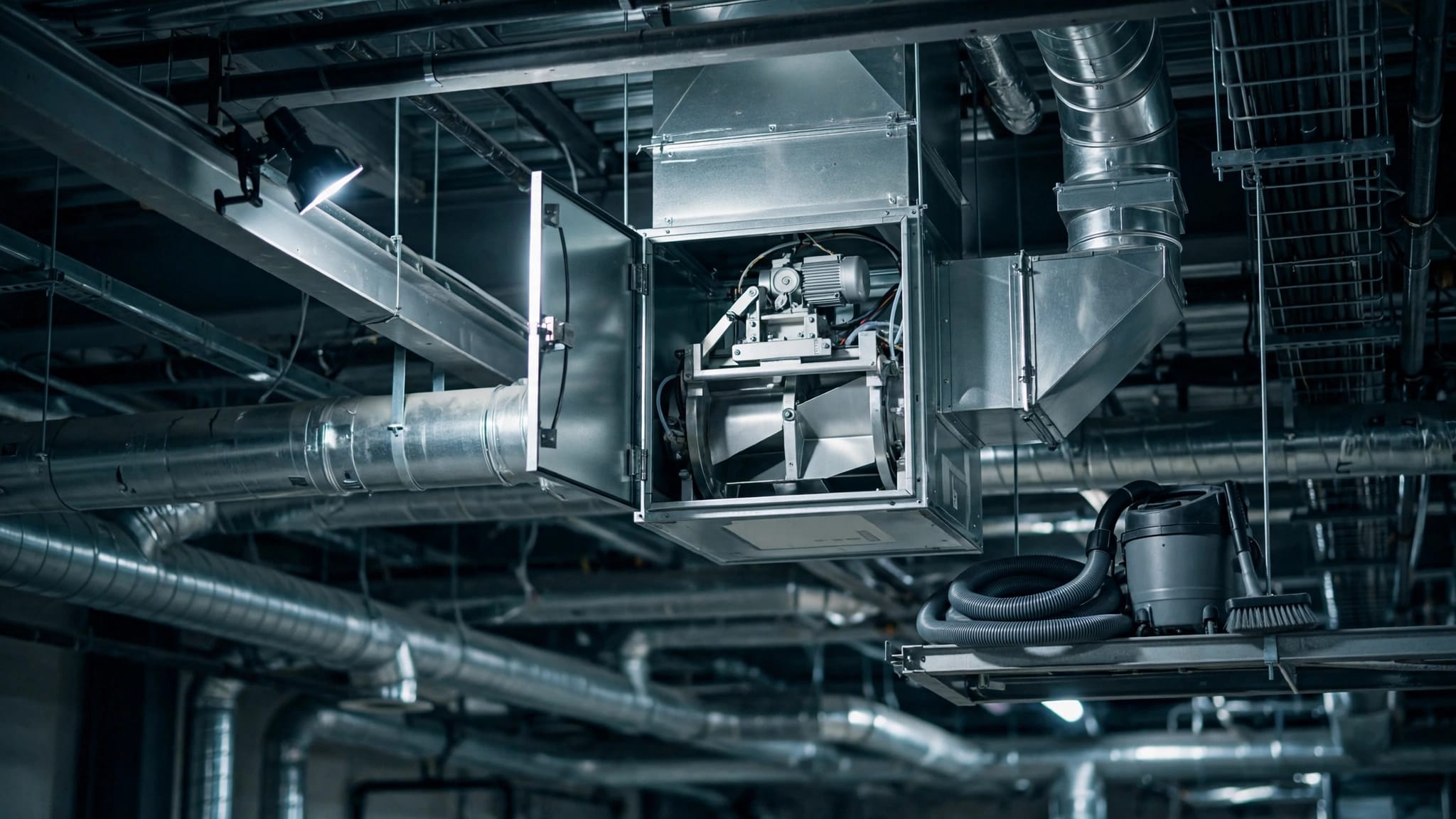
If cleaning is recommended, agree on its scope before work begins. The estimate should identify what the service includes, such as accessible supply and return ducts, grilles, or other specified components. Professional cleaning generally uses controlled negative pressure with agitation tools to loosen and collect debris, rather than pushing it into occupied rooms. Read about how negative-pressure duct cleaning works.
If someone suspects mold or another microbial concern, the source of moisture needs attention. Treatment isn't a substitute for removing debris or correcting the conditions that caused the problem. Learn when to use air duct microbial treatment.
Duct Cleaning, HVAC Maintenance, and Dryer Vents
These services address different parts of a building. Understanding the difference helps daycare operators avoid paying for the wrong work or expecting one service to correct a separate problem.
Duct cleaning versus an HVAC tune-up
Duct cleaning focuses on removing material from inside the duct system. Routine HVAC maintenance focuses on the equipment and its operation, including components such as the blower, coil, drain, and filter. A system may need one service, both, or neither, depending on inspection findings.
A duct cleaning won't repair a disconnected duct, solve a failing blower, or correct a moisture problem around the air handler. Likewise, an equipment tune-up doesn't remove significant debris inside ductwork. See choosing between HVAC maintenance and duct cleaning for a closer comparison.
Dryer vent cleaning is a separate job
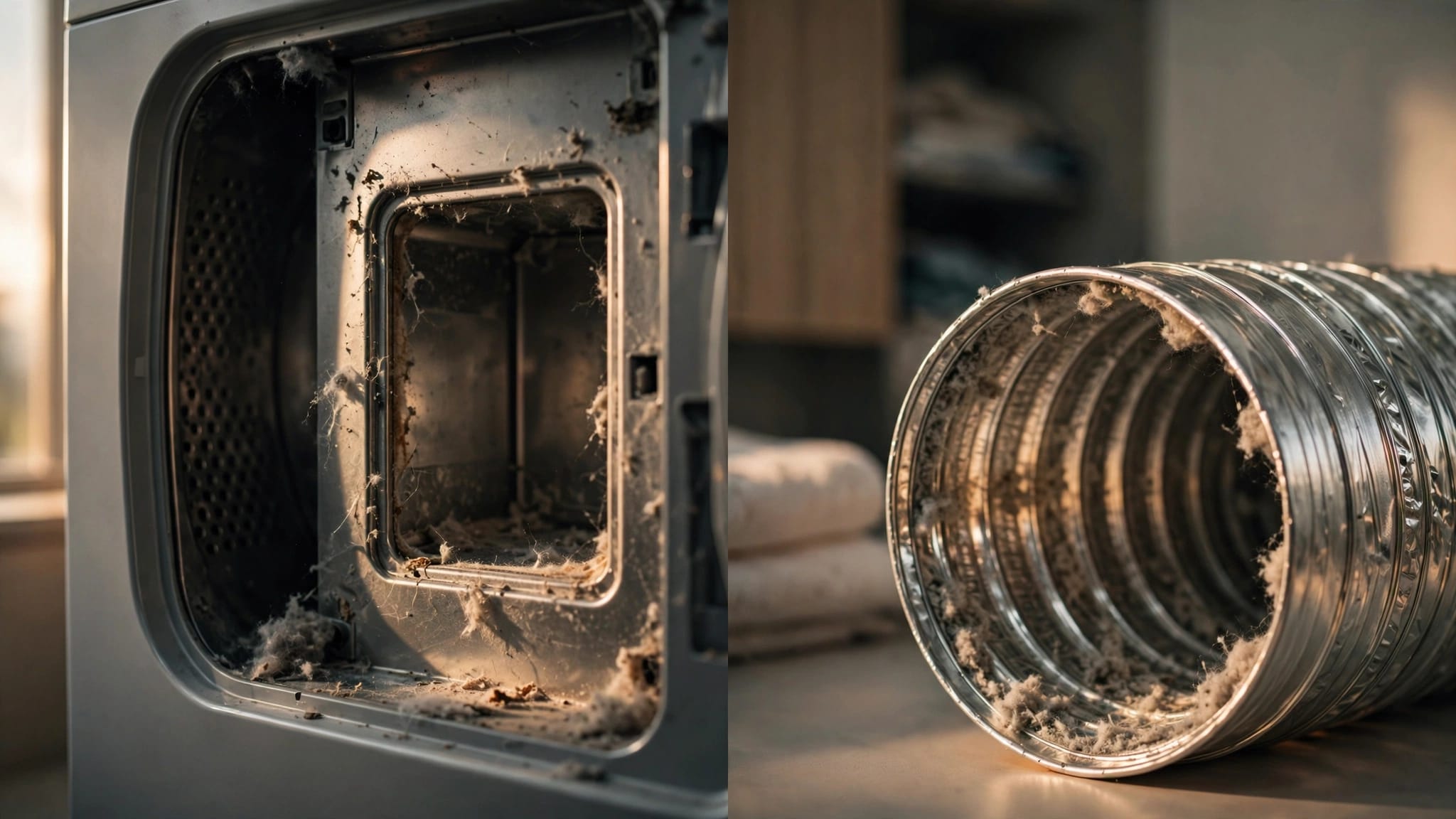
If the daycare has an on-site laundry area, consider the dryer exhaust separately from the HVAC ducts. Lint buildup can restrict exhaust airflow and hold heat near the appliance. Cleaning the lint screen after each load helps, but it doesn't clear lint from the full vent route.
Duct cleaning and dryer vent cleaning involve different systems, so one appointment shouldn't be assumed to include both. Ask for each service to be identified separately in the scope.
Benefits of Addressing a Documented Duct Problem
When an inspection confirms substantial debris or contamination, cleaning can remove that material from the accessible duct system. That's useful when dust from construction, pest activity, or another specific source has accumulated inside the ducts.
The practical benefit is a cleaner duct interior, not a promise that every air quality issue will disappear. Indoor air is affected by filtration, humidity, outdoor air, cleaning practices, and other sources. Duct cleaning shouldn't be presented as a cure for allergies or respiratory conditions.
A proper assessment can also prevent unnecessary cleaning. If the issue comes from a loaded filter, loose return connection, or equipment fault, identifying that cause helps direct attention toward a more fitting repair or maintenance task. In a daycare, that distinction matters because service time and room access need to be planned around children's routines.
How to Schedule Service Around Daycare Operations
Start planning before the busiest return-to-school days. An early assessment gives you time to understand the findings, arrange any needed repairs, and reserve a work window without rushing the decision.
Choose a time when rooms are available
Whenever possible, schedule work during a closure, a planned maintenance day, or another period when the affected rooms are unoccupied. If only part of the building is being serviced, coordinate access routes and room use so children and staff stay clear of the work area.
Tell the service provider about operating hours, room schedules, security procedures, and any areas that must remain accessible. Discuss how the crew will protect nearby furnishings and floors, manage equipment, and clean up before the space returns to use.
Coordinate the work with other maintenance
If the HVAC system needs repairs or routine service, coordinate that work with the duct assessment. A repair or construction project can create dust, so cleaning the ducts before that work is finished may lead to repeat contamination. When there's moisture, address its source rather than relying on duct cleaning alone.
For service in the Gulf Coast area, Get a Free Estimate for air duct or dryer vent cleaning. Describe the building's concern and preferred service window so the scope can be discussed before scheduling.
Frequently Asked Questions
Should daycare ducts be cleaned every year?
No fixed annual cleaning schedule applies to every building. Consider cleaning when an assessment finds a reason, such as substantial debris, pest evidence, or contamination related to renovation or water intrusion. Otherwise, routine HVAC maintenance and filter care may be the relevant tasks.
Does dust around a vent prove the duct is dirty?
No. Dust near a register can come from several sources, including a loaded filter, a loose return connection, or ordinary room dust. A professional assessment can help determine whether there's material inside the duct or another cause that needs attention.
Will duct cleaning improve indoor air quality?
Cleaning can remove debris from inside the ducts when that debris is present. It won't address every indoor air source, such as humidity, outdoor air, or problems with HVAC equipment. Results depend on the cause and the condition of the whole system.
Can cleaning happen while children are at daycare?
Scheduling during an unoccupied period is often the simpler choice because it avoids children moving through work areas and gives the crew access. If that isn't possible, discuss room access, equipment placement, and safe separation of the work area with the qualified provider before setting the date.
Make the Decision from the Evidence
Before the school year begins, focus on what the system shows rather than assuming it needs annual cleaning. Dust, moisture, renovation debris, or pest activity can justify an assessment, while filter or equipment problems may call for different service.
A qualified inspection helps match the response to the cause. With a clear scope and a work window that protects children and staff from disruption, you can address a documented duct concern without treating every building the same way.