Dryer Cabinet Lint vs. Vent Lint: What Homeowners Should Know
Lint in the screen is easy to see and remove. Lint inside the dryer cabinet or exhaust vent is harder to spot, but it can restrict airflow and hold heat near the appliance.
Cleaning the screen after every load helps, yet it doesn't clear the rest of the system. Knowing where dryer vent lint collects can help you recognize warning signs and decide when the vent needs attention.
Key Takeaways
- The lint screen catches many fibers, but some pass into the dryer housing and exhaust path.
- Cabinet lint is inside the dryer; vent lint collects in the duct that carries warm, moist air outdoors.
- Longer drying cycles, unusual heat, a burning-lint odor, or weak airflow at the exterior hood deserve attention.
- Clean the lint screen after each load, but don't run the dryer with its vent disconnected.
- A professional inspection can assess the accessible exhaust route, including areas that aren't visible from the laundry room.
Where Lint Collects in a Dryer
A dryer moves warm air through several connected areas. The lint screen catches much of the loose fiber, but it doesn't capture everything that leaves clothing during a cycle.
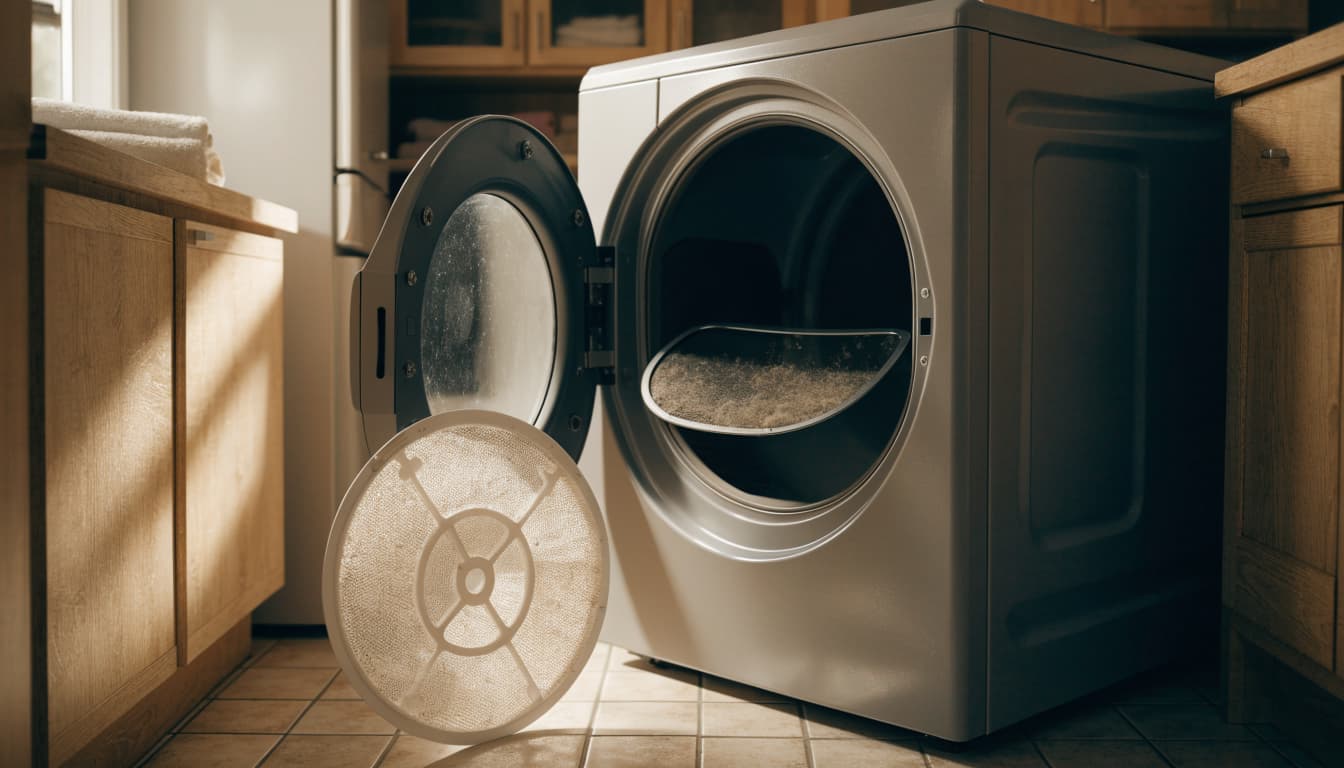
The lint screen catches only part of the debris
The screen, also called the lint trap or filter, is the first place to check. Empty it before every load, and remove loose lint from the surrounding opening when it's accessible.
Even a clean screen can allow fine fibers to pass through. A damaged screen or one coated with fabric-softener residue may also affect airflow. Follow the dryer manufacturer's instructions for cleaning or washing it, and let a washable screen dry fully before putting it back.
Lint can settle inside the cabinet and vent
Cabinet lint is inside the dryer housing, beyond the parts a homeowner normally reaches. Vent lint is farther along the exhaust route, inside the duct that leads to an outside opening. These are separate locations, and cleaning the screen doesn't clean either one.
A small amount of visible lint near a connection doesn't show how much may be hidden farther down the line. For more on the difference, see why a clean lint trap doesn't clear the dryer vent.
Cabinet Lint and Vent Lint Are Different Problems
Both types of buildup involve fibers that escape the screen, but their locations change what you can see and how they affect the dryer.
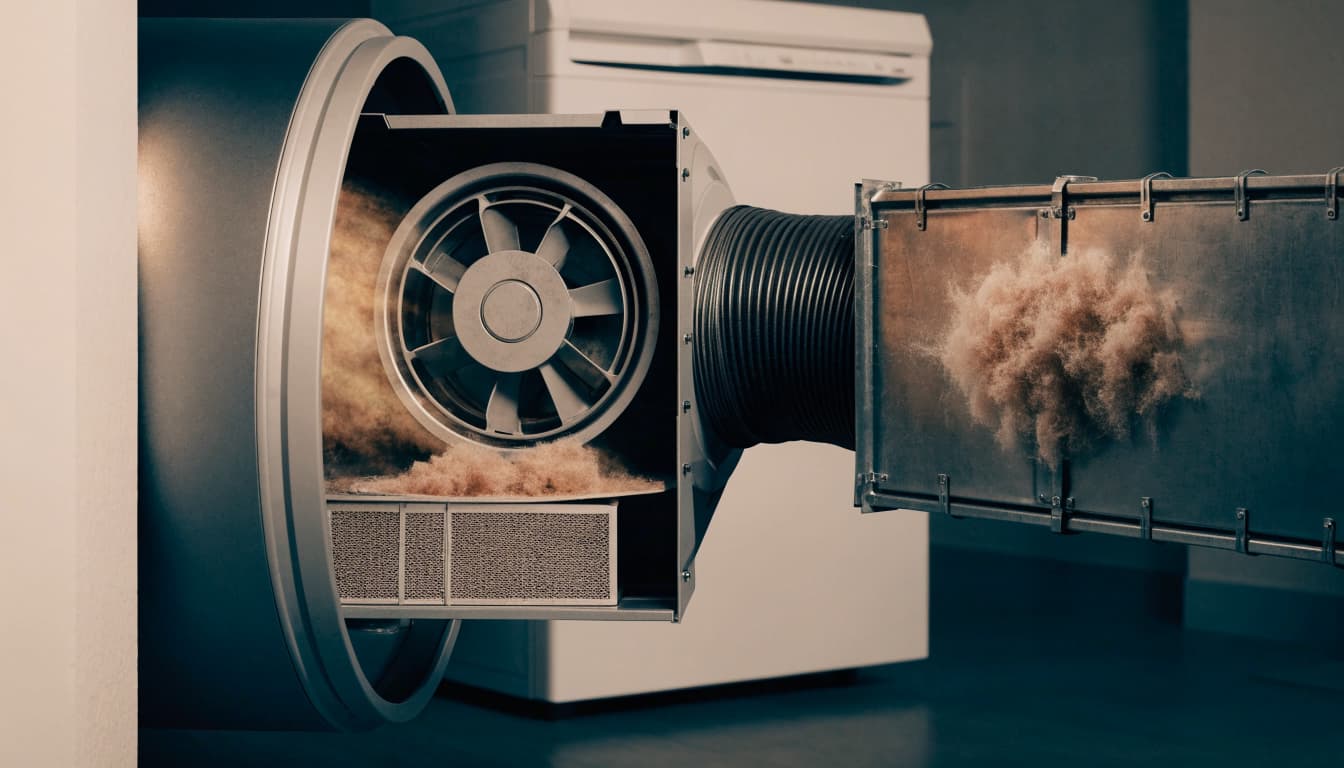
Cabinet lint stays within the appliance
Cabinet lint is hidden inside the dryer's housing. It may be difficult to identify from the outside, and its presence doesn't tell you whether the exhaust duct is clear. Opening the appliance to reach internal parts can expose electrical components or damage the machine.
If the dryer smells hot, overheats, or shuts off before a load is dry, stop using it and arrange an inspection. Those symptoms can have more than one cause, so avoid assuming the issue is only lint.
Vent lint accumulates along the exhaust route
Vent lint collects in the transition duct behind the dryer, farther inside the exhaust line, or near the exterior hood. The duct carries warm, moist air out of the home. When lint or another obstruction restricts the route, air can't leave as freely.
The exterior hood is part of the same path. A stuck flap, lint, leaves, or nesting material can reduce airflow even if the duct near the dryer looks clear.
Why Lint Builds Up Beyond the Screen
A clean screen is important, but it doesn't stop every fiber from entering the exhaust system. Over time, lint can catch on surfaces and joints along its route.
Duct length and bends affect airflow
Long ducts and sharp turns give lint more places to settle. Ridges, screws, loose connections, and the inner surface of the pipe can catch fibers over months. As lint accumulates, airflow may weaken.
A short, straight route has fewer places for debris to collect. In contrast, a longer run with several bends can be harder to assess from either end. That's why a quick look behind the dryer may not reveal the condition of the entire line.
A crushed or sagging connection can add resistance
The flexible transition duct behind the appliance can sag or become crushed when the dryer is pushed back. That can restrict airflow even if lint buildup isn't the only issue. A loose or damaged connection may also let lint escape around the appliance.
Don't force the dryer into a tight space or operate it with the vent disconnected. If the visible duct looks flattened, torn, or loose, leave it off until the connection has been assessed.
Signs That Dryer Vent Lint May Be Restricting Airflow
A dryer can keep tumbling while its exhaust path becomes restricted. Look for changes in the machine's performance, the laundry room, and the outdoor vent.
- Loads that used to dry in one cycle now need extra time.
- Clothes come out damp after a normal cycle, or unusually hot while still wet.
- The dryer or laundry room feels hotter or more humid than usual.
- The exterior flap opens weakly, or little air comes out while the dryer runs.
- Lint appears around the dryer connection or outside vent opening.
- The dryer shuts off early or gives an overheating warning.
- A burning-lint smell appears during or after a cycle.
One symptom can have another cause, such as an appliance fault or an overloaded drum. However, several signs together make restricted airflow more likely. Read about signs of a clogged dryer vent to understand which changes call for prompt attention.
If you smell burning or notice severe overheating, stop using the dryer. Lint is combustible, and trapped heat raises concern. Don't keep restarting cycles to see whether the smell or excess heat goes away.
Safe Dryer Vent Care at Home
Routine care can help prevent lint from accumulating around the parts you can reach. Keep it to accessible areas, and avoid taking apart the dryer or reaching into a concealed duct.
Clean the screen and observe normal operation
Remove lint from the screen before every load. Also watch for changes in drying time, excess heat, humidity, or odor. When the dryer is running, you can observe the exterior flap from a safe, accessible location. It should open as exhaust leaves the home.
Keep the area around the dryer clear. If the appliance has shifted, check whether the visible transition duct appears crushed, but don't pull or bend it forcefully.
Don't run the dryer with the vent disconnected
The dryer should exhaust outdoors through a complete, connected vent system. Running it while disconnected releases heat and moisture into the home and can spread lint around the laundry area.
Avoid pushing a brush deep into a concealed route if you can't control where it goes. Forcing tools into a duct can damage a connection or push debris into a section you can't reach. If the vent appears packed or inaccessible, stop and arrange professional help.
When to Arrange a Dryer Vent Inspection
An inspection is useful when warning signs recur, the vent route is long or difficult to access, or you can't tell whether the problem is lint, damage, or a connection issue.
A full-path check can reveal hidden restrictions
A professional inspection can look at the accessible exhaust path, from the dryer connection toward the exterior opening. It may identify lint buildup, a crushed section, loose joints, or a problem at the outside hood. See what a dryer vent inspection can reveal for examples of issues a visual check may uncover.
Cleaning removes lint, but it doesn't repair a damaged duct or correct a poor connection. If a technician finds a physical problem, the next step depends on the condition and layout of the vent.
Stop using the dryer when safety signs appear
A burning smell, severe overheating, or repeated early shutoffs call for prompt attention. Turn the dryer off and don't restart it until the cause has been assessed. If you have a gas dryer and suspect a damaged or blocked exhaust connection, stop using it and contact a qualified professional.
We provide dryer vent cleaning for homes across Florida's Gulf Coast, including communities from Naples to Tampa. If you're seeing warning signs, Get a Free Estimate for dryer vent cleaning or related service.
Frequently Asked Questions
Does cleaning the lint screen remove dryer vent lint?
No. The screen catches many fibers, but it doesn't clean the dryer cabinet, transition duct, exhaust line, or exterior hood. Some lint can pass through and collect downstream.
Is lint inside the dryer cabinet the same as lint in the vent?
No. Cabinet lint is inside the appliance housing, while vent lint is in the exhaust route that carries air outdoors. A problem in one area doesn't prove that the other area is clear or blocked.
How can I tell if the outside vent is restricted?
Weak airflow or a flap that barely opens while the dryer runs can point to a restriction. Lint, leaves, or nesting material near the hood may also interfere with exhaust. Don't climb onto a roof or reach into an unsafe opening to inspect it.
Should I use the dryer if it smells like burning lint?
No. Turn it off and stop using it until the cause has been checked. A burning smell can signal overheated lint or another appliance problem, and repeated cycles may add heat to the system.
Keep the Full Exhaust Path in View
The lint screen is the part you can clean routinely, but it's only one part of the dryer's airflow system. Cabinet lint and vent lint collect in different places, and neither is cleared by emptying the screen alone.
Pay attention when drying takes longer, heat builds up, or airflow at the exterior hood drops. A clear, connected exhaust route helps the dryer move warm, moist air outside rather than leaving it trapped near the appliance.