Warehouse HVAC Dust: How to Tell If It's Inside the Ducts
Dust on a warehouse return grille can be ordinary surface buildup, or it can point to a problem farther inside the HVAC system. The grille alone can't tell you which.
Look for patterns: dust that returns quickly, debris visible beyond the opening, or particles coming from supply registers. These are reasons to inspect, not automatic proof that the ducts need cleaning. Here's how to distinguish a useful clue from stronger evidence.
Key Takeaways
- Dust on a return grille shows what the system collects at that opening. It doesn't confirm the condition of hidden ductwork.
- Dust inside an accessible duct section, return plenum, or air-handler compartment is stronger evidence that particles have moved past the grille.
- Warehouse activity, filter fit, airflow, humidity, and return leaks can all affect dust buildup.
- A safe visual check can help locate a concern, but deep ductwork and HVAC components call for professional inspection.
Why a dusty return grille is only a clue
A return grille pulls air from the warehouse toward the HVAC system. As that air passes through, lint and fine particles can settle on the grille or nearby surfaces. A return near a loading area, dusty work zone, or frequently opened door may collect more residue than one in a cleaner part of the building.
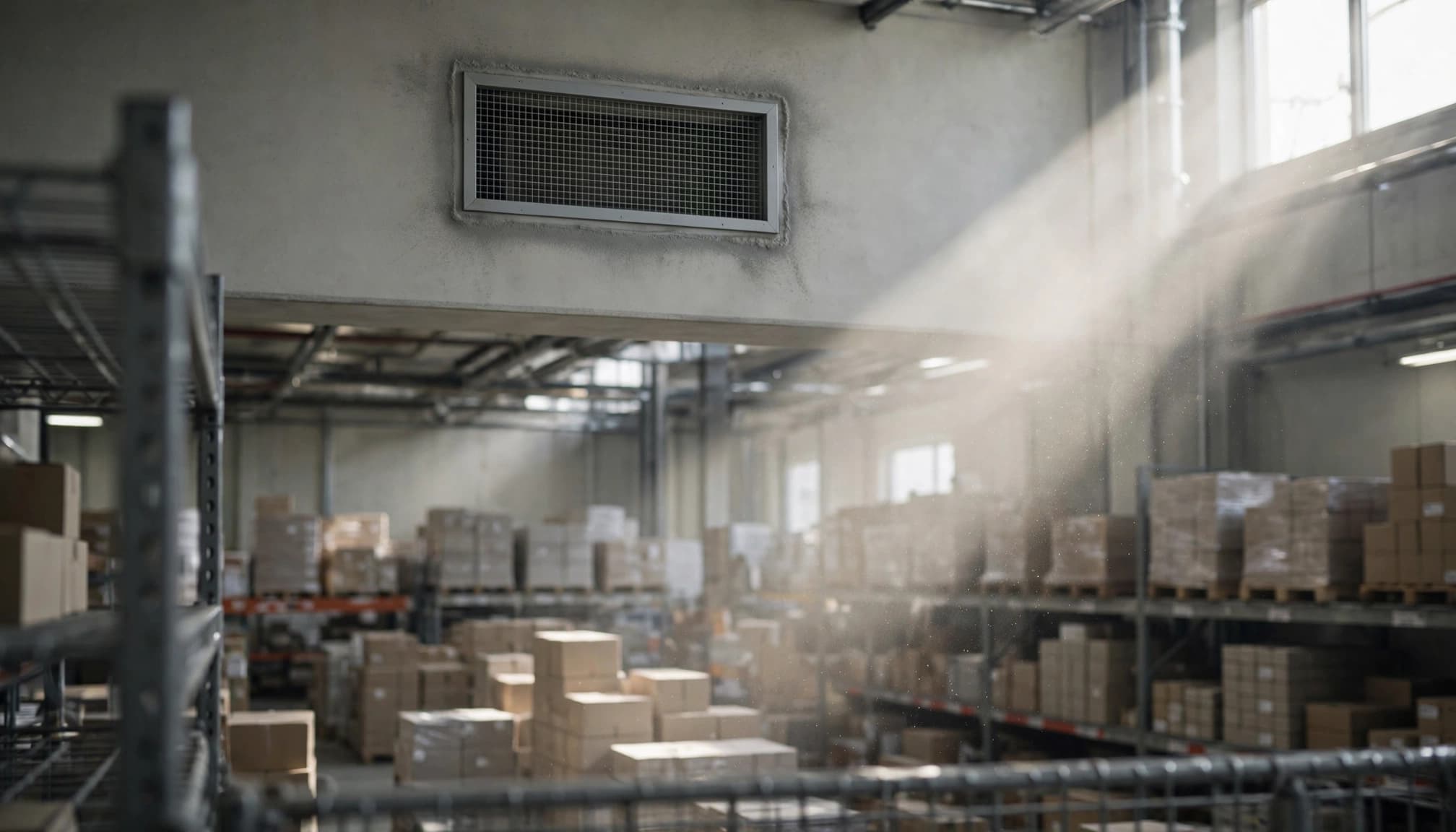
What the grille can show
A layer on the grille tells you that particles are reaching that point. It may also reveal a pattern: one return getting dirty much faster than others can help identify where to look next. If the system ran during sanding, packaging work, or another dusty task, the filter and nearby return opening deserve attention.
However, ordinary dust often collects at the opening without building up throughout the duct. Grille design, airflow, nearby foot traffic, open doors, and the type of work around the return can all affect what you see.
What it can't prove
Dust on one cover doesn't establish how much material is deeper in the system. Even a dark ring around a grille may reflect dust in the room or an airflow pattern rather than contamination throughout the ductwork.
The difference between vent cleaning and duct cleaning matters here. Cleaning the cover and the first reachable area is different from inspecting or cleaning connected duct runs and other HVAC components.
How warehouse HVAC dust can move past the grille
Dust can enter the return path when the system runs while particles are airborne. If a return opening or duct joint is loose, damaged, or left uncovered during work, it may draw in dust from the surrounding space. Material can then collect in the return plenum, on the filter, or near the blower.
Supply ducts can also carry particles into work areas if dust entered through an uncovered supply register or a gap in the system. That's why dust appearing at supply vents deserves attention, especially if it returns after the surfaces have been cleaned.
Check accessible openings
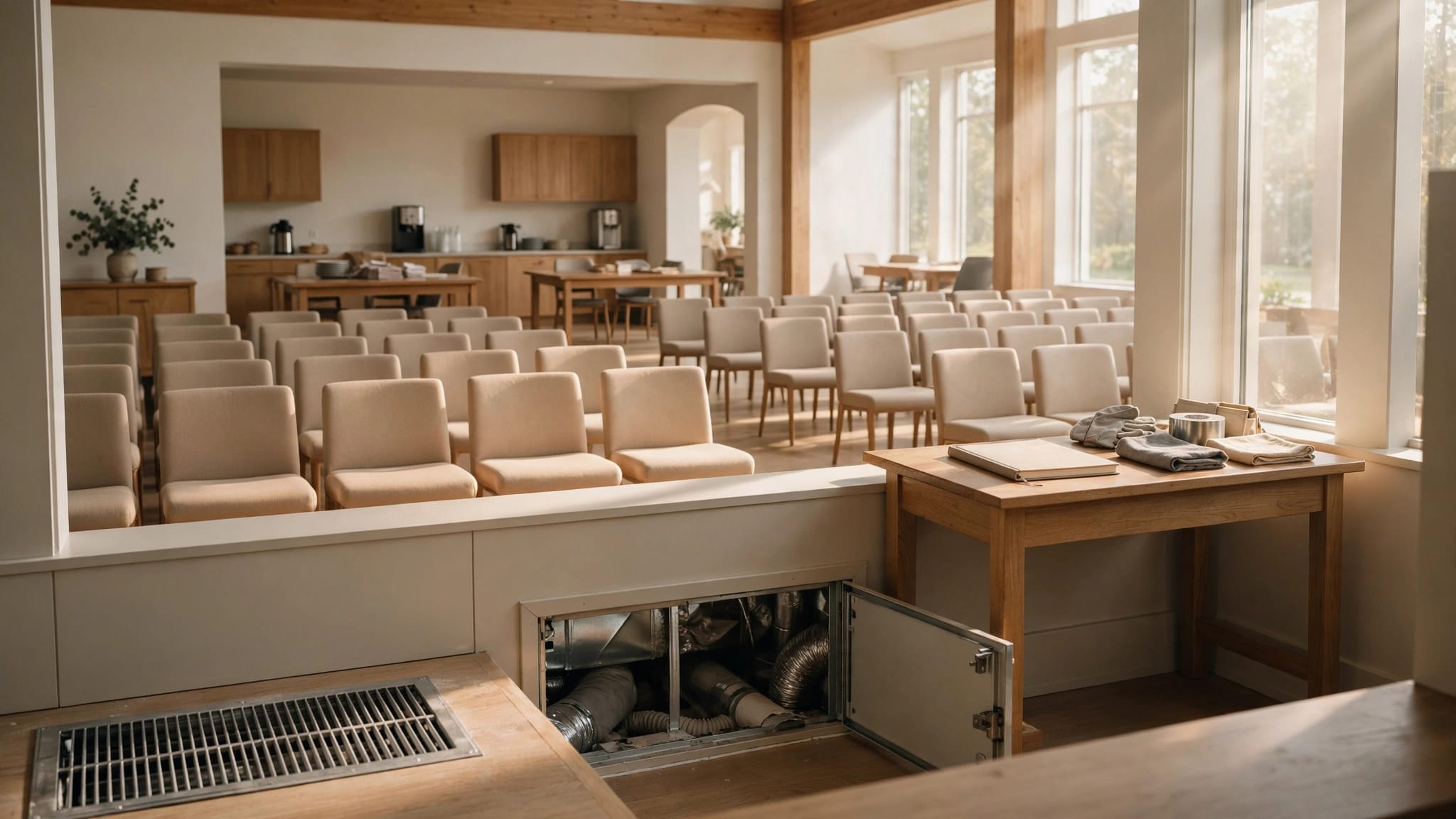
If the grille can be removed safely, inspect the boot or opening just behind it with a flashlight. Look for loose material beyond the cover, rather than relying on dust on the grille face. Don't push tools deep into the duct or disturb insulation.
Inspect the filter as well. A filter that becomes dirty unusually quickly after dusty work is a clue worth recording, but it doesn't identify where particles collected. A poor fit or a gap around the filter can also allow dust to bypass it.
Look for related signs
Check visible duct sections and nearby HVAC components only where access is safe. Dust in a return plenum or blower compartment is more relevant than residue on a grille, because it shows material has reached another part of the system.
Also note damaged insulation, loose connections, moisture, or dust blowing from supply registers. These findings help locate the concern, but a technician may need to inspect further to establish its extent. After insulation work, visible fibers inside openings or accessible ducts can justify an evaluation. Read more about when to clean ducts after insulation, a situation where the source and path of the material matter.
Common causes that can look like duct contamination
Warehouse dust doesn't always come from inside the ducts. The source may be at the grille, in the room, or in how the system moves air. Identifying the likely source can prevent a small maintenance issue from being mistaken for a full-system problem.
Room activity and outdoor particles
Forklift traffic, pallet handling, cardboard breakdown, sweeping, and nearby construction can stir up particles. Open loading doors may also let outdoor dust or pollen enter. Returns near these areas can collect residue quickly, particularly while the HVAC system is operating.
Fine dust around a grille may also come from normal room activity. Foot traffic, stored materials, and changing work patterns all influence how much dust stays airborne. If buildup appears only near one return or one work area, that location can offer a useful starting point.
Filter, airflow, and moisture issues
A filter that doesn't fit properly can let particles pass around its edges. A clogged filter may also restrict airflow. These conditions can contribute to uneven dust patterns, but they don't prove that ducts are dirty.
Humidity can make dust cling to grilles and nearby surfaces. A greasy or damp residue may have a different source than dry warehouse dust, so don't assume all buildup is the same material. If dust quickly reappears after cleaning, consider airflow problems or a leaking return path as well as duct contamination.
What counts as stronger evidence?
The most useful distinction is between dust on an exposed surface and material inside a connected part of the system. A visible layer within an accessible duct section, return plenum, or air-handler area offers stronger evidence that dust has moved beyond the grille. Dust or particles repeatedly discharged from supply registers also warrant inspection.
A camera can help show otherwise hidden areas, but an image has limits. Dark marks don't by themselves identify mold, and a view of one section doesn't establish the condition of every duct run. Dust, soot, residue, and staining can look similar.
The U.S. Environmental Protection Agency's guidance is condition-based. It doesn't recommend routine duct cleaning for every building, but substantial visible mold, pest infestation, or excessive dust and debris released into occupied space can be reasons to consider cleaning. Visible dust by itself isn't a health diagnosis or proof of a system-wide problem.
If an indoor-air-quality test is planned to investigate airborne dust, testing before cleaning can preserve a baseline. Record recent warehouse work, filter changes, HVAC repairs, cleaning dates, treatments, and any water event so the results have useful context.
Safe inspection steps for warehouse staff
A basic visual check can help document what's happening without opening equipment or disturbing debris. Start with the HVAC system's normal controls and accessible areas. If the grille is high, difficult to reach, or near moving equipment, leave the inspection to a qualified professional.
Keep the inspection limited
Turn the system off at the thermostat and wait for the blower to stop before removing an accessible grille. Use a flashlight to view the first reachable section. Keep the vacuum hose outside the duct if removing loose dust from the grille, and don't reach deep into the opening.
Avoid opening the air handler, climbing into an unsafe space, or using compressed air to blow out a duct. These steps can disturb debris, damage components, or spread material into the warehouse. Don't disturb wet or deteriorating insulation, suspected microbial growth, or pest waste.
Document patterns
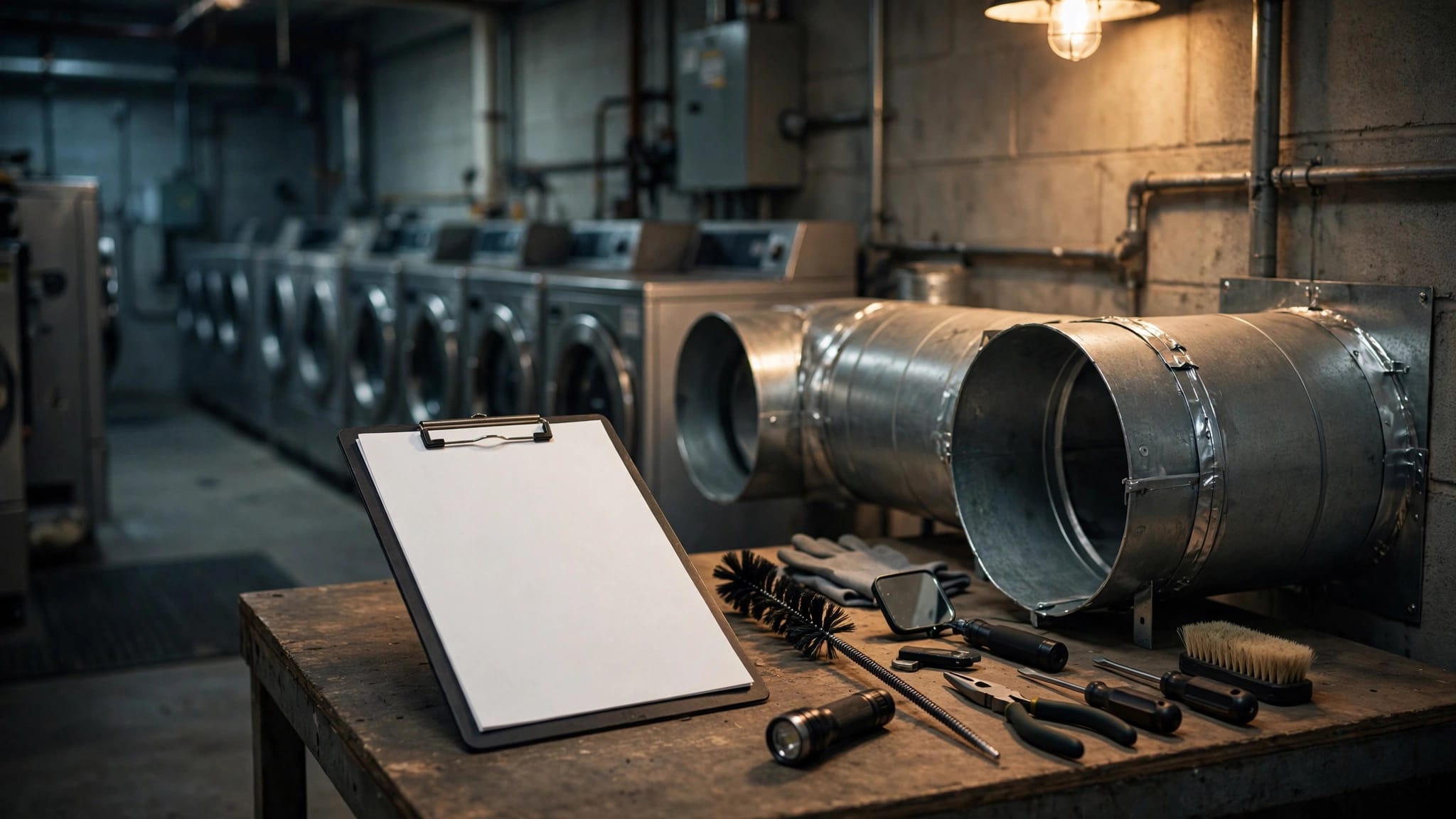
Take notes on which grille or register is affected, whether the residue is dry or damp, how quickly it returns, and whether the system was running during dusty work. Record when the filter was changed and whether it looks loaded. Photos can help a technician compare locations and understand the pattern.
If the concern is airborne particles rather than visible duct debris, avoid scheduling cleaning before planned testing. Cleaning can change the conditions being measured. When work is recommended afterward, ask for a scope that identifies the supply runs, returns, registers, and accessible HVAC components included.
When to call an HVAC or duct-cleaning professional
Arrange a professional inspection when you see dust beyond the grille, debris blowing from supply vents, repeated buildup soon after cleaning, or visible material near the blower or return plenum. A technician should also assess damaged duct connections, moisture, pest evidence, or insulation concerns.
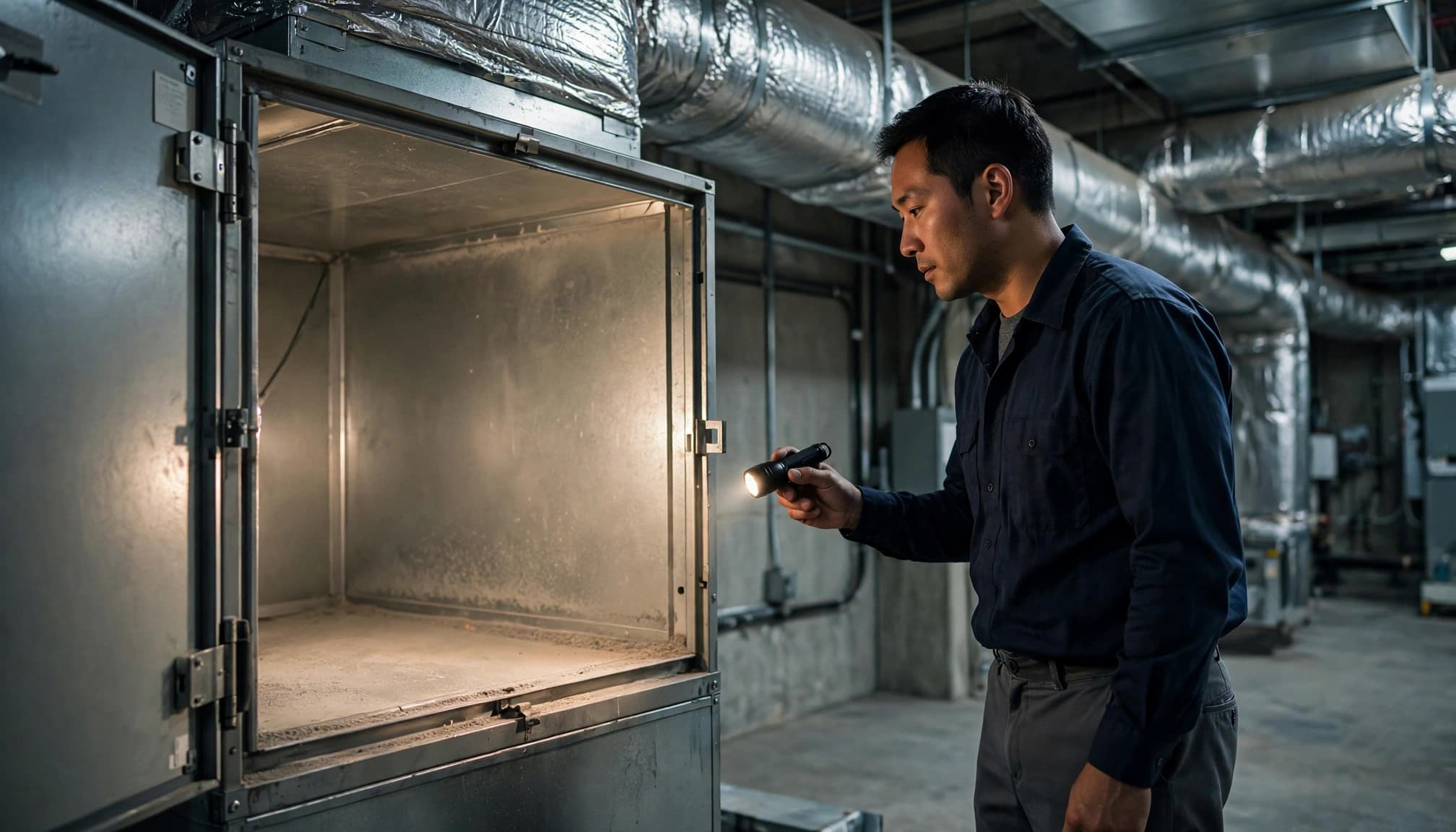
An inspection should connect the findings to the proposed work. Ask which areas show debris and whether the recommendation covers register surfaces, supply and return ductwork, plenums, or accessible HVAC components. Those parts aren't automatically included in every service. You can review what professional air duct cleaning removes to understand why the scope should match the material and its location.
Professional cleaning generally uses controlled negative pressure and suitable agitation tools to collect loosened debris rather than scatter it. The method should suit the duct material and access available. Cleaning also won't correct a return leak, damaged insulation, or moisture source, so repairs may need separate attention.
For hidden contamination, HVAC equipment, or unsafe access, avoid DIY work and seek when to hire a professional duct cleaner. If an inspection supports service, you can Get a Free Estimate for air duct or dryer vent cleaning.
Frequently asked questions
Does dust on a return grille mean the ducts need cleaning?
No. It shows that dust has reached the grille, but it doesn't prove the hidden ductwork is contaminated. Inspect the accessible opening and look for other signs, such as debris inside a duct section, repeated dust from supply registers, or buildup near the air handler.
Can a dirty filter confirm that dust entered the ducts?
No. A loaded filter can reflect dusty work or normal conditions, but filter fit and airflow also affect what it collects. Treat it as one clue alongside visible debris and the system's condition.
Should the HVAC system run during dusty warehouse work?
When practical, keep dust-producing work from sending particles into active returns or uncovered registers. Follow the site's HVAC and work-area procedures. After the work, inspect accessible grilles and check the filter before assuming the duct system needs cleaning.
Make the decision from evidence
A warehouse return grille is a useful checkpoint, but it shows only a small part of the HVAC system. Look for material beyond the opening, repeated particles at supply vents, or debris at accessible equipment, while considering filters, airflow, moisture, and nearby work as possible causes.
The right next step depends on where the dust is and how it got there. Surface buildup may need simple cleaning, while visible material deeper in the system calls for a careful professional assessment.