How to Schedule Church HVAC Duct Service Around Weekly Events
Church duct work is easier to plan when the service window follows the building's actual event calendar. For effective church HVAC maintenance , schedule inspections and cleaning when the affected rooms, HVAC system, and access routes are available.
A Sunday service may be the most visible event, but weekday programs, rehearsals, meetings, and community use also shape the schedule. A short planning conversation with facility staff and the cleaning team can prevent blocked entrances, unavailable rooms, and last-minute changes.
Plan church HVAC maintenance around the weekly calendar
Before booking, map the church's recurring activities by room and time. Include setup and cleanup periods, since a hall may be occupied before or after the listed event.
List events by room, not just by day
A weekly calendar should identify which spaces are in use, when people arrive, and how long the room needs to remain clear. Include the sanctuary, classrooms, fellowship hall, offices, nursery, and any rooms used by outside groups.
Also record events that change from week to week, such as funerals, weddings, seasonal programs, or community gatherings. One person, often the facilities coordinator or administrator, should gather updates from staff and ministry leaders. That gives the service team one current schedule rather than several conflicting versions.

Identify rooms that need to stay open
Some spaces can be closed for a few hours, while others support essential activities throughout the week. Mark rooms that need continuous access, along with nearby routes people use to reach them.
Then identify which HVAC system serves each area. A sanctuary and an education wing may have separate equipment, so work on one system may not require closing the entire building. A clear room-by-room plan helps limit the work area and keeps unaffected programs on schedule.
Choose a service window that allows for access and cleanup
A useful appointment window covers more than the time spent cleaning. The team may need to enter the building, move equipment, reach duct access points, protect nearby surfaces, and restore rooms afterward.
Coordinate building access and HVAC controls
Tell the facilities contact who will open the building and where the crew can park or unload equipment. Share entry procedures, alarm instructions, access restrictions, and the location of mechanical rooms, attic hatches, or other relevant areas.
Discuss HVAC controls before the appointment. The crew may need access to system switches or thermostats, and staff should know which units are part of the work. If building access or parking changes during the week, communicate that before the crew arrives.
Churches can adapt planning ideas from after-hours duct service for Florida offices, including advance coordination of access, security, parking, and cleanup. The same principles help keep a church service visit orderly, even when the building's schedule differs from an office's.
Leave time to make rooms usable again
Avoid scheduling work to end at the moment a class, rehearsal, or meeting begins. Build in time to remove equipment, collect coverings, close access openings, and return furniture to its usual arrangement.
If a room hosts multiple activities, ask staff when it must be ready for the next group. A service window that ends well before people arrive is often easier to manage than one that overlaps with setup. When possible, keep a staff contact available to answer questions about room access or building controls.
Schedule inspections, cleaning, and repairs as separate decisions
A calendar can help organize service, but the condition of the system should guide what work is appropriate. Inspection, cleaning, and repair answer different questions, so plan them as distinct parts of the process.
Start with an inspection and clear findings
Before cleaning, the technician should inspect accessible duct areas and discuss what the system shows. Staff can point out rooms with visible debris at registers, persistent odors, recent renovation dust, moisture concerns, pest activity, or weak airflow.
Those observations help the technician focus on the relevant sections. A written estimate should describe the proposed work and identify what is included. If the inspection finds damage, moisture, or another issue that cleaning won't correct, staff can discuss that separately instead of assuming a cleaning visit will resolve it.
Schedule work around real triggers
Rather than choosing a recurring date without considering condition, use practical signs and building changes to prompt an inspection. Recent construction, visible buildup, pest debris, or a water event may call for attention. A long period without service may also make an inspection useful, especially when staff notice changes in the system.
When a repair is needed, plan it separately if it requires different access, parts, or work time. For example, cleaning can remove settled debris, but it won't reconnect a separated duct or repair a damaged section. Keeping those tasks distinct makes it easier to protect event dates and understand the schedule.
Define what the duct service includes
"Duct cleaning" can refer to different amounts of work. A written scope helps the church understand which parts of the system the crew will access and which areas remain outside the appointment.
Ask about supply, return, and HVAC components
A complete duct service may include accessible supply branches and trunks, return ducts, plenums, connections, registers, grilles, and diffusers. Some estimates may also include accessible air-handler areas, such as the blower motor, when listed in the scope.
A coil, drain pan, or internal cabinet may need separate access and service. Therefore, ask the provider to identify those components rather than assuming they're automatically included. The explanation of what full HVAC duct cleaning includes can help distinguish cleaning visible registers from cleaning a broader portion of the duct system.
Understand how the crew will contain debris
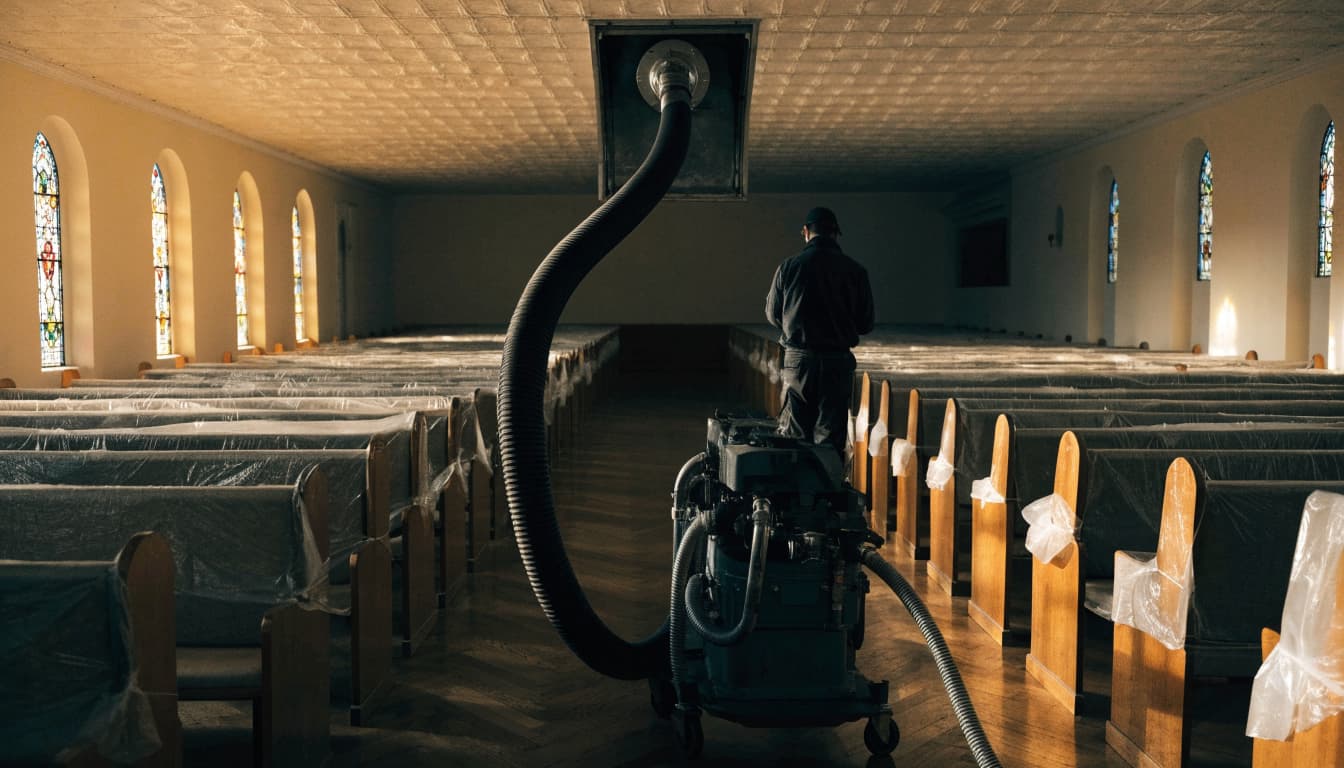
Depending on the system, technicians may use air whips, compressed air, or rotary brushes to loosen material. A vacuum collects debris as the crew works through the supply and return sides. The cleaning method should suit the duct design and condition.
For example, how negative-pressure air duct cleaning works describes a collection approach that draws loosened material toward vacuum equipment. Ask where access points are needed and how the crew will protect nearby furnishings and finished surfaces. Those details help staff plan room access and know what to expect during the visit.
Prepare rooms to reduce disruption
Once the work area is set, small steps from facility staff can prevent avoidable delays. Preparation should focus on access, protection, and keeping people away from active work areas.
Clear routes and protect furnishings
Move chairs, music stands, tables, and stored items away from vents, return grilles, equipment locations, and access points. If the crew needs to work above a ceiling or reach an attic hatch, keep the route clear and reserve the relevant area.
Discuss protection for pews, instruments, sound equipment, artwork, and other items that are difficult to move. The service team can explain what needs to be covered or relocated. Agree on who will handle room setup before work begins, rather than leaving that decision for the day of service.
Keep people clear of active work areas
Cleaning may involve equipment, hoses, open access points, and movement between rooms. Keep the work zone separate from church activities, and tell staff which rooms or corridors are temporarily unavailable.
If a class or rehearsal must continue nearby, consider whether another room is a better fit during the appointment. Clear communication matters for volunteers and outside groups as well as employees. A brief notice with the affected rooms and expected access limits can prevent people from walking into the work area.
Keep staff coordination simple before and after service
One designated contact can connect the schedule, building access, and service details. That person doesn't need to manage every task, but should know who can answer questions about the building and who needs updates.
Share the information the crew needs
Before the appointment, provide the current event calendar, room restrictions, and details about building access. Mention the location of mechanical equipment and any known issue that could affect the work, such as a recent leak or renovation. If different staff members oversee different wings, identify them so the crew can reach the right person.
The same contact can tell ministry leaders which areas will be unavailable. For multi-system buildings, a simple room-to-system list can help staff understand which spaces may be affected.
Review what was completed
After service, have the facility contact walk through the affected rooms with the technician or review the completed work summary. Ask which duct sections were accessed, whether any areas were excluded, and whether the crew found conditions that need separate attention.
Record the service date, cleaning scope, and any repair recommendations with the church's facility documents. That record helps future coordinators plan around prior work without relying on memory. If the church needs professional air duct cleaning or dryer vent cleaning, Get a Free Estimate to discuss the property and the service required.
Key Takeaways
- Build the service plan around a room-by-room calendar, including setup and cleanup time.
- Name one facility contact to coordinate access, HVAC controls, parking, and staff notices.
- Use an inspection to identify whether cleaning is appropriate and which system areas need attention.
- Get a written scope for supply ducts, returns, registers, and any included HVAC components.
- Schedule repairs separately when the problem involves damaged or disconnected ductwork.
Frequently Asked Questions
When is the best time to clean church ducts?
Choose a period when the affected rooms and HVAC equipment are available and the work area can remain clear. The best window depends on the church's weekly events, the systems being serviced, and the access required. Plan around setup and cleanup, not only the event start time.
Should duct cleaning happen every year?
A fixed annual appointment isn't necessary for every building. Schedule an inspection when staff notice visible buildup, renovation dust, pest debris, moisture concerns, or another specific reason to assess the system. The findings can guide whether cleaning is appropriate.
Can the church keep other rooms open during service?
Often, the schedule can focus on the rooms and systems included in the agreed scope. However, access routes, equipment location, and HVAC connections affect what can remain open. Identify those constraints with the facility contact before the appointment.
Does duct cleaning fix weak airflow?
Not necessarily. A blocked or dirty duct may be part of the issue, but weak airflow can also come from damaged or disconnected ductwork or an equipment problem. Have the system inspected so cleaning and repairs aren't treated as interchangeable.
Make the schedule fit the building
A church's weekly calendar is the starting point for duct service, not an obstacle to it. When staff share room use, access needs, and known system concerns in advance, the crew can plan a focused visit and limit disruption.
The most useful schedule pairs an appropriate service window with a clear inspection and written scope. That keeps the building's activities in view while directing attention to the ductwork and components that need it.