Why a Clean Lint Trap Doesn't Mean a Clean Dryer Vent
A spotless lint screen can create a false sense of security. Dryer vent cleaning reaches far beyond the small mesh filter you clear after each load.
Lint still moves past the screen, settles inside the duct, and can restrict the hot, moist air leaving your dryer. That buildup can make laundry take longer, raise wear on the appliance, and create a safety concern. Understanding where lint travels helps you maintain the whole system, not only the part you can see.
Dryer Vent Cleaning Starts Beyond the Lint Screen
Your dryer has several separate parts that work together. Cleaning one part helps, but it doesn't clean the others.
The lint screen catches only part of the lint
The lint screen, also called a lint trap or lint filter, sits near the dryer door or on the top panel. Its mesh catches loose fibers released from clothing during a drying cycle.
You should remove lint from this screen before every load. However, the screen isn't designed to capture every tiny fiber. Fine lint can pass through the mesh, especially when airflow is strong.
Fabric softener sheets and dryer-sheet residue can also coat the screen. A screen may look clean while its mesh still resists airflow. Washing it occasionally with warm water, dish soap, and a soft brush removes that invisible film.
The housing, duct, and hood are separate spaces
Below the lint screen is the lint-filter housing , a narrow channel that leads into the dryer cabinet. Lint often drops or clings inside that housing, where fingers cannot safely reach.
The dryer then pushes air into a flexible or rigid vent duct behind the appliance. That duct runs through a wall, ceiling, crawlspace, attic, or another concealed route before it reaches the exterior exhaust hood .
The exterior hood is the flap or louvered cover where warm air exits the home. It can collect lint, hold a nesting material, or fail to open fully. Clearing the lint screen does not reach the housing, the duct, or that outside hood.
Why Lint Builds Up After You Clean the Filter
A dryer moves a large volume of warm air during every cycle. That air carries moisture and fine fibers through a route with turns, joints, and varying duct lengths.
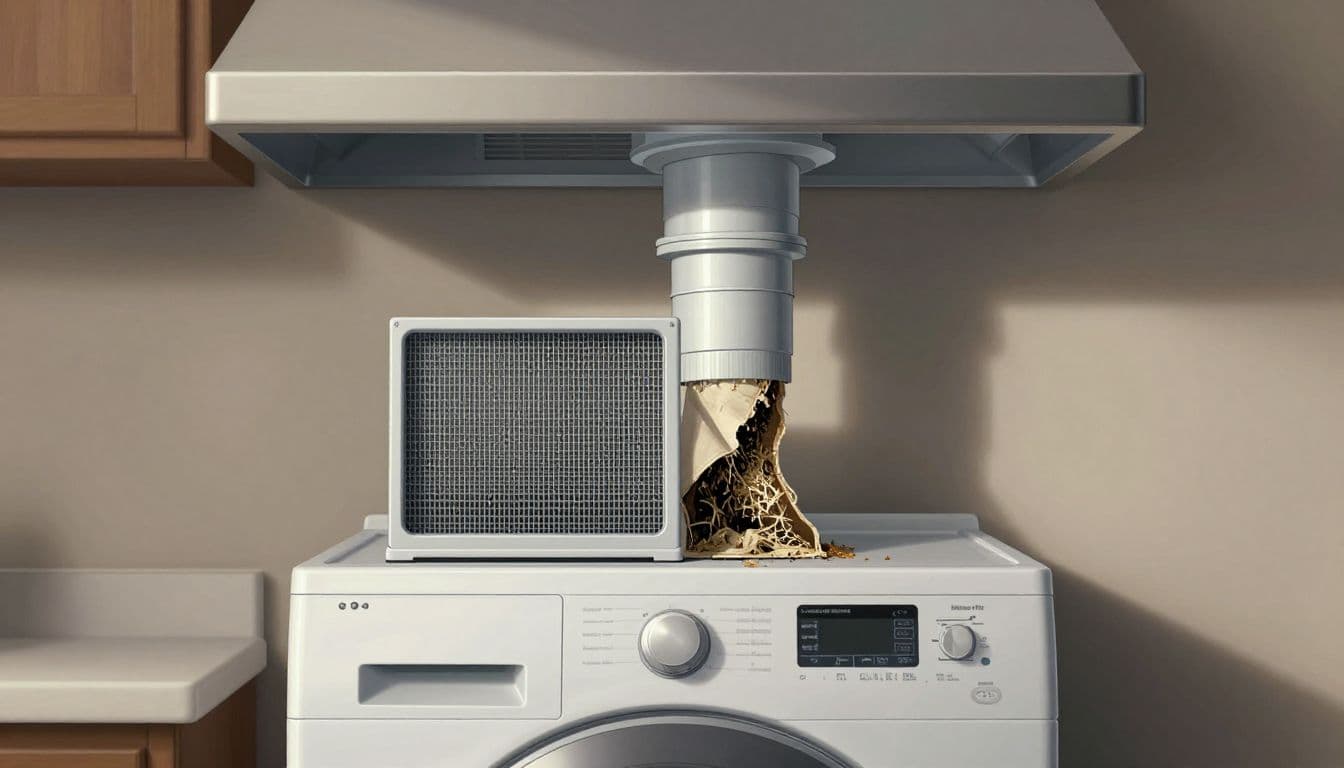
Even a well-maintained screen allows some lint downstream. Over months, the fibers catch on ridges, screws, loose connections, and the inner surface of the vent pipe.
Long ducts and sharp turns hold more debris
A short, straight metal duct gives lint fewer places to settle. In contrast, ducts with several elbows or a long run through the home lose airflow more easily.
Flexible transition ducts behind the dryer can also sag or become crushed when the appliance gets pushed back. A pinch in that connector narrows the path and creates a place for lint to gather.
Plastic or thin foil-style ducts tear easily and tend to trap lint in their ridges. A properly installed metal duct has a smoother interior and holds its shape better. If you notice damaged material behind your dryer, don't tape over a crushed section and hope for the best.
Moisture makes lint cling to duct walls
Dryer exhaust contains moisture. In Florida, humid outdoor air can make venting problems more noticeable, especially when a weak exhaust hood allows moist air to linger around the outlet.
As lint catches moisture, it can stick to duct walls instead of blowing outdoors. The buildup often begins in a small area, then slows airflow enough for more fibers to remain behind.
A clean lint screen protects the dryer only when air can still travel freely through the entire route to the exterior hood.
A Clean Screen Cannot Fix Restricted Airflow
When the duct begins to clog, the dryer may still run and produce heat. Yet heat without proper exhaust is not effective drying. The moisture has nowhere to go fast enough.
Many homeowners respond by running a second or third cycle. That may dry the clothes, but it also keeps the appliance hot for longer and adds more lint to the system.
Longer cycles are often the first clue
A usual load that suddenly needs extra time deserves attention. Heavy items such as towels, jeans, and bedding will always take longer than T-shirts, but a clear change in normal performance matters.
Check the exterior exhaust hood while the dryer is operating. Its flap should open when air reaches it. Weak airflow, a flap that barely moves, or no movement at all can point to a blockage or a disconnected duct.
Still, don't place your hand inside the hood while the dryer is on. The cover may have sharp edges, and pests can sometimes nest near an exterior opening.
Excess heat can damage more than laundry
A restricted vent makes the dryer work harder to remove moisture. The appliance may feel unusually hot, and clothes can come out hotter than expected.
You may also notice a musty smell from damp fabrics that stayed wet too long. In some cases, a burning odor means lint or another component has overheated. Stop using the dryer if you smell burning, then arrange an inspection before running another load.
Safe Dryer Vent Maintenance at Home
Routine care matters, but it should stay within the areas you can access without dismantling the appliance or damaging the duct. Start with the lint screen every time you dry clothes.
For deeper maintenance, work slowly and protect the vent connection. A bent, torn, or loose duct can create more problems than a little visible lint.
Follow these basic maintenance steps
- Remove lint from the screen before each load, then wipe the surrounding opening with a dry cloth.
- Every few months, wash the screen with warm water and mild dish soap. Let it dry fully before reinstalling it.
- Turn off and unplug an electric dryer before moving it. If you have a gas dryer, avoid disconnecting or disturbing the gas line.
- Pull the dryer forward only far enough to inspect the transition duct. Do not drag the appliance or crush the connector against the wall.
- Check that the duct is attached securely and isn't kinked, ripped, or flattened. Replace damaged sections with suitable metal material rather than patching them.
- Clear visible lint and leaves from around the exterior exhaust hood. Confirm the flap can open and close freely.
- Reconnect the duct carefully, restore power, and run a short test cycle. Check outside to confirm warm air exits normally.
A household vacuum can remove loose lint near the filter housing or vent opening. However, don't force a long brush or drill attachment through an unknown duct path. It can snag, split flexible material, or push lint into a tighter obstruction.
Signs You Need Professional Dryer Vent Cleaning
A yearly inspection is a sensible baseline for many households. Homes with large families, frequent laundry, pet hair, long vent runs, or several sharp turns may need service sooner.
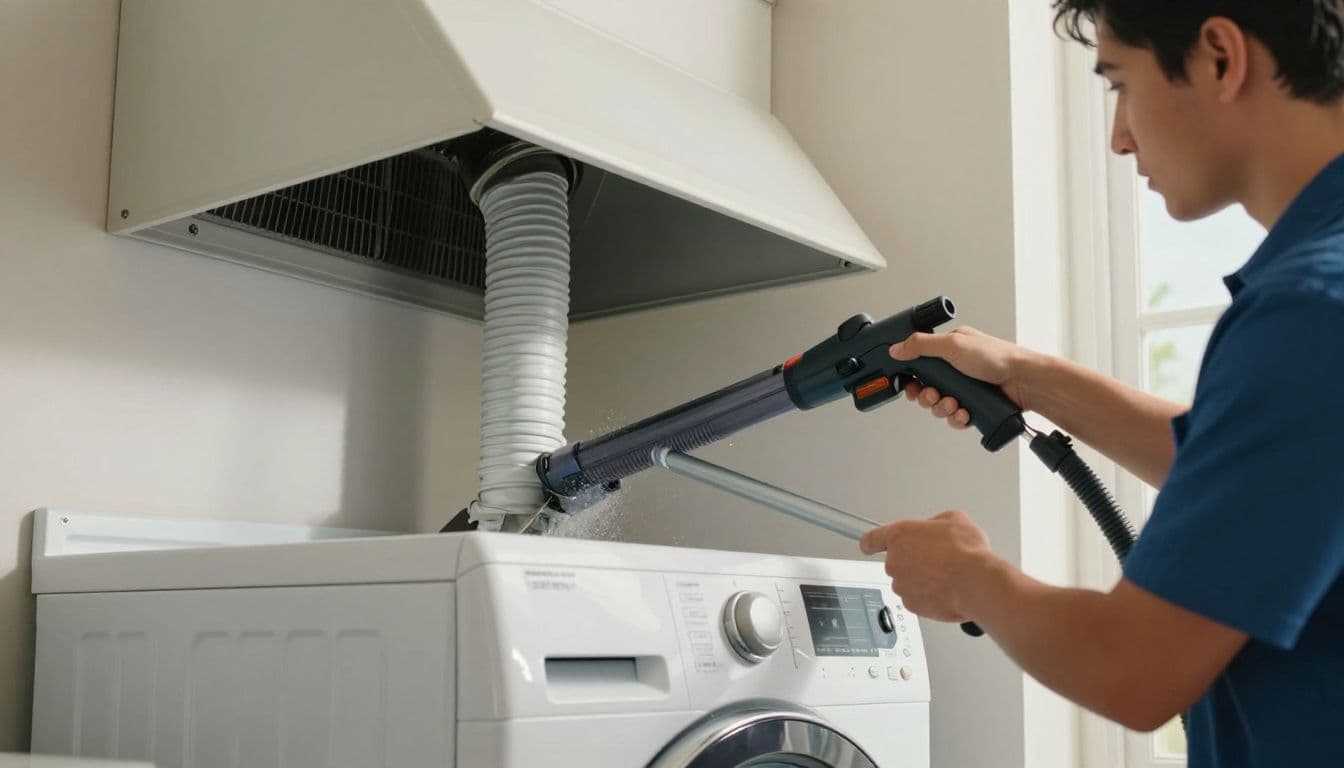
Professional dryer vent cleaning removes debris from the complete path instead of treating the lint screen as the whole job.
Watch for these changes in dryer performance
Call for service when you notice one or more of these warning signs:
- Laundry takes more than one cycle to dry when it previously dried normally.
- The dryer, laundry room, or clothing feels unusually hot during or after a cycle.
- The exterior exhaust hood has weak airflow or doesn't open while the dryer runs.
- You smell a burning odor, musty odor, or see lint gathering around the dryer connection.
- The vent duct is visibly crushed, disconnected, torn, or inaccessible.
A technician can inspect the connection behind the dryer, clear the duct, clean the exterior outlet, and test airflow afterward. For homeowners along the Gulf Coast, Fort Myers dryer vent cleaning provides a local option when the vent route needs more than surface cleaning.
What a Full Vent Service Should Address
A proper appointment is more than vacuuming around the lint trap. The work should account for the system's entire exhaust route.
That means checking the lint-filter housing, the transition connector behind the dryer, the concealed duct, and the exterior exhaust hood. The technician should also look for loose connections, damaged duct material, blocked hoods, and airflow issues.
Keep air ducts and dryer vents in their own lanes
Your dryer vent and HVAC ductwork are separate systems. Dryer vents carry hot, moist appliance exhaust outside. Air ducts circulate conditioned air throughout your home.
Both may collect dust or debris over time, but they need different tools and inspection methods. If household dust, odors, or HVAC cleanliness are also concerns, review the available air duct and dryer vent services before scheduling work.
For a clogged vent, a damaged connector, or persistent slow drying, Get a Free Estimate and have the complete route checked. A clear scope of work gives you a better picture of what needs attention.
Common Questions About Lint Traps and Dryer Vents
Can I use my dryer without the lint screen?
No. Running a dryer without its lint screen allows much more lint into the housing, duct, and dryer cabinet. Replace a damaged or missing screen before using the appliance.
Does cleaning the exterior hood clean the whole vent?
No. Removing lint from the outside cover helps airflow at the exit point. It does not remove buildup farther inside the duct, especially around bends and long concealed runs.
How often should I clean the lint screen?
Clean it before every load. Wash it with soap and water when it feels coated, looks discolored, or seems to repel water.
Keep the Entire Exhaust Path Clear
The lint screen is your first line of defense, but it is only one part of the dryer exhaust system. Fine fibers still enter the housing, vent duct, and exterior hood with every load.
Regular screen care, gentle visual checks, and timely dryer vent cleaning keep air moving where it belongs, outside your home. When drying times change or airflow weakens, treat it as a maintenance issue before it becomes a bigger repair.