Dryer Vent Cleanout Doors for Difficult Runs
A dryer can look fine from the laundry room while lint builds up far beyond the appliance. Dryer vent cleanout doors give cleaning equipment a way to reach hidden sections of a long or bend-heavy vent route without tearing into finished walls.
For homeowners and remodelers, placement matters as much as the door itself. A poorly located opening can be unreachable, leak air, catch lint, or create more trouble at the next service visit. The right location keeps the full path inspectable and practical to clean.
Why Access Placement Changes the Whole Job
Dryer exhaust needs an open route from the appliance to the exterior termination. When a run passes through a ceiling, soffit, attic, crawlspace, or a chase behind cabinetry, lint can collect in sections that are hard to reach from either end.
A cleanout door gives a technician another entry point. It can reduce the distance a brush, air tool, or inspection camera must travel around bends. It also helps identify crushed pipe, disconnected joints, and buildup that ordinary cleaning tools cannot clear from the laundry-room connection alone.
A cleanout door is not the same as an access panel
A duct cleanout door is an opening or fitting on the vent duct itself. A building access panel is the removable wall, ceiling, or closet panel that lets someone reach that duct opening.
Difficult runs may need both. The duct cleanout must close securely, while the surrounding finish panel must remain easy to open. Installing one without considering the other leaves the system only partly serviceable.
Long runs deserve a service plan
Each turn adds resistance to airflow and makes cleaning harder. A vent route with several elbows, a vertical rise, or a long path through finished spaces needs more thought than a short, straight wall exit.
Before a remodel closes up a wall or ceiling, map the route and decide how a service professional can inspect it later. This small planning step can prevent a costly drywall repair when the vent needs attention.
Placement Options for Dryer Vent Cleanout Doors
The best location depends on the duct route, framing, appliance location, and available finished space. The opening should sit where a professional can reach it without moving permanent construction or using unsafe positions.
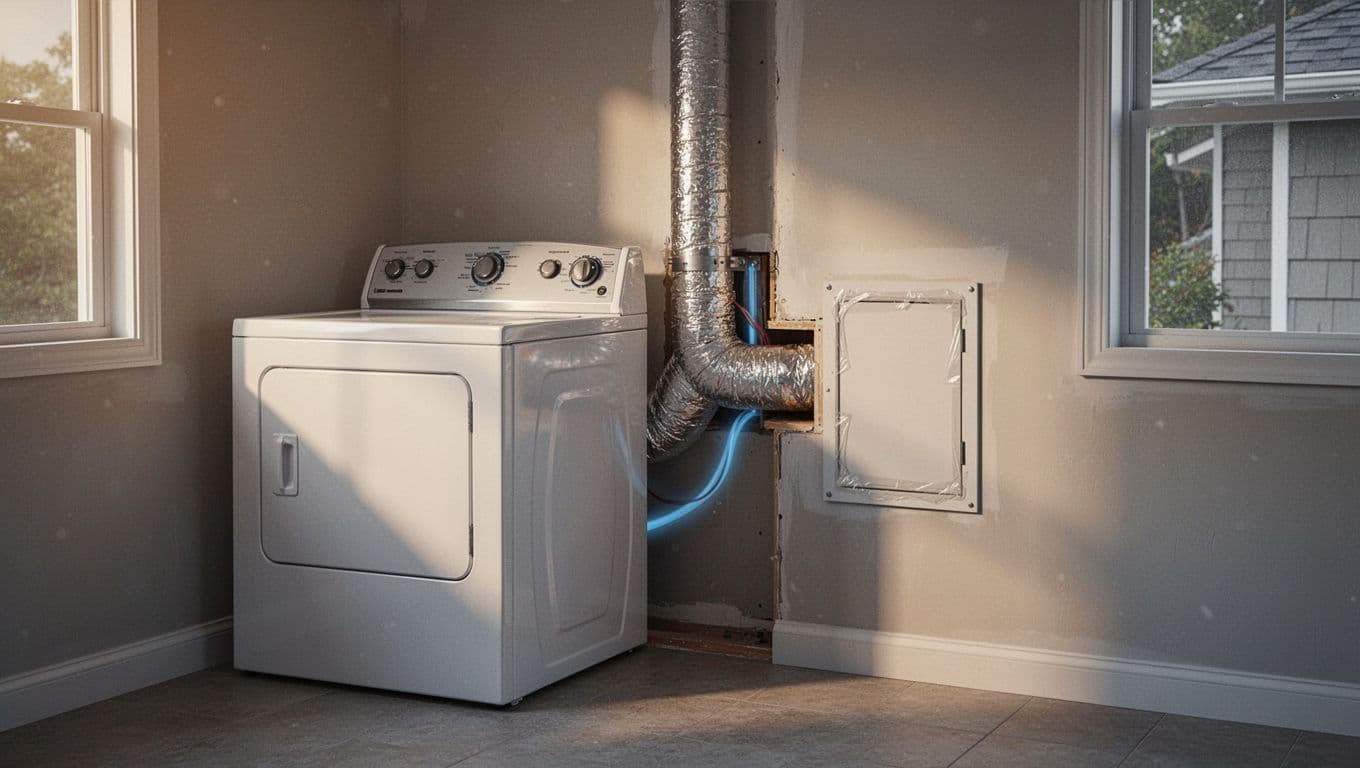
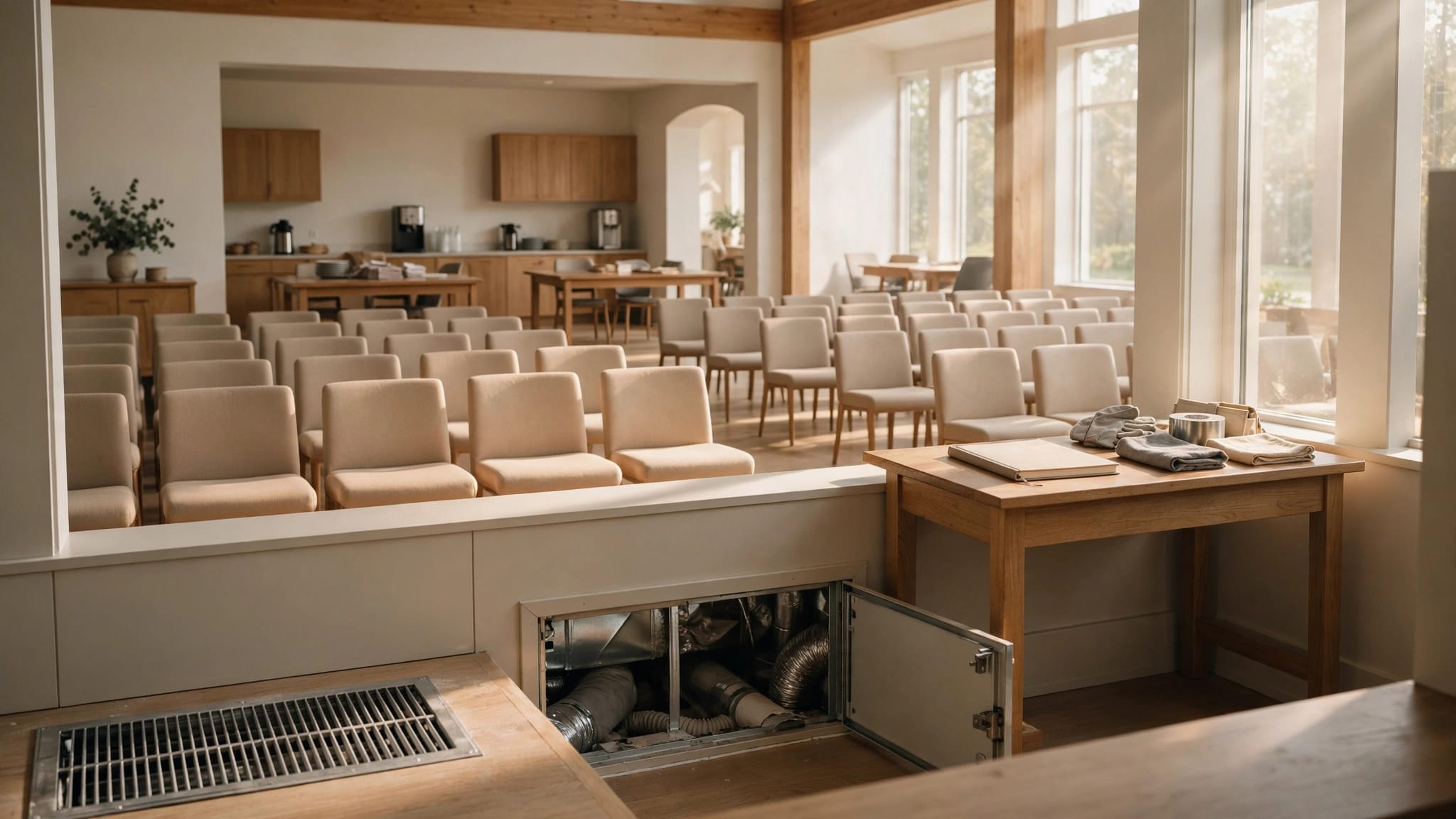
An accessible side-wall panel can expose a cleanout point without placing it behind the dryer.
Near the dryer, but not buried behind it
A cleanout point near the dryer can work well when the vent immediately turns upward or sideways into a concealed chase. Place the building access panel beside the appliance, in an adjacent closet, or on a nearby wall where it stays visible and reachable.
Avoid putting the panel directly behind a permanently installed dryer. Even if the machine can move today, that location becomes a problem when a pedestal, cabinetry, stacked unit, or tight closet blocks access.
The flexible connector between the dryer and wall is also a regular inspection point. However, it doesn't always provide enough reach for a long concealed run.
At a major turn or before a concealed section
A direction change can be a practical location for dryer vent cleanout doors, particularly before the duct disappears into an attic, soffit, floor cavity, or wall chase. The opening can give tools a straighter approach to the hidden segment.
For example, a laundry-room duct may rise vertically, turn into a ceiling cavity, then travel to an exterior wall. An accessible point at the transition can make cleaning more complete than relying only on the appliance connection and exterior hood.
Do not add an opening simply because a bend exists. The fitting, joint seals, duct material, and clearances must work with the dryer manufacturer's instructions and local requirements.
In a utility closet or removable ceiling panel
An adjacent utility closet is often a better choice than a laundry closet. It provides a wider work area and avoids moving the appliance. A removable ceiling panel can also work where the duct crosses a short, reachable overhead section.
Still, an attic opening only helps if it can be reached safely and has a stable walking surface nearby. A panel above a tall cabinet or over a stairwell may look accessible on a plan but creates a poor service location in real life.
A cleanout location only works when a technician can reach it with cleaning equipment, reseal it, and inspect the surrounding duct afterward.
What a Durable, Sealed Access Point Needs
Dryer exhaust contains heat, moisture, and fine lint. An access fitting needs to tolerate those conditions without warping, loosening, or creating a rough interior edge that snags debris.
Use components made for dryer exhaust and compatible with the existing vent system. Rigid metal duct is commonly preferred for concealed portions because it has a smooth interior and resists damage better than thin, flexible material. Follow the dryer manual for approved materials, maximum run limits, and connection details.
Keep the door sealed after every service visit
A cleanout door must close tightly after inspection or cleaning. Gaps can release warm, damp air into walls or attics, and a loose cover can disrupt airflow.
The technician should check the closure and nearby joints before leaving. If the access point sits behind a finish panel, that panel should also fit securely without relying on paint, tape, or a furniture piece to hold it closed.
Design around future reach
Choose a location with clear floor space and a removable panel large enough for service access. Labeling the inside of an access panel can be useful during construction, but the panel should never need a hidden trick to open.
Don't conceal access doors behind tile, built-in shelving, fixed countertops, glued trim, or permanently installed appliances. A polished finish is not worth losing the ability to maintain a safety-related exhaust path.
How Professionals Inspect and Clean a Difficult Run
A proper visit starts with the whole route, not only the short connector behind the dryer. The technician checks the appliance connection, accessible cleanouts, visible duct joints, and exterior termination. They also look for lint buildup, damage, and airflow restrictions.
For a clearer picture of the appointment, review what happens during dryer vent cleaning. The process should include the vent path and exterior hood, not just a quick vacuum around the dryer.
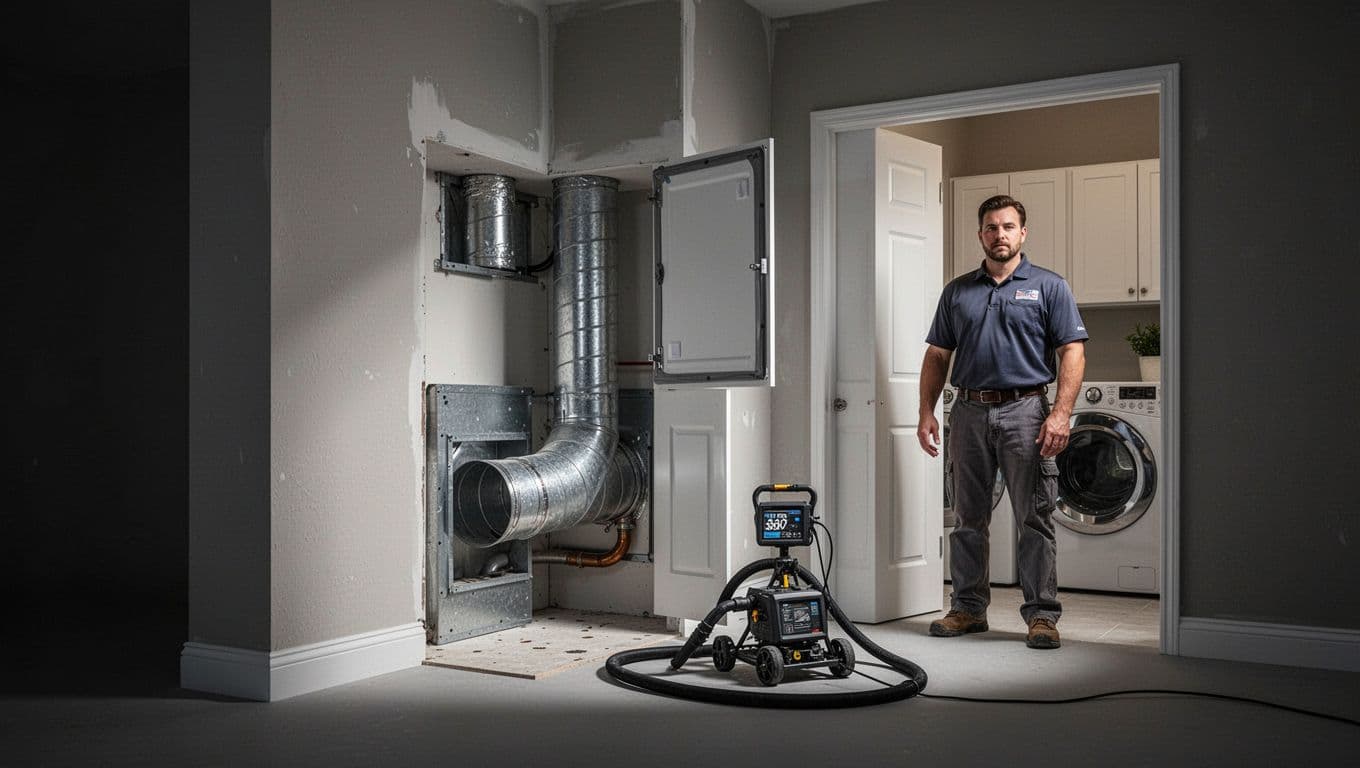
An accessible closet panel gives a technician room to inspect a concealed duct section and reseal it after service.
Inspection comes before any alteration
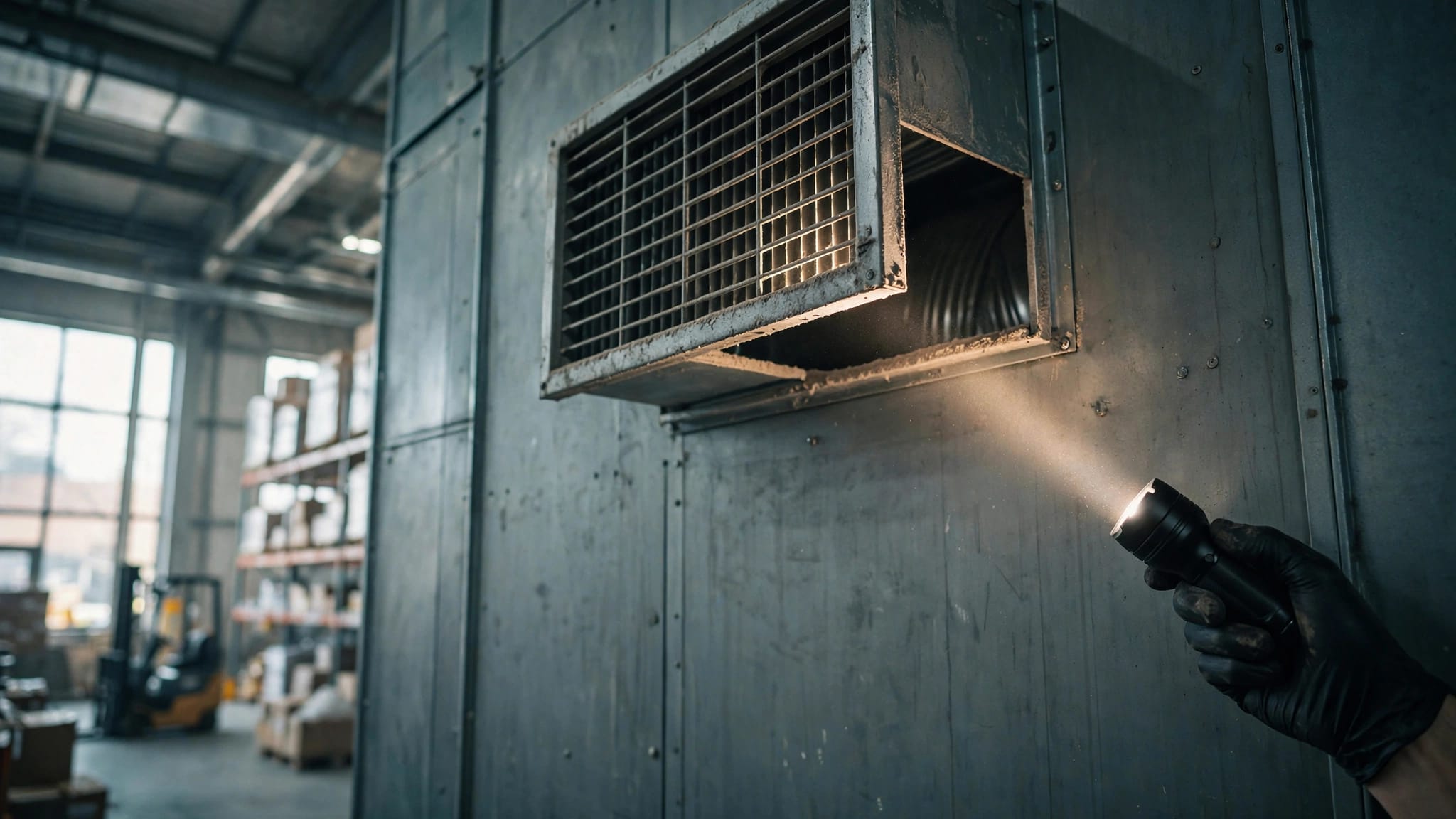
A camera or visual inspection can reveal whether a difficult section has packed lint, an unexpected elbow, a separated joint, or crushed ductwork. Cleaning equipment can't repair a broken route, so the inspection should guide the next step.
If the path is inaccessible or the duct material is damaged, a licensed HVAC or appliance-vent professional can recommend a repair plan. Avoid cutting into ductwork, drywall, or structural framing without knowing what sits behind the surface.
Cleaning should verify airflow afterward
After lint removal, the technician should check that air reaches the exterior termination and that the flap can open freely. A cleanout door is then closed and sealed before the dryer goes back into regular use.
If drying remains slow, the cause may be a restricted outlet hood, a long route beyond the appliance's approved limits, duct damage, or a dryer problem. A thorough dryer vent inspection can reveal hidden airflow issues before someone assumes the machine has failed.
Warning Signs Your Setup Is Hard to Service
Some access problems become obvious only when cleaning is due. If a technician cannot reach a segment without removing cabinetry or opening a wall, the system needs a better maintenance plan.
Watch for these signs:
- The dryer takes more than one cycle to dry ordinary loads.
- The appliance, laundry room, or clothes feel unusually hot during a cycle.
- Lint appears around a duct joint, access cover, or wall opening.
- The exterior vent hood has weak airflow or doesn't open fully.
- A cleanout door is blocked by built-ins, storage, or the dryer itself.
- The panel opens, but there is no safe room to reach the duct or reseal it.
A burnt smell, visible damage, or a dryer that stops mid-cycle calls for prompt attention. Stop using the appliance if you suspect an exhaust blockage or damaged vent connection until a qualified professional checks it.
When to Call a Licensed Professional
Routine lint-screen cleaning is a homeowner task. Opening finished walls, altering metal duct, changing the vent route, or adding dryer vent cleanout doors belongs with a qualified professional who understands dryer exhaust systems.
Call for help when the run passes through a multi-story chase, attic, crawlspace, garage ceiling, masonry wall, or shared building area. The same applies when a remodel has hidden the duct, the termination is high above grade, or the dryer manual conflicts with the proposed layout.
Local rules vary, and dryer manufacturers set their own limits and material instructions. Verify both before approving a new cleanout location. A professional should also explain whether the work involves cleaning, repair, rerouting, or all three.
If your dryer runs hot, takes too long, or has a route no one can fully reach, Get a Free Estimate for a cleaning and inspection plan that matches the actual vent path.
Key Takeaways for Remodels and Existing Homes
Access should be planned before walls and ceilings close, especially when a vent has several turns or crosses a concealed area. Place service panels where people can open them without moving fixed appliances or dismantling finished surfaces.
A durable, sealed duct opening and a reachable building access panel work together. Keep both in a dry, stable, visible location with enough room for professional equipment.
Most importantly, treat slow drying as a vent-system warning, not merely an inconvenience. A reachable route makes routine maintenance safer and more complete.
Conclusion
A difficult dryer vent run doesn't need to become a permanent blind spot. Reachable, sealed cleanout access gives professionals a practical way to inspect and clean the sections that matter most.
Plan the location around actual service access, not only what disappears neatly behind a finished wall. That choice protects the vent system long after the remodel is complete.
FAQ
Where should a dryer vent cleanout door go?
Place it near a major bend, before a long concealed section, or in an adjacent utility space where a technician can reach the duct safely. Keep the surrounding access panel visible and free of permanent obstructions.
Can a cleanout door sit behind the dryer?
It may be physically possible, but it is usually a poor choice. A dryer, pedestal, stacked unit, or future cabinetry can block the panel. Choose a side wall, nearby closet, or other reachable location instead.
Does every dryer vent need a cleanout door?
No universal rule covers every house and vent layout. Short, straight, accessible runs may be serviceable from the dryer connection and exterior termination. Long or complex concealed runs often benefit from planned access, subject to local regulations and the appliance manufacturer's instructions.
Can I add a cleanout opening myself?
Don't modify concealed dryer ductwork without professional guidance. An improper opening can leak exhaust, catch lint, weaken the duct, or violate manufacturer instructions. A licensed HVAC or appliance-vent professional can assess the route and install compatible components.