Dryer Vent Corrosion on Florida's Gulf Coast
Salt air can damage a dryer vent long before the problem looks serious from inside your laundry room. Along the coast, dryer vent corrosion can narrow the exhaust path, hold moisture, and make a routine load of laundry take longer than it should.
Homes in Fort Myers, Cape Coral, Naples, and other Gulf Coast communities face a mix of heat, humidity, rain, and airborne salt. A quick look at the exterior vent hood and a few changes in dryer performance can help you catch trouble early.
Why Gulf Coast Conditions Wear Down Dryer Vents
A dryer sends warm, moist air outdoors. On Florida's Gulf Coast, that air meets humid outdoor conditions and often a salt-laden breeze. Metal parts can stay damp longer, especially on shaded walls or after heavy rain.
Salt air attacks exposed metal
Ocean air carries tiny salt particles inland. Even homes several miles from the shoreline can collect salt residue on exterior vent hoods, screws, clamps, and duct joints.
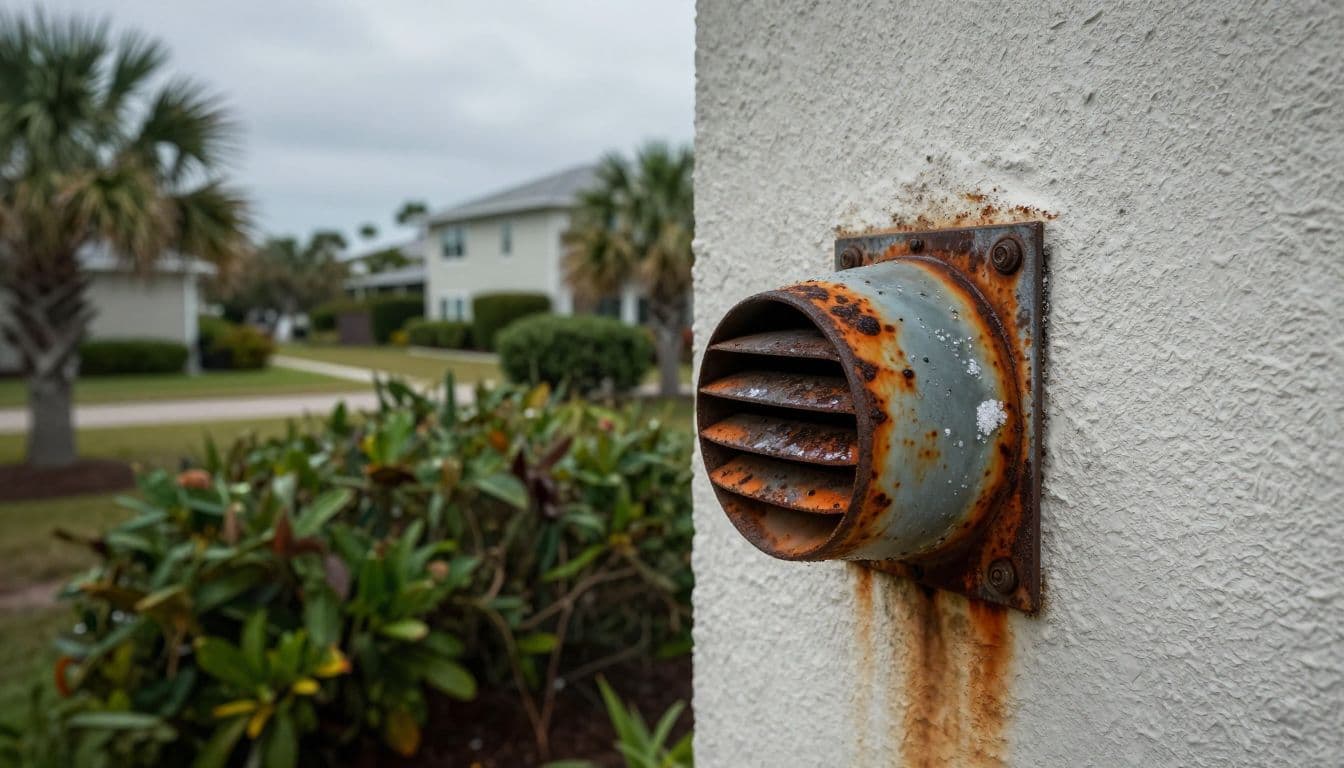
Salt attracts moisture. Once dampness sits on unprotected metal, oxidation can begin. Rust may first show up as small orange spots around fasteners or seams. Over time, the metal can pit, flake, or develop holes.
Galvanized steel has a protective zinc coating, but that coating can wear away. Aluminum does not rust red like steel, yet it can corrode, weaken, and develop a chalky or pitted surface.
Humidity, rain, and condensation add moisture
Florida humidity gives moisture more time to linger on a vent hood after the dryer stops. Rain can also enter through a damaged, stuck, or missing exterior flap. Water that reaches seams or low spots in the duct can remain there.
Condensation is another concern. If warm dryer exhaust travels through a long duct run near cooler surfaces, moisture can form inside the pipe. That moisture mixes with lint, creating a damp layer that sticks to the vent walls.
Salt residue and trapped moisture often cause more damage at seams, screws, and exterior terminations than on the middle of a straight duct section.
Signs of Dryer Vent Corrosion to Watch For
Corrosion doesn't always announce itself with a visible hole. Sometimes the first clue is reduced airflow or moisture where it should not be.
Check the exterior vent hood from the ground
Walk around your home after a dry spell and look at the exterior dryer vent hood from ground level. You may see rust streaks on stucco, blistered paint, white powdery deposits, loose fasteners, or a flap that hangs open.
During a dryer cycle, the exterior flap should open with the exhaust airflow. If it barely moves, remains shut, or rattles against a corroded hood, lint buildup or damaged hardware may be restricting it.
Avoid climbing a ladder or accessing a roof to inspect a termination. High vents, roof exits, and second-story locations need a trained professional with the right equipment.
Notice changes in the laundry room
A corroded vent may also cause problems indoors. Pay attention if clothes need more than one cycle, the dryer feels hotter than usual, or the room becomes unusually humid during laundry.
Musty odors can point to trapped moisture. You might also see lint collecting around the dryer connection, although visible lint alone does not reveal the condition of the full duct run.
A professional dryer vent airflow inspection can trace the path from the dryer connection to the outside hood. It can identify corrosion, crushed sections, loose joints, lint buildup, and concealed damage that a homeowner cannot see.
Materials and Connections That Can Fail Early
Material choice matters near the coast. A vent system may look like one continuous pipe, yet it often includes several metals, fasteners, transition pieces, and exterior components.
Mixed metals can corrode at connection points
When dissimilar metals stay wet and touch one another, they can corrode faster through an electrochemical reaction. For example, an aluminum duct connected with incompatible steel hardware may show deterioration around the joint.
That does not mean every mixed-metal connection will fail right away. However, Gulf Coast moisture gives small material conflicts more opportunity to become a repair issue.
A professional can check the full assembly and recommend compatible replacement parts. They can also look for failing tape, loose clamps, or gaps that allow humid outside air to enter the duct.
Flexible ducts need close attention
The short connection behind a dryer often receives little attention because it is hard to reach. Flexible material can collect dust, sag, kink, or tear. In a humid room, damaged sections can also hold moisture against nearby metal.
For the main vent route, smooth rigid metal ducting provides a cleaner path for exhaust than a long, loosely supported flexible run. The right setup depends on the home's layout and dryer location.
Do not patch corroded holes with household tape or attempt to squeeze damaged metal back into shape. A patch can peel away, catch lint, or hide a bigger issue at the seam.
How Corrosion Can Affect Airflow and Safety
A little surface discoloration may be cosmetic. However, deeper corrosion can change how the dryer exhaust system performs.
Restricted airflow increases heat and drying time
Flaking metal, a warped hood, or a corroded flap can reduce the space where air exits. Lint then has more opportunity to settle inside the duct, which adds another layer of resistance.
As airflow drops, clothes can take longer to dry. The dryer may run hotter or cycle repeatedly. That extra use wastes energy and puts unnecessary strain on the appliance.
Corrosion and lint often appear together because poor airflow leaves more humid air in the duct. The moisture can speed up metal damage, while rough corroded surfaces give lint more places to catch.
Moisture and lint deserve prompt attention
A leaking or separated vent can release warm, damp air into a wall cavity, attic, garage, or laundry room. That moisture can contribute to musty conditions and damage nearby materials.
Lint is combustible. When it accumulates in a restricted dryer vent, heat cannot leave as freely. Corrosion alone does not cause a fire, but it can contribute to the airflow problems that raise concern.
Gas dryers need added caution because they exhaust combustion byproducts along with moisture. If you suspect a damaged, disconnected, or blocked vent on a gas dryer, stop using the appliance and arrange for a qualified dryer-vent or HVAC professional to inspect it.
A Homeowner's Safe Inspection Routine
You do not need to take apart the dryer or climb onto the roof to spot early warning signs. A simple routine focuses on accessible areas and normal appliance behavior.
What you can check without disassembly
Start by cleaning the lint screen before every load. Then inspect the screen for tears or a slippery coating from dryer sheets and fabric-softener residue. Wash it with warm water and mild dish soap when needed, then let it dry fully.
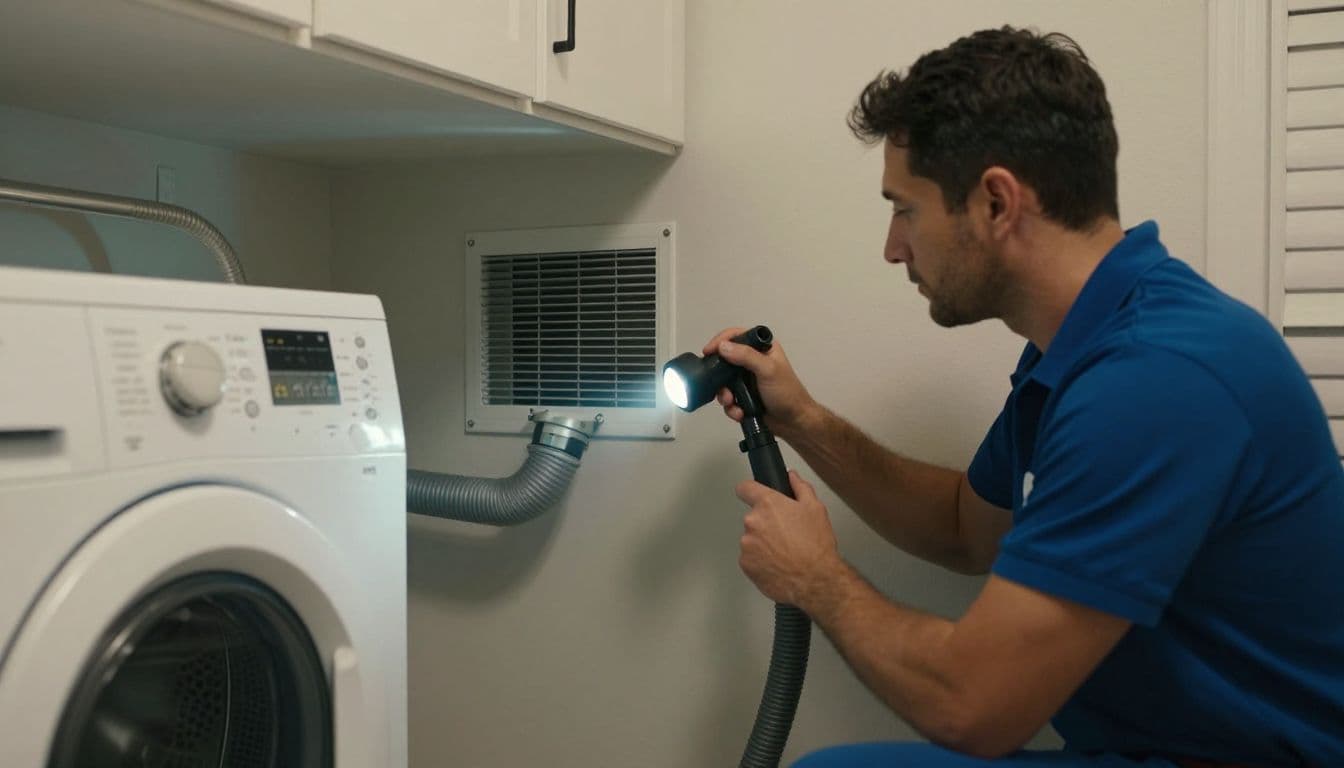
Every few months, look behind the dryer only if you can do so without straining, pulling the appliance, or disconnecting anything. Check for obvious crushing, kinks, loose exterior hardware, and lint around the connection.
You can also stand outside at ground level while the dryer runs. Feel for warm air near the termination without touching sharp or corroded metal. Weak airflow, a stuck flap, or moisture around the hood calls for service.
- Keep shrubs, mulch, patio furniture, and stored items clear of the exterior hood.
- After a storm, check the visible wall area for water streaks, debris, or a vent flap that no longer closes.
- Record drying-time changes, because a gradual slowdown can be easy to miss.
When cleaning is not enough
Cleaning removes lint, but it cannot restore metal that has thinned, pitted, split, or pulled apart at a joint. If the vent has visible holes, significant rust, loose sections, or a damaged exterior cap, ask for an inspection before the next repair decision.
During dryer vent cleaning in Florida homes, a technician can remove buildup and assess whether the duct still has a sound, continuous path to the exterior. That distinction matters because a clean but deteriorated vent can still leak or restrict airflow.
Protecting a Coastal Dryer Vent Between Service Visits
The Gulf Coast climate cannot be changed, but you can reduce the time moisture and salt stay on the system. Consistent attention is more useful than waiting for heavy rust to appear.
Keep the exhaust path clear and dry
Use the dryer only with its lint screen in place. Do not vent the appliance into an indoor space, garage, attic, or crawlspace. The exhaust needs a clear route outdoors.
Outside, gently rinse salt and dirt from the surrounding wall and vent hood during normal exterior cleaning. Do not force water into the flap or spray high-pressure water directly into the opening.
If a storm leaves the vent hood bent or packed with debris, leave the repair to a professional. A replacement hood must allow dryer air to exit freely while protecting the opening from weather and pests.
Set a service schedule based on use
Many households benefit from an annual dryer vent inspection and cleaning. More frequent attention may make sense if your family does frequent laundry, has a long vent route, owns several pets, or notices slower drying.
Coastal homes also need a closer look after severe weather. Salt spray, wind-driven rain, and flying debris can damage exterior components even when the dryer itself still works.
Homeowners in Lee County can arrange Fort Myers dryer vent cleaning services when lint, corrosion, or airflow concerns need a closer evaluation. For visible damage, recurring moisture, inaccessible ductwork, or any gas-dryer concern, Get a Free Estimate for professional service.
Keep Small Corrosion From Becoming a Larger Repair
Florida's heat and salt air make dryer vent corrosion a practical home-maintenance issue, not a cosmetic detail to ignore. A damaged hood, rough duct seam, or failing connection can restrict airflow and give moisture and lint a place to build up.
Regular lint removal, ground-level exterior checks, and timely professional inspections protect the full exhaust path. A dry, clear, intact dryer vent helps laundry move along without adding unnecessary heat or moisture to your home.