
Why Condensation Forms Inside a Dryer Vent

Adkins Duct Cleaning • June 29, 2026

Condensation inside a dryer vent usually means warm, wet air is cooling before it can escape. That water may look minor at first, but it often points to a vent that is moving air too slowly.

When moisture stays in the vent, lint sticks more easily, the dryer works harder, and mold can start to grow. In some homes, the same buildup can also raise fire risk. The good news is that the cause is usually easy to trace once you know what to look for.

Warm moist air cools before it leaves the house

Every load of laundry sends hot, damp air through the vent line. If that air moves fast and exits cleanly, little moisture stays behind. If it slows down, cools off, or hits a cold surface, water forms on the inside of the duct.

That process gets worse in long vent runs, vent lines with too many bends, and ducts that run through cooler spaces. Attics, garages, and exterior walls can all pull heat out of the air inside the vent. In Florida, high outdoor humidity can add another layer to the problem, especially when the vent cap does not close tightly.

Lint makes it worse. A thin layer of lint narrows the passage, so the moist air lingers longer. Then more water forms, more lint sticks, and the cycle keeps going. That is how a small airflow problem turns into a damp, clogged vent.

Common causes include:

  • a vent path that is too long or full of turns
  • crushed or sagging duct sections
  • lint buildup inside the vent
  • a missing or weak exterior vent cap
  • uninsulated ductwork in a cool space

When those problems stack up, the vent stops acting like a clear exhaust line. Instead, it starts holding moisture like a cold glass on a humid day.

Signs the vent is holding water

A dryer vent that keeps forming condensation usually gives off a few clues. Clothes may take longer to dry, especially heavy items like towels and jeans. You might also notice a musty smell in the laundry room or on fresh laundry.

Look for damp lint around the dryer connection, water spots near the wall, or moisture around the outside vent hood. If the vent flap sticks or barely opens, airflow is probably weak. Rust on metal parts is another warning sign, because standing moisture starts eating away at the duct over time.

A dryer vent should move air out, not hold moisture in place.

You may also feel extra heat or humidity in the laundry area after a cycle ends. That happens when moist exhaust leaks out before it leaves the system. If the problem keeps coming back, the vent deserves a closer look.

How to troubleshoot it safely

Start with the simple checks first. Turn the dryer off, let it cool, and unplug it if you need to move it. Then clean the lint screen and check the area behind the dryer for loose lint or a crushed hose.

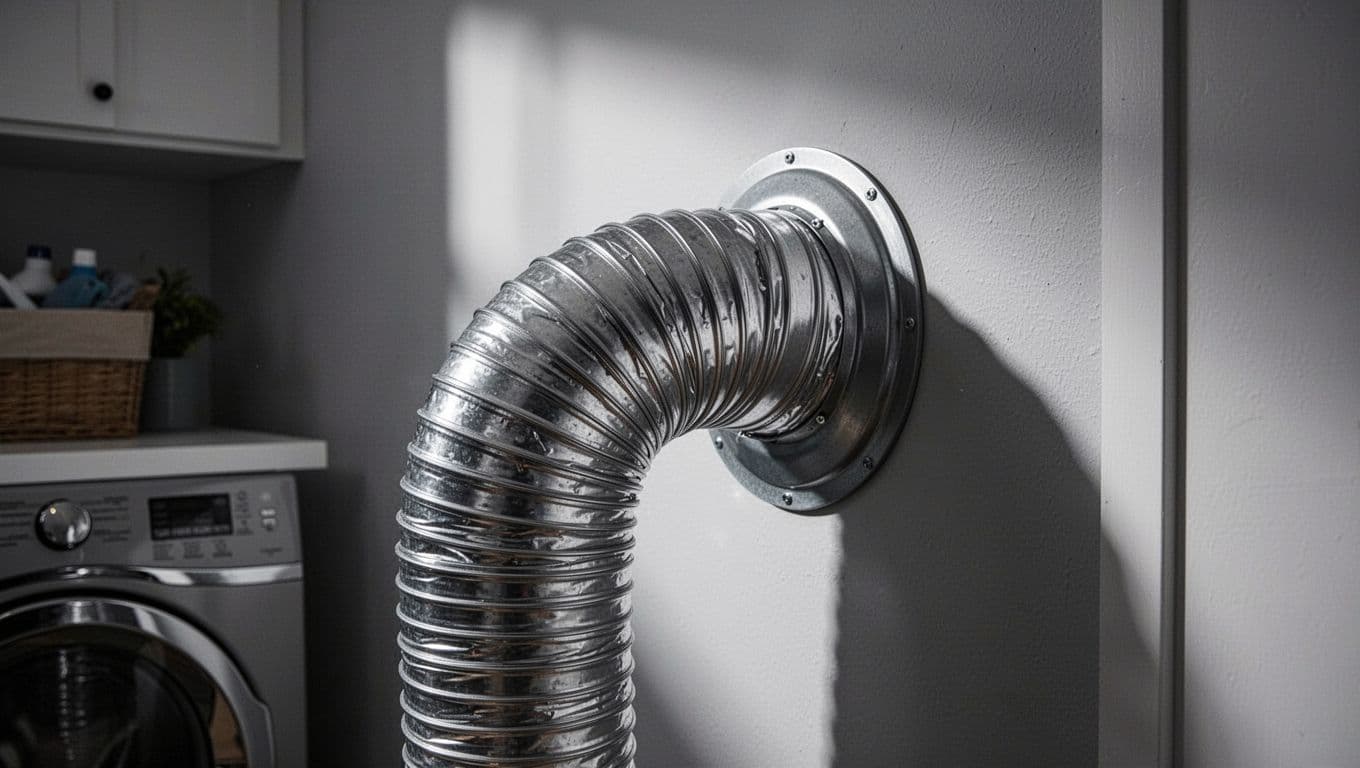
Next, inspect the visible vent sections. Make sure the duct is not flattened, kinked, or taped together in a sloppy way. A short, smooth metal connection works better than a floppy line that traps heat and moisture. If the dryer vent runs through a wall or ceiling, do not force tools deep into the line.

A quick check list helps:

  1. Clean the lint screen and the lint trap housing.
  2. Inspect the visible duct for dents, sags, or gaps.
  3. Open the exterior vent and confirm the flap moves freely.
  4. Feel for weak airflow while the dryer runs.
  5. Stop and call a professional if the vent is hidden, blocked, or hard to reach.

If you have a gas dryer, avoid disturbing parts you are not sure about. Safety matters more than a fast fix. A vent problem can hide behind the wall while the machine keeps running.

Fixes that keep moisture out for good

The best fix is better airflow. A vent that stays straight, tight, and clear gives warm air less time to cool into water. That means less lint clinging to the walls, less odor, and a lower chance of a blockage.

Rigid or semi-rigid metal ducting is a better choice than flimsy foil or plastic. It holds its shape and lets air move more freely. If the vent passes through an unheated area, insulation helps keep the duct warmer so the exhaust does not condense as fast.

The exterior vent cap matters too. It should open easily and close when the dryer is off. If it stays stuck open, rain and humid air can slip in. If it stays partly closed, moist air backs up into the line.

Regular cleaning is just as important. If lint is already narrowing the vent, dryer vent cleaning and maintenance can clear the path and help the dryer move air the way it should. That often improves drying time right away.

If moisture keeps returning after basic checks, Get a Free Estimate for a dryer vent inspection. A long, damp, or hard-to-reach vent usually needs more than a quick surface clean.

Conclusion

Condensation inside a dryer vent is a warning that moist air is lingering where it should not. Once that air cools and water starts to form, lint buildup, poor drying, mold risk, and fire concerns all move closer together.

A clear vent path, solid ductwork, and regular cleaning keep the system dry and efficient. When the dryer starts leaving moisture behind, the vent is telling you something important.

By Adkins Duct Cleaning June 28, 2026
A dirty AC filter after only a few weeks usually points to more than skipped maintenance. Your filter is doing its job, but it may be catching a lot more than normal, or your system may be moving air through a problem. In a Florida home, that can happen fast. Long cooling cycl...
By Adkins Duct Cleaning June 27, 2026
If your HVAC system runs and the house still feels uneven, a hidden leak near the air handler may be the reason. A supply plenum leaking air can waste conditioned air before it reaches the rooms that need it. That kind of leak often hides behind insulation, metal seams, or a t...
By Adkins Duct Cleaning June 26, 2026
A MERV 13 filter can work in some older AC systems, but it can also choke airflow when the setup already has little room to spare. That is why one home gets cleaner air and another gets weak vents, longer run times, or hot spots after the same filter upgrade. The rating on the...