
Can a Dryer Vent Terminate in the Attic?

Adkins Duct Cleaning • June 30, 2026

No, a dryer vent should not terminate in the attic. When hot, moist air and lint dump into that space, you get a fire hazard, moisture damage, mold risk, and a dryer that works harder than it should. It can also violate local building code, even though requirements vary by area. If you suspect a dryer vent attic setup, it needs attention before the problem spreads.

Why an attic dryer vent is a problem

Dryer exhaust carries more than warm air. It carries fine lint and a lot of moisture. In an attic, that mix has nowhere safe to go.

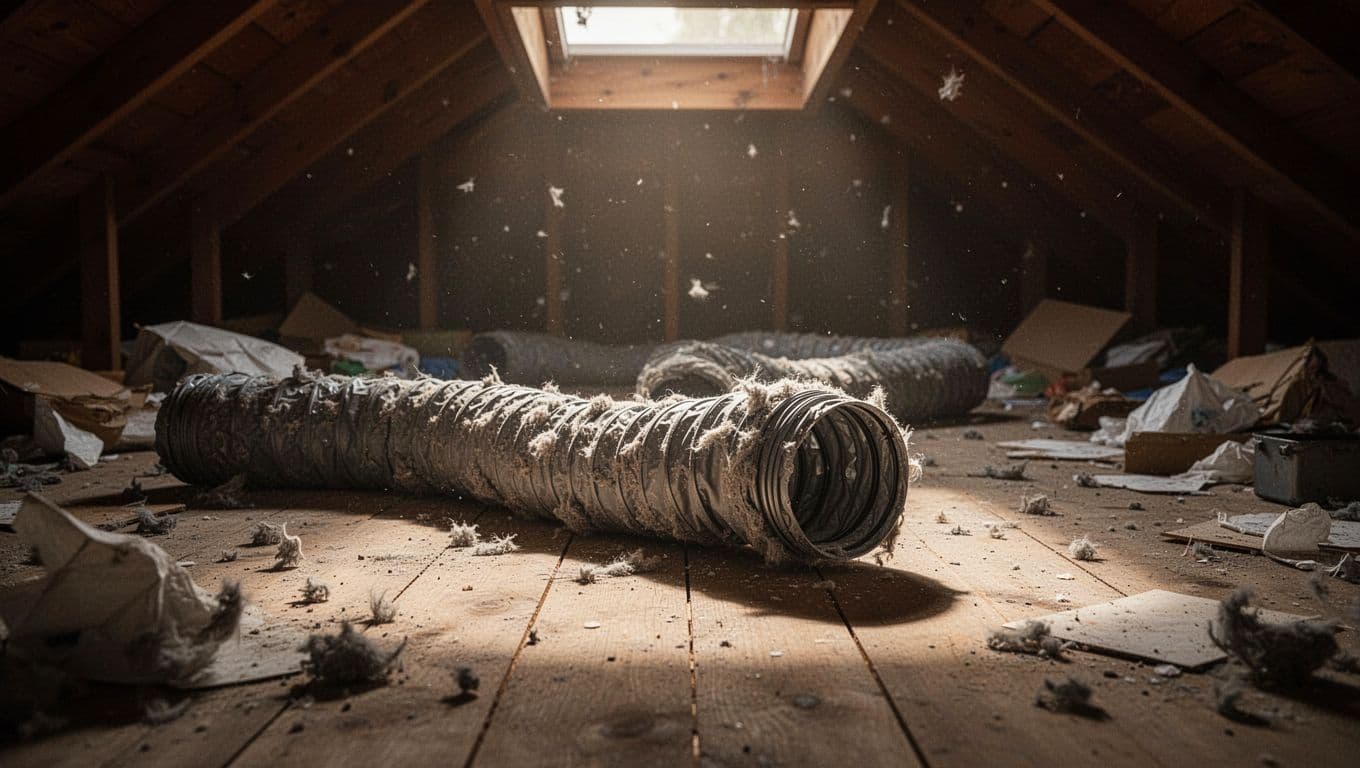
Lint is the first problem. It gathers around seams, bends, and loose joints. Because lint is dry and light, it can build up fast. If the dryer overheats or a component fails, that lint becomes fuel.

Moisture is the second problem. Attics often stay cooler than the air coming out of a dryer. As a result, the warm exhaust can condense on wood, insulation, and roof decking. Over time, that dampness can stain materials, weaken insulation, and feed mold growth.

The third issue is performance. A vent that ends in the attic usually means poor airflow. Clothes take longer to dry, energy use rises, and the dryer runs hotter than normal. That extra strain can shorten appliance life.

A vent that disappears into the attic does not make the moisture disappear. It just moves the problem out of sight.

In most cases, this setup also conflicts with code because dryer exhaust is supposed to leave the home. Local rules may differ, so it's smart to check what applies where you live.

Where a dryer vent should terminate instead

A dryer vent should terminate outdoors, not in an attic, crawlspace, garage, or other enclosed area. For many homes, the cleanest route is through an exterior wall with an approved vent cap. Some homes use a roof termination, but the vent still has to discharge outside through a proper cap that opens and closes correctly.

The goal is simple. The air needs a clear path out of the house, and the lint needs a place to leave safely. A short, direct run is usually better than a long one with multiple bends. Fewer turns means stronger airflow and less lint buildup.

A proper termination point also makes inspection easier. You can see whether the cap opens, whether lint is collecting, and whether the vent is blowing with normal force. That matters because hidden problems often grow into expensive repairs.

If your current vent path is long, twisted, or hard to reach, it may need more than a quick patch. A professional can reroute the line and check whether the full system is still safe. For homes that already have vent issues, understanding the dryer vent cleaning process can help you see what a proper service visit includes.

How to inspect your existing setup

You don't need special tools to spot many attic vent problems. A flashlight, a little patience, and a careful look are enough to catch common warning signs.

Start at the dryer. Follow the vent line as far as you can. If it disappears into the ceiling and never reaches an exterior wall or roof cap, that's a red flag. Next, check the attic access if it's safe and reachable. Look for loose duct sections, crushed flexible hose, lint on the floor, or damp insulation near the vent.

These signs matter:

  • The vent line ends inside the attic instead of outside.
  • You see lint collecting around duct joints.
  • The attic smells musty or feels damp near the vent.
  • Clothes take more than one cycle to dry.
  • The dryer cabinet feels hotter than normal after a load.

Also, step outside and look for the vent cap. If you can't find one, the vent may not be terminating outdoors at all. That's a problem worth fixing quickly.

If you live in Florida, humidity makes the moisture problem worse. Homes here often need more attention because the air already carries plenty of water. If your setup looks questionable, how often to clean dryer vents in Florida is a helpful reference for keeping maintenance on schedule.

What to do if the vent already ends in the attic

Treat it as a repair, not a minor tweak. A vent that ends in the attic needs to be rerouted to the outside of the home. That may mean replacing damaged flex duct, correcting the path, sealing joints properly, and installing the right exterior cap.

Do not keep using the dryer as if nothing is wrong. Every load sends more heat, lint, and moisture into the attic. The longer it runs that way, the more damage it can cause.

A dryer vent cleaning service can also help after the reroute, especially if lint has already built up in the line. In many homes, the best fix is a combination of rerouting and cleaning, followed by a quick airflow test to confirm the dryer is exhausting properly.

If you want a professional look at the problem, Get a Free Estimate before the next load goes in. That's a simple step when the vent path needs both cleanup and correction.

Conclusion

A dryer vent should not terminate in the attic. The risks are too high, and the payoff is zero. You're left with fire danger, trapped moisture, mold concerns, and a dryer that runs poorly.

If your vent ends anywhere except outside, treat it as a home safety issue. A proper outdoor termination protects the house, helps the dryer breathe, and keeps a hidden problem from turning into a costly one.

By Adkins Duct Cleaning June 29, 2026
Condensation inside a dryer vent usually means warm, wet air is cooling before it can escape. That water may look minor at first, but it often points to a vent that is moving air too slowly. When moisture stays in the vent, lint sticks more easily, the dryer works harder, and...
By Adkins Duct Cleaning June 28, 2026
A dirty AC filter after only a few weeks usually points to more than skipped maintenance. Your filter is doing its job, but it may be catching a lot more than normal, or your system may be moving air through a problem. In a Florida home, that can happen fast. Long cooling cycl...
By Adkins Duct Cleaning June 27, 2026
If your HVAC system runs and the house still feels uneven, a hidden leak near the air handler may be the reason. A supply plenum leaking air can waste conditioned air before it reaches the rooms that need it. That kind of leak often hides behind insulation, metal seams, or a t...