Signs Your Exterior Dryer Vent Hood Is Stuck Closed
A dryer that suddenly needs two cycles is often sending a message. Sometimes the problem is inside the machine, but just as often the real issue is outside, at the dryer vent hood .
When the exterior flap stays shut, hot air and moisture have nowhere to go. You may notice damp clothes, a hotter laundry area, or almost no airflow outside during a cycle.
How the warning signs show up inside your home
The first clues usually show up in the laundry room, not at the vent. Clothes that used to dry in one normal cycle may come out warm and still damp. That happens because humid air stays trapped in the vent line, so the dryer has to work harder.
A few symptoms tend to appear together. If you see more than one, the problem is usually bigger than a load of heavy towels.
| Sign inside the home | What you may notice | What it can mean |
|---|---|---|
| Clothes take longer to dry | A normal load needs extra time | Air is not leaving the vent line well |
| Laundry room feels hot | Warm air builds up around the dryer | Heat is backing up instead of venting outside |
| Burning or hot-lint smell | The dryer smells stronger than usual | Lint may be collecting and overheating |
| Condensation near the laundry area | Foggy windows, damp surfaces, or moisture on nearby walls | Moist air is escaping where it should not |
| Dryer shuts off early or runs too long | Cycles end with clothes still damp | The dryer is struggling against restricted airflow |
If these issues sound familiar, the vent may be part of the problem. A helpful related guide is signs your dryer vent is clogged and unsafe, because a stuck hood and a clogged vent often create the same warning signs.
A vent that stays shut can act like a plug in the system. Heat, lint, and moisture keep building up until something gives.
What the exterior vent hood should do during a cycle
The outside hood should open when the dryer runs and close again when it stops. That movement lets hot air and moisture escape, while the flap helps keep outside air, pests, and rain from coming back in.
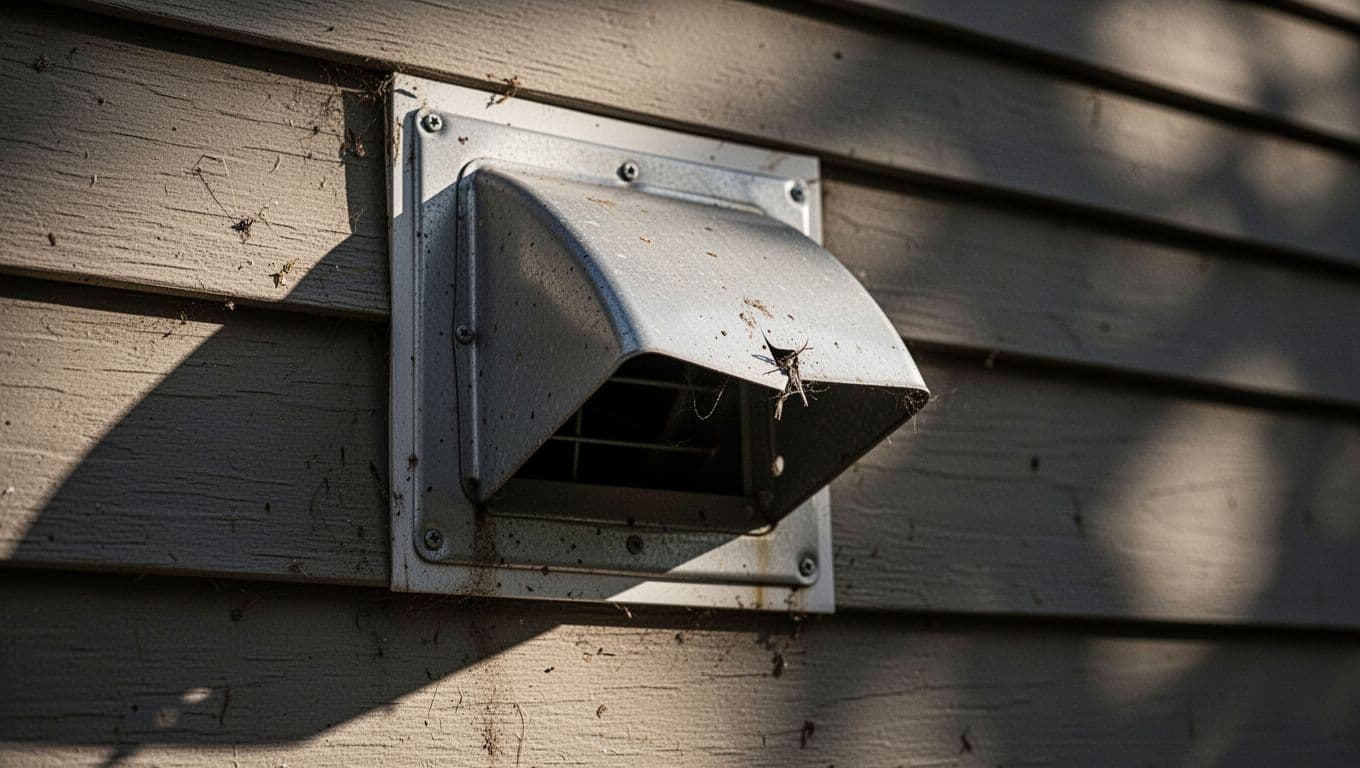
When the flap does not move, or barely lifts, airflow is being restricted somewhere. The flap may be painted shut, bent, blocked with lint, or jammed by debris. In some cases, the hood is fine, but the vent line behind it is packed tight.
A quick outdoor look can tell you a lot. Watch the hood while the dryer runs, then check for these signs:
- The flap stays closed the whole time.
- The flap opens only a crack.
- The flap rattles or sticks on one side.
- Lint collects around the opening.
- Leaves, nests, or other debris sit around the cover.
A properly working hood should move with the dryer's exhaust air. If it does not, the vent system needs attention. For a broader look at the service itself, see why dryer vent cleaning matters.
Safe checks you can make without taking anything apart
A few simple checks can help you narrow down the problem. These do not require disassembly, and they can save time when you call for help.
- Run the dryer on a normal cycle and watch the exterior flap. If the hood never opens, airflow is not reaching the outside properly.
- Check the lint screen before every load. A clogged screen can make an airflow problem worse and can hide the real issue.
- Look at the hood from the ground or a safe spot. You may see lint buildup, a bent flap, or debris blocking the opening.
- Listen for unusual sounds. A weak flutter, buzzing, or flapping noise can point to a flap that is trying to open but cannot.
- Notice how the laundry room feels. Excess heat, a damp smell, or visible moisture near the dryer all point to restricted venting.
Do not try to force the flap open with a tool, and do not remove the vent hood if it is mounted high or sealed in place. If you need a professional cleaning, what happens during a dryer vent cleaning visit can help you know what to expect before service starts.
Why a closed vent hood creates fire and moisture trouble
A stuck-closed hood is more than an annoyance. It creates two problems at once, heat buildup and trapped moisture. Lint loves hot, restricted spaces, and a blocked vent lets that lint sit where it should not.
That is why a stuck hood can become a fire and moisture problem . Heat backs up in the dryer and vent line, while humidity stays trapped in the system. Over time, that can raise wear on the appliance and leave the laundry area feeling damp.
The moisture side matters too. In humid homes, especially in Florida, trapped moisture can lead to condensation around the vent path and nearby surfaces. That can make the laundry space feel clammy and can encourage odor issues.
A stuck hood often points to a bigger airflow problem somewhere in the line. If that sounds familiar, the vent may be loaded with lint deeper inside the duct, not just at the exterior cover. Professional cleaning matters because it addresses the full route air needs to travel, not just the visible opening.
When the problem calls for professional help
If the flap is stuck because the vent is blocked deep in the line, damaged, or hard to reach, stop there. The safest move is to get the system inspected and cleaned by a technician who works on dryer vents every day.
You should call for help when:
- The hood stays closed during every cycle.
- Clothes still come out damp after repeat cycles.
- The laundry room smells hot or burnt.
- You see moisture, lint, or debris around the exterior opening.
- The vent line looks crushed, disconnected, or inaccessible.
- The hood is mounted high on the wall or roof line.
A technician can inspect airflow, clear lint buildup, and check whether the hood needs repair or replacement. That is important because a flap that will not open may be the last visible sign of a restriction that has already spread farther into the vent line.
For homeowners who want a clear picture of the service, what happens during a dryer vent cleaning visit explains the process in practical terms. If you are ready to address the problem, Get a Free Estimate and get the vent checked before the next load goes in.
Keeping the vent hood from sticking again
Once the hood works properly, a little upkeep goes a long way. Keep the lint screen clean, and clear leaves or debris from the outside opening when it is safe to do so. A quick visual check every few months can catch a flap that is starting to bind.
It also helps to pay attention after each load. If drying time starts creeping up again, do not wait for the dryer to fail completely. Slow drying often comes before a full blockage.
A clean vent system should move air with little effort. The outside flap should open during operation, the laundry area should stay reasonably cool, and clothes should finish on time. When any of those changes, the hood is often the first place to look.
Conclusion
A stuck-closed exterior hood leaves a trail of clues, usually starting with longer drying times and ending with heat, moisture, and poor airflow. The outside flap should open when the dryer runs, and if it does not, the vent system needs attention.
Watch for the signs early, because a blocked vent is a safety issue, not just a convenience problem. When the problem looks deep, damaged, or out of reach, professional dryer vent service is the right next step.