Apartment Dryer Vent Cleaning for Shared Laundry Rooms
A shared laundry room can hide a serious airflow problem behind an ordinary drying cycle. When several machines use the same room, apartment dryer vent cleaning needs more planning than cleaning a single home's short exhaust line.
Lint collects inside screens, duct runs, bends, booster fans, and exterior hoods. If airflow weakens, clothes stay damp, dryers run hotter and longer, and residents notice the problem before management does. A building-level inspection helps staff find the actual blockage and schedule service without disrupting every tenant.
Why apartment dryer vent cleaning needs a building plan
A shared laundry room isn't simply several household dryers placed together. The exhaust design determines how a technician should inspect and clean it.
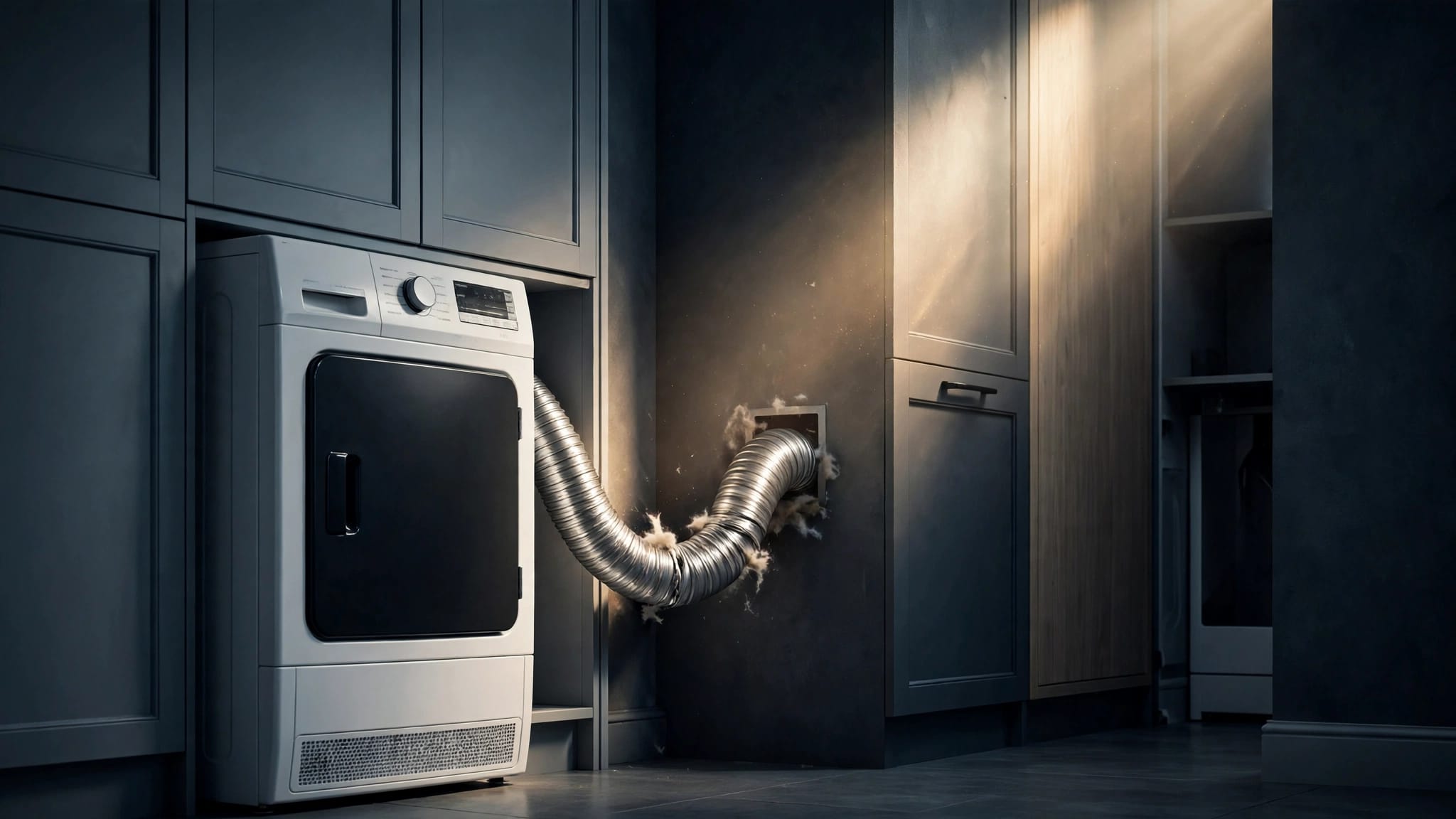
Some buildings give each dryer its own metal duct to an exterior termination. Others connect several dryers to a shared header, vertical shaft, rooftop fan, or booster fan. Those systems need different access points and airflow tests.
Dryer exhaust also is separate from heating and cooling ducts. Cleaning the HVAC system won't clear lint from a dryer line. Likewise, cleaning one machine's short connector won't clean a common riser.
Management should confirm which equipment, ducts, and termination points belong to the laundry room before approving work. Guidance for managing shared ventilation in multi-family units can also help property owners plan work around building access and approval requirements.
When a blockage sits near a shared header, several machines may show slow drying. A restriction in one dedicated branch may affect one dryer only. That difference matters when residents report scattered complaints.
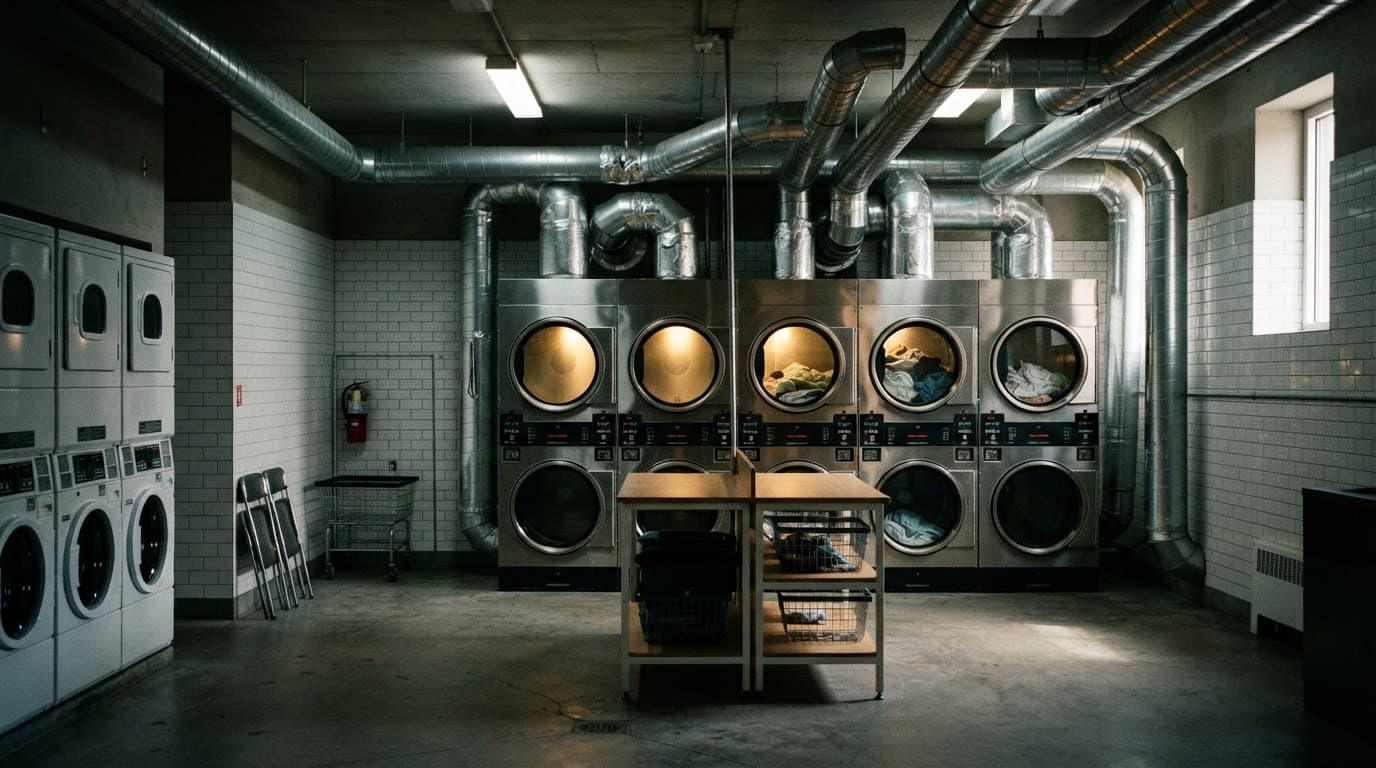
Signs the shared laundry exhaust needs attention
Long drying cycles are the most common warning sign. However, slow drying doesn't prove that the vent is clogged. A blocked lint screen, overloaded drum, damaged heating component, or appliance fault can create similar symptoms.
Look at the pattern across the room. If several dryers take longer than normal, the shared exhaust path may have restricted airflow. If only one dryer struggles, its branch duct, connector, or appliance may need closer inspection.
Residents and staff may also notice:
- Clothes remain damp after a normal cycle.
- The laundry room feels unusually hot or humid.
- The exterior vent flap opens weakly or stays closed.
- Lint gathers around the dryer or nearby floor.
- A stale or overheated odor remains after machines stop.
- Dryers shut off before clothes finish.
A professional apartment dryer vent cleaning inspection should consider these signs alongside the duct layout. The technician should check accessible connectors, lint screens, exhaust outlets, and any booster equipment. A good inspection also identifies problems that cleaning won't fix, such as a crushed duct or failing dryer.
Florida's heat and humidity can make a laundry room feel uncomfortable when exhaust flow is poor. For a closer look at warning signs and the cleaning process, review what happens during apartment dryer vent cleaning.
What professional cleaning should include
During apartment dryer vent cleaning , the crew should work from the machines through the complete exhaust route. The exact process depends on whether the building has separate branches, a shared manifold, or a central exhaust system.
A thorough service usually includes these steps:
- The technician reviews the building layout with management and identifies every dryer, access panel, termination point, and fan.
- Staff coordinate machine shutdowns and provide safe access. Gas and electrical connections shouldn't be altered by anyone without the proper training.
- The crew disconnects accessible dryer connections and removes lint from the ductwork with commercial vacuum equipment and suitable agitation tools.
- Technicians clean shared headers, vertical runs, booster fan housings, and exterior termination hoods when those components are part of the agreed scope.
- The crew reconnects the equipment, checks airflow, confirms that exterior dampers move correctly, and reports damage or design concerns.
The exhaust hood outside the building deserves attention because birds, leaves, dust, and lint can restrict the final exit point. Long vertical runs may also need access at more than one location.
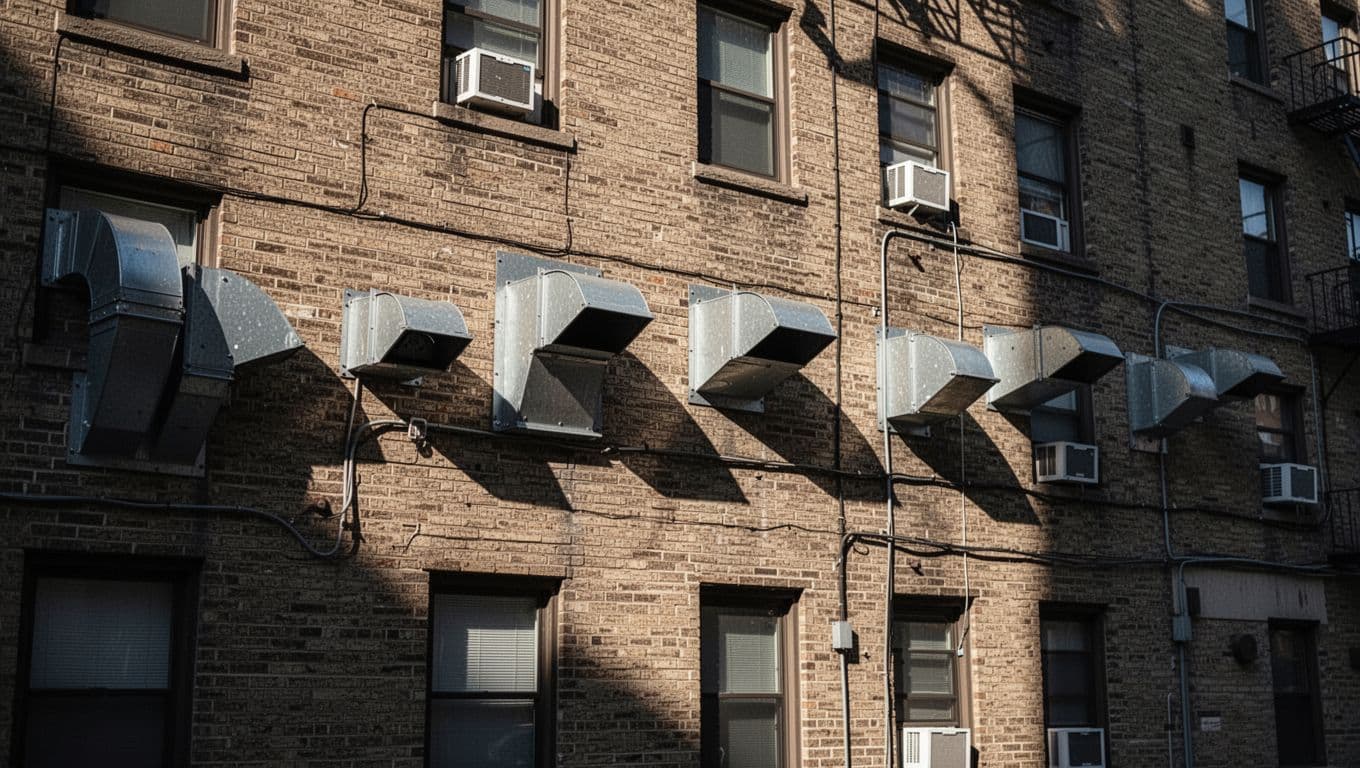
Ask for written service records after the visit. The report should identify the areas cleaned, note access limitations, list damaged components, and state whether the technician found airflow concerns. Photos can help management track recurring buildup and explain repairs to an HOA or ownership group.
Cleaning reduces lint buildup in the exhaust path, but it doesn't replace routine appliance care. Residents still need to clean the lint screen after every load and report damaged, loose, or crushed connections.
How to schedule service without disrupting residents
Shared laundry rooms need a communication plan before the crew arrives. A short closure may be enough for a small room, while a larger property may need work divided into zones.
Management should give residents advance notice with the expected closure time. If the room stays open during part of the work, staff need a clear way to keep residents away from disconnected machines and active equipment.
Before scheduling, confirm:
- Which dryers will be serviced.
- Whether access panels are inside a locked room, occupied unit, utility space, or roof area.
- Whether the building has a booster fan or shared vertical exhaust.
- Who can shut down gas or electrical equipment.
- Where residents can find closure notices.
- Whether the provider can work outside peak laundry hours.
After-hours scheduling can reduce disruption in buildings with busy common areas. After-hours service for multi-family buildings may be useful when a laundry room shares space with another commercial operation.
Don't schedule the work based only on the laundry room's visible condition. A clean-looking room can still have lint inside a long duct run or exterior hood. The route, equipment use, and previous service history provide better scheduling information.
How often should apartment laundry vents be cleaned?
There isn't one calendar interval for every apartment building. Usage is the biggest factor, but duct length, bends, shared connections, rooftop equipment, and exterior exposure also affect buildup.
A laundry room used throughout the day will generally need closer attention than one used by a small number of residents. Long exhaust routes and poorly placed termination hoods can also require more frequent inspection.
A yearly review gives many properties a practical starting point. Management can then adjust the schedule based on airflow results, lint accumulation, resident complaints, and equipment history. New construction, major appliance replacement, or changes in laundry volume should prompt a fresh review.
Between professional visits, staff should keep the area around each dryer clear. Residents should clean lint screens after every load, avoid overloading machines, and report damp clothes, heat, odor, or unusual drying times.
Immediate service makes sense when several machines develop the same problem, an exterior hood stops opening, or lint appears around duct connections. Waiting for a complete failure can leave the room uncomfortable and reduce machine availability.
Comparing providers and service quotes
A low quote may cover one dryer connection while leaving the shared header, vertical shaft, booster fan, or exterior hoods untouched. Before comparing prices, ask each provider to describe the complete scope.
A useful quote should state:
- The number of dryers and duct branches included.
- Whether shared headers and vertical runs are included.
- Whether exterior terminations and booster fans are inspected.
- Any roof, lift, or locked-area access requirements.
- How the crew will protect the laundry room.
- Whether management receives photos or a written report.
- What repairs are excluded from the cleaning price.
When you compare apartment dryer vent cleaning quotes, compare access and equipment, not only the total cost. A provider with commercial and multi-family experience will understand that one room can contain several separate airflow paths.
Ask whether the company is insured and whether technicians have worked in occupied buildings. Also ask how they handle a damaged connector, blocked exterior hood, or inaccessible section. A clear answer is more useful than a promise that every issue will disappear after cleaning.
Adkins Duct Cleaning & Dryer Vent Service is based in Fort Myers and has more than 16 years of experience serving Florida property owners. Managers who need to discuss a shared laundry room can Get a Free Estimate and describe the number of dryers, building layout, and known symptoms.
Keep shared laundry exhaust on schedule
A shared laundry room needs a building-level plan because its dryers may use separate branches, common headers, vertical shafts, or rooftop equipment. Cleaning only the visible lint screen or one short connector won't address restrictions deeper in the system.
Regular inspections, clear resident notices, complete duct cleaning, and written service records help management protect dryer performance and keep the laundry room operating reliably. When several machines run hotter or longer than usual, apartment dryer vent cleaning should be part of the investigation, not an afterthought.