Air Duct Cleaning After Sewage: What to Assess First
A sewage backup doesn't automatically contaminate every air duct, but it can make a routine cleaning appointment the wrong first step. Before scheduling air duct cleaning after sewage contamination, you need to establish what got wet, where water traveled, and which materials can be restored.
Assessment comes first , especially if wastewater reached a return opening, duct insulation, or the air handler. Cleaning alone won't repair damaged components or remove contamination absorbed into porous materials.
Start with the water's path and the HVAC system's condition, then let those findings determine the work.
Key Takeaways
- A backup elsewhere in the building doesn't prove HVAC contamination. Direct water contact, residue, and inspection findings provide stronger evidence.
- Keep the system off when sewage may have reached its ducts or components. Qualified professionals should determine the cleanup and restart plan.
- Sewage-soaked insulation and other porous duct materials generally need replacement. Suitable metal surfaces may be restorable, but routine vacuuming or sanitizer alone isn't a complete remediation plan.
Establish Whether Sewage Reached the HVAC System
The first question is whether the backup affected the ventilation system. That requires tracing water movement rather than assuming every duct needs cleaning.
Separate confirmed contact from suspicion
Confirmed exposure can include sewage entering a low return opening, standing water inside ductwork, or wastewater soaking insulation around the air handler. Photographs, water-level marks, and accessible inspection findings help document the affected area.
However, a sewage odor near a register doesn't establish that sewage entered the ducts. Odors may originate in contaminated flooring, a wall cavity, or the room containing the return.
Similarly, dark staining doesn't identify mold or prove sewage contamination. Ask the contractor to distinguish observed damage from suspected exposure and explain what additional inspection would resolve uncertainty. Those distinctions should appear in the proposed scope.
Trace the backup and operating history
Tell the assessor where the backup started, how high water rose, and whether the HVAC system ran during the event. Also report any cleanup already performed.
A system operating near contaminated materials warrants closer inspection, but operation alone doesn't prove every branch duct was affected. The location of returns and the route of contaminated water matter.
For Gulf Coast homes with attic ductwork, assess low-mounted equipment and return pathways separately from elevated supply runs. Water may affect one component without reaching another.
Document what you can from a dry, safe location. Don't open concealed duct sections yourself to investigate.
Keep a Suspect HVAC System Off
If sewage may have reached the ducts, return pathway, or air handler, turn the system off when you can do so safely. Don't run the fan to clear the smell or use potentially contaminated equipment to dry the house.
CDC guidance advises keeping flood-affected HVAC equipment out of service until cleanup and professional inspection determine whether it can be restored or needs replacement.
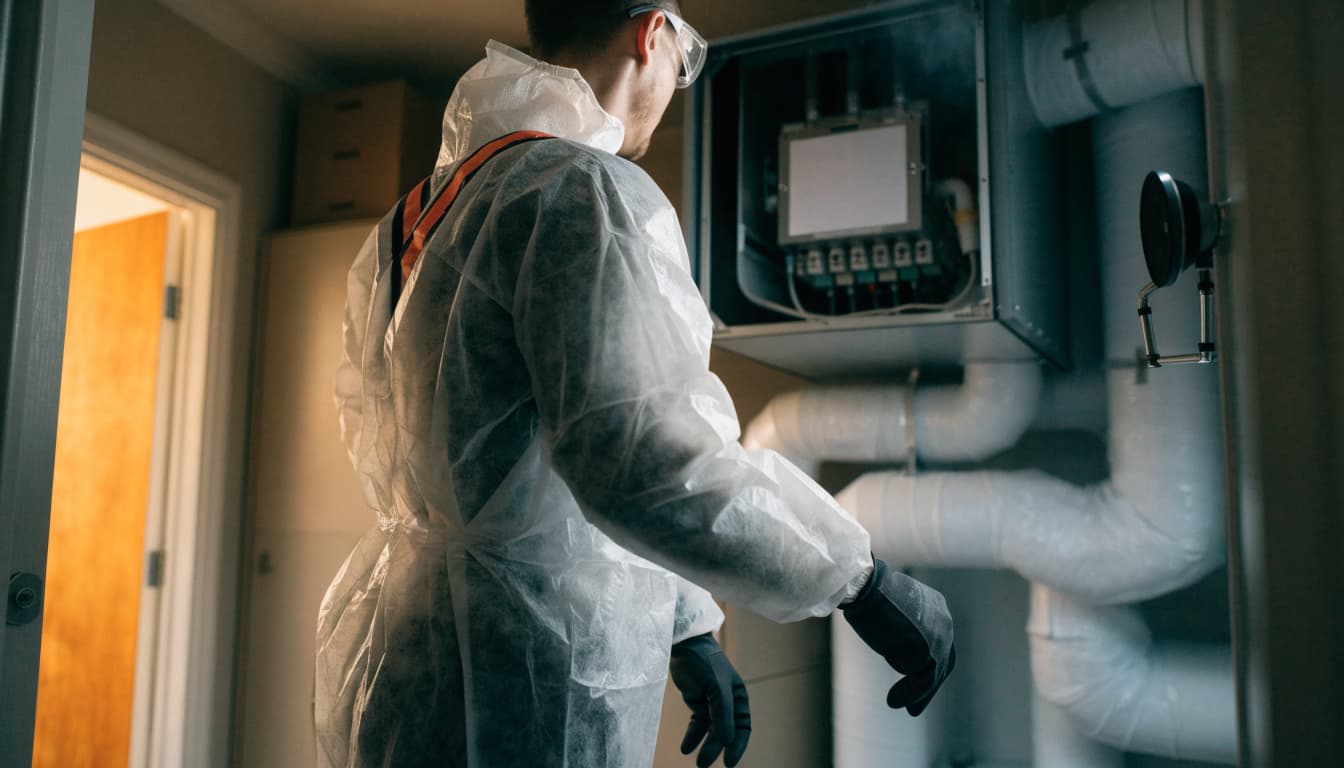
Use a dry, safely accessible thermostat to stop operation. If reaching controls means entering standing water or touching wet electrical equipment, stay out and seek professional help.
Keep children and pets away from the affected area. Sewage can contain disease-causing organisms, so avoid direct contact and track-in through unaffected rooms.
For unavoidable contact, CDC recommends rubber boots, rubber gloves, and goggles. Protective gear doesn't make invasive HVAC cleanup a suitable homeowner project.
Arrange contaminated-water remediation and an HVAC inspection rather than relying on household vacuums, brushes, or bleach sprays. In Florida's heat, discuss temporary cooling and drying options with the restoration team while the affected system remains off.
Inspect Beyond the Visible Vent Opening
A clean-looking grille doesn't establish that the system behind it is unaffected. Assessment should cover connected components and surrounding building materials.
Check the air handler and airflow pathways
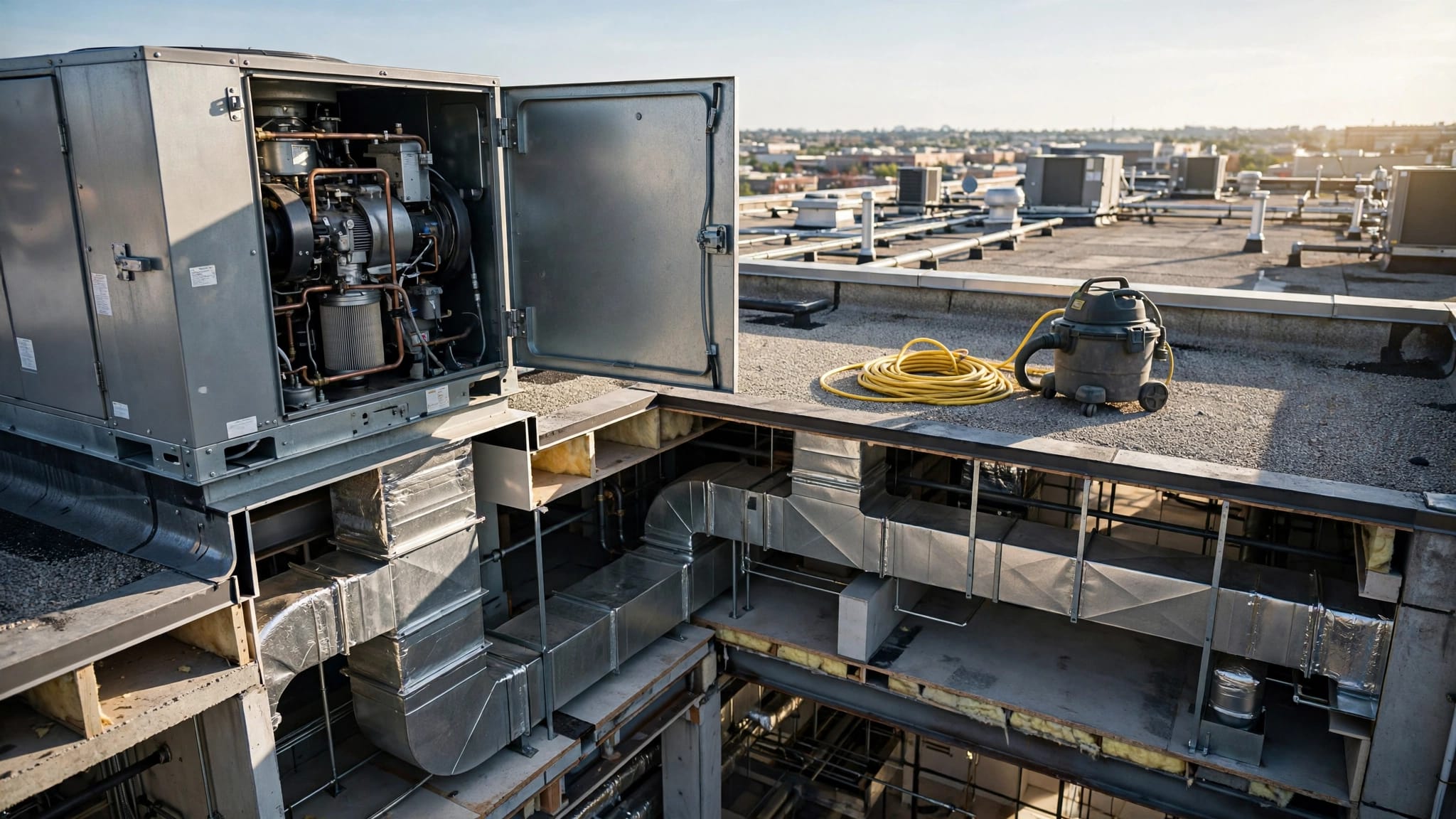
The inspection should include the air handler cabinet, blower compartment, filter rack, evaporator coil area, and drain pan. Supply and return plenums, accessible branch ducts, and registers also need attention where exposure is possible.
CDC and FEMA guidance address contamination and damage across HVAC equipment, rather than treating duct openings as the entire system.
Ask whether filters or insulation were exposed and whether wastewater entered equipment compartments. Contamination on a cleanable surface presents a different problem from contamination absorbed into an internal liner.
An HVAC contractor should also assess water-damaged electrical and mechanical components. Cleaning doesn't establish their operating safety.
Review concealed areas and nearby materials
Water can travel along floors, framing, and duct exteriors beyond the most obvious stain. Nearby drywall, flooring, and insulation may therefore belong in the remediation scope.
A duct camera can help inspect inaccessible runs, although video alone cannot identify every contaminant or establish material restorability. The contractor should document inspection limits and explain any proposed access openings.
Older buildings introduce another concern: suspect asbestos-containing insulation, duct wrap, or mastic. Appearance cannot reliably identify asbestos.
If inspection or cleaning could disturb suspect material, stop that work until qualified professionals evaluate it. Don't authorize aggressive brushing or cutting into unknown materials.
Decide Which Duct Materials Can Be Restored
The decision depends on material, exposure, condition, and access. Neither "clean everything" nor "replace everything" is an adequate assessment.
Bare metal may be cleanable
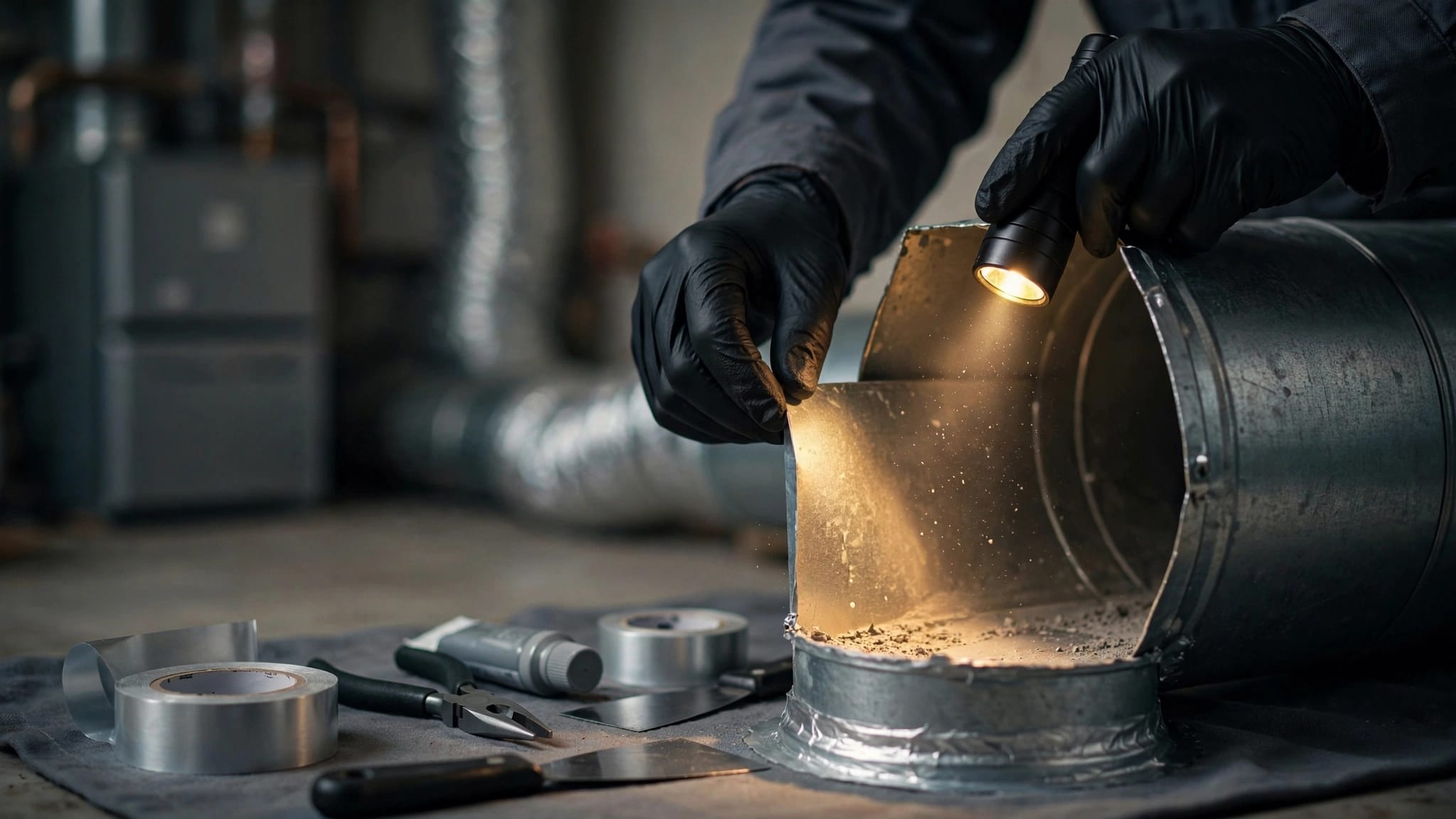
Structurally sound, unlined metal ductwork may be restorable when professionals can access the contaminated surfaces and remove debris effectively. Appropriate cleaning, disinfection, and drying may form part of that plan.
However, joints, seams, and inaccessible sections can complicate restoration. A contractor should explain how those areas will receive attention and how the result will be checked.
Exterior insulation deserves a separate decision. A metal duct might remain usable while sewage-soaked insulation around it requires removal and replacement.
The assessment should identify each affected component. A general promise to sanitize the system doesn't explain which materials can be saved.
Sewage-soaked porous materials usually need replacement
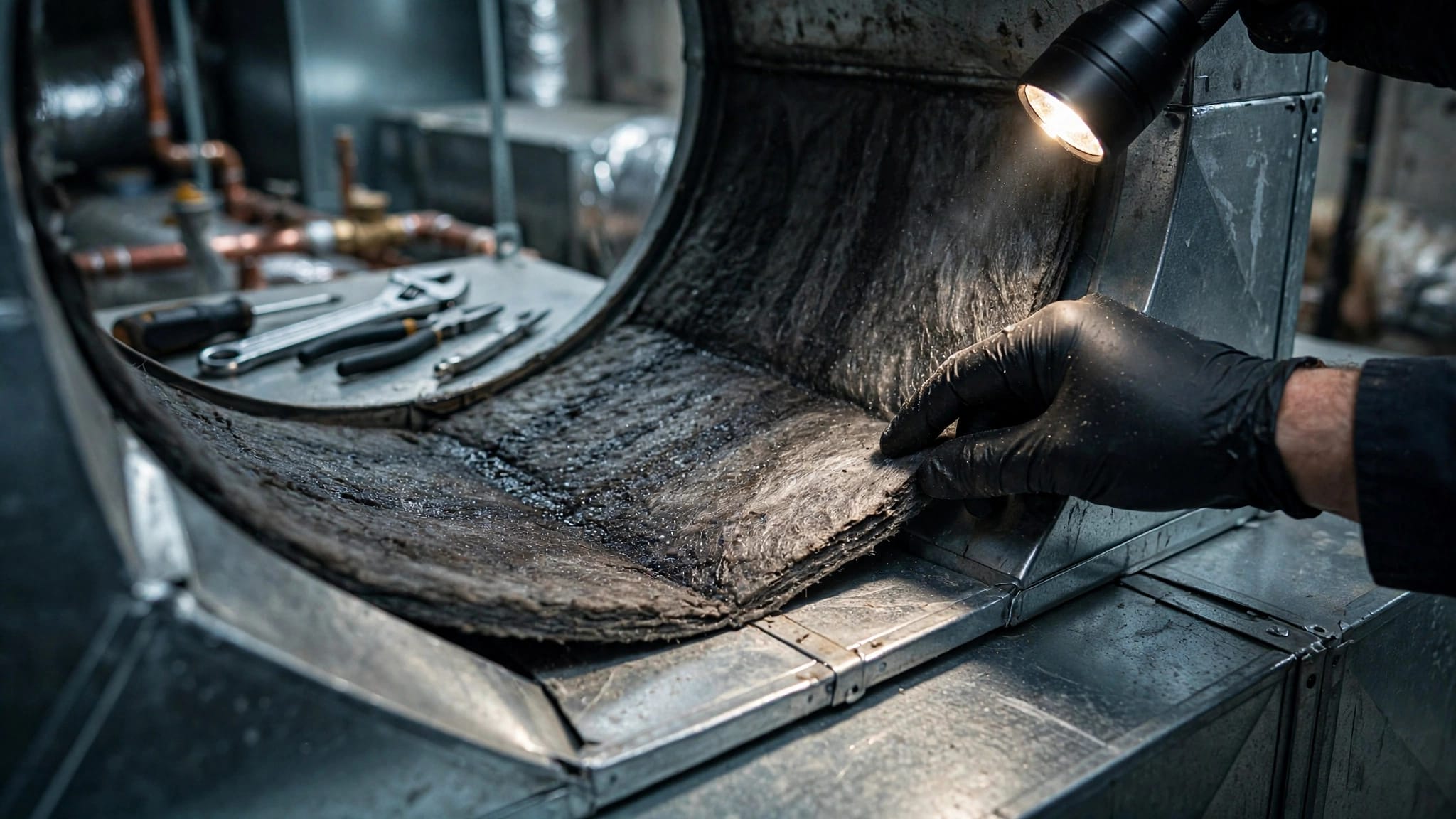
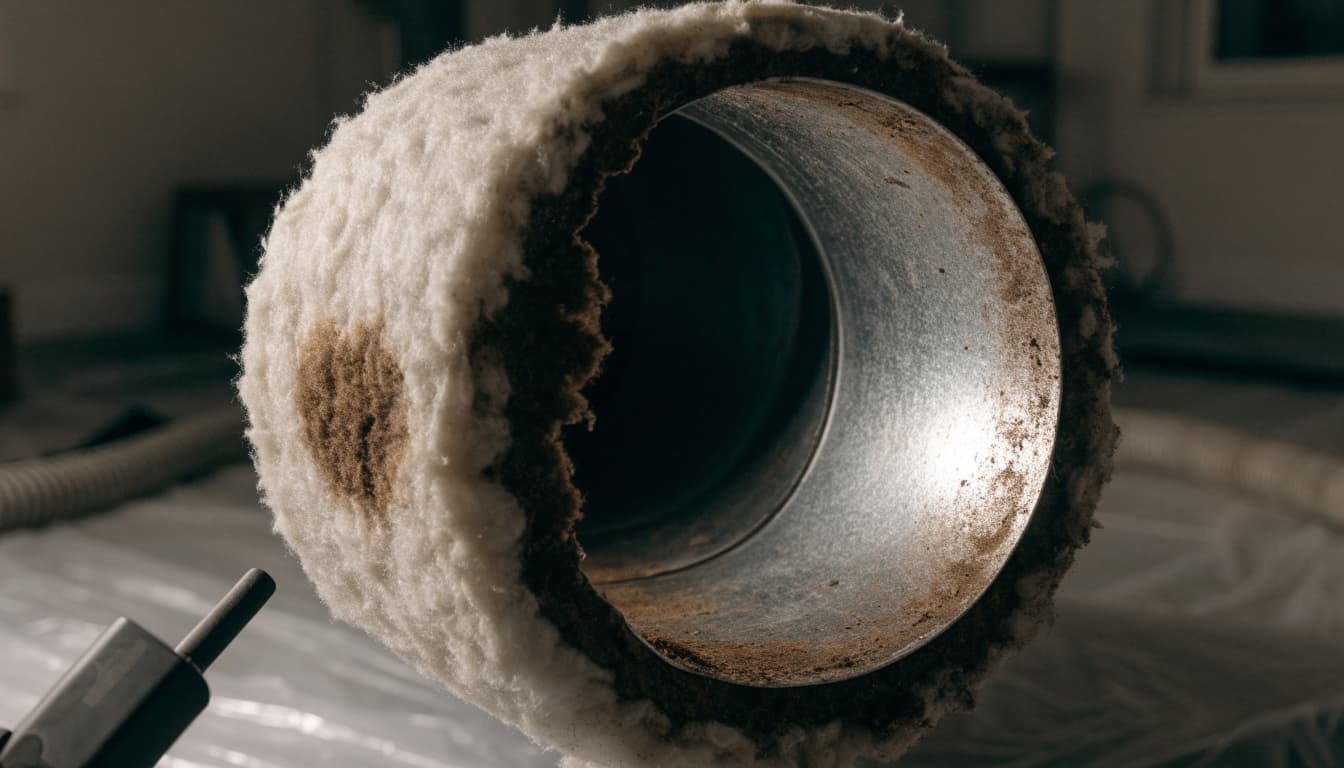
Fiberglass duct board, internal duct liners, and insulation can retain contamination after soaking. Drying their surfaces or removing the smell doesn't demonstrate successful restoration.
EPA's flood-related cleaning review supports replacing interior-lined ducts, plastic flex ducts, and coated fiberboard ducts exposed to heavily contaminated water. This is why sewage-exposed porous materials need a replacement assessment before cleaning is proposed.
Replacement should follow the documented extent of damage. An unaffected duct section doesn't automatically require removal because another section was exposed.
Likewise, an affected porous section shouldn't remain merely because the contractor can vacuum its visible surface. Ask how the material's exposure determines the recommendation.
Plan Remediation Before Routine Duct Cleaning
Air duct cleaning after a sewage backup may be part of a larger restoration project. The sequence must address the contamination source and affected materials.
Coordinate source removal, repairs, and cleaning
A plumbing professional may need to correct the backup, while a contaminated-water restoration team handles affected building areas. An HVAC contractor can evaluate equipment damage and duct repairs.
When the HVAC system itself is contaminated, its cleaning or replacement may occur within the remediation project before final verification. Don't assume that all duct work must wait until every other restoration task is finished.
Professional source removal should capture debris rather than redistribute it. NADCA guidance emphasizes controlled collection, suitable agitation methods, and cleanliness verification.
Reviewing what to expect during air duct cleaning helps distinguish a standard service visit from the additional work sewage damage may require.
Treat chemicals as a limited supporting step
Disinfection may be appropriate on suitable surfaces after physical contamination has been removed. The professional should explain the product, approved application, and required precautions.
Ask whether an EPA-registered product's label permits the intended use on that component. Don't accept an automatic whole-system spray without that explanation.
Fragrances, sanitizers, UV lights, and air purifiers cannot replace removal of contaminated insulation or repair of the water source. Adkins' explanation of what microbial treatment actually does clarifies that distinction.
If substantial suspected mold is also present, consult an appropriately licensed Florida mold professional. Sewage cleanup and mold assessment may overlap, but neither should be reduced to an odor treatment.
Request a Written Scope and Restart Criteria
Choose professionals with experience in contaminated-water damage, not just ordinary dust removal. Ask how the remediation provider and HVAC contractor will coordinate responsibilities.
Compare the work, not just the price
A useful estimate identifies observed exposure, affected components, inspection limits, and the proposed cleaning or replacement methods. It should separate duct cleaning from building remediation, equipment repairs, material replacement, and optional treatments.
Ask these questions before approving work:
- Which supply ducts, returns, plenums, and air-handler components are included?
- How will the crew contain contamination and protect unaffected rooms?
- Which materials cannot be restored, and what supports that decision?
- What photographs, inspection records, or other verification will document completion?
Without those details, a low advertised cleaning price tells you little about whether the proposal addresses the actual damage.
Base restart on completed work and evaluation
The HVAC system should remain off until the required cleanup and repairs are complete and a qualified professional has evaluated it for operation. A new filter or improved smell isn't enough.
Request confirmation that affected materials were handled, suitable components were cleaned, moisture sources were corrected, and equipment safety was assessed. Follow any product-specific ventilation or re-entry instructions.
Air or surface sampling may be appropriate for a particular project, but it doesn't replace material removal and inspection. The cited CDC and FEMA guidance doesn't establish a universal sampling threshold for every sewage-affected home.
Unresolved contamination, inaccessible affected areas, or damaged components require further decisions before restart.
Make Assessment the Starting Point
A sewage backup calls for evidence-based decisions about exposure, materials, and equipment safety. Keep a suspect system off and coordinate qualified remediation and HVAC professionals before authorizing cleaning.
Once the assessment supports duct service, you can Get a Free Estimate from Adkins Duct Cleaning & Dryer Vent Service. Share the backup history and inspection findings so the proposed work matches the documented conditions.
The right outcome is a properly addressed system, with cleaning, repairs, or replacement chosen according to what actually happened.