How Often Do Florida Commercial Ducts Need Cleaning?
Florida's long cooling season doesn't make annual duct cleaning necessary for every commercial building. Commercial duct cleaning frequency depends on inspection findings , building use, and conditions inside each HVAC system.
For property managers, annual cleanliness inspections are a useful starting point, while cleaning should follow documented contamination. Filter replacement and equipment maintenance belong on separate schedules because they address different problems. Start by separating the inspection calendar from the decision to clean.
Key Takeaways
- NADCA recommends annual commercial HVAC cleanliness inspections, not automatic annual duct cleaning.
- Heavy debris, pest contamination, renovation dust, or moisture damage can justify earlier evaluation and corrective work.
- Cleaning won't repair leaking ducts, remove an active pest infestation, or replace routine filter changes.
- Document conditions separately for each air handler so one dirty system doesn't trigger unnecessary cleaning throughout the property.
Set Commercial Duct Cleaning Frequency Through Inspections
A building-wide cleaning interval can overlook differences between HVAC systems. Even within one property, a busy ground-floor tenant and a lightly occupied upper floor may have different inspection findings.
Use annual inspections as the baseline
NADCA's Commercial Checklist recommends annual cleanliness inspections of commercial air-handling units, supply ducts, and return or exhaust ducts. It also recommends more frequent inspections when geographic, occupancy, or mechanical conditions warrant them.
That recommendation concerns inspection frequency . It doesn't mean every commercial duct system needs cleaning each year.
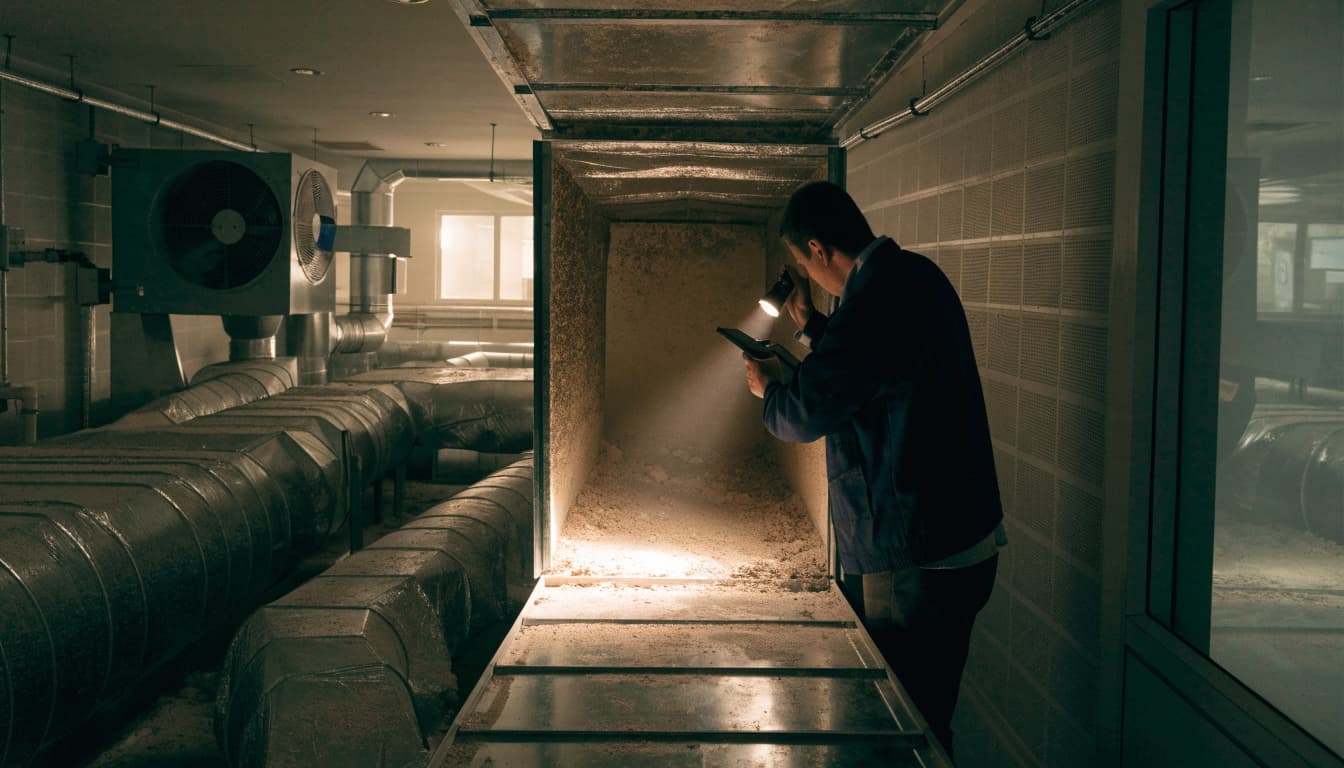
Let the findings determine cleaning
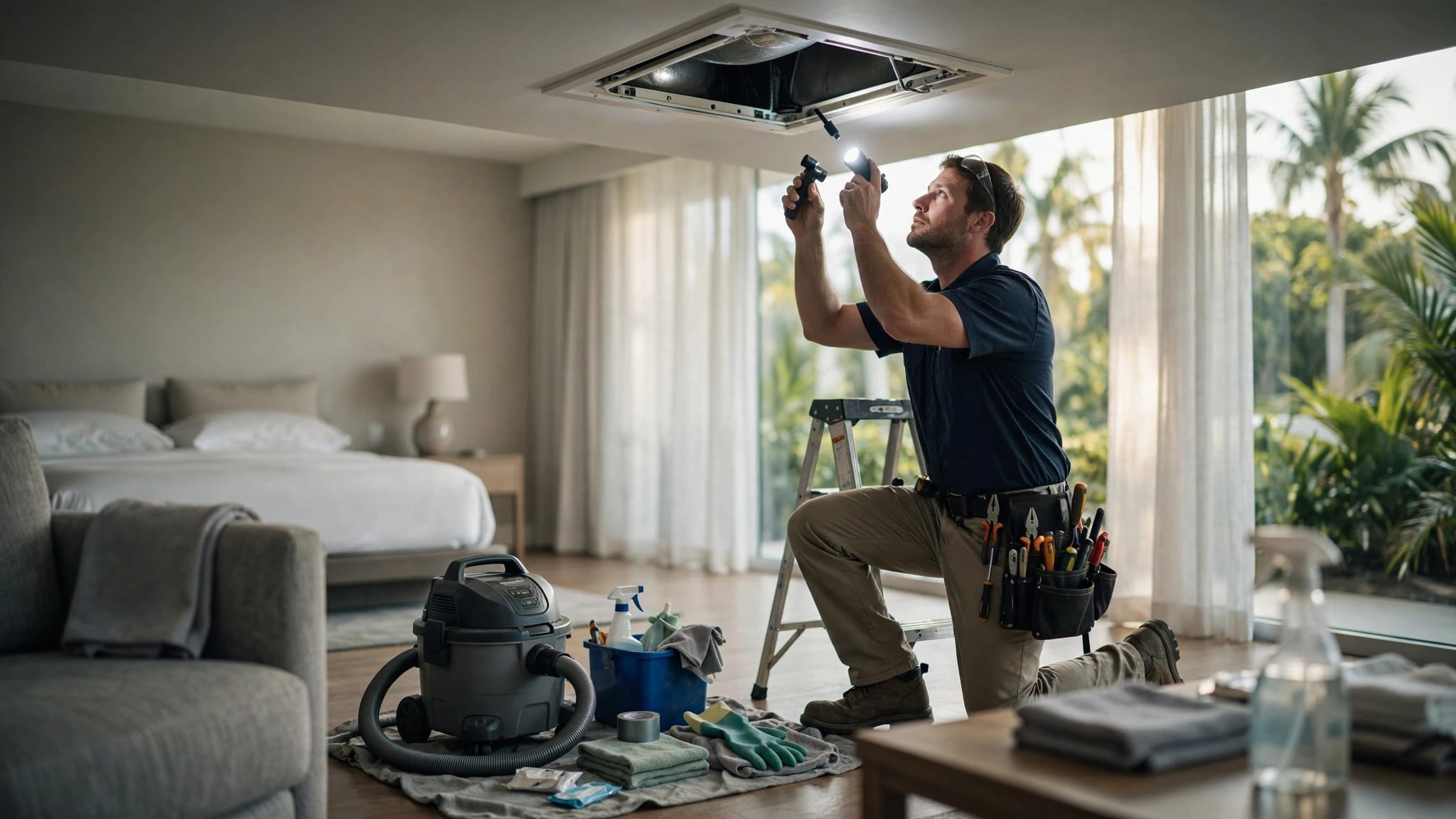
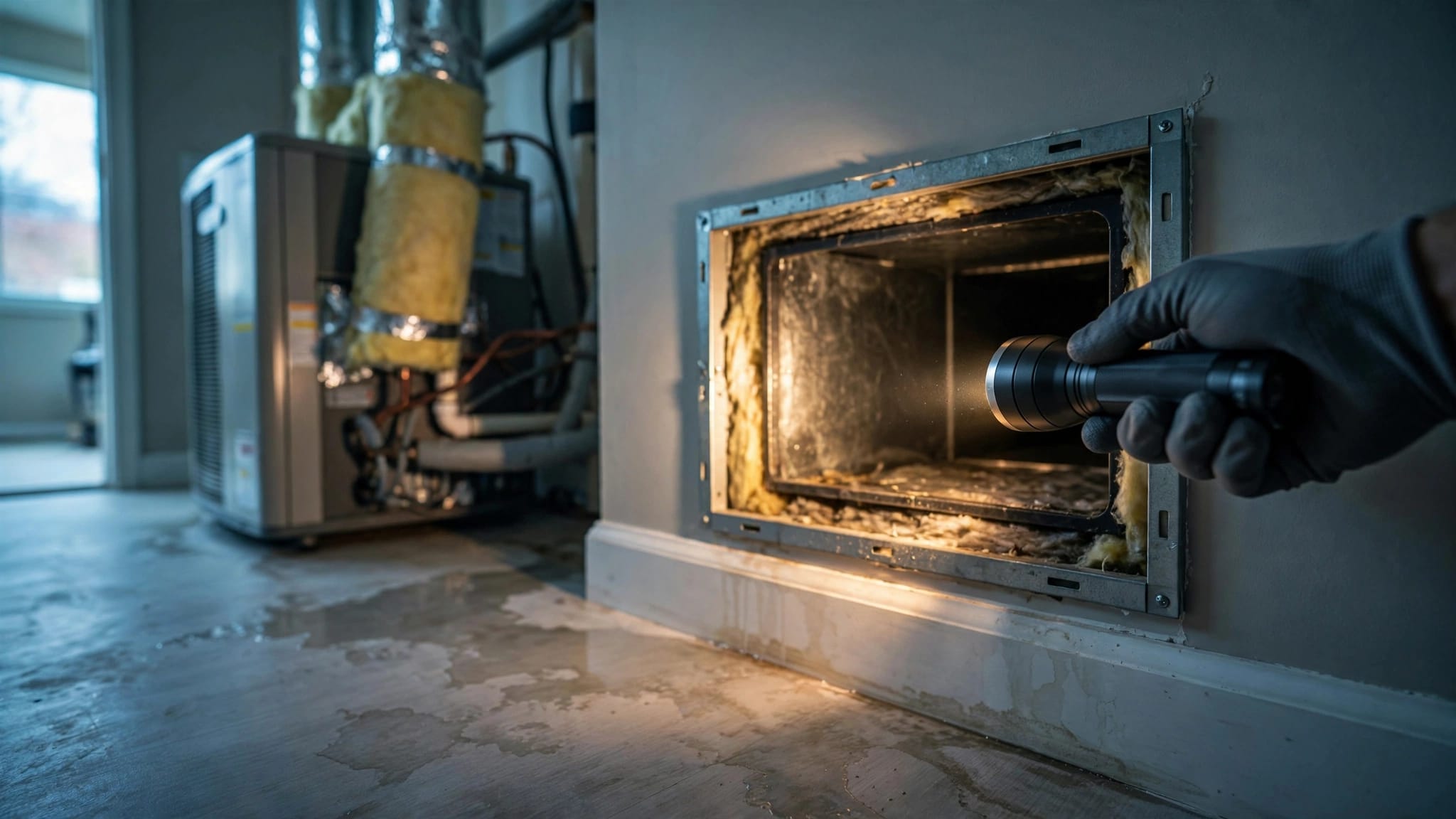
Ask the inspector to document accessible duct interiors, air-handler components, filter condition, and signs of moisture or damage. Photos should identify the system and location rather than show an unexplained close-up of dust.
If the system remains clean and dry, continue maintenance and inspections. If contamination is present, identify its source before approving cleaning.
Keep the latest inspection alongside previous reports. That comparison helps distinguish a stable condition from recurring buildup that requires repairs or a shorter inspection interval.
Adjust the Plan to Your Florida Building
Florida heat, humidity, and storm exposure deserve attention, but climate alone doesn't establish a cleaning interval. Building use and actual system condition matter more than the ZIP code.
These property types need different inspection priorities.
| Building type | Inspection priorities | What can change the timing |
|---|---|---|
| Offices and retail spaces | Filter fit, return pathways, tenant complaints | Tenant build-outs or dust entering ductwork |
| Hotels and mixed-use properties | Separate HVAC zones, moisture, operating hours | Water intrusion or contamination in individual systems |
| Warehouses and workshops | Airborne dust sources and filtration | Heavy particulate loading or filter bypass |
| Schools and healthcare facilities | System cleanliness and facility procedures | Findings requiring facility-specific environmental controls |
| Restaurants | Comfort HVAC condition and separate exhaust systems | Renovation debris or documented HVAC contamination |
The takeaway is to evaluate each system's exposure rather than assign one cleaning date to the entire property.

After a roof leak or storm-related water intrusion, arrange an inspection of affected HVAC areas without waiting for the annual review. Similarly, inspect after dusty renovation work if debris may have entered open returns or supply ducts.
Restaurant grease exhaust and commercial dryer exhaust are separate systems. Their maintenance plans shouldn't inherit the comfort-air duct-cleaning schedule.
Findings That Justify Earlier Action
Dust around a grille doesn't prove the entire duct system needs cleaning. However, debris inside ducts, contamination entering occupied areas, and damaged materials deserve closer investigation.
Heavy debris, renovation residue, and pests
Ask for an inspection when dust repeatedly blows from supply registers or construction residue appears inside ductwork. Drywall sanding and ceiling work can introduce debris when contractors leave openings unprotected.
Schedule any justified cleaning after the final dusty task. Otherwise, ongoing work may contaminate the system again.
Pest evidence requires another step first. Fresh droppings, nesting material, gnaw marks, or damaged insulation can indicate active activity. Have pest control complete removal and exclusion before final cleaning, then evaluate any duct damage.
Water damage and suspected microbial growth
Musty odors or dark spots warrant investigation, but neither confirms mold by itself. Dust, staining, and other residues can look similar on inspection images.
Correct leaks, drainage problems, and insulation defects before treating contaminated surfaces. Wet or deteriorating duct insulation may require replacement rather than repeated cleaning.
EPA moisture-control guidance recommends drying wet areas within 48 hours and keeping indoor relative humidity below 60% , ideally 30% to 50% when possible. These are moisture-control recommendations, not duct-cleaning intervals.
Cleaning a damp system without correcting the moisture source leaves the conditions that allowed contamination to develop.
Keep Filters and HVAC Maintenance on Separate Schedules
A clean filter and clean ducts support different parts of building care. Neither service replaces the other, and weak airflow doesn't automatically identify a duct-cleaning problem.
Match filter changes to the equipment
Filters capture particles moving through the filtration point. They don't remove settled debris already inside ducts, blower compartments, or air-handler surfaces.
Follow equipment recommendations and inspect filters for loading. Busy or dusty areas may need more frequent replacement, but use observed conditions rather than a universal monthly rule.
Choose a filter size and efficiency compatible with the system. A higher rating isn't automatically suitable if the equipment cannot handle its resistance. The distinction between duct cleaning and filter replacement helps clarify which service addresses the finding.
Diagnose airflow and cooling problems separately
A loaded filter, dirty coil, malfunctioning blower, crushed duct, or disconnected return can cause performance complaints. An HVAC contractor should diagnose those conditions before a manager assumes cleaning will solve them.
Also inspect filter-rack gaps and return connections. Air bypassing the filter can carry dust into the equipment even when staff replace filters regularly.
For moisture concerns, include condensate pans and drains in routine maintenance. Keeping them clean and unobstructed addresses conditions that duct cleaning alone cannot correct.
Specify the Cleaning Scope Before Approving Work
A useful estimate connects the inspection findings to the proposed work. It should identify which systems need attention and explain what the price includes.
Look beyond visible registers
Ask the contractor to identify supply and return ducts, plenums, registers, grilles, and diffusers. The inspection should also consider coils, drain pans, blower components, and the air-handler housing.
NADCA's cleaning guidance takes a whole-system view because contaminated components can remain after someone cleans only the visible vents.
Compare register cleaning and full-system service before accepting a proposal. Confirm which components the duct cleaner will handle and which require a separate HVAC contractor.
Confirm containment and material protection
Professional cleaning generally combines controlled negative pressure with tools that loosen debris for collection. Ask how the contractor will contain dust and whether HEPA-filtered collection is appropriate for the contamination and work location.
The method must suit the duct material. Flexible ducts and internally lined ductwork can tear or deteriorate under aggressive handling.
Request before-and-after documentation and a description of inaccessible areas. If someone recommends sanitizers, microbial treatments, or UV equipment, ask what finding supports that recommendation.
Cleaning can remove documented buildup. It shouldn't come with guaranteed allergy relief, disease prevention, or promises to fix every indoor-air-quality complaint.
Build a Maintenance Calendar You Can Defend
A practical plan combines recurring inspections with event-driven checks. It also gives staff a clear way to report changes between scheduled visits.
- Create a system inventory. Record each air handler, the spaces it serves, duct access points, filter specifications, and known repairs.
- Schedule and document inspections. Use annual cleanliness inspections as the commercial baseline, then review whether particular systems need closer monitoring.
- Respond to documented changes. Record water intrusion, renovation exposure, pest activity, persistent odors, or debris from registers. Arrange the appropriate inspection, repair, or cleaning.
Keep photos, inspection reports, cleaning records, and unresolved recommendations together. Assign a person to close out repairs so recurring contamination doesn't disappear into an unfinished work order.
When cleaning is justified, coordinate tenant notices, security access, HVAC shutdowns, equipment placement, and reopening checks. Planning after-hours duct service can reduce disruption, but the crew still needs access to every included area.
For hotels, salons, and other properties with laundry equipment, maintain a separate dryer-exhaust plan. Laundry volume, vent configuration, manufacturer guidance, lint accumulation, and performance changes affect that plan. HVAC duct inspections don't cover dryer exhaust.
Frequently Asked Questions
Should Florida commercial ducts be cleaned every year?
Not automatically. NADCA recommends annual commercial cleanliness inspections, while cleaning depends on findings. A clean, dry system may need continued maintenance rather than another cleaning appointment.
Does an odor mean the ducts need cleaning?
An odor deserves investigation, but its source may be a drain, moisture problem, occupied space, or HVAC component. Confirm where it originates before approving duct cleaning or an odor treatment.
Should every HVAC system be cleaned during one visit?
Only when the findings support that scope. Inspect separate air handlers and document contamination by system. One affected tenant space doesn't establish that every duct system in the building needs cleaning.
What determines the cleaning estimate?
The number of systems, duct material, access, contamination, and work hours affect scope and price. Request an on-site assessment and a written proposal rather than relying on a per-vent offer that leaves major components undefined.
Put Inspection Findings Ahead of the Calendar
The strongest cleaning schedule starts with documented conditions . Annual inspections provide a baseline, while contamination, moisture events, and building changes determine when additional work is appropriate.
Keep filter care, equipment maintenance, repairs, and dryer-exhaust service on their own plans. That separation helps you approve the service your building needs.
If you need help evaluating the next step, Get a Free Estimate for air duct or dryer vent cleaning based on your property's conditions and access requirements.