Dryer Vent Replacement or Cleaning: How to Choose
A dryer that takes two cycles to dry clothes may have more than a lint problem. Restricted airflow, crushed ductwork, poor routing, or an indoor termination can all reduce performance and increase safety concerns.
Choosing between dryer vent replacement and cleaning starts with identifying the defect. Cleaning removes lint from an intact vent, while replacement corrects damage, unsuitable materials, or a poor exhaust route. A careful inspection helps you avoid paying for the wrong service.
Dryer Vent Replacement or Cleaning: Start With the Problem
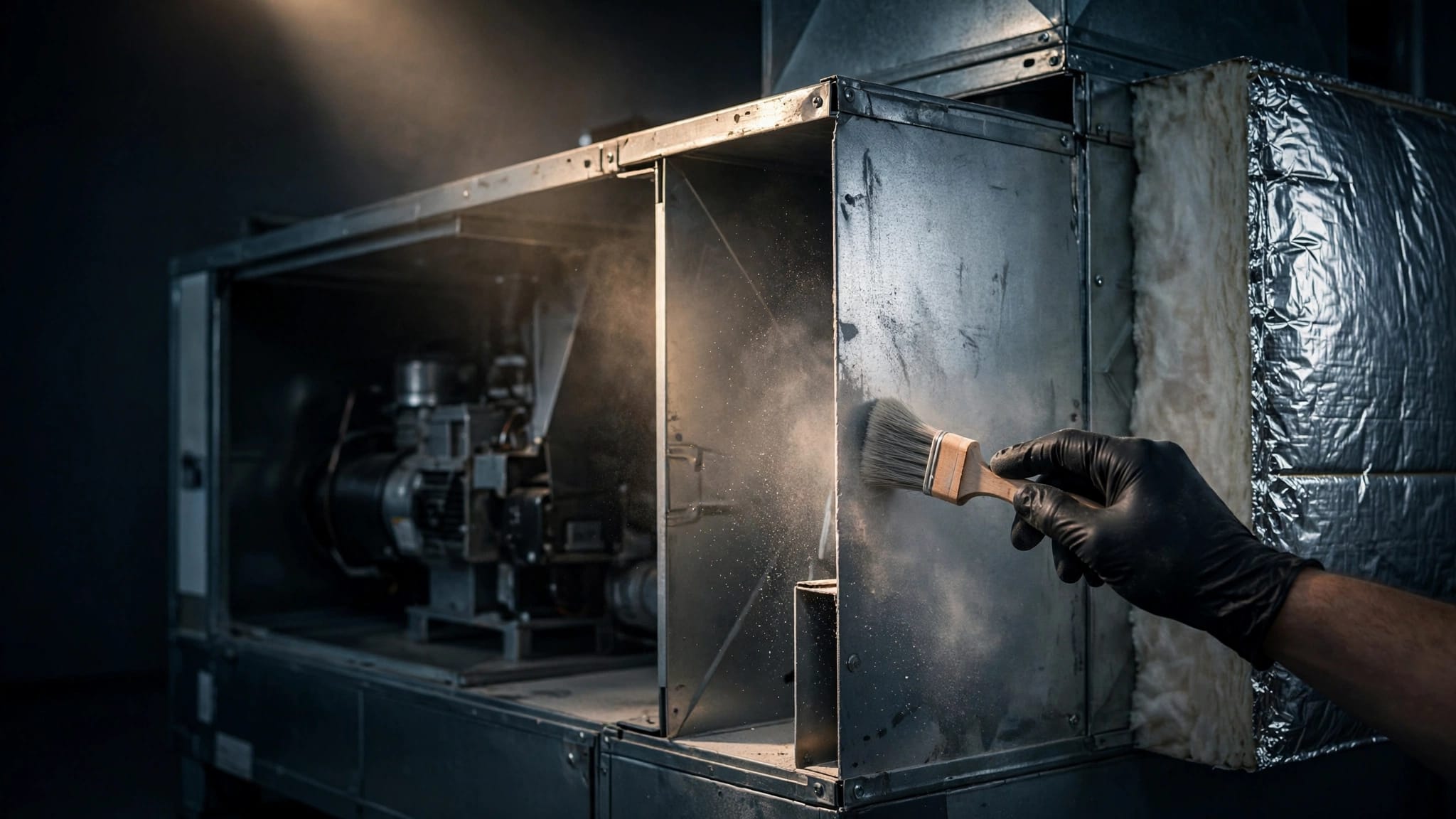
Dryer vent cleaning and duct replacement address different conditions. If lint has collected inside a sound, properly routed duct, cleaning may restore airflow. A technician can remove the buildup with specialized equipment, clean the exterior vent opening, and test the system afterward.
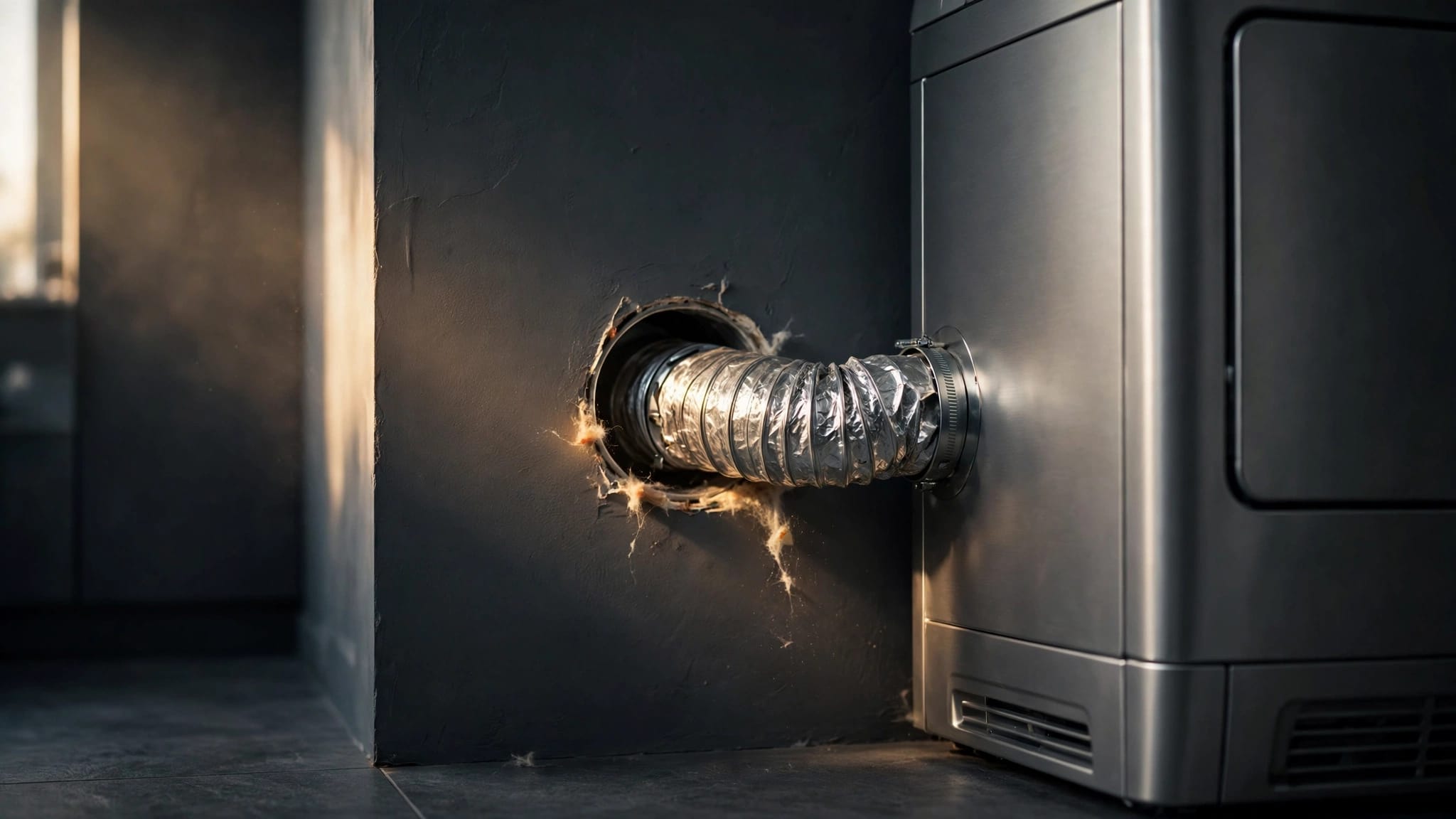
Replacement becomes necessary when the duct itself is damaged or poorly installed. A crushed section behind the appliance can restrict airflow even after cleaning. A disconnected joint can release lint and warm moisture into a wall, attic, or laundry room. Holes, corrosion, severe sagging, and repeated blockages also point to a repair or replacement issue.
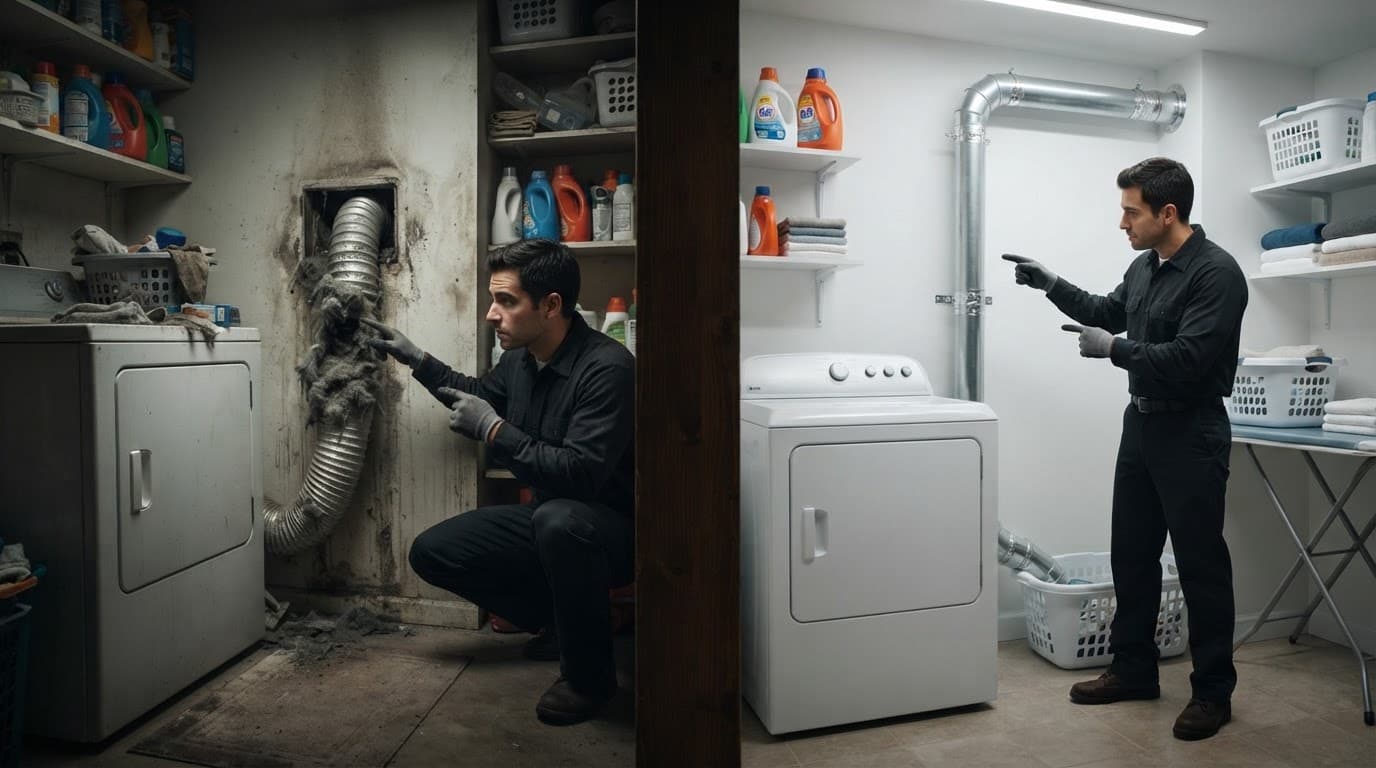
Some homes need both services. For example, a damaged section may require replacement, while lint remains in the sections that stay in place. In that situation, replacing the defective duct and cleaning the remaining path gives the dryer a clear, continuous exhaust route.
Pay attention to what changed. A gradual increase in drying time often points to buildup. A sudden loss of airflow, a new rattling sound, or lint appearing around the dryer may indicate a disconnected or damaged section.
When Cleaning Is the Right Choice
Cleaning is usually the appropriate first step when the vent has no visible damage and the main symptom is restricted airflow. Clothes may remain damp after a normal cycle, the dryer may feel hotter than usual, or the outside flap may open weakly while the appliance runs.
Lint can collect deep inside a long duct, especially when the line contains bends or the exterior cap has a sticking flap. The lint screen catches much of the debris, but it doesn't remove material that travels into the exhaust line.
A professional cleaning visit should include more than vacuuming the area behind the dryer. The technician should inspect the accessible duct, clean the interior path, clear the exterior termination, and check airflow after the work. Read what happens during dryer vent cleaning before scheduling service so you know what a complete visit should cover.
Cleaning may also make sense when a recent inspection finds lint but no damage. A professional dryer vent inspection can reveal packed debris, loose connections, sagging sections, or other problems hidden behind walls and appliances.
Keep the lint screen clean after every load, and don't push the dryer tightly against the wall if doing so bends the transition hose. If drying performance declines again soon after a thorough cleaning, look for a duct design or damage problem instead of repeating cleanings without an inspection.
When dryer vent replacement is safer than cleaning
Cleaning can't repair a crushed, torn, disconnected, or incorrectly routed duct. In these cases, continued use can leave the dryer working against restricted airflow. The appliance may run longer, clothes may stay damp, and heat may build up in areas that should remain clear.
A crushed transition hose is common when a dryer is pushed too far back. The hose may flatten against the wall and create a narrow passage where lint collects. Replacement or repositioning can restore the opening, but the correct solution depends on the space behind the appliance.
A duct may also need replacement when it has too many turns or follows an unnecessarily long route. Every bend adds resistance and creates another place for lint to settle. A qualified technician can assess whether the line should be shortened, rerouted, or rebuilt with suitable duct material.
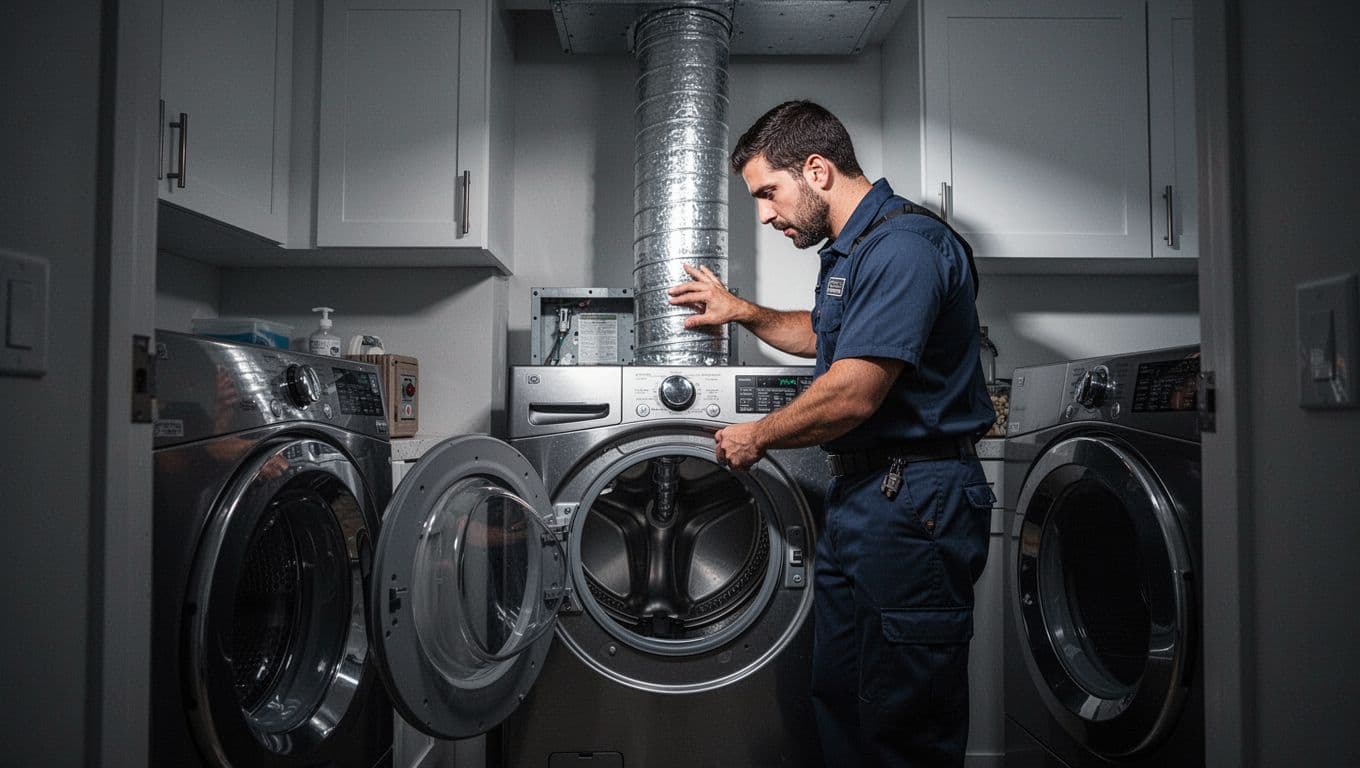
Replacement is also the safer option when the duct uses a material that doesn't meet local requirements or the appliance manufacturer's instructions. Long sections of thin flexible material can fold and sag. A short accessible transition connection may be acceptable in some installations, but local rules and the dryer manual determine what belongs in your home.
An exhaust that ends in an attic, crawlspace, garage, or another enclosed area needs professional correction. Dryer exhaust carries moisture along with lint, so releasing it indoors can damage building materials and create conditions that support mold growth. Learn more about rerouting a vent to the outside if your duct doesn't discharge through a suitable exterior termination.
Replacement also deserves attention when:
- Lint continues to appear around joints after cleaning.
- The exterior flap barely moves even though the dryer runs.
- The duct has visible holes, rust, loose seams, or crushed areas.
- The vent repeatedly clogs within a short period.
- The dryer overheats or shuts off before clothes are dry.
- A previous installation used an improvised route or unsuitable connector.
Stop using the appliance and arrange service if you smell burning, feel unusual heat around the dryer, or see exhaust escaping indoors. Don't disconnect a gas line or move a heavy appliance through a tight space without the right qualifications and equipment.
How to choose between cleaning and replacement
Start with the simplest question: Is the duct intact and correctly routed? If the answer is yes, cleaning may be enough. If the answer is no, replacement or repair should come before another cleaning.
A technician should examine the transition hose behind the dryer, the accessible sections of the exhaust line, the exterior cap, and the route through the building. Some ductwork runs through walls, ceilings, attics, or crawlspaces, so the full condition may not be visible from the laundry room.
Use the findings to match the service:
- Lint buildup with sound ductwork calls for cleaning. The technician removes the obstruction and checks airflow after clearing the line.
- A single crushed or disconnected section calls for repair or partial replacement. The remaining duct may still need cleaning if lint has entered it.
- Severe damage, poor materials, or an inefficient route calls for a larger replacement. The work may involve rerouting the line and installing a suitable exterior termination.
- Unclear symptoms call for an inspection before choosing a service. This approach is useful when the dryer has become slow but the visible hose looks normal.
The inspection should also consider the dryer itself. A clogged lint screen, failing blower, blocked internal passage, or heating problem can affect drying performance. Vent work may not solve every appliance issue, so a clear diagnosis matters.
Don't rely only on the amount of lint removed. A large pile of lint doesn't prove that cleaning solved the problem, and a small amount doesn't prove the duct is safe. Airflow, duct condition, routing, connections, and termination all matter.
What affects dryer vent replacement cost?
The price of replacement depends on the length and location of the duct, how easily the technician can access it, the number of bends, the condition of the exterior opening, and whether the route needs to change. A short accessible repair is different from rebuilding a line that passes through a finished ceiling or wall.
Ask for an estimate that separates cleaning, repairs, replacement, rerouting, exterior cap work, and airflow testing. You should also know whether the quote includes removing old material, sealing connections, protecting finished surfaces, and checking the system after installation.
Local requirements can affect the materials, route, clearances, and exterior termination. A qualified professional should review those requirements rather than promise that one setup fits every home. The dryer manufacturer's installation instructions matter too.
Before hiring a company, ask these practical questions:
- Will you inspect the entire accessible exhaust path before recommending work?
- Can you show me the damaged, crushed, or disconnected section?
- Does the proposed material fit the appliance instructions and local requirements?
- Will you test airflow after cleaning or replacement?
- Does the estimate include the exterior vent opening and final cleanup?
For property owners along Florida's Gulf Coast, indoor moisture deserves attention because humid conditions can make ventilation problems more noticeable. A clear exhaust route helps the dryer remove moisture properly, but it doesn't replace appliance maintenance or good laundry-room ventilation.
If you need help deciding which service fits your home, you can Get a Free Estimate for dryer vent cleaning or related work.
Conclusion
The right choice depends on the condition of the exhaust system. Cleaning fits a sound duct with lint buildup, while dryer vent replacement fits damage, crushing, poor routing, unsuitable materials, or an indoor termination.
When symptoms return soon after cleaning, stop treating the problem as routine buildup. Have the full vent path inspected, correct the physical defect, and confirm airflow before putting the dryer back into regular use.