Smoke Contaminated HVAC Ducts After a Kitchen Fire
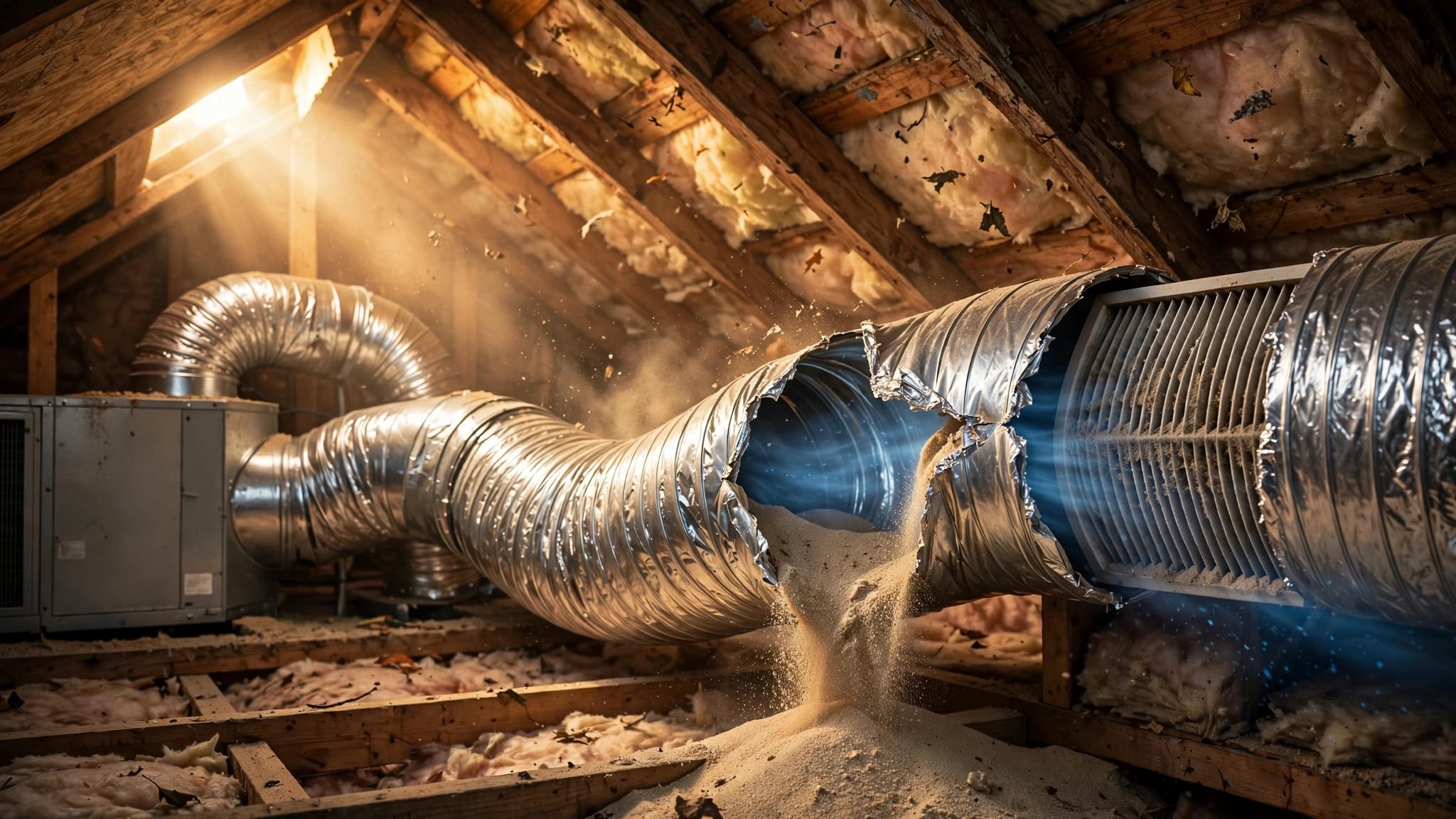
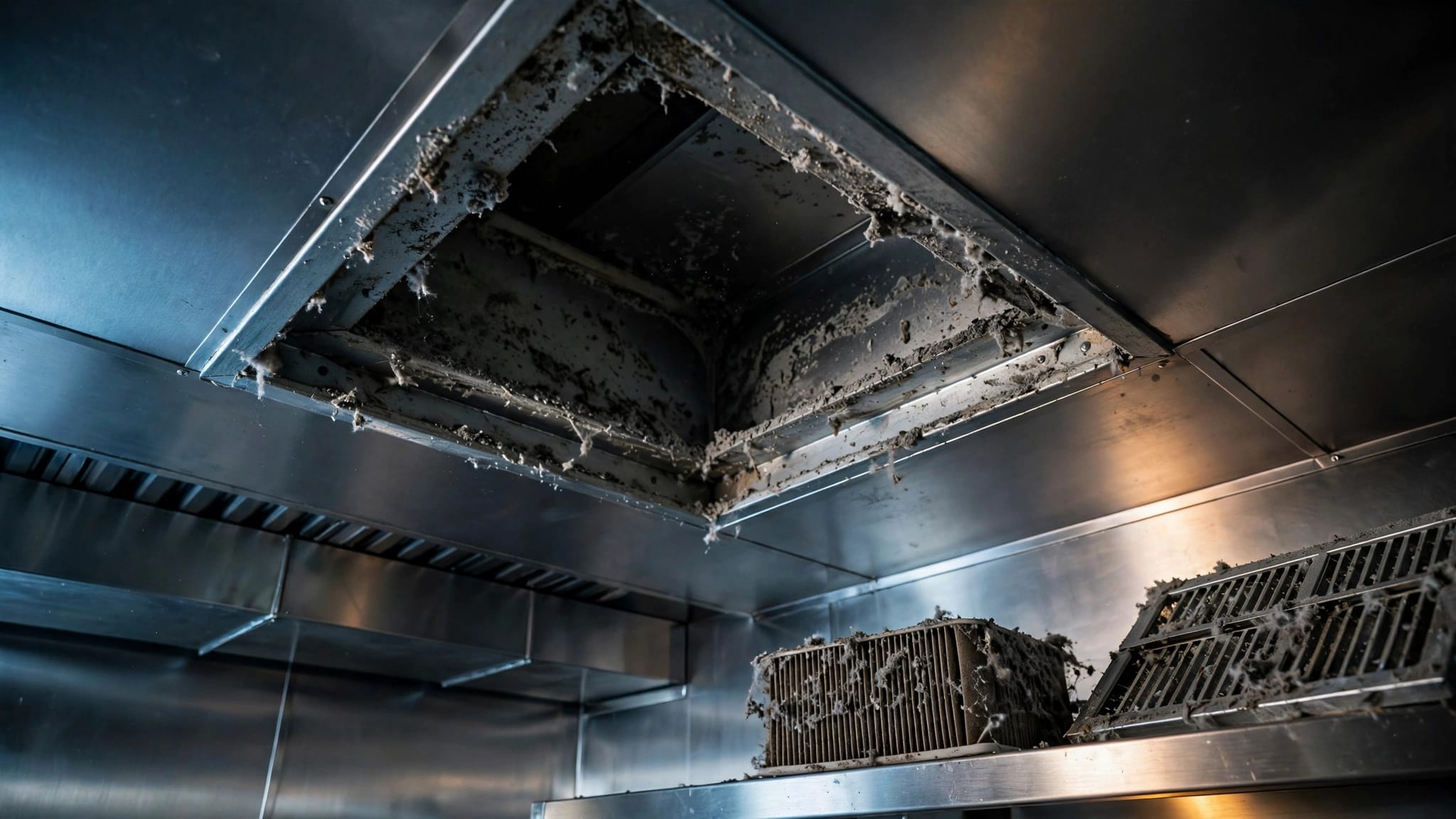
A kitchen fire can leave smoke contaminated HVAC ducts long after the flames are out. Soot, grease residue, and odor may settle inside supply vents, return lines, blower components, and filters.
If smoke entered the heating or cooling system, keep the HVAC system off until a qualified professional inspects it. Running the fan can spread contaminated particles through every room, making cleanup harder and exposing your family to lingering smoke residue.
The right response starts with safety, followed by a careful inspection and targeted cleaning.
Why Kitchen Smoke Gets Into HVAC Ducts
Kitchen fires produce more than visible smoke. Burning cabinets, plastic items, insulation, paint, food, and cooking grease can release particles with different textures and odors. Some residues feel dry and powdery. Others are oily and stick to metal surfaces.
If the HVAC system was operating during the fire, the blower may have pulled smoke through return-air grilles. The system can then push those particles into supply ductwork and living areas. Even when the equipment was off, smoke can enter open registers, gaps around grilles, or duct connections.
Smoke often travels farther than homeowners expect. Contamination may reach:
- Supply and return ducts
- Air handler cabinets
- Blower wheels and motor compartments
- Evaporator coil surfaces
- Filters and filter housings
- Flexible duct liners and insulation
- Registers, grilles, and nearby drywall
Odor can remain after visible soot disappears because smoke compounds cling to porous materials. Flexible ducts and internal insulation can absorb odor more easily than smooth, bare metal. A surface wipe around a vent won't remove residue hidden deeper inside the system.
The type of fire also matters. A grease fire may leave an oily film, while burning plastic can produce a sharp chemical odor. Water used during firefighting can add moisture to insulation, wall cavities, and duct connections. Those areas need assessment before anyone applies a sanitizer or deodorizer.
Smoke Contaminated HVAC Ducts: What to Do Immediately
Your first priority is life safety. Leave the property if fire officials or emergency personnel say it isn't safe to remain inside. Don't turn on the HVAC system to clear the smell, and don't use portable fans connected to the home's electrical system until the property has been cleared.
Once the area is safe, you can take a few limited steps:
- Turn the thermostat to the off position and leave the system off.
- Keep doors to unaffected rooms closed when possible.
- Avoid sweeping or brushing soot near vents because dry particles can become airborne.
- Photograph visible damage before moving items or cleaning surfaces.
- Contact your insurance carrier and ask about fire and smoke restoration procedures.
- Have a qualified HVAC or restoration professional inspect the equipment and ductwork.
Don't remove panels from the air handler unless you're trained to do so. Electrical components may have water damage, and soot can hide inside areas that remain energized. Also avoid spraying household cleaners, bleach, fragrance products, or essential oils into vents. These products can damage components or push residue farther into the duct system.
Replace the HVAC filter only if you can do so safely and without disturbing heavy soot. In many cases, a restoration contractor should handle filter removal because the filter may contain concentrated smoke residue. The replacement filter is not a substitute for cleaning the system.
Keep the blower off until inspection. A contaminated system can distribute smoke residue throughout the home in minutes.
How Professionals Assess Smoke Contamination
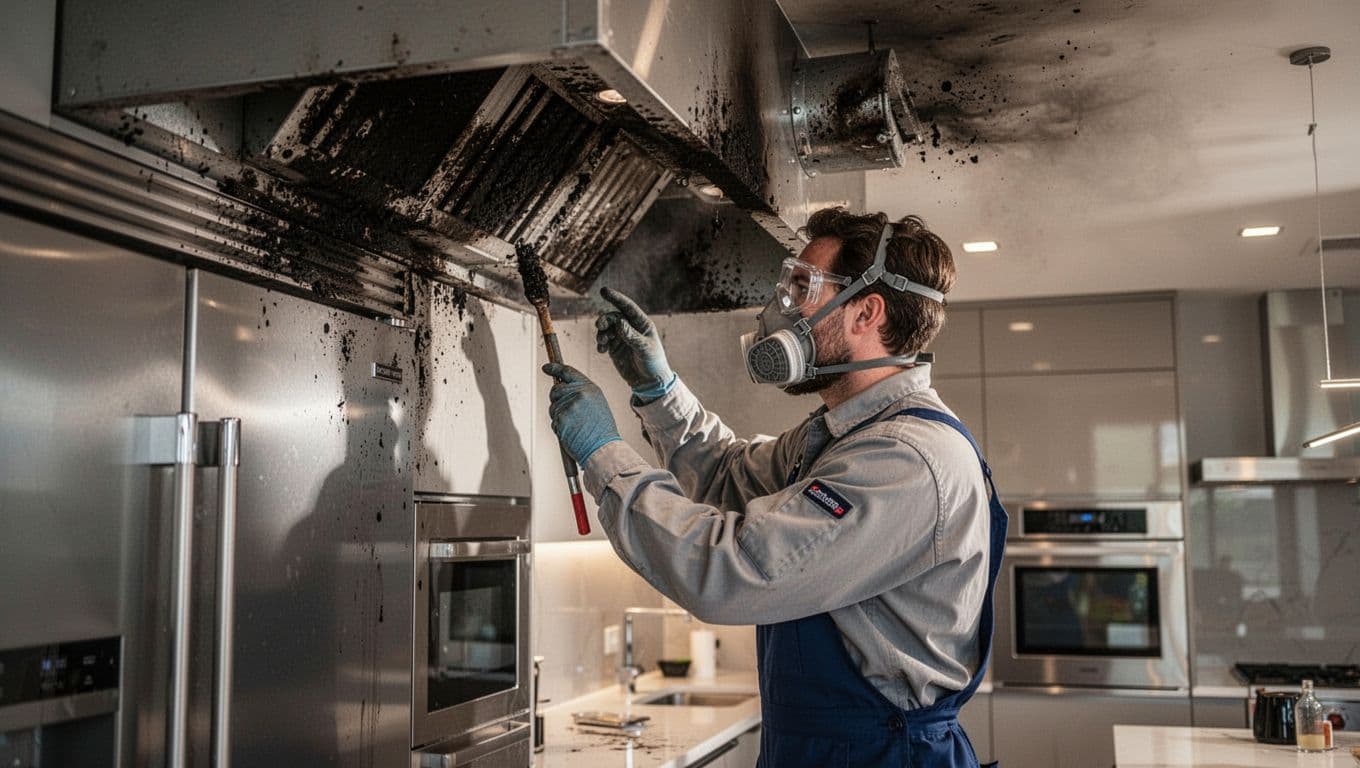
A proper inspection looks beyond the visible kitchen damage. The technician should trace the HVAC airflow path and identify where smoke could have entered, settled, or been redistributed.
The inspection usually begins with the air handler, filter, return plenum, and nearby duct connections. The technician may remove accessible registers and use a camera or inspection tools to view interior surfaces. They also check for soot patterns, oily residue, odor intensity, damaged insulation, loose connections, and moisture.
The system's location affects the cleanup plan. An air handler in a garage, attic, closet, or utility room may have different exposure than a unit installed near the kitchen. The technician also needs to know whether the fire affected only the cooking area or reached ceilings, walls, attic spaces, or other rooms.
A professional may separate the system into zones:
- Areas with visible soot or grease film
- Areas with odor but no obvious residue
- Areas that appear unaffected
- Components that require repair or replacement
This distinction matters because cleaning every part of a system may not be necessary, while cleaning only the visible vent may leave contamination behind. A written scope should identify the affected components, the proposed cleaning method, and any items that cannot be restored.
When you compare contractors, ask about training, insurance, equipment, and documentation. These questions to ask air duct contractors can help you compare estimates based on the actual work included, not only the price.
Professional Cleaning for Smoke Contaminated HVAC Ducts
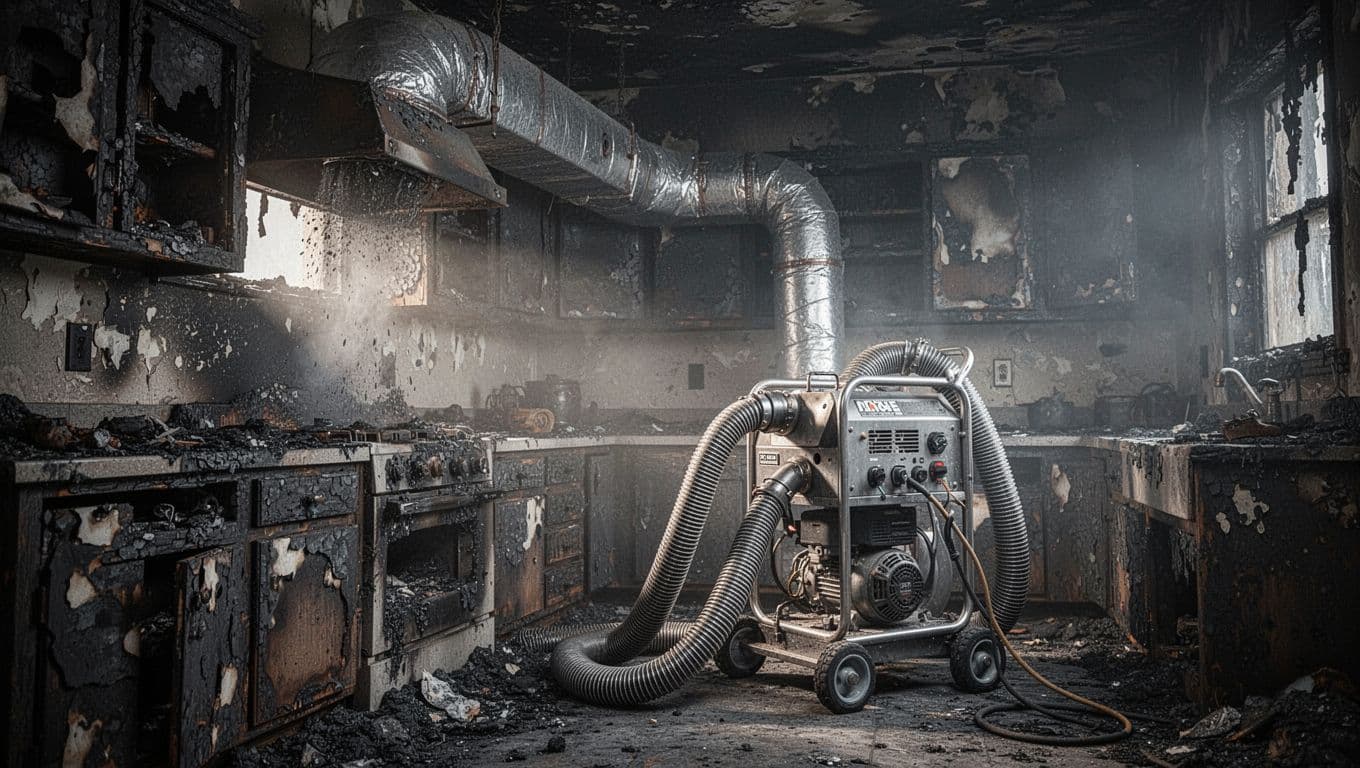
Cleaning smoke contaminated HVAC ducts requires controlled containment and equipment that can collect loosened debris. A professional crew typically protects floors and furnishings, covers registers that aren't being cleaned, and connects a high-powered vacuum system to the ductwork.
Negative pressure helps pull loosened soot and debris toward the collection equipment instead of allowing it to drift into the home. Technicians may use air whips, rotary brushes, or other agitation tools based on the duct material and condition. They should adjust the method for sheet metal, flex duct, lined duct, and insulated components.
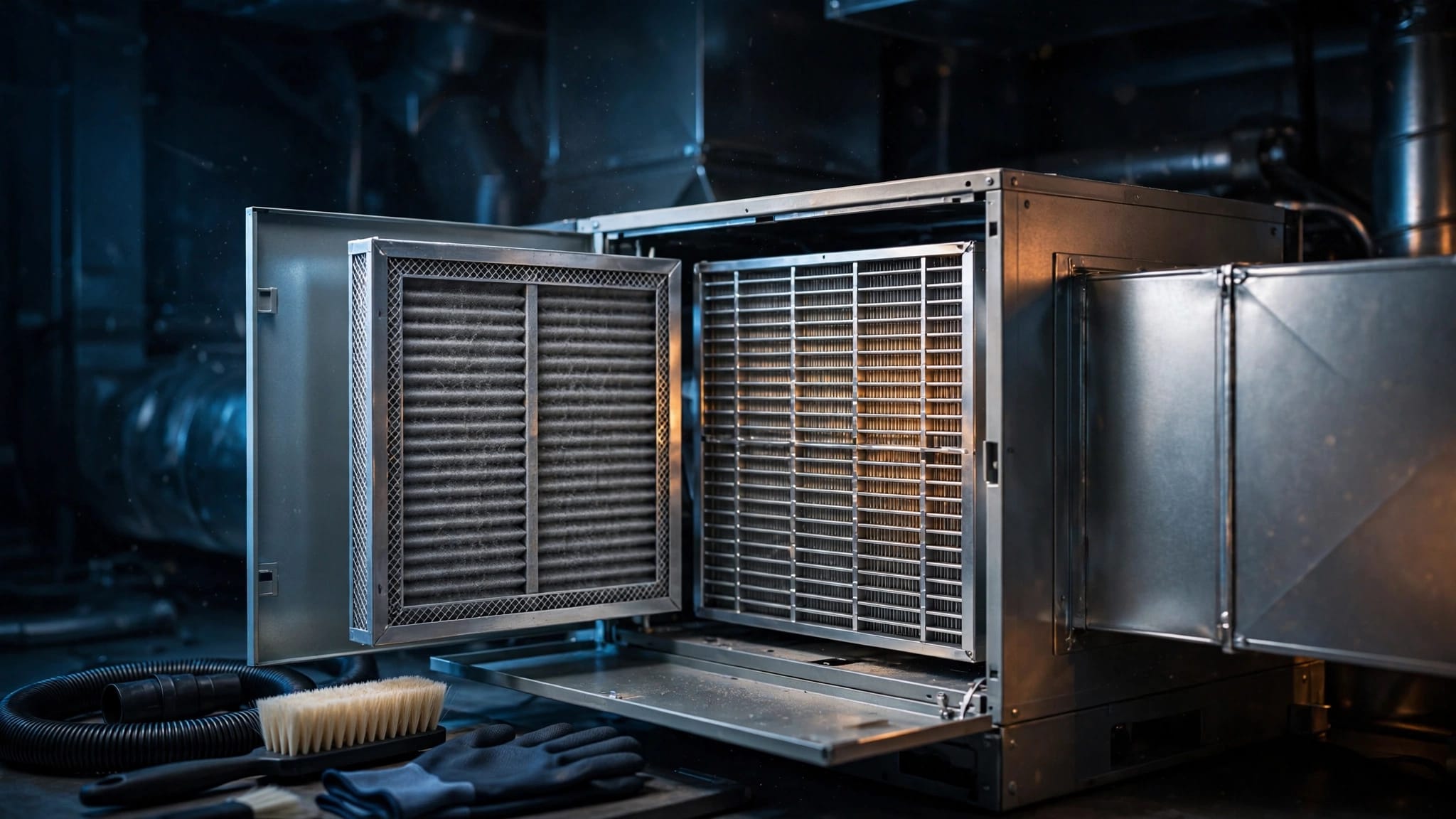
The air handler needs attention as well. Cleaning may include accessible blower components, cabinet surfaces, return plenums, and other parts that hold smoke residue. Coils and electrical sections require careful handling because aggressive cleaning or excess moisture can damage equipment.
A standard residential duct cleaning may not address every fire-related problem. Smoke restoration can also involve:
- Removing and replacing heavily contaminated filters
- Cleaning registers, grilles, and accessible plenums
- Treating persistent odors after physical residue is removed
- Replacing saturated or smoke-damaged duct insulation
- Repairing crushed, disconnected, or heat-damaged ductwork
- Coordinating HVAC repairs when equipment has electrical or mechanical damage
Sanitizers, odor treatments, and microbial products have a limited role. They shouldn't cover up smoke residue or replace physical cleaning. The technician should identify the product, explain where it will be applied, and confirm that it is suitable for the HVAC materials and occupants.
If duct insulation has absorbed heavy smoke odor, replacement may be more practical than repeated treatment. The same may apply to flexible duct sections with visible soot, melted areas, or damaged inner liners. A qualified contractor can explain which components are cleanable and which should be removed.
Cleaning, Repair, or Replacement?
The answer depends on the contamination, the duct material, and the condition of the HVAC equipment. Bare sheet-metal ducts often allow more thorough cleaning when heat has not warped the metal or damaged joints.
Flexible ductwork can present a different problem. Its inner liner may tear during aggressive cleaning, and absorbed smoke odor may remain after surface debris is removed. Damaged insulation can also reduce system performance and create spaces where residue collects.
Replacement becomes more likely when:
- The duct material has melted, charred, or collapsed.
- Internal insulation contains heavy soot or oily residue.
- Fire or water damaged the air handler.
- Electrical wiring, controls, or motor components show damage.
- Cleaning cannot remove the odor or residue from porous materials.
- The duct system has lost its seal or structural integrity.
Homeowners should avoid making this decision based on odor alone. Smoke smell can remain in surrounding cabinets, drywall, flooring, and furnishings, even after the duct system is clean. Conversely, a system can look clean while hidden residue remains inside the return path.
A post-cleaning inspection should confirm what the crew cleaned and what it left in place. Ask for photographs when possible. If the smell returns when the fan operates, stop using the system and request another inspection rather than adding more fragrance or deodorizer.
The air duct cleaning process in Florida homes should include system protection, negative-pressure collection, controlled agitation, and a final review. Those practices are useful after a fire because they limit the chance of spreading debris during the work.
Choosing a Fire and HVAC Cleanup Company
Kitchen fire cleanup often involves more than one trade. A fire restoration company may handle soot removal, odor control, and structural drying, while an HVAC contractor addresses equipment, ductwork, and system operation. Communication between both providers helps prevent cleaned ducts from being exposed to ongoing smoke or construction dust.
When you request an estimate, give the company clear information about the fire:
- Where the fire started
- Whether the HVAC system was running
- Whether sprinklers or hoses introduced water
- Which rooms smell like smoke
- Whether you see soot at registers or returns
- Whether the air handler is near the kitchen
A dependable estimate should describe the number and type of duct sections, air handler components, registers, return lines, filters, and treatments included. It should also state whether repairs or replacement are excluded.
Ask whether the crew is insured and whether technicians have relevant HVAC cleaning or restoration training. NADCA certification can provide one comparison point, but the written scope and inspection process matter too. A company should explain its methods in plain language instead of promising that a quick treatment will remove every odor.
Don't operate the HVAC system while waiting for service unless a qualified professional has cleared it. If you live along Florida's Gulf Coast, humidity can also complicate smoke cleanup when water entered duct insulation or nearby building materials. Moisture concerns should be checked before the system returns to normal operation.
For help evaluating air duct or dryer vent service after property damage, you can Get a Free Estimate and discuss the condition of the system before work begins.
Conclusion
Smoke contaminated HVAC ducts can spread residue and odor well beyond the kitchen when the blower runs after a fire. Keep the system off, avoid disturbing soot, and arrange an inspection that covers the air handler, return path, supply ducts, filters, and insulation.
Some components can be cleaned with controlled vacuuming and agitation. Others need repair or replacement because porous, melted, or heavily damaged materials may hold smoke residue. A careful inspection and clear scope give you the safest path back to clean indoor air.