Why a Backward Air Filter Causes Airflow Problems

Adkins Duct Cleaning • June 23, 2026

A filter that faces the wrong way can slow an HVAC system fast. The thermostat may keep calling for air, but rooms feel flat, stuffy, or slow to recover. A backward air filter often hides in plain sight because the unit still runs.

The fix starts with the arrow on the frame. That arrow matches the way the filter media and support mesh are built, and when it points the wrong way, return airflow drops and the blower works harder.

How an Air Filter Is Built to Face One Way

The filter media does the catching. It traps dust, pollen, pet hair, and lint before those particles reach the blower and coils. On pleated filters, the folds give air more path, so the filter can catch more dirt without choking the system.

A support mesh or backing keeps those folds from flattening. It also helps the media hold its shape during long run times, when the system keeps pulling air through the return.

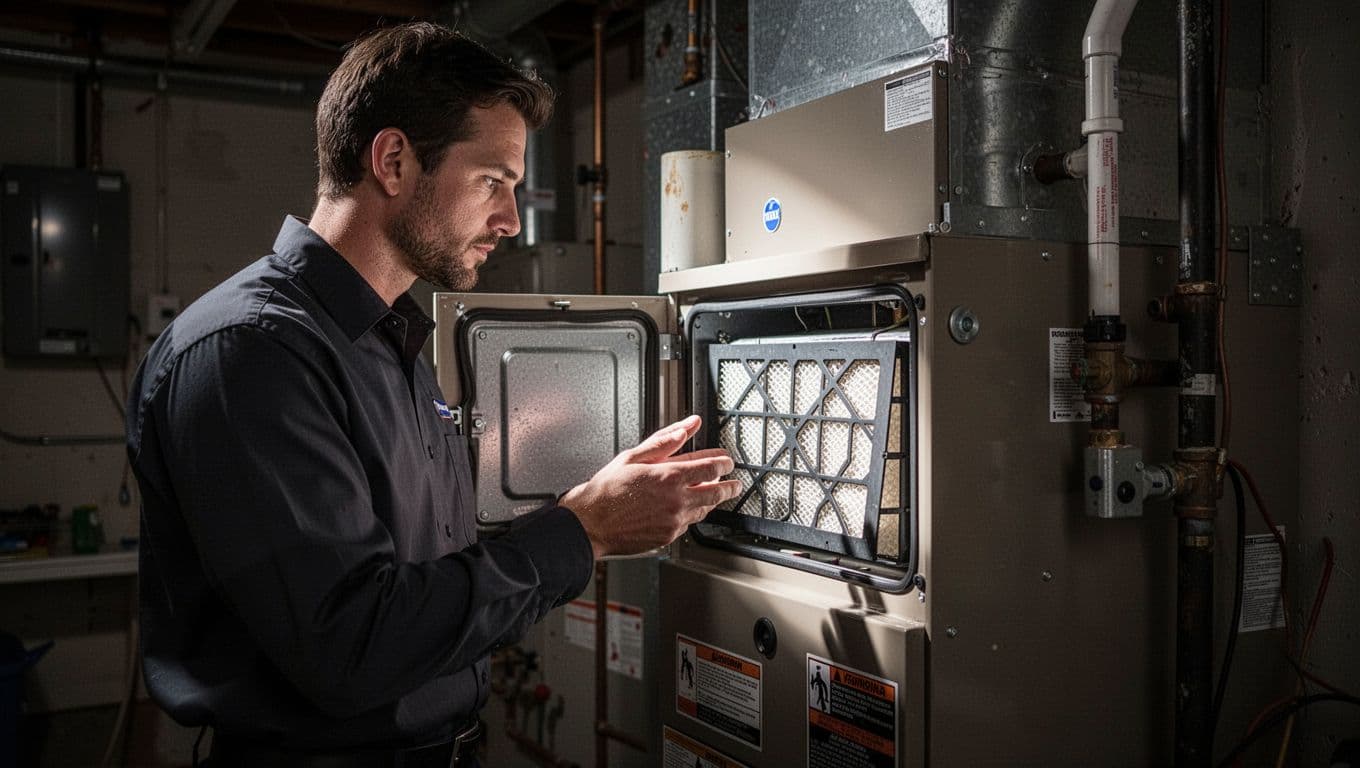
The airflow arrow on the frame shows the direction air should move through the filter. In most homes, that means the arrow points toward the furnace or air handler, not back toward the return grille. If the filter slides in backward, the media faces the wrong side of the airflow. Dust loads unevenly, resistance rises, and the filter can seem fine until the system starts acting weak.

A filter can fit the slot and still be installed wrong. The arrow is the clue that matters.

What a Backward Air Filter Does to Return Airflow

A backward air filter turns the return side into a bottleneck. Air has to work harder to pass through the filter, so less of it reaches the blower on time.

That restriction can make rooms take longer to heat or cool. In summer, the system may struggle to move enough warm indoor air back to the coil. In winter, the furnace may run longer before enough air returns for another heating cycle.

The blower feels that load. It draws more power, may sound louder, and can wear out faster if the problem sticks around. In homes with pets or heavy dust, the filter can clog sooner, which makes the restriction even worse.

If the return duct is dirty too, the filter has to fight that extra buildup. Then the whole return path works like a narrow straw instead of a wide opening. That is when professional air duct cleaning solutions can help restore better airflow.

Warning Signs That Point to the Wrong Filter Direction

Most homeowners notice a backward filter through small changes before they see an obvious breakdown. The house may still be livable, but the system stops feeling steady.

  • Vents push out less air than they used to, even when the thermostat setting stays the same.
  • The return grille may whistle, hum, or pull air with a strained sound.
  • Some rooms feel fine while others lag behind.
  • The filter looks dirty on the return side much sooner than expected.
  • The blower seems to run longer, or the system short-cycles on and off.

These signs can overlap with dirty ducts, clogged coils, or an undersized filter. Still, the arrow check is the easiest place to start, and it costs nothing.

If you notice weak airflow after a filter change, compare both sides of the filter. A clean-looking filter on the wrong side often points straight to installation trouble.

Simple Troubleshooting and a Quick Prevention Checklist

Simple troubleshooting can solve the problem in minutes.

  1. Turn the system off before removing the filter.
  2. Look for the airflow arrow and compare it with the blower direction.
  3. Reinstall the filter so the arrow points toward the furnace or air handler.
  4. Make sure the filter sits snugly in the slot, because a loose fit can let air slip around the edges.
  5. Replace any filter that is bent, damp, crushed, or coated in heavy dust.

After that, listen for smoother airflow and check whether the vents feel stronger. If the same filter dirties too quickly, the return may need a cleaning too.

A short prevention checklist helps keep the mistake from coming back.

  • Keep spare filters near the unit with the arrow side visible.
  • Write the correct direction on the cabinet with a marker or small label.
  • Check filters monthly during heavy AC use or when pets shed more.
  • Match the filter size and thickness to the slot so it seals properly.
  • Replace filters on time, not only when they look dark.

If airflow still seems weak after the filter is installed correctly, Get a Free Estimate and have the system checked before the strain builds up.

Conclusion

A backward air filter is a small mistake with a big effect. It can reduce return airflow, raise blower strain, and make the whole system feel off.

The fix is simple, check the arrow, watch the dust pattern, and keep the filter snug in place. When the same filter keeps clogging early, the return duct may need more than a quick swap.

By Adkins Duct Cleaning June 22, 2026
A dark spot on a vent cover often starts with moisture, not neglect. In Florida, that moisture shows up fast because cool indoor air meets hot, humid outdoor air all the time. That mix makes vent cover mildew a common sight in homes across the state. Dust gives it something to...
By Adkins Duct Cleaning June 21, 2026
A bedroom that feels fine with the door open can turn muggy once you close it. In Florida, that often points to air pressure, not just a weak AC. A jump duct in Florida homes can help, but only when the room and the system are a good match. Closed doors, tight weatherstripping...
By Adkins Duct Cleaning June 20, 2026
When your AC starts losing strength, the ducts are not the only thing worth suspecting. A dirty evaporator coil can cause weak airflow, uneven temperatures, longer run times, poor cooling, and higher energy bills, all of which can look like a duct problem. That mix-up matters...