
Can a MERV 13 Filter Restrict an Older AC System?
A MERV 13 filter can work in some older AC systems, but it can also choke airflow when the setup already has little room to spare. That is why one home gets cleaner air and another gets weak vents, longer run times, or hot spots after the same filter upgrade.
The rating on the box is only part of the story. Blower strength, duct condition, filter thickness, and system design all affect how well your AC can push air through the filter.
Why a MERV 13 filter can strain an older AC system
A higher MERV rating captures smaller particles, which is good for indoor air quality. The tradeoff is resistance. Air has to work harder to pass through the media, and that resistance is called pressure drop.
Older AC systems are often more sensitive to pressure drop because their blowers were not built with much extra headroom. If the return side is small, the ducts are dusty, or the coil is already dirty, the added load can show up fast.
That does not mean a MERV 13 filter is wrong for every older unit. It means the system has to be able to move air without stress. A well-sized blower and a clean duct path can handle more than a weak or neglected one.
A higher MERV rating helps only when the system can keep enough air moving.
What really decides whether the filter will work
Compatibility depends on the whole air path, not the filter alone. The same rating can behave very differently in a 1-inch slot filter and a thicker media filter cabinet.
Here is a quick way to compare the factors that matter most.
| Factor | Why it matters | What to watch for |
|---|---|---|
| Blower strength | Weak blowers struggle with extra resistance | Low airflow, longer cycles, uneven cooling |
| Filter thickness | More surface area usually means less restriction | A thicker cabinet often handles higher MERV better |
| Duct condition | Dust, debris, and leaks add load | Whistling, dusty returns, poor room balance |
| System age and design | Older systems have less margin for error | Manufacturer limits, older fan motors, narrow returns |
A key point sits behind every row in that table. The filter rating matters, but the system design matters more. A 4-inch MERV 13 filter may fit one home nicely, while a 1-inch version causes trouble in another.
If dust keeps coming back right after a filter change, the problem may not be the filter at all. In that case, air duct cleaning vs filter replacement can help you sort out which fix makes sense first.
Signs your AC is struggling with the filter
A filter that is too restrictive usually shows up in daily comfort before it shows up on a repair bill. Pay attention if the airflow changes right after you install the new filter.
Common warning signs include:
- Weak airflow at supply vents
- Rooms that cool more slowly than before
- A louder blower or a soft whistling sound
- Longer AC run times
- Ice on the evaporator coil or a system that feels off
- Dust still collecting faster than expected
One sign by itself does not prove the filter is the problem. A dirty coil, failing blower motor, blocked return, or leaky ductwork can create the same symptoms. Still, if several of these show up together after a filter swap, the new filter may be too much for the system.
If the ducts themselves are loaded with debris, what to expect from a duct cleaning service gives you a clear look at how a proper cleaning is handled.
How to test a MERV 13 filter without hurting the system
The safest approach is to test the filter, not guess about it. Start with the equipment you already have, then watch how the home responds.
- Check the air handler label or owner's manual for the recommended filter range.
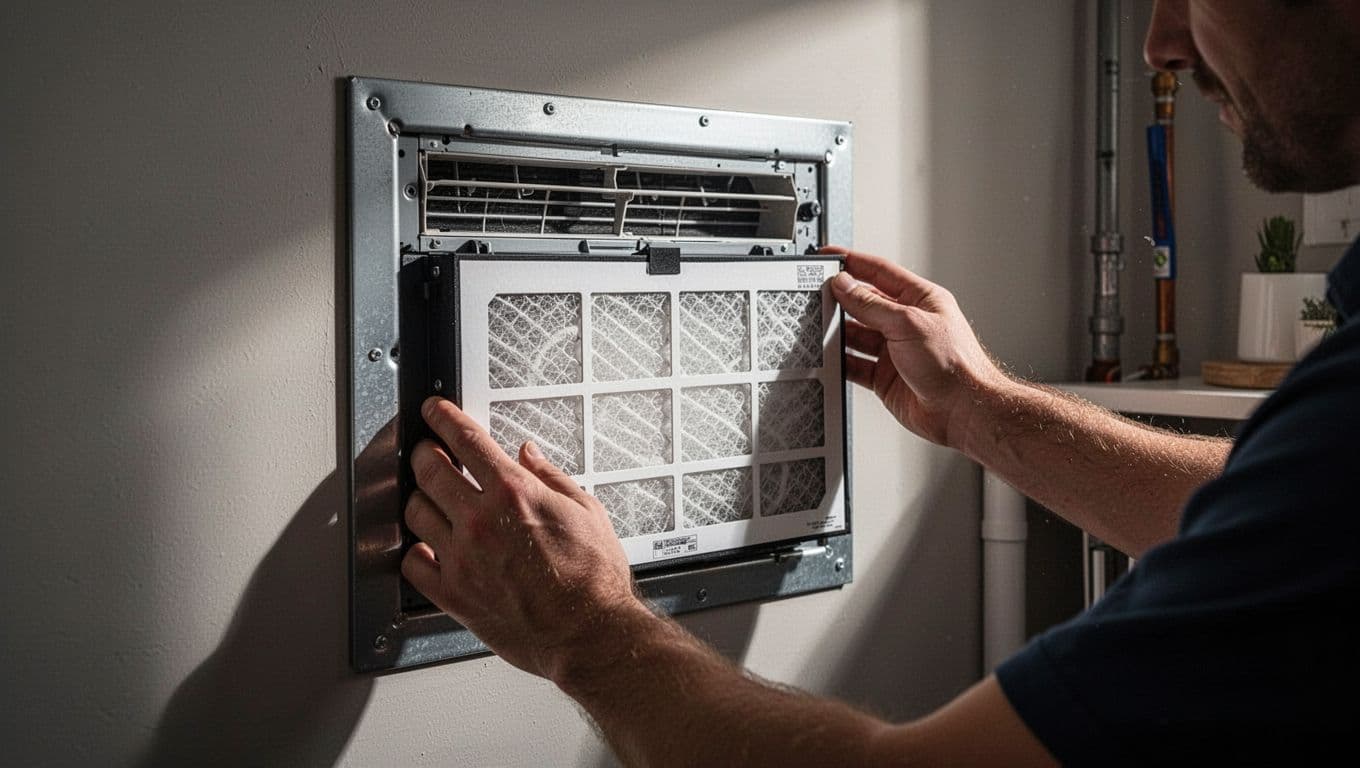
- Match the exact filter size and use the thickest cabinet your system supports.
- Install the new filter and watch airflow, noise, and room comfort for a few days.
- If rooms feel stuffy, the blower sounds strained, or cooling slows down, step back to a lower MERV or call an HVAC pro.
- Ask for a static pressure check if the system is older or already has airflow issues.
For many homes, MERV 8 to MERV 11 is a better fit than MERV 13. That is not a rule for every system, but it is a common middle ground when airflow is more important than maximum filtration.
An HVAC professional can measure pressure, check the blower, look at the coil, and tell you whether the filter is the real problem. That kind of check matters more than guessing based on the number printed on the package.
If your system feels weak after a filter change, Get a Free Estimate and ask for an airflow-focused opinion.
Conclusion
A MERV 13 filter can restrict an older AC system, but only when the blower, ducts, or filter housing cannot handle the extra resistance. The number on the filter is not the full answer.
The best choice comes from the whole setup, including system design, blower strength, duct condition, and filter thickness. If airflow drops, rooms cool unevenly, or the system sounds strained, treat that as a real warning sign.
A MERV 13 filter AC setup can work well, but only when the equipment is ready for it. When in doubt, check the manufacturer's guidance and get the system looked at before comfort problems get worse.