Dryer Vent Cleaning Florida Rentals Can't Skip
A back-to-back booking schedule can turn one household dryer into a commercial-level workload. For owners and managers, a clear dryer vent cleaning Florida plan helps control lint buildup, protect drying performance, and reduce avoidable fire risk.
Guests rarely report a vent problem until towels take two cycles or the laundry room feels unusually hot. Because turnover crews work under time pressure, each property needs a repeatable inspection routine, a professional service interval, and records that show what was checked.
Why vacation rentals need a tighter dryer vent cleaning Florida schedule
The dryer may be a standard residential appliance, but a vacation rental can run it several times between guest departures and arrivals. Towels, sheets, blankets, and beach clothing all add to the workload.
Guest turnover increases lint exposure
A full changeover may involve several loads in a short period. When bookings run back to back, the dryer gets less time between cycles, while lint accumulates in places a quick filter wipe won't reach.
Guests also use appliances differently. Some overload the drum, leave the lint screen dirty, or dry items that shed heavily. Housekeepers may catch these problems, but a rushed cleaning window makes missed checks more likely.
The U.S. Fire Administration recommends cleaning the lint filter before and after every cycle. It also advises removing lint from behind the dryer and checking the vent system for damage, crushing, or restrictions.
Florida conditions can reveal weak venting
Florida's heat and humidity add moisture to the air around the home. A dryer vent should send hot, moist air outdoors, so a long, restricted, or poorly routed exhaust line can leave more moisture inside the laundry area.
Some rental homes also have dryers located far from an exterior wall. Long runs, multiple bends, crushed transition ducts, and blocked exterior covers all reduce airflow. Humidity doesn't create a fixed cleaning deadline, but it makes proper exhaust and moisture control more important.
A clean lint screen doesn't prove the entire vent is clear. Lint can collect behind the appliance, inside the exhaust duct, or at the outdoor termination.
How often should you schedule dryer vent cleaning?
A practical dryer vent cleaning Florida schedule starts with annual professional service, then adjusts for laundry volume and warning signs. The U.S. Fire Administration and National Park Service both use yearly vent and exhaust duct cleaning as a common safety benchmark.
The International Fire Code and NFPA 1 also focus on maintaining the lint trap, heating components, mechanical parts, and exhaust duct according to the manufacturer's instructions. Florida owners should check the dryer manual, local requirements, and the property's insurance policy before setting a final interval.
Use annual service as the starting point
Schedule a professional inspection and cleaning at least once a year for a vacation rental with regular guest use. This interval gives the owner a documented baseline and creates a predictable maintenance date.
Move the appointment earlier when the vent has a long run, the dryer serves several bedrooms, or the home experiences frequent bookings. A recently installed dryer also deserves an early check if the installation route or exterior termination is uncertain.
The annual appointment should cover more than the lint screen. It should address the exhaust path, the transition connection, the outdoor cover, and visible duct condition.
Move to six-month reviews for heavy use
Semiannual service can make sense for properties with daily laundry, large guest capacity, or frequent same-day turnovers. The USFA advises more frequent cleaning when drying times increase or the dryer receives heavy use.
A six-month schedule is a management choice, not a blanket Florida-wide legal deadline. Set it based on actual loads, the duct layout, previous lint buildup, and the technician's findings.
Book service sooner after a vent repair, appliance replacement, renovation, pest nest, or report of burning odor. A change in performance is a reason to inspect the system rather than wait for the next calendar appointment.
Turnover checklist for housekeeping and managers
A simple checklist keeps daily care separate from professional vent cleaning. Housekeeping staff can handle visible checks, while trained technicians should handle duct access, disassembly, and airflow testing.
What housekeeping should check after each stay
Before the next guest arrives, the person responsible for laundry should:
- Clean the lint screen after the final load and before the next cycle.
- Remove visible lint around the screen housing, door, and accessible rear area.
- Check whether clothing dried within its usual cycle time.
- Look for unusual heat, burning smells, rattling, or damp laundry.
- Confirm that the outside vent cover opens while the dryer runs, when the termination is safely visible.
- Keep the dryer area clear of boxes, towels, cleaning chemicals, and other stored items.
Staff shouldn't reach behind a gas dryer or disconnect ductwork without proper training. If the exterior cover is on a roof, high wall, or unsafe location, add the check to the professional inspection instead.
The dryer should never run without its lint filter. Staff should also avoid overloading it and shouldn't leave it running when leaving the property or going to bed.
What managers should inspect between visits
Property managers can add a monthly review to the maintenance calendar. Look for a crushed hose, loose connection, gaps, excessive bends, or foil and plastic ducting that needs evaluation.
Dryer exhaust should terminate outdoors, not in an attic, soffit, crawl space, or wall cavity. Hot, moist air and lint in those areas can create moisture damage and increase fire concerns. Use rigid or flexible metal venting where the manufacturer's instructions and local code require it.
A manager doesn't need to diagnose the system. Photos and a short note about any concern are enough to create a service request before the next turnover.
What professional dryer vent cleaning includes
When comparing dryer vent cleaning Florida providers, ask what the quoted service covers. A focused dryer vent visit is different from cleaning HVAC ductwork, registers, or air handlers.
Inspection comes before the equipment
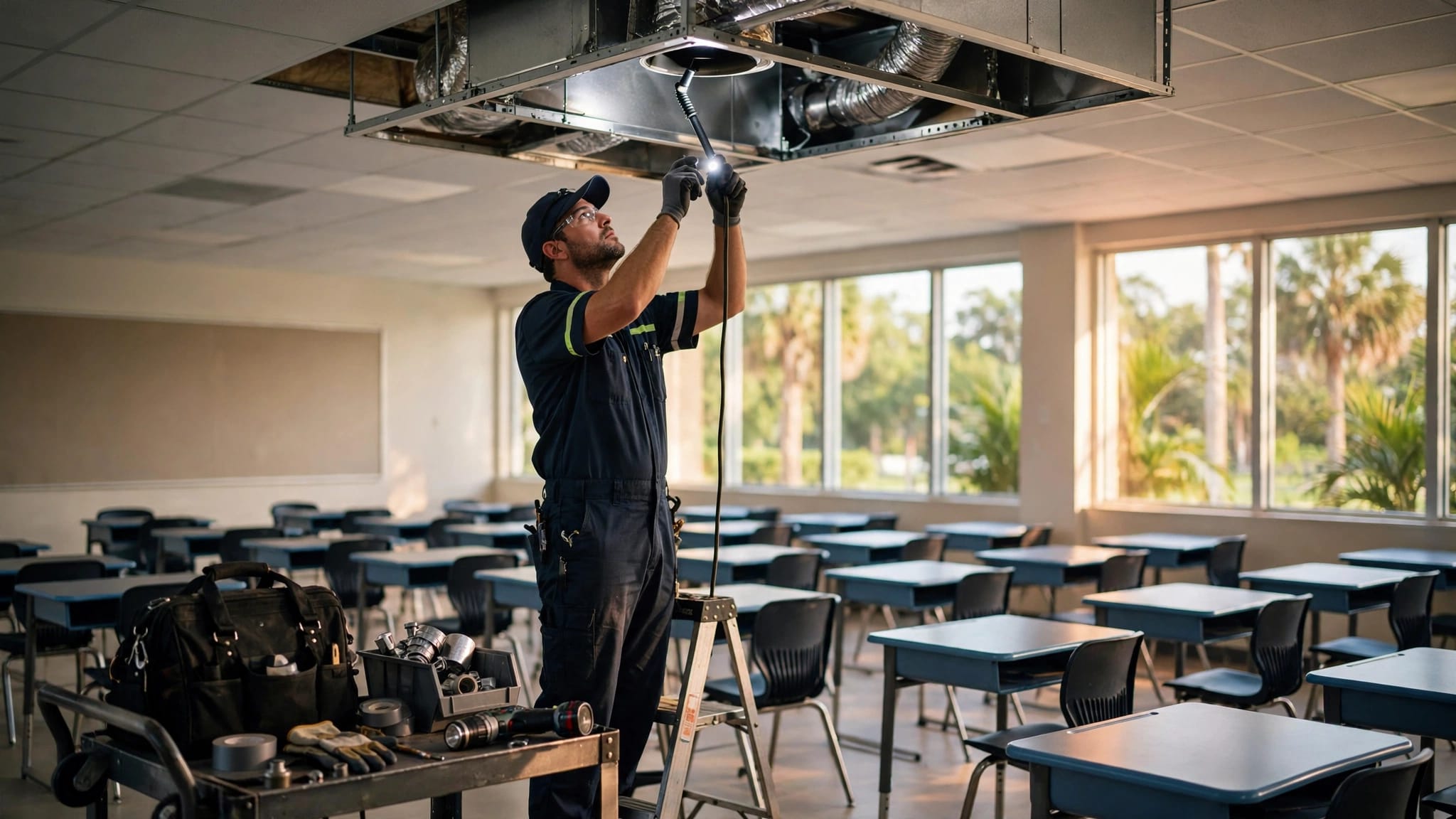
A technician should identify the dryer type, inspect the transition duct, check accessible connections, and locate the exterior termination. The inspection should also look for crushed sections, disconnected joints, excessive length, blocked covers, and unsafe access conditions.
The provider may ask about drying times and past repairs. Those details help identify whether the problem is lint buildup, a routing defect, appliance failure, or more than one issue.
For properties in southwest Florida, Fort Myers air duct and dryer vent cleaning can be scheduled as separate services when the home needs both types of maintenance.
Cleaning should cover the full exhaust path
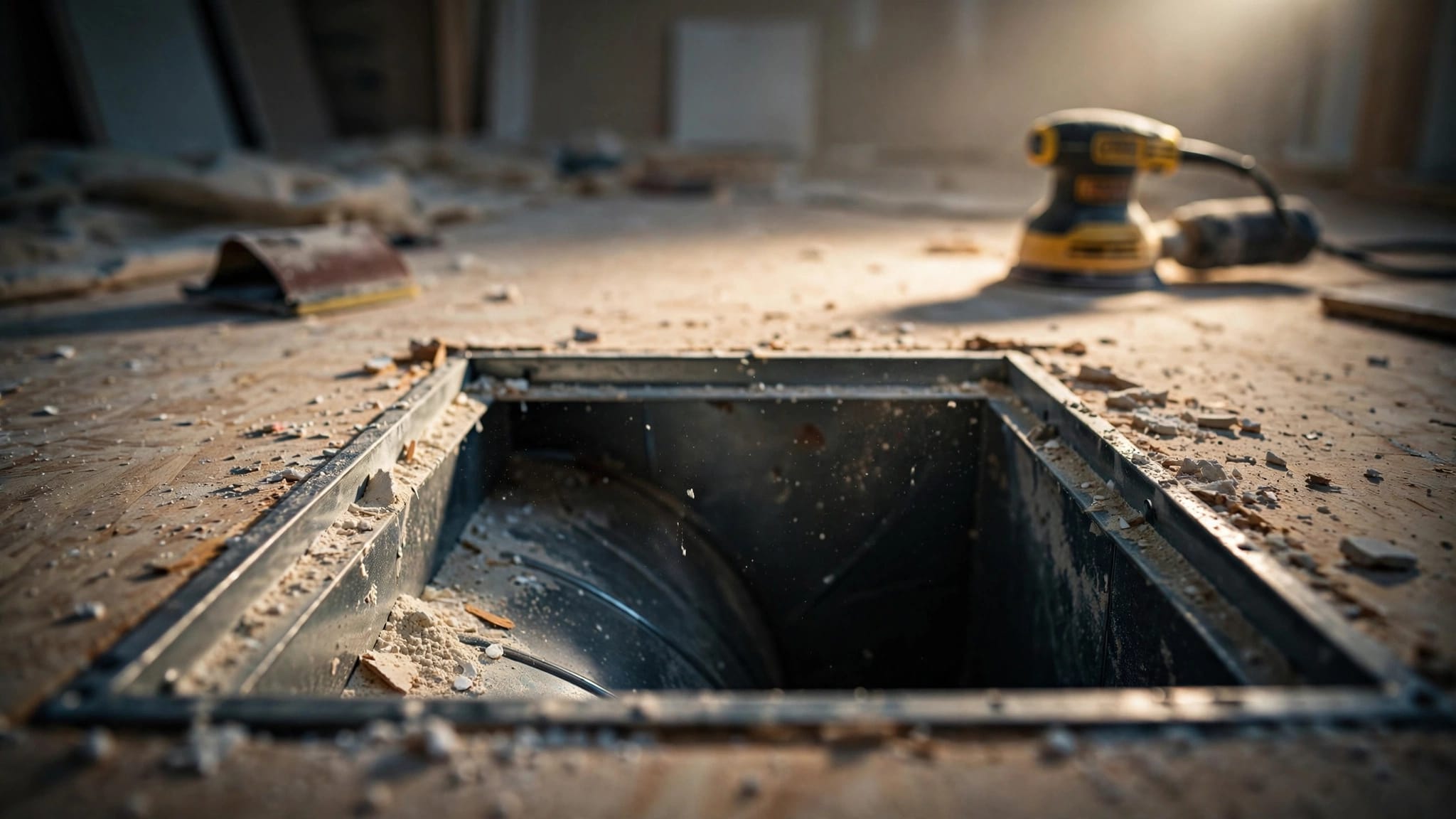
Depending on the layout, a technician may use a commercial vacuum, rotary brush system, air tools, or a combination of methods. The goal is to remove lint and debris from the accessible exhaust line, not push it farther into the duct.
The technician should protect the laundry area, clean around the dryer connection, inspect the exterior outlet, and reassemble the system correctly. An airflow check after cleaning can help confirm that the vent is exhausting properly.
Cleaning won't correct every problem. Damaged ductwork, a poor termination, an undersized route, or a failing dryer may need separate repairs.
Warning signs that call for service now
A dryer doesn't need to stop working before it needs attention. Small performance changes often appear first, especially in a rental where several people use the appliance between professional visits.
Drying performance gives early clues
Schedule an inspection when loads take longer than usual, clothing remains damp after a normal cycle, or the dryer needs two cycles for towels that previously dried once.
Other clues include weak airflow at the outside cover, lint collecting around the termination, or a laundry room that feels hotter than normal. These signs can point to a restricted exhaust path, although appliance problems can cause similar symptoms.
Don't respond by raising the heat or running additional cycles. That increases use while leaving the underlying restriction in place.
Heat, odor, and damage require a quick response
Stop using the dryer and arrange service if you notice a burning smell, a hot cabinet, scorch marks, melted material, or a transition hose that has collapsed. If you see smoke or an active fire, leave the property and call 911.
A vent cover that stays closed during operation also needs attention. Birds, insects, leaves, and outdoor debris can block the opening. Never remove a cover from an unsafe height without the right equipment.
Scheduling and documenting work across bookings
Maintenance is easier when it fits the rental calendar. A missed appointment can become a recurring problem during peak season, when every blocked date affects revenue and guest satisfaction.
Attach service to the booking calendar
Choose an owner-use date, a planned vacancy, or a slower turnover period. Add the next due date to the same system used for HVAC filters, smoke alarm checks, pest control, and other property tasks.
Keep the schedule tied to the unit, not only to the current manager. Ownership changes, cleaner changes, and software changes can otherwise erase the maintenance history.
A recurring reminder should include the last cleaning date, the recommended next visit, and any follow-up repair. For Gulf Coast properties, owners who want a local quote can Get a Free Estimate with the address, dryer location, and known access details.
Keep records that show preventive care
Save the invoice, service date, property address, technician or company name, and a short description of the work. Ask for notes on lint buildup, duct condition, exterior termination, airflow, and recommended repairs.
Photos can add useful context. Keep before-and-after images of accessible connections or the outdoor cover, especially when a technician finds damage or a routing concern.
Insurance policies may request maintenance records, and local rules or condo requirements can vary. A service file won't replace coverage or compliance, but it gives the owner clear evidence of routine care. Keep the dryer make and model, the operating manual, receipts, and repair records with the property file.
Conclusion
Vacation rentals place more demand on dryers because guest laundry happens often and under tight turnover deadlines. Annual professional cleaning is a sensible baseline, while heavy-use homes may need service every six months or sooner when drying performance changes.
Daily lint removal, safe operation, clear exhaust routing, and complete records protect the property better than a calendar reminder alone. A consistent dryer vent cleaning Florida plan helps turn an overlooked appliance task into a visible part of responsible rental maintenance.