Library HVAC Duct Cleaning: Protect Books During Dust Removal
Dust removal from HVAC ducts can disturb settled debris, so library work needs a plan that protects collections as well as the building. Library HVAC duct cleaning focuses on the air-distribution system, not on removing dust from books. The safest approach is to define the work area, control airflow and debris, and bring in a qualified conservator when collection materials may be at risk.
A clear scope also helps staff distinguish necessary duct work from direct book cleaning. Start by assessing the building, the collection's location, and the condition of the system.
Key Takeaways
- Duct cleaning removes loose debris from accessible HVAC components; it doesn't clean books or guarantee that all airborne dust disappears.
- Plan the work with facilities staff, the cleaning crew, and collection-care staff before equipment arrives.
- Separate the work zone from collection areas where practical, and agree on how HVAC operation and airflow will be managed.
- Keep negative pressure and collection equipment in place while technicians loosen duct debris.
- Ask a qualified conservator to guide decisions when rare, fragile, damaged, or contaminated materials could be affected.
Why Dust Control Matters in a Library
Dust can settle on exposed books, shelving, exhibits, and equipment. During duct work, technicians may loosen material inside ducts so a vacuum system can collect it. Poorly controlled work can allow some dust to escape through openings or into nearby rooms.
A library may also have areas with different levels of sensitivity. A public reading room, a local-history collection, and a closed archive may need different access and protection plans. Staff should identify these areas before selecting the work schedule or cleaning approach.
Duct cleaning can collect settled dust and loose debris inside accessible parts of the HVAC system. It does not remove every airborne particle, nor does it replace regular surface cleaning or collection-care practices. The work should address a documented need, such as visible debris in the system, rather than assuming that all buildings require the same service.
Plan the Work Before the Crew Arrives
Advance planning lets the library identify which rooms, collections, and systems could be affected. It also gives the cleaning team time to explain access points, equipment locations, and the proposed method.
Map the system and nearby collections
Facilities staff should help identify the air handlers, supply registers, return grilles, and accessible duct routes. Then note which areas hold valuable or vulnerable materials, including open shelving, display cases, archives, and processing spaces.
Discuss how technicians will move between locations and where they'll place hoses or collection equipment. The work may involve multiple rooms, so a plan should cover each access point, not only the first room where tools enter.
Agree on timing and responsibilities
Schedule work when the affected spaces can be closed or used less, if the building's operations allow. Coordinate with library staff responsible for collections and building systems, and make clear who can authorize changes if an unexpected condition appears.
Before work begins, agree on when HVAC equipment will be off or running, which areas require protection, and who will inspect the site afterward. If the collection includes fragile or high-value materials, consult a qualified conservator before deciding how to protect or move them.
Isolate the Work Area and Manage Airflow
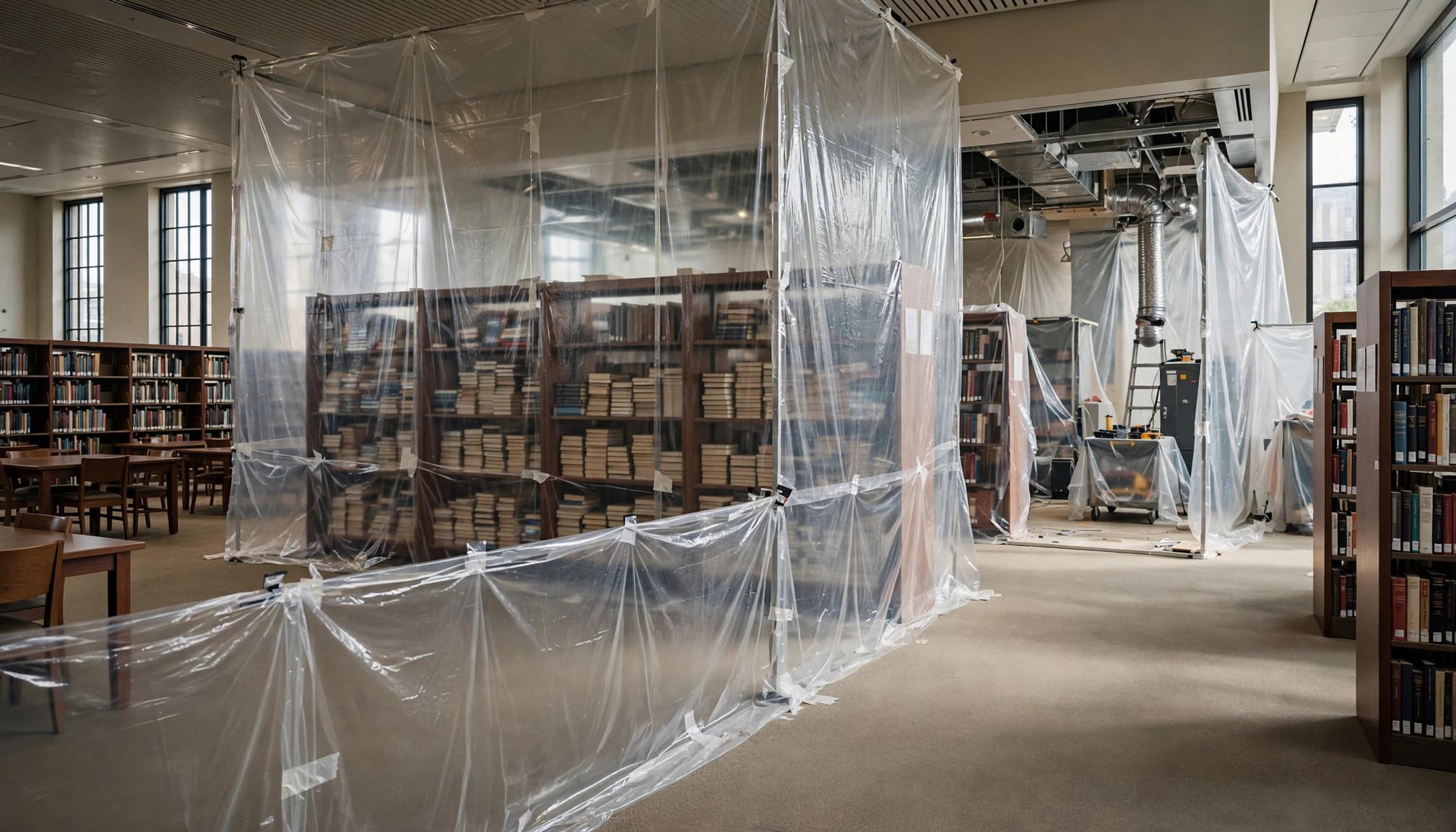
A physical boundary can help separate duct work from nearby collections. The appropriate method depends on room layout, airflow, and the items present, so the library's facilities and collection-care staff should set the plan. Keep pathways and required ventilation clear.
Protect nearby surfaces and materials
Where practical, move movable books and objects away from the immediate work zone. Cover or isolate shelves and equipment that can't be relocated, using a method approved by staff responsible for the collection. Avoid placing protective materials directly against delicate objects unless a conservator has approved that approach.
Protect floors and furnishings near access points as well. Hoses, tools, and removed grilles can create contact and trip hazards, so keep the route orderly and limit unnecessary traffic through collection areas.
Decide how HVAC operation will be controlled
Discuss system shutdowns, zone controls, and room access before work starts. Keeping equipment off during some work may limit air movement, but building needs and the specific cleaning setup matter. Don't make a blanket decision without coordinating with facilities staff.
If a work area can't be separated from sensitive collections, reconsider the timing or sequence. A conservator can help staff assess whether materials should be moved, protected in place, or kept out of the area until work is complete.
Control Dust at the HVAC Source
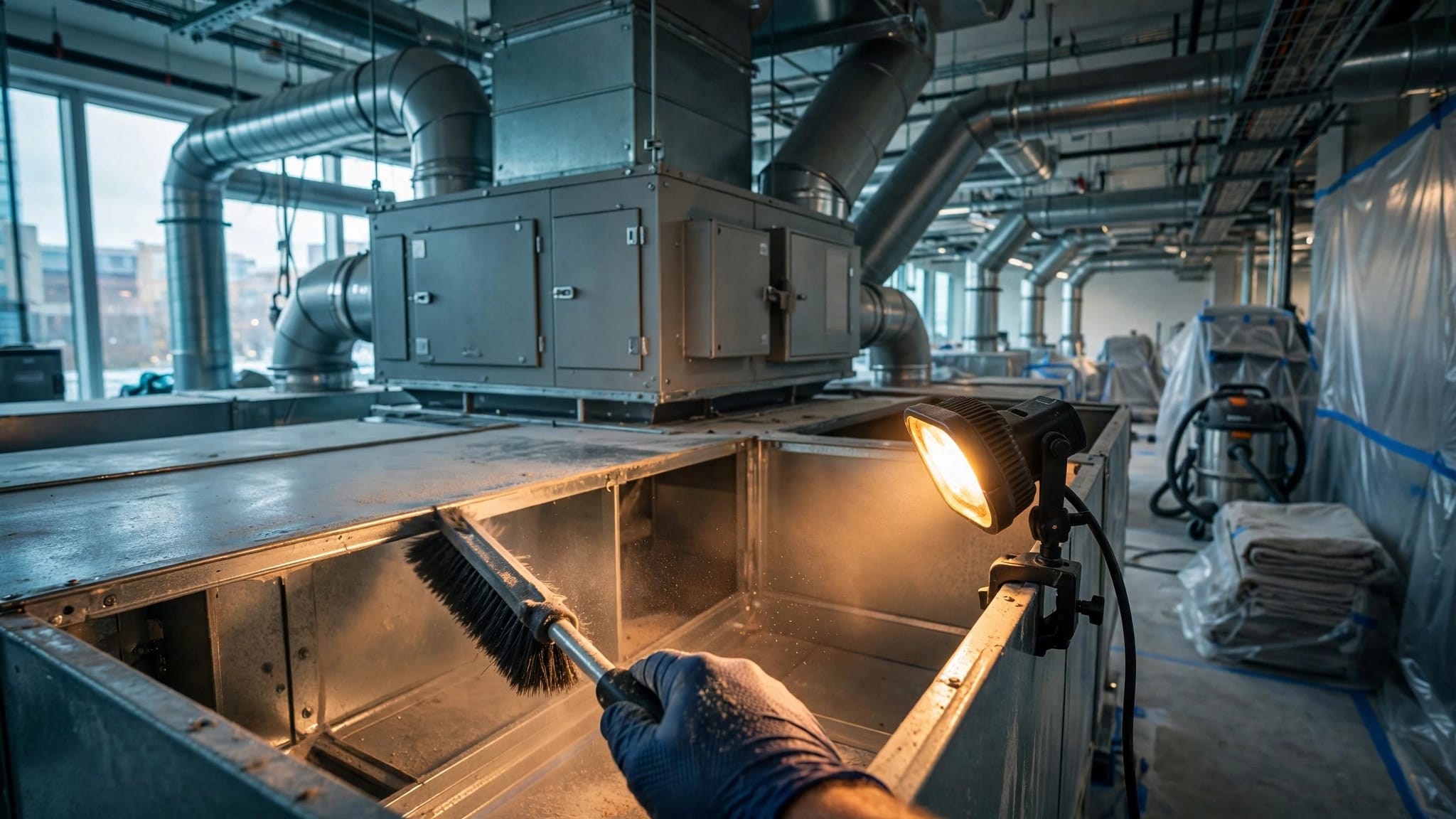
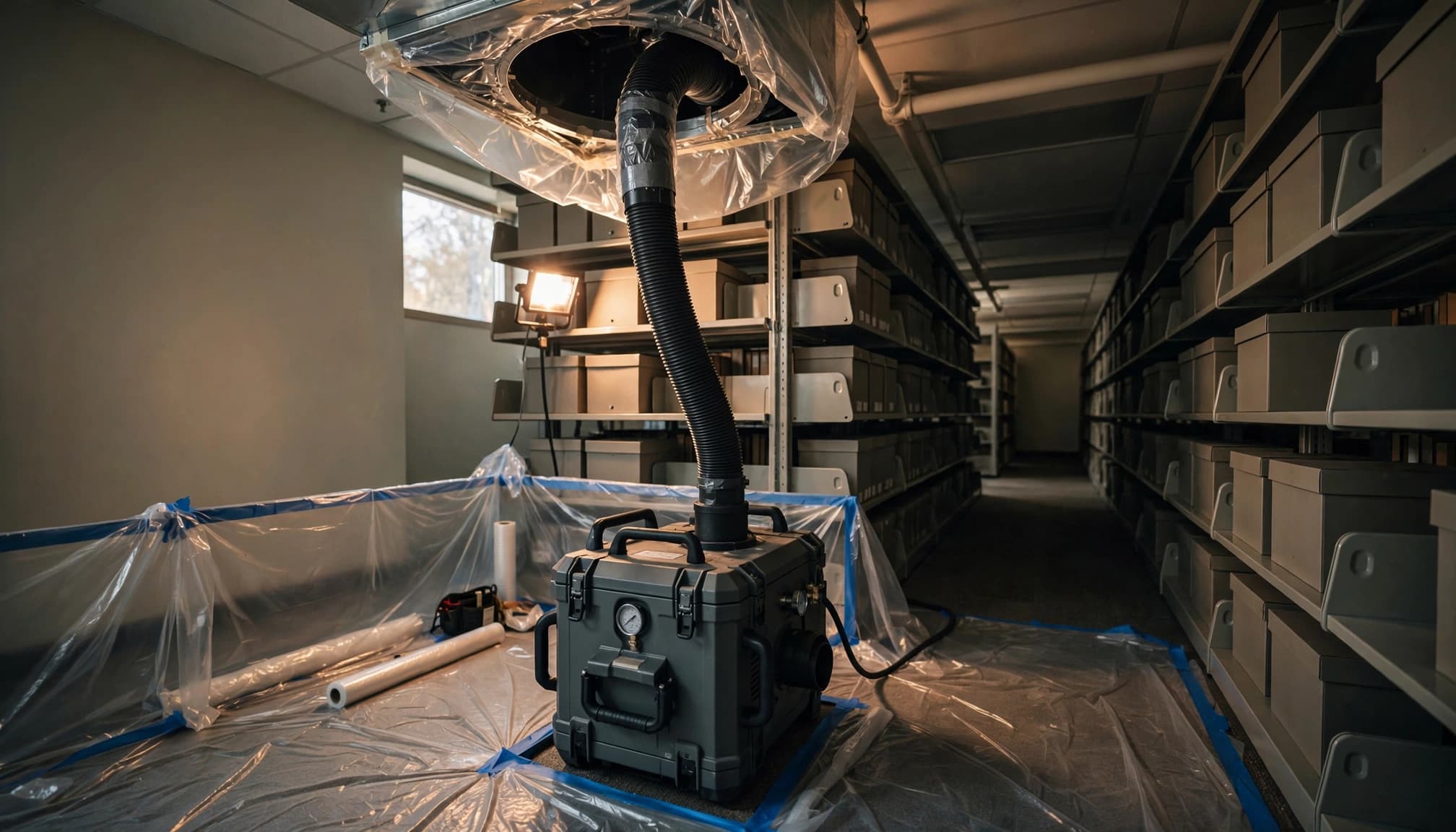
Professional duct cleaning uses agitation to loosen settled debris and negative pressure to draw it toward a collection system. That suction helps direct the debris into the equipment rather than back into occupied rooms. For more on the method, see how negative-pressure duct cleaning works.
Keep collection connected during agitation
The vacuum should remain connected while technicians loosen debris inside the duct section being cleaned. The crew should explain how it will access the duct and contain debris at each service opening. A household vacuum or a quick pass over visible vent covers is not equivalent to cleaning the full accessible system.
Technicians should also use a method suited to the duct's construction and condition. The scope and access determine what can be reached. Fragile or damaged sections may require a different response than routine dust removal.
Define what the service includes
Ask for a clear description of the areas included, such as supply and return ducts, accessible plenums, connections, registers, and grilles. Some air-handler components may be included only when specified; coils, drain pans, or internal cabinets can require separate access and service.
Cleaning a register cover alone is different from cleaning the connected duct system. Read about the difference between vent and full-system cleaning when setting expectations for the work.
Keep Duct Cleaning Separate From Book Cleaning
HVAC cleaning and direct collection cleaning are different jobs. A duct-cleaning crew works on the air-distribution system. Cleaning dust from book covers, page edges, bindings, or shelving requires a separate decision based on the materials and their condition.
Don't treat every book the same
A sturdy, modern book and a brittle volume with a damaged binding may not tolerate the same handling. Staff should follow the library's collection-care procedures for routine items. When objects are rare, fragile, mold-affected, or otherwise compromised, consult a qualified conservator before cleaning or moving them.
Avoid asking duct technicians to dust collections as part of the HVAC service. Their work scope and equipment are designed for the duct system, not for handling collection materials.
Address visible dust after the source work
Once the duct work is complete and the area is ready to reopen, collection staff can assess whether dust settled on nearby surfaces. Follow the library's established cleaning procedures, and keep vulnerable materials out of routine cleaning until a conservator advises on suitable handling.
Duct cleaning can remove settled material from accessible ducts, but it can't guarantee that books or rooms will remain dust-free. Dust also comes from ordinary use and other building activities. For more context on the service limits, see what air duct cleaning can remove.
Inspect the Site Before Reopening
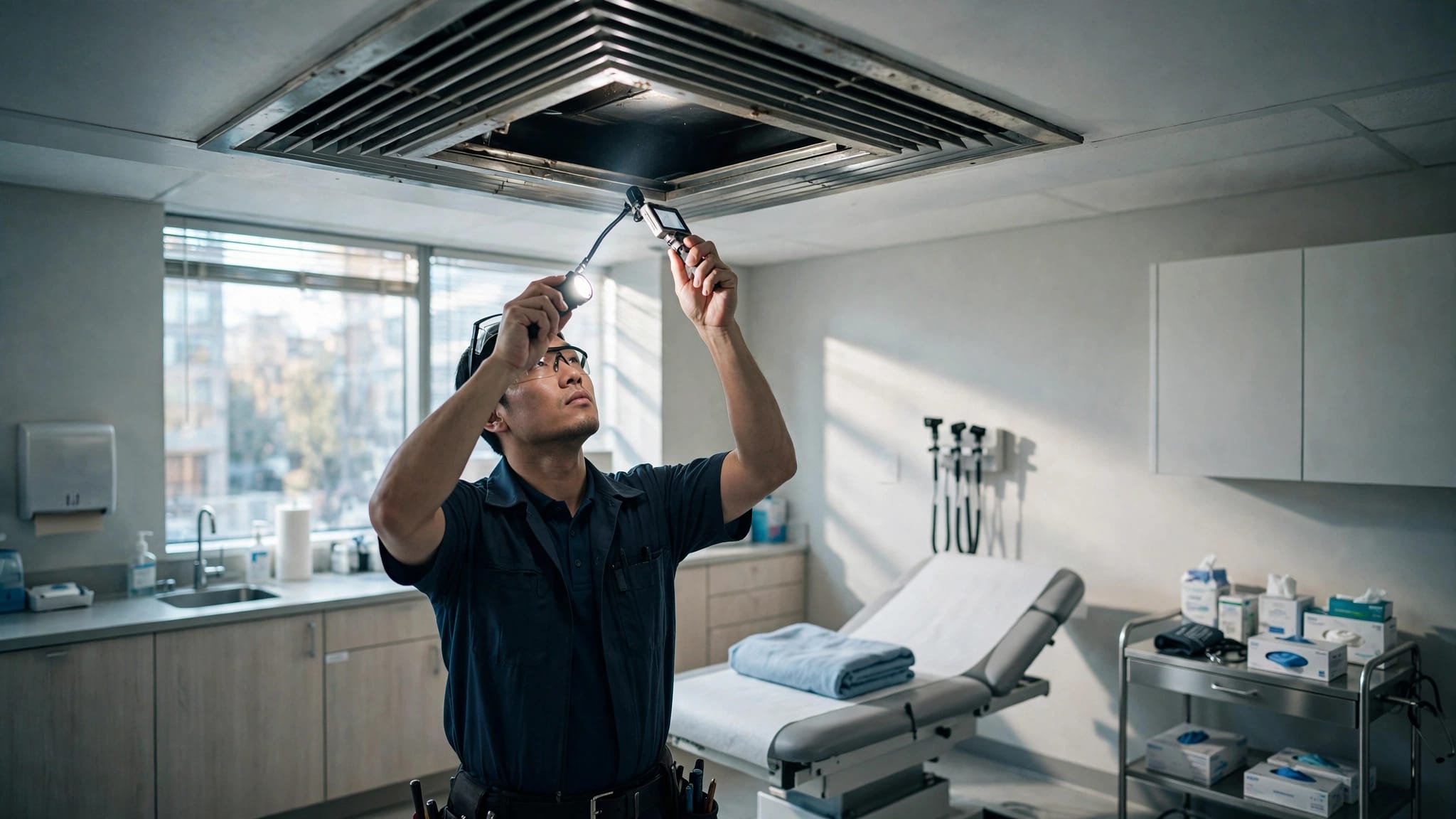
A walk-through gives staff a chance to spot loose coverings, dust around access points, or equipment that needs attention. Facilities staff and the cleaning crew should review the work area together before the library returns it to normal use.
Check access points and surrounding areas
Look at the areas where technicians opened or accessed ducts, along with nearby floors, shelves, and equipment. Confirm that grilles and access panels are back in place and that protective materials have been removed without disturbing the collection.
If dust is visible on books or sensitive objects, pause routine handling and consult collection-care staff. A conservator can guide the response when materials may be damaged by ordinary cleaning.
Record findings for the next service
Keep a short record of the areas cleaned, any inaccessible sections, and any issues identified during the work. Photos of service access points or visible conditions can help facilities staff compare future inspections.
The record can also help the library plan later work around the collection, instead of repeating an unsuitable schedule or assuming that every HVAC component was included.
Frequently Asked Questions
Does duct cleaning remove dust from books?
No. Duct cleaning targets loose debris inside accessible HVAC components. Dust on books and shelves needs a separate response under the library's collection-care plan.
Should the HVAC system run during dust removal?
That depends on the system, the work area, and the building's needs. Facilities staff and the cleaning crew should agree on equipment operation and airflow controls before work starts.
Is cleaning only the vents enough?
Cleaning visible grilles or register covers does not provide the same coverage as cleaning connected supply and return ducts. The service scope should identify what the crew can access and what the work includes.
When should a conservator be involved?
Consult a qualified conservator when materials are rare, fragile, damaged, or affected by suspected contamination, or when staff aren't sure how to protect or clean them. Collection preservation decisions should not be folded into a routine duct-cleaning task.
Protect the Collection by Planning the Whole Job
Library HVAC duct cleaning works best as a coordinated facilities project. A defined scope, practical separation of work areas, and controlled debris collection help reduce avoidable dust movement while technicians clean accessible ductwork.
Books need their own care plan. When vulnerable collections may be exposed, involve a qualified conservator before work begins, then inspect the area before reopening it. For a commercial air duct cleaning estimate in our Florida service area, Get a Free Estimate.