Mastic vs Foil Tape for Sealing HVAC Duct Leaks

Adkins Duct Cleaning • July 6, 2026

A good duct sealant comparison starts with one simple fact, cloth duct tape is not built for permanent HVAC sealing. When ducts leak, you lose conditioned air, pull in dust from attics or crawlspaces, and make the system work harder than it should.

The real choice is between mastic, UL 181 foil tape, and foil-backed mastic tape. The right one depends on the size of the leak, the surface you're sealing, and how long you need the repair to hold.

Key Takeaways

  • Standard cloth duct tape is a poor long-term fix for HVAC ducts.
  • Mastic is the strongest choice for irregular gaps, joints, and durable repairs.
  • UL 181 foil tape works well on small seams, clean metal, and tight spaces.
  • Foil-backed mastic tape can be useful for quick repairs, but it is still limited on larger gaps.
  • Clean prep matters as much as the product you choose.

Why cloth duct tape keeps failing in HVAC work

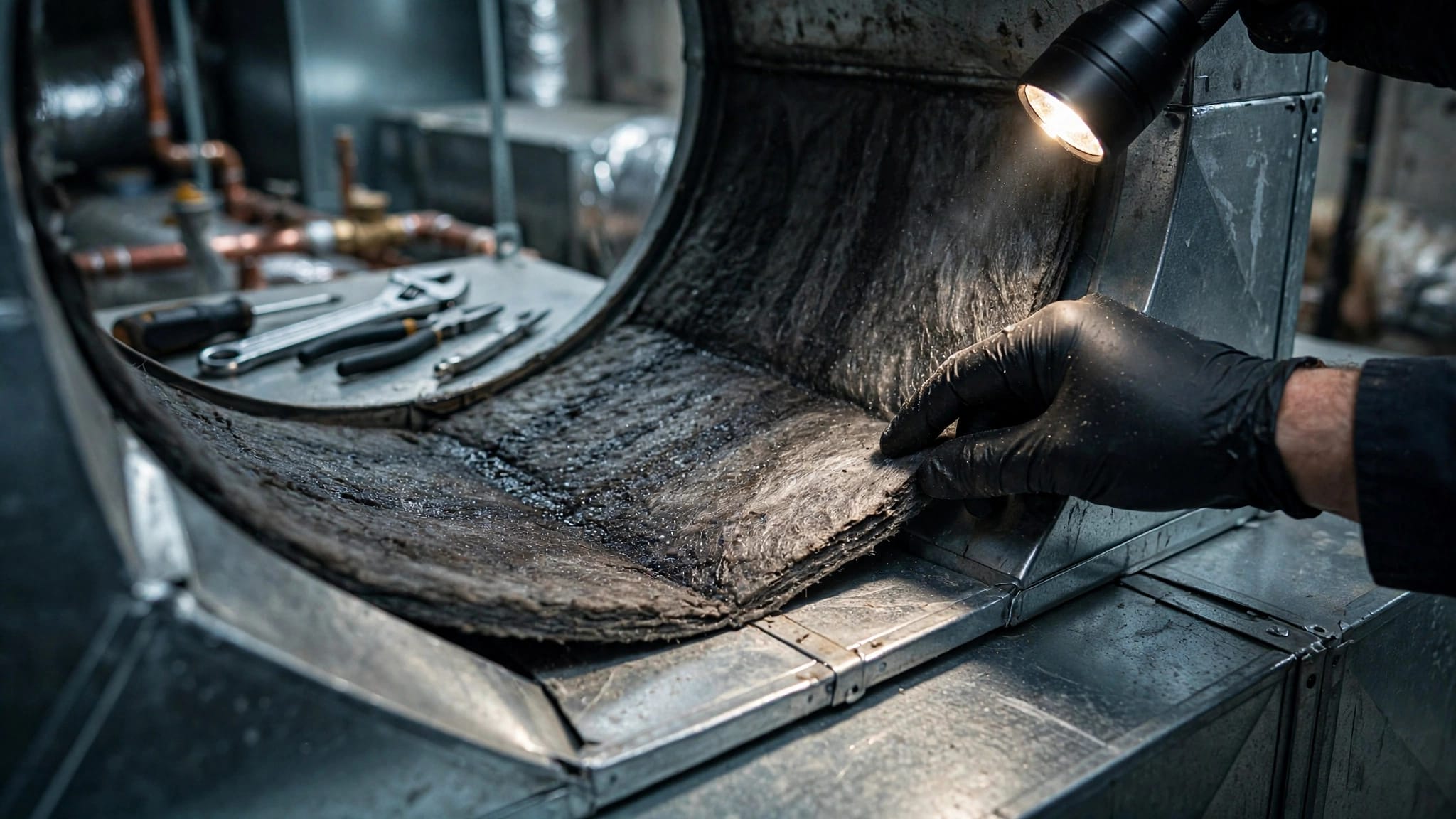
Cloth-backed duct tape gets its name from general household use, not from long-term duct sealing. Heat, humidity, dust, and constant expansion and contraction all work against it. Over time, the adhesive dries out, the edges lift, and the backing starts to curl.

That is why a repair can look fine on day one and fail months later. In a Florida attic, that timeline can be even shorter.

A seal that depends on sticky cloth rarely survives a hot attic or a damp crawlspace.

Mastic and UL 181-rated foil tape are made for this job. They bond better to HVAC surfaces and handle the temperature swings that happen every day when the system cycles on and off.

Mastic, foil tape, and foil-backed mastic tape compared

Each product has a place, but they do very different jobs.

Option Best use Strengths Limits
Mastic Irregular gaps, joints, seams, accessible duct work Flexible, durable, fills odd shapes well Needs a clean surface and some drying time
UL 181 foil tape Small seams, straight metal joints, hard-to-reach spots Neat, fast, and durable when applied to clean surfaces Poor choice for wide gaps or rough surfaces
Foil-backed mastic tape Small repairs where you want extra grip and easier handling Stronger than basic tape, quick to apply Still not a substitute for mastic on larger openings
Cloth duct tape Temporary, non-HVAC uses Cheap and familiar Fails as a long-term duct seal

Mastic is usually the strongest long-term option because it conforms to the shape of the leak. Foil tape is cleaner and faster on smooth seams. Foil-backed mastic tape sits in the middle, which can help on smaller repairs where you want more bite than plain foil tape.

The takeaway is simple, use mastic for shape , foil tape for neat seams , and skip cloth duct tape for any repair you expect to last.

Which sealant fits the leak in front of you

Small seams on clean metal

For tight seams on sheet metal, UL 181 foil tape is often the best fit. It lays flat, it presses down cleanly, and it is easy to apply in a narrow space where a brush and bucket of mastic would be awkward.

The surface has to be clean. Dust, oil, and old adhesive keep the tape from bonding. Press it firmly, then smooth it from the center outward so air pockets do not stay trapped under the edges.

Foil tape works best on straight, small gaps. If the joint is jagged or wider than a thin seam, move to mastic.

Irregular gaps and leaky joints

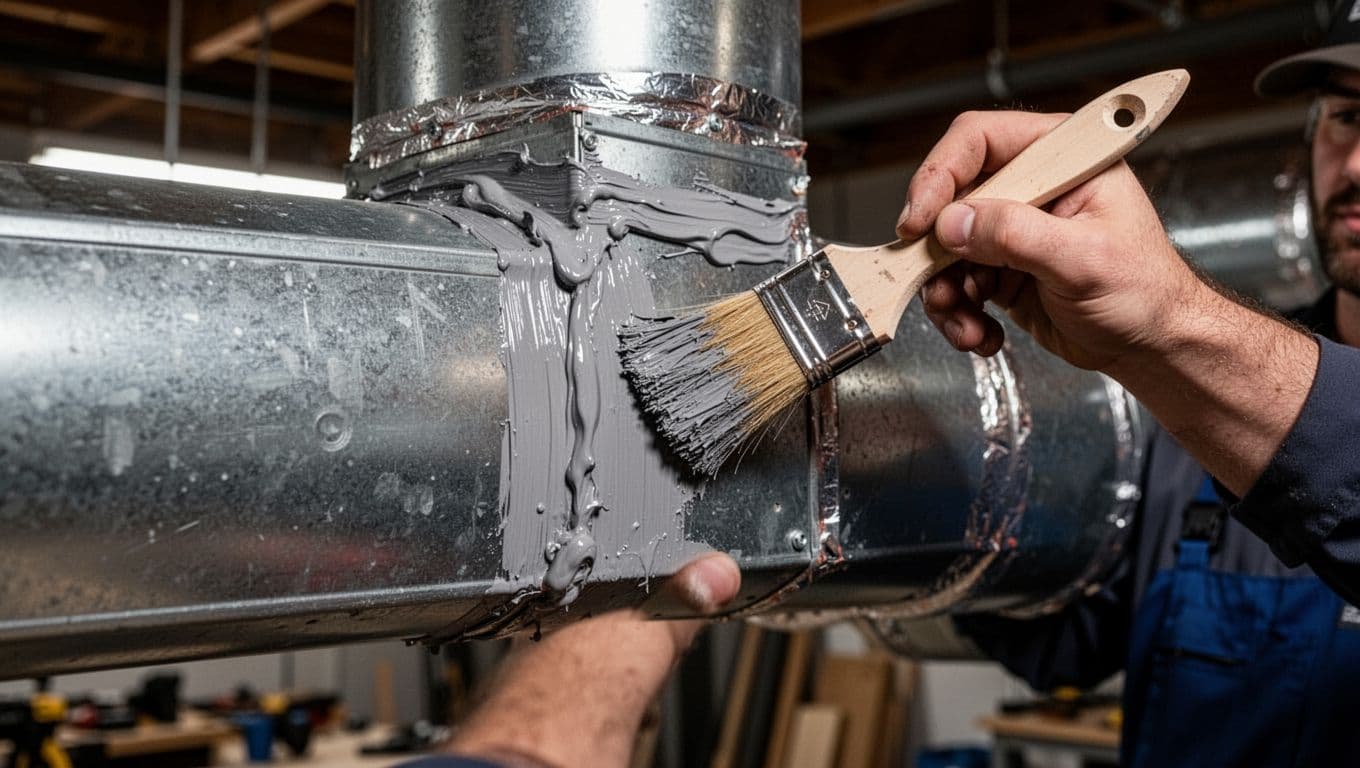
Mastic is the better choice for messy joints, uneven seams, and places where the duct surface is not perfect. It is thick enough to fill small voids and flexible enough to handle vibration and normal movement.

For larger gaps, a layer of fiberglass mesh under the first coat can help the mastic bridge the opening. That matters on older ductwork, boots, and joints that have shifted over time.

This is where mastic earns its reputation. It does not depend on a perfectly smooth surface the way tape does, so it handles real-world ductwork better.

Hard-to-reach areas and quick repairs

Foil tape and foil-backed mastic tape can make sense in tight spaces because they go on faster. That matters in cramped attic runs, behind equipment, or around short accessible sections where a brush-on seal would be messy.

Still, speed should not be the only goal. If the surface is dusty or the opening is irregular, a fast tape repair may hold for a while but fail early. In those cases, the better fix may be to open the area, clean it properly, and use mastic instead.

If the leak sits in a spot you cannot reach well, the most durable option is the one you can apply correctly, not the one that looks easiest in the moment.

Prep and application steps that make the seal last

A strong seal starts before the first strip of tape or brush of mastic goes on. If the surface is dirty, the repair will struggle from the start.

  1. Remove old cloth tape, loose foil tape, and flaky residue.
  2. Wipe away dust, grease, and loose debris from the duct surface.
  3. Make sure the metal or duct jacket is dry.
  4. Close the seam fully before sealing it, so the material bridges the joint instead of floating over it.
  5. Apply the sealant evenly, then press or smooth it so it bonds well at the edges.
  6. Check the repair after the system runs, because airflow and vibration can expose weak spots fast.

If the opening is larger than a small seam, do not rely on tape alone. A patch or proper repair may be needed before any sealant goes on.

Common failure points to watch for

Even the right product can fail when the basics get skipped. The most common problems are predictable.

  • Dusty surfaces that stop the adhesive from bonding
  • Old cloth tape left underneath the new repair
  • Wide gaps covered with tape instead of patched first
  • Mastic applied too thin to cover the joint fully
  • Tape pressed on loosely, with air pockets at the edges
  • Repairs made on damaged flex duct without addressing the tear itself

If a seal peels at the corners or lifts after a few days, the problem usually started with prep, not with the product label. The best duct sealant still needs a clean surface and solid contact.

If you're trying to budget repair work and cleaning together, the breakdown in how much air duct cleaning costs in Florida in 2026 gives a useful starting point. When the leak is widespread or the ducts are hard to reach, Get a Free Estimate before the damage spreads.

Conclusion

For most HVAC leaks, mastic is the most forgiving and durable choice. It handles irregular gaps, older joints, and repairs that need to last through heat, humidity, and daily system cycles.

UL 181 foil tape still has a place. It works well on small, clean seams and tight spots where a neat repair matters. Foil-backed mastic tape can help with quick, smaller fixes, but it does not replace the strength of a proper mastic seal.

Cloth duct tape belongs in the temporary fix category, not the long-term solution category. If a repair has to survive the season, choose the material that matches the leak, not the one that happened to be in the toolbox.

By Adkins Duct Cleaning July 5, 2026
Florida attics punish ductwork. Heat builds fast, humidity hangs around, and your system runs longer to keep up. That makes the choice between flex duct vs sheet metal important, but the install matters just as much. If you're comparing materials for a hot attic, focus on airf...
By Adkins Duct Cleaning July 4, 2026
A smart thermostat in Florida can help, but the wrong settings can make a humid house feel worse. If your rooms feel sticky, the air smells stale, or the temperature seems fine while comfort still feels off, the thermostat may be part of the problem. Florida heat comes with he...
By Adkins Duct Cleaning July 3, 2026
An AC without a filter can seem fine at first, then the dust starts showing up where it shouldn't. The filter catches debris before it reaches the coil, blower, and ductwork, so leaving it out opens the door to buildup and poor airflow. If it happened by accident, the risk may...