Signs a Duct Damper Is Stuck in Your HVAC System
When one room feels like a sauna and another feels fine, the ductwork may be part of the problem. A duct damper stuck open or closed can throw off airflow in ways that look like thermostat trouble or a weak AC system.
The good news is that many clues show up in plain sight. Uneven temperatures, weak vents, odd run times, and strange duct noise can all point to a damper that isn't moving the way it should. The next step is knowing which signs matter most.
How a duct damper controls airflow
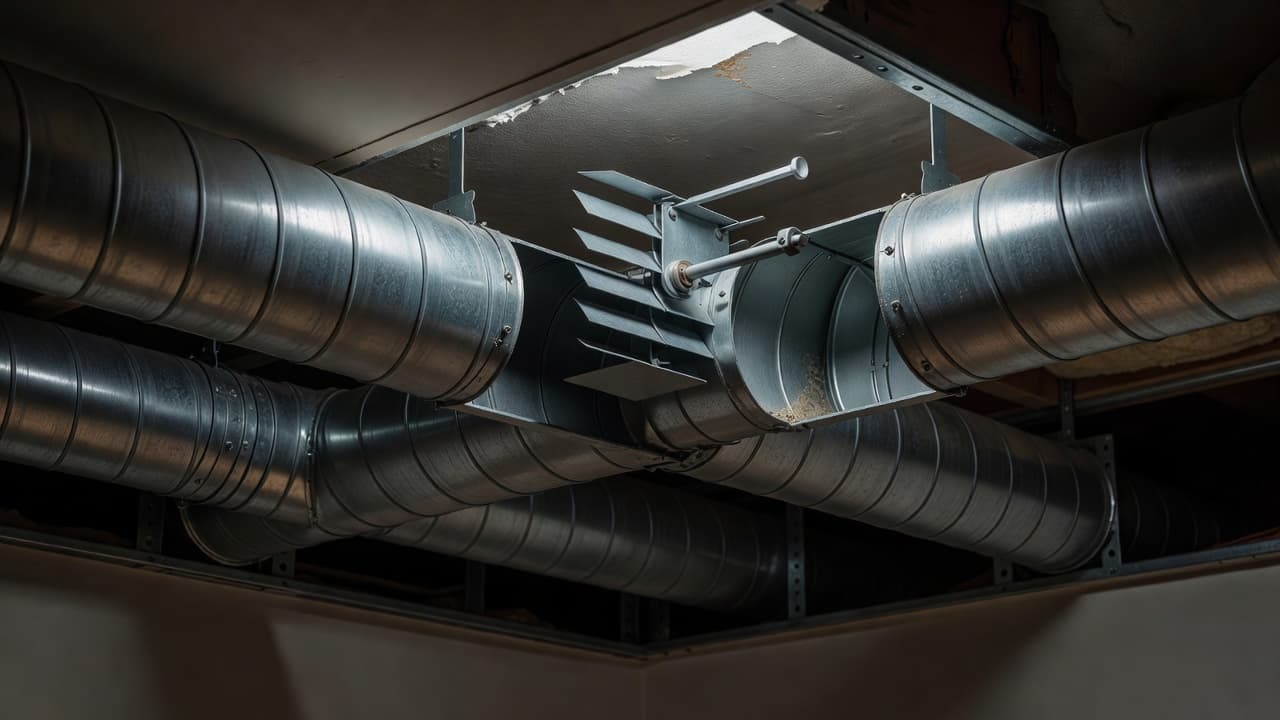
Inside the ductwork, a damper acts like a gate. It opens to send more air to one branch and closes to hold air back from another. In a zoned system, that small flap helps different rooms get the right amount of heating or cooling.
Some dampers use a simple manual handle. Others use a motor and a control panel. When the blade sticks, the blower may still run normally, so the problem can hide behind everyday comfort issues. Dust, rust, age, and a failed actuator can all keep the damper from moving as it should.
Signs a duct damper is stuck
A damper problem rarely announces itself with one clear alarm. More often, it shows up as a comfort complaint that keeps repeating in the same part of the house.
If several rooms feel off at once, the damper is one of the first parts worth suspecting.
Look for these common signs:
- Uneven room temperatures . One room stays warmer or colder than the rest of the house.
- Weak airflow . Air at one register feels much lighter than it should.
- Odd HVAC run times . The system runs longer than usual, or it shuts off before the room feels right.
- New duct noise . Hissing, whistling, rattling, or a sudden rumble can show up near one branch.
- Zone control trouble . A zoned thermostat keeps calling for air, but the room never catches up.
These clues do not always point to a stuck damper. A dirty filter, blocked vent, or leaky duct can cause similar problems. Still, when the same room keeps acting up, the damper moves higher on the list.
A stuck damper can also affect the whole system in small ways. One branch may hog air, while another branch gets starved. That imbalance often makes the house feel less steady, even when the thermostat seems set correctly.
Stuck open versus stuck closed
Knowing whether the damper is stuck open or closed helps narrow the issue. The symptoms often look different.
| Damper position | What you may notice | Common effect |
|---|---|---|
| Stuck open | Too much air keeps moving into that branch, even when the room is satisfied | One room feels overcooled or overheated, and other rooms may get less air |
| Stuck closed | Little or no air reaches that branch | A room stays uncomfortable and the system may run longer |
| Partly stuck | Airflow changes, but not enough | The room swings between too warm and too cool |
A damper stuck open can make one space feel bossy. It gets more air than it needs and pulls comfort away from other rooms. A damper stuck closed feels more like starvation. The room never gets enough conditioned air, so the HVAC keeps trying to catch up.
That difference matters because the fix depends on the cause. A stuck-open damper may point to a control issue or a blade that won't seal. A stuck-closed damper may point to a jam, rust, or a failed motor that no longer opens the branch.
Safe checks you can do without opening the system
Homeowners can spot a lot without opening panels or touching wiring. The goal is to compare rooms and notice patterns.
- Compare the same rooms at the same time each day. A bedroom that is always warmer, or a family room that is always colder, gives you a useful pattern.
- Feel the airflow at each supply vent. Use your hand, then compare one room to another. A big difference matters more than a small one.
- Watch how long the system runs. If one zone never seems satisfied, the HVAC may keep running longer than expected.
- Listen when the system changes zones. New clicking, rattling, or whistling near a duct branch can be a clue.
- Check only what you can already see. If a manual damper handle is visible on exposed ductwork in a closet, attic access, or utility space, note its position. Do not force it.
If the registers are dusty and airflow still feels uneven, professional air duct cleaning in Sarasota County can help remove buildup that makes the picture harder to read. That won't fix a stuck blade by itself, but it can rule out one more cause.
The point here is simple. You are looking for patterns, not trying to repair the system yourself. If a room problem keeps showing up in the same way, you have a stronger case for a damper issue.
Why zoning systems make damper problems easier to spot
Zoning systems make damper trouble easier to notice because the system has more than one comfort goal. When one zone calls for cooling and another zone is already satisfied, the dampers decide where the air goes.
If those dampers fail, the whole balance shifts. Upstairs may stay warm while downstairs feels overcooled. A bonus room may never reach the set temperature, even though the rest of the house feels fine. That mismatch often shows up as unusual run times too.
A stuck-open damper can make one zone cool or heat too quickly. A stuck-closed damper can make a zone fall behind all day long. Either way, the thermostat keeps asking for a result the system can't deliver. That extra work can wear on comfort and waste energy.
Zoning problems also make hidden issues easier to miss. A homeowner may blame the thermostat, the filter, or the weather. In reality, the air path may be the part that is out of line.
When professional diagnosis makes sense
Call for a professional inspection when the symptom keeps coming back, when the damper is motorized, or when the noise sounds mechanical. Grinding, clicking, and a damper that will not move at all often point to a part that needs testing, not guesswork.
A trained HVAC technician can trace the branch, test the actuator, and check whether the issue is the damper, the control, or another part of the duct system. They can also see whether the problem is tied to dirty ducts, a weak blower, or a zoning control that is not sending the right signal.
If the airflow still feels off after your safe checks, Get a Free Estimate and have the system looked at before it starts working harder than it should.
Conclusion
A stuck damper often hides behind ordinary comfort complaints. One room feels wrong, another seems fine, and the HVAC keeps running as if nothing is happening.
When you notice uneven temperatures, weak airflow, odd run times, duct noise, or zoning problems together, the damper deserves attention. Catching it early makes the system easier to balance and keeps the problem from blending into the rest of your HVAC troubles.