What an HVAC Ductwork Inspection Reveals in Your Home
A home inspection can reveal ductwork problems without opening walls or ceilings. An HVAC ductwork inspection focuses on accessible components, visible damage, airflow clues, moisture, and conditions that may justify a closer evaluation.
For homeowners preparing to buy, sell, or clean a Florida home, the goal is to separate normal dust from problems that need repair or professional cleaning. Here's what inspectors typically look for and where a visual inspection reaches its limits.
Key Takeaways
- Inspectors usually review accessible supply ducts, return grilles, registers, plenums, air-handler areas, insulation, and visible connections.
- They look for crushed or disconnected flex duct, loose fittings, damaged insulation, rust, water staining, pests, and debris.
- Dark dust around a vent does not prove that the entire duct system needs cleaning.
- A visual inspection cannot confirm the condition of concealed duct sections inside walls, ceilings, or inaccessible attic areas.
- Moisture, pest activity, visible contamination, renovation debris, and material blowing from supply vents are stronger reasons to call a qualified professional.
- Dryer vents are separate from HVAC ductwork and require their own inspection.
What an HVAC Ductwork Inspection Includes
A home inspector generally observes accessible areas without dismantling the system or cutting into finished surfaces. The findings can still provide useful clues about installation quality, maintenance, and possible airflow problems.
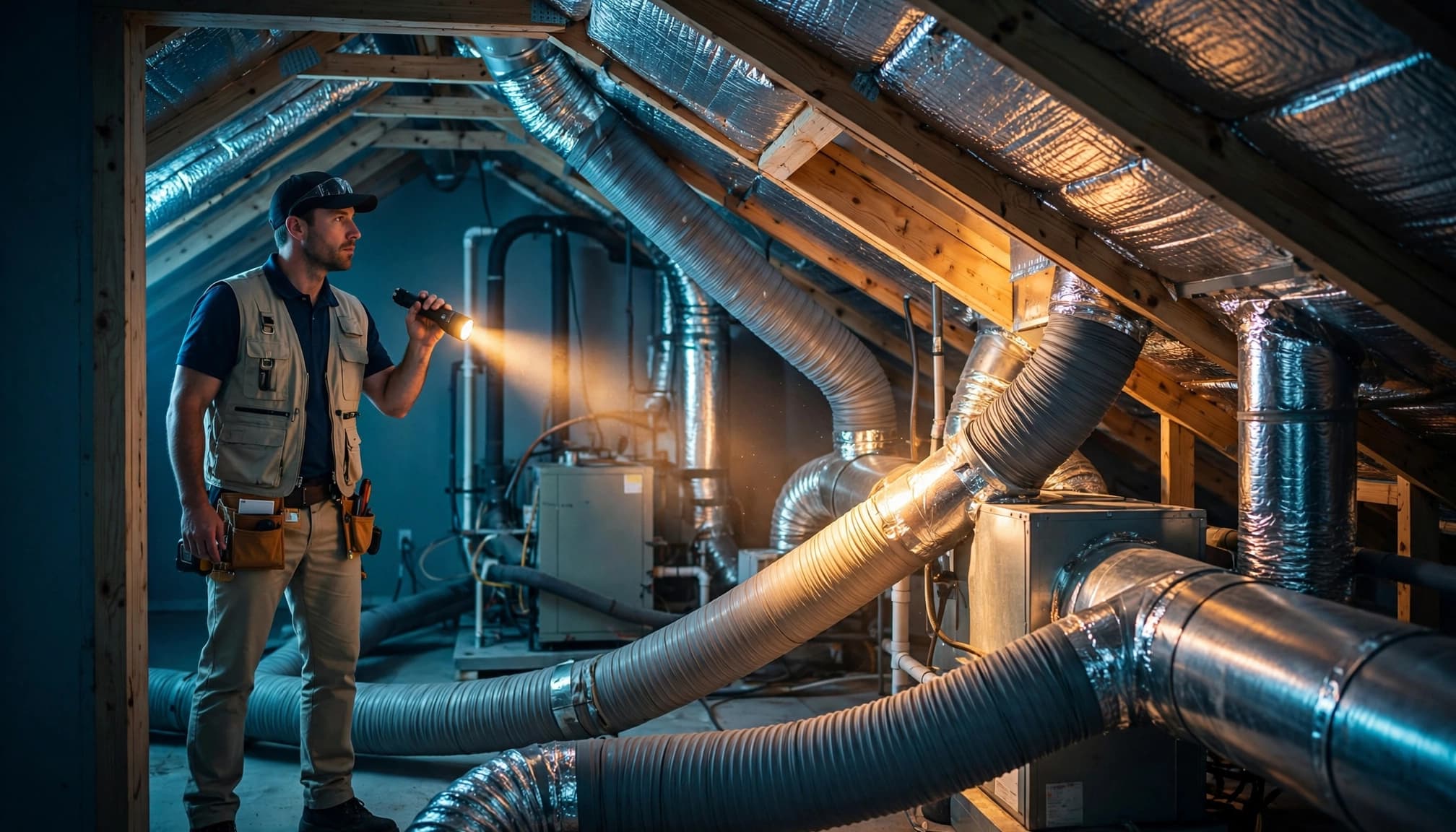
Supply ducts, returns, and registers
The inspection often starts at the visible parts of the air path. That includes supply registers, return grilles, exposed branch ducts, larger supply trunks, and connections near the air handler.
An inspector may check whether registers sit securely, whether return grilles are blocked, and whether visible duct sections connect properly. Loose boots, gaps, disconnected flex duct, and poorly supported runs can affect airflow and allow conditioned air to escape.
The inspector may also note whether furniture, curtains, storage boxes, or other items restrict supply or return openings. A blocked return can change system pressure and make some rooms feel warmer or more humid.
For a broader service review, the areas commonly considered include supply and return ducts, registers, the air-handler area, and overall access. You can compare those areas with the HVAC ductwork inspection and cleaning steps a professional technician may follow.
Exposed duct materials and connections
Inspectors pay attention to the type and condition of visible ductwork. Flexible duct should not look sharply crushed, torn, sagging, or separated at its connections. Sheet-metal sections may show rust, damaged seams, missing insulation, or loose fasteners.
Duct board and fiberglass-lined materials need additional care. A damaged facing or loose interior surface cannot be restored by ordinary brushing. Aggressive tools may release more material or worsen the damage.
A professional should explain the duct material before recommending cleaning. The cleaning method needs to match the system's construction and condition. Never allow someone to push a stiff brush into an unknown duct without first checking the surface.
How Inspectors Follow Airflow Through the System
Ductwork is part of a larger system. A problem near the air handler can affect the entire home, while a problem in one branch may explain weak airflow in a single room.
The filter and return-air path
A dirty or poorly fitted filter is an important clue. A clogged filter can restrict airflow and increase strain on the system. A filter that does not fit correctly can allow dust to bypass the filter and collect inside the return path.
Inspectors may check the filter's condition, size, fit, and access. They may also observe dust around the filter rack, return plenum, or grille. Heavy buildup in those areas can point to air leakage or a maintenance problem.
The correct filter is the size and type recommended for the equipment. A higher-efficiency filter is not automatically better if the system cannot move air through it properly. Ask an HVAC professional before changing filter types or choosing a more restrictive rating.
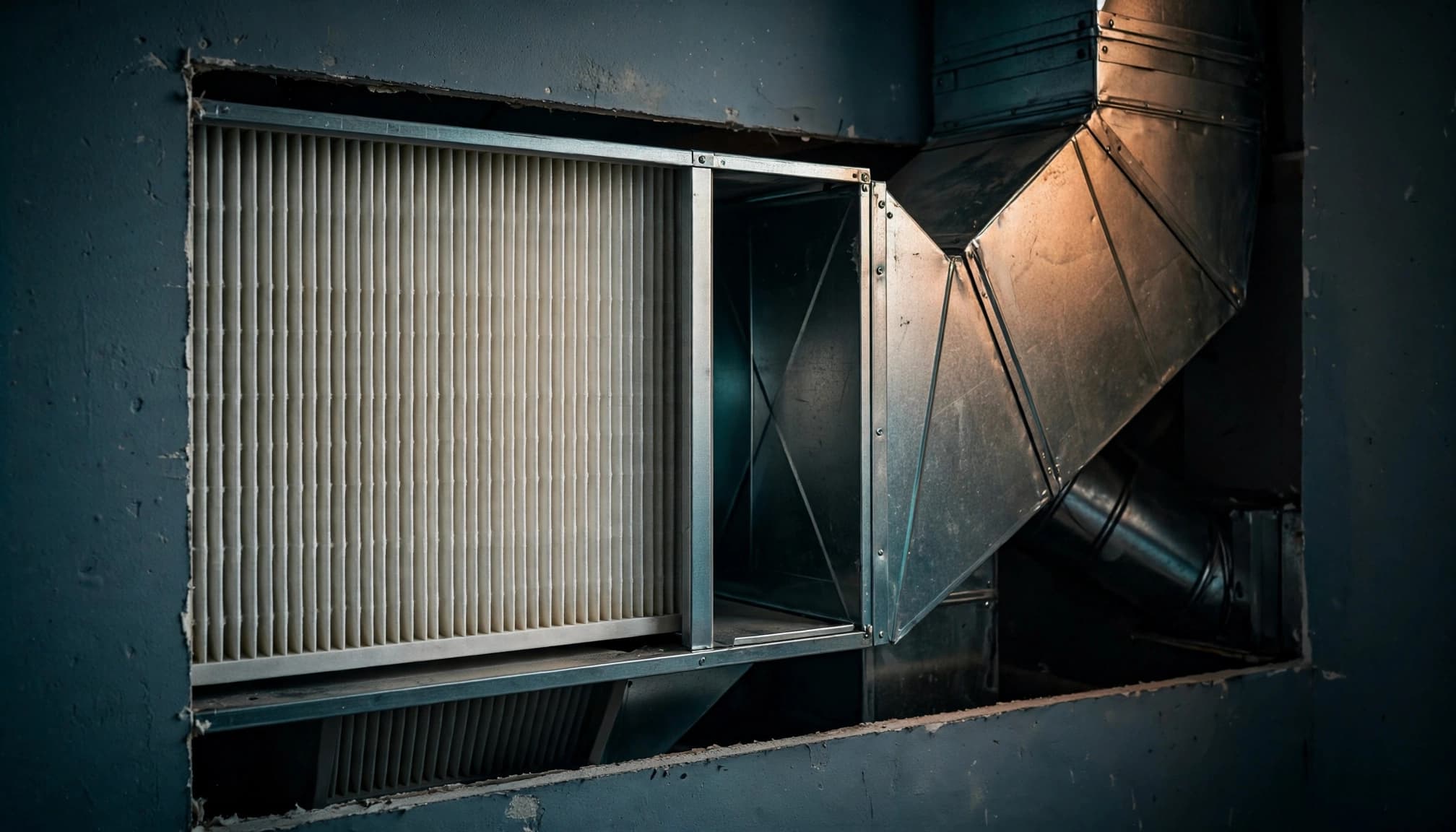
The air handler and nearby components
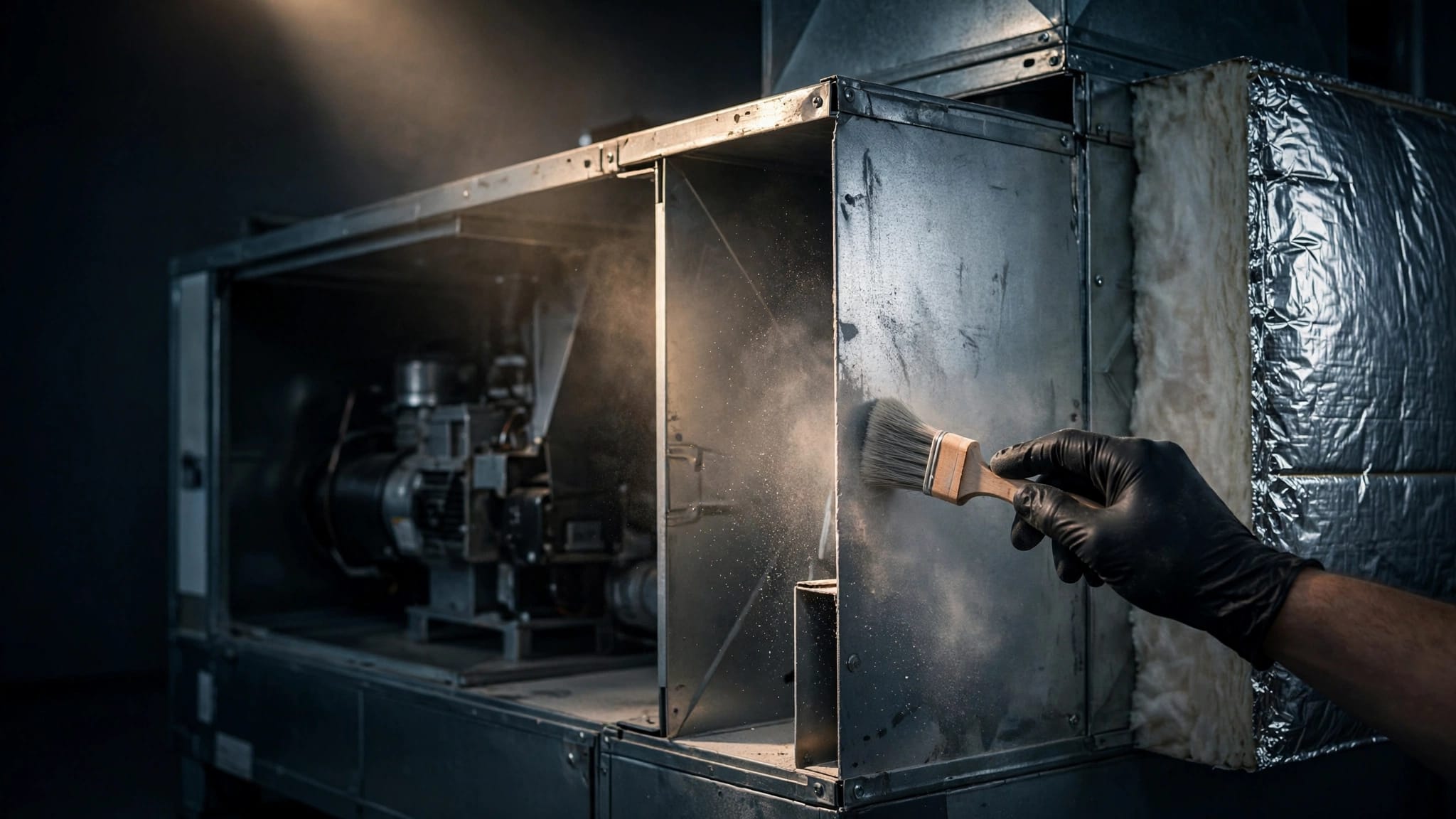
The air handler contains the blower and other parts that move air through the home. A professional evaluation may include the cabinet, blower compartment, coil area, return plenum, drain pan, and condensate drain.
This distinction matters because air-handler cleaning and duct cleaning are separate services. Debris may be concentrated inside the equipment rather than throughout the duct runs. In other cases, dirty ducts may continue sending material back toward the air handler.
Review the difference between air handler cleaning versus duct cleaning before approving a broad service. The written scope should identify which components need attention.
Damage, Insulation, and Moisture Red Flags
Visible duct damage can affect comfort and energy use, but it may also expose the system to dust, attic debris, and humid air. Inspectors document what they can see and recommend further evaluation when the condition is beyond a visual review.
Crushed, loose, or damaged ductwork
Common red flags include crushed flex duct, separated joints, punctures, loose register boots, sagging sections, torn insulation jackets, and gaps around connections. These conditions can reduce airflow or send conditioned air into an attic, crawl space, or wall cavity.
Attic storage can cause damage when boxes or equipment press against ductwork. Roof work, plumbing repairs, insulation replacement, and air-conditioning repairs can also disturb ducts or leave debris near registers.
After recent work, inspect accessible areas with the HVAC system turned off. Look for new stains, loose fibers, displaced insulation, and changes in airflow. Keep stored items away from duct panels and flexible runs.
Water stains, condensation, and soft insulation
Moisture deserves prompt attention in Florida homes. Fort Myers summer humidity can reach 75 to 90 percent, and cooling systems must remove moisture while they operate. Drainage problems, dirty coils, poor airflow, or oversized equipment can leave the home damp.
Inspectors may note water stains, wet insulation, rust, standing water, or condensation around the air handler and accessible ducts. A musty smell may come from wet duct material, but it can also come from a drain pan, evaporator coil, blower compartment, or clogged condensate line.
Cleaning alone will not correct a leak or drainage problem. The moisture source needs attention first. Wet or damaged duct material may require repair or replacement rather than routine cleaning.
What Dust, Odors, and Pests Can Tell You
A visual finding does not always identify the source of a problem. Dust near a register may come from the room, while an odor may originate in the air handler or drain system.
Conditions that support professional cleaning
Professional evaluation becomes more reasonable when there is a clear connection between the duct system and the observed problem. Examples include:
- Visible mold-like growth inside ducts or HVAC components, after the moisture source is corrected.
- Rodent droppings, nesting material, insects, or other pest evidence.
- Dust or debris blowing from supply vents.
- Water damage, wet insulation, or microbial growth.
- Persistent odors linked to smoke, pets, sewage, mold, or residue.
- Drywall dust, sawdust, insulation fibers, or other renovation debris inside the air path.
Dark spotting around a grille does not automatically confirm mold. Dust, soot, adhesive residue, and damp staining can look similar. Testing or specialist evaluation may be needed before choosing a treatment.
Florida conditions and indoor humidity
Long cooling seasons, high humidity, storms, pollen, and coastal dust can affect HVAC systems. Fine sand and salt-heavy dust may collect faster near the coast, while year-round air-conditioning use keeps debris moving through the system.
Watch for condensation on windows or supply vents, musty odors when the system starts, clammy rooms, visible spotting near returns, or repeated uneven cooling. These clues may point to a duct issue, but they can also involve equipment performance or building moisture.
The EPA does not recommend routine duct cleaning for every home. Visible contamination, pest activity, or substantial debris released into living areas provides a stronger reason to seek professional advice than a calendar date alone.
Know the Limits of a Visual Inspection
A home inspection is valuable, but it cannot reveal every condition inside a closed duct system. Understanding the limits helps you interpret the report correctly.
Hidden sections remain unverified
Ducts may run through walls, ceilings, floors, crawl spaces, or congested attic areas. If a section cannot be reached safely, the inspector cannot confirm its interior condition without specialized access or additional testing.
A clean-looking register also does not prove that the connected branch line is clean. Likewise, dust inside one return opening does not prove that every supply run has the same problem.
A camera can help in some situations, but dark spots on video do not automatically confirm mold. The result still needs interpretation by a qualified professional.
Inspection is different from cleaning
A home inspector documents visible conditions. A duct-cleaning technician evaluates access, material, contamination, equipment, and the work scope before choosing a method. An HVAC contractor may need to diagnose airflow, drainage, refrigerant-related concerns, electrical components, or cooling performance.
Do not allow anyone to scrape, brush, vacuum, or collect samples from suspicious insulation or wrap. If asbestos may be present, keep people away from the area and arrange an assessment by an accredited asbestos inspector or certified industrial hygienist.
When to Call an HVAC or Duct-Cleaning Professional
A professional evaluation makes sense when the inspection identifies damage, moisture, contamination, or a performance change that a visual check cannot explain.
Ask for a written scope of work
Before scheduling cleaning, ask which parts of the system are included. The estimate should identify the number of HVAC systems, supply runs, return runs, registers, grilles, trunks, plenums, and accessible air-handler components.
Also ask whether the company will use existing access points, whether new openings are needed, and how those openings will be sealed. The provider should explain how it protects flexible duct liners and what happens if it finds damaged insulation, standing water, pest debris, or heavy microbial growth.
A good company separates necessary work from optional treatments. If a sanitizer, inhibitor, or deodorizer is recommended, ask what product it is, where it will be applied, and why the inspection supports using it.
Choose the next step based on evidence
Duct cleaning may help when loose debris or contamination is present in appropriate parts of the system. Repairs may matter more when the duct is crushed, disconnected, leaking, wet, or poorly insulated.
Most homes do not need cleaning on a fixed annual schedule. General guidance often places cleaning around three to five years, but older pre-2000 homes, renovation history, moisture events, pets, pests, and visible contamination can change that timing. You can review when Florida homes need duct cleaning before deciding.
If you want local help interpreting visible dust, odors, or airflow concerns, you can Get a Free Estimate for air duct cleaning or a separate dryer vent evaluation.
FAQ About Residential HVAC Ductwork Inspections
Will a home inspector open my walls or ceilings?
Usually, no. A standard inspection is generally visual and non-destructive. The inspector may review accessible attic, garage, crawl space, utility closet, register, and air-handler areas, but concealed duct sections remain outside the inspection scope unless access already exists.
Does dust around a vent mean I need duct cleaning?
Not by itself. Dust may collect around a grille because of normal household activity, a poor seal, a dirty filter, or air leakage. Dust blowing from supply vents, heavy debris inside returns, pest evidence, renovation contamination, or persistent odors provides stronger justification for professional evaluation.
Can an inspector confirm mold inside ductwork?
A visual inspection may document suspected growth, staining, or moisture. It cannot always identify the material. Mold-like growth may require testing, and the moisture source should be corrected before cleaning or treatment.
Is dryer vent ductwork part of the HVAC system?
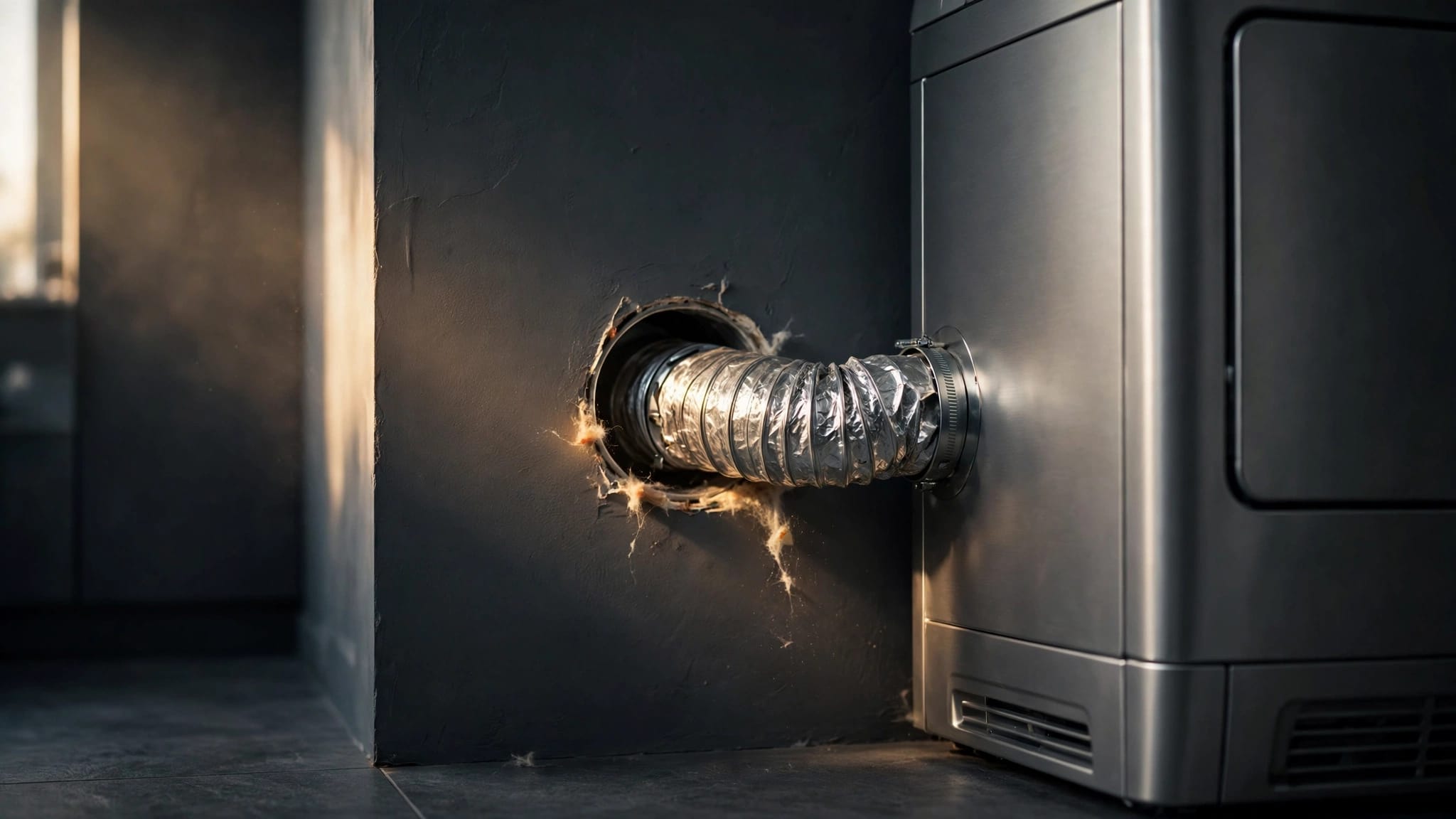
No. A dryer vent carries lint and moisture outdoors. It is separate from the heating and cooling duct system. Longer drying times, burning odors, unusual heat, or visible lint require a separate dryer vent inspection.
Conclusion
An HVAC ductwork inspection helps identify visible damage, poor connections, airflow restrictions, moisture, contamination, and access concerns without opening the home. The strongest findings connect an observable condition with a practical next step, such as repair, moisture control, equipment service, or professional cleaning.
Before approving work, ask which parts of the system were inspected and which remain hidden. A clear scope and condition-based recommendation will protect your home better than a routine cleaning package based only on age or dust near a vent.