How to Clean Exposed Spiral HVAC Ducts Safely
For exposed spiral duct cleaning, separate exterior dust removal from interior duct service, and protect the room before work starts. Keep the work focused on loose, accessible dust rather than treating stains, damaged coatings, or internal buildup as ordinary housekeeping.
Visible ductwork adds another concern: its exterior is part of the room's finished appearance. Start by defining the cleaning area, protecting nearby surfaces, and identifying anything that needs professional attention.
Key Takeaways
- Exterior cleaning and internal duct cleaning are different jobs; dust on the outside doesn't establish contamination inside.
- Protect furniture, flooring, and nearby equipment before disturbing overhead dust.
- Keep joints, hangers, and access panels intact, and never use the ductwork to support your weight.
- Base professional cleaning on visible contamination and system conditions, rather than a fixed cleaning calendar.
Separate Exposed Spiral Duct Cleaning Into Two Jobs
Exterior dust is a room-cleaning concern
Dust can settle on exposed ductwork just as it settles on shelves and light fixtures. Open doors, foot traffic, construction, and ordinary room activity all affect how quickly surfaces collect debris.
However, a dusty outer surface doesn't tell you what is happening inside the air distribution system. Cleaning the exterior also doesn't remove contamination from supply branches, return ducts, or the air handler.
Define the task before starting. Accessible exterior dust belongs in a different work plan than residue, damaged surfaces, or debris inside the duct.
Internal buildup requires a different process
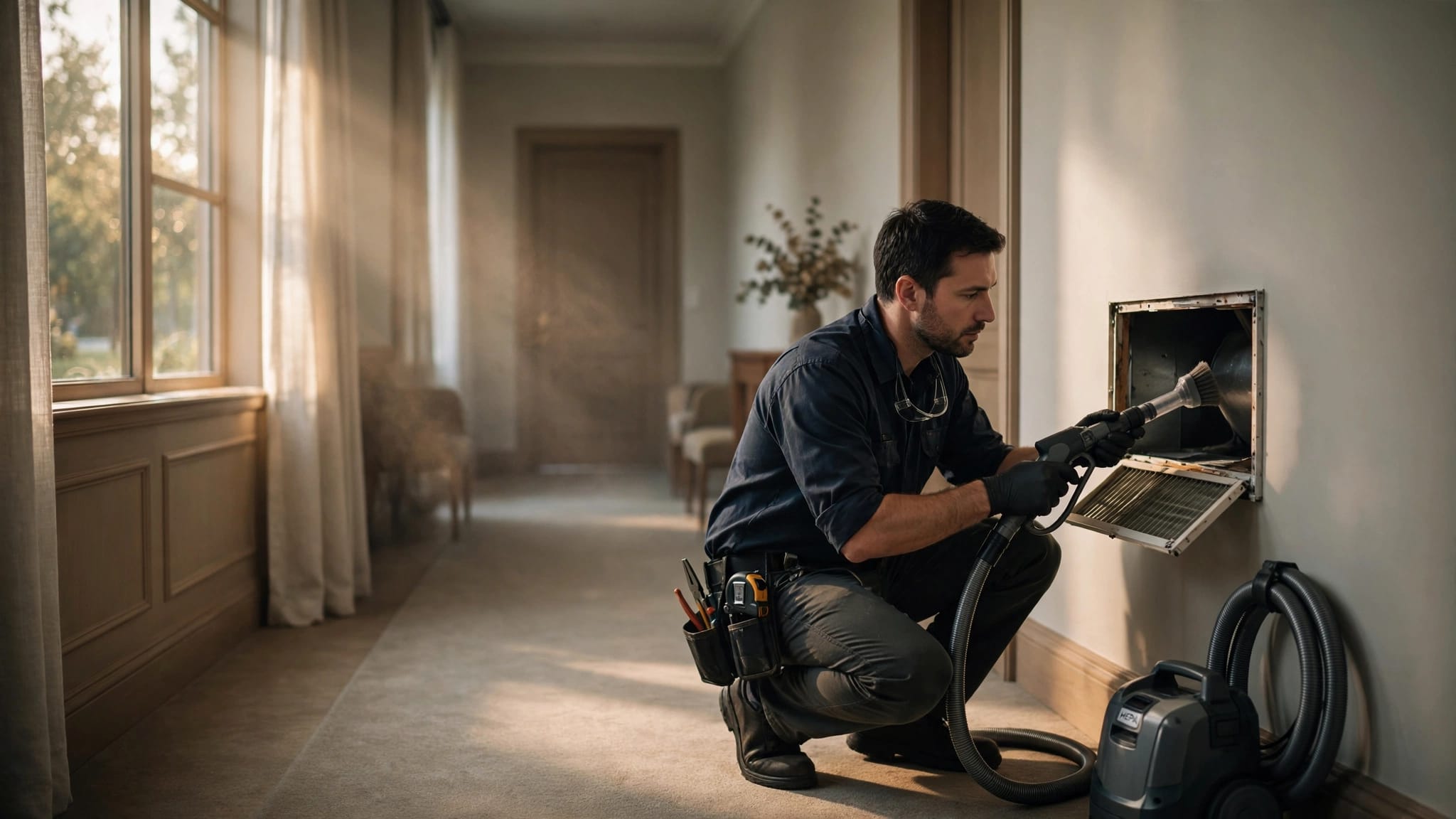
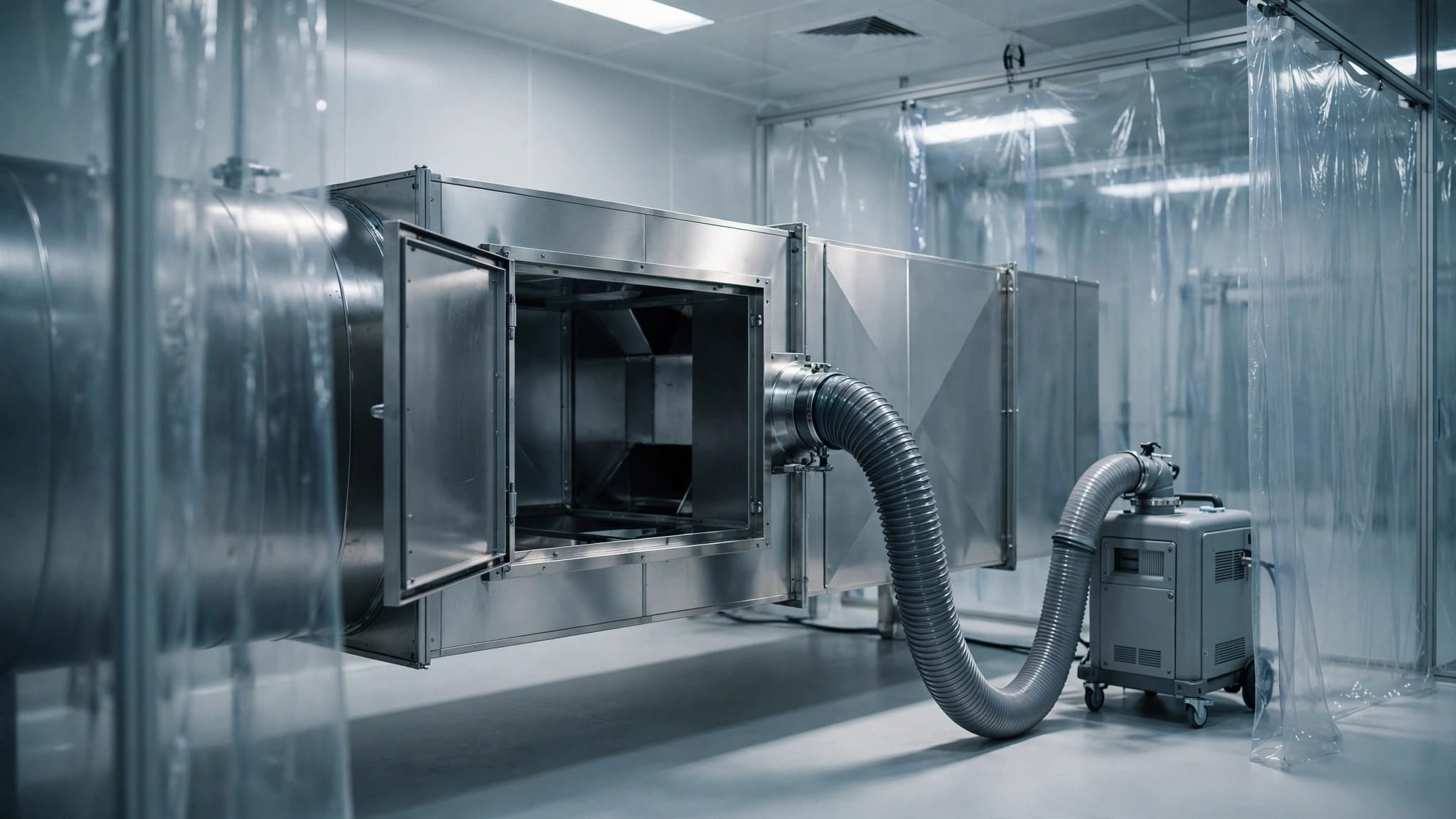
Professional interior cleaning uses collection equipment and tools suited to the duct material and condition. Technicians maintain controlled negative pressure while loosening debris so it moves toward the collection equipment.
That process differs from cleaning an exposed surface or an accessible grille. Our explanation of register cleaning versus full-system service outlines that distinction.
Don't insert a household vacuum hose through an opening to extend an exterior cleaning job. Internal duct cleaning requires suitable access, filtration, and containment.
Prepare the Room Before Disturbing Overhead Dust
Establish safe access
First, clear the floor beneath the duct run. Move chairs, rolling carts, and other obstacles so they don't interfere with access or cleanup.
Use access equipment suited to the height and working area. A chair, countertop, or stack of boxes isn't an appropriate substitute. If reaching the duct requires stretching sideways or working above stairs, leave that section to a professional.
Never lean on the duct, pull against a branch, or use a hanger as a handhold. Although exposed metal may look substantial, the duct system isn't an access platform.
Keep other people away from the work zone, especially children and anyone likely to move equipment while work is underway.
Protect nearby surfaces
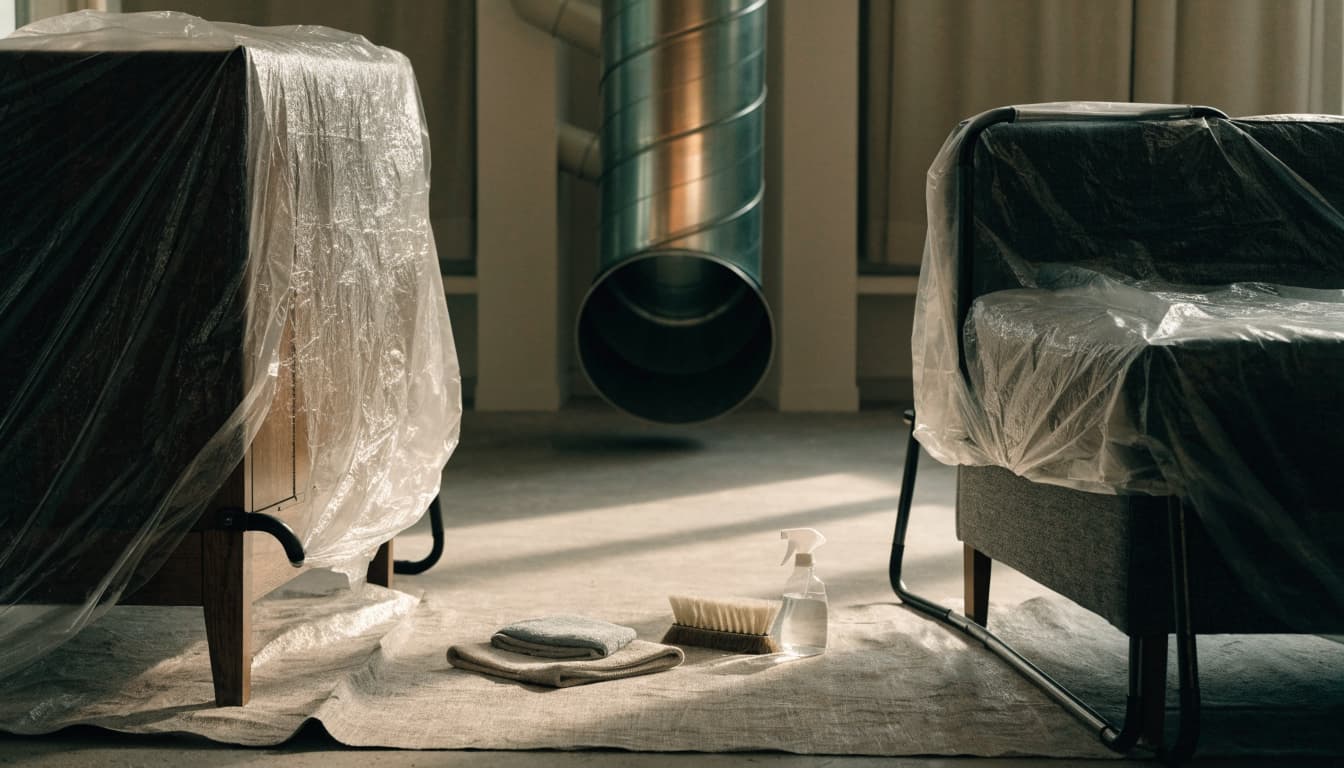
Move portable electronics, food, dishes, and lightweight furnishings out of the area. Cover furniture that must remain, and protect the floor beneath the entire working section.
Extend protection beyond the duct's footprint because overhead debris can fall outward. Keep coverings clear of walking routes and access equipment.
Also establish a place for used supplies and collected debris. Moving dirty materials through the room without containment can undo the preparation.
Plan the cleanup route before starting. That makes it easier to remove protective coverings without carrying dust across uncovered flooring.
Follow a Controlled Exterior Cleaning Routine
Keep this routine limited to accessible exterior dust. It doesn't include opening the system, treating decorative finishes, or cleaning internal duct surfaces.
- Inspect from a safe position. Look for loose connections, displaced supports, damaged surfaces, damp areas, and debris around openings. Stop work on a section with an obvious defect rather than working around it.
- Prepare one working section. Position access equipment and floor protection before disturbing dust. Leave enough clear space to step down safely without moving furniture or stepping over supplies.
- Contain loose exterior debris. Keep removed dust within the protected work area. Don't push it through a grille, into an open connection, or behind nearby ceiling fixtures.
- Keep the system assembled. Leave seams, screws, hangers, and access panels intact. An exterior cleaning task doesn't require separating duct sections or reaching through fittings.
- Separate remaining residue from loose dust. Once loose debris is gone, assess what remains. Stains, adhered deposits, and altered coatings are separate finish-care issues, not a reason to keep escalating an ordinary dust-removal task.
- Clean the work area before uncovering furniture. Collect fallen debris first. Then fold coverings inward to contain dust, remove supplies, and leave access routes clear.
Work through the room in manageable sections. This keeps the protected area practical and reduces unnecessary movement beneath overhead work.
Handle Finishes, Seams, and Obstructions Separately
Bare-looking metal and painted surfaces
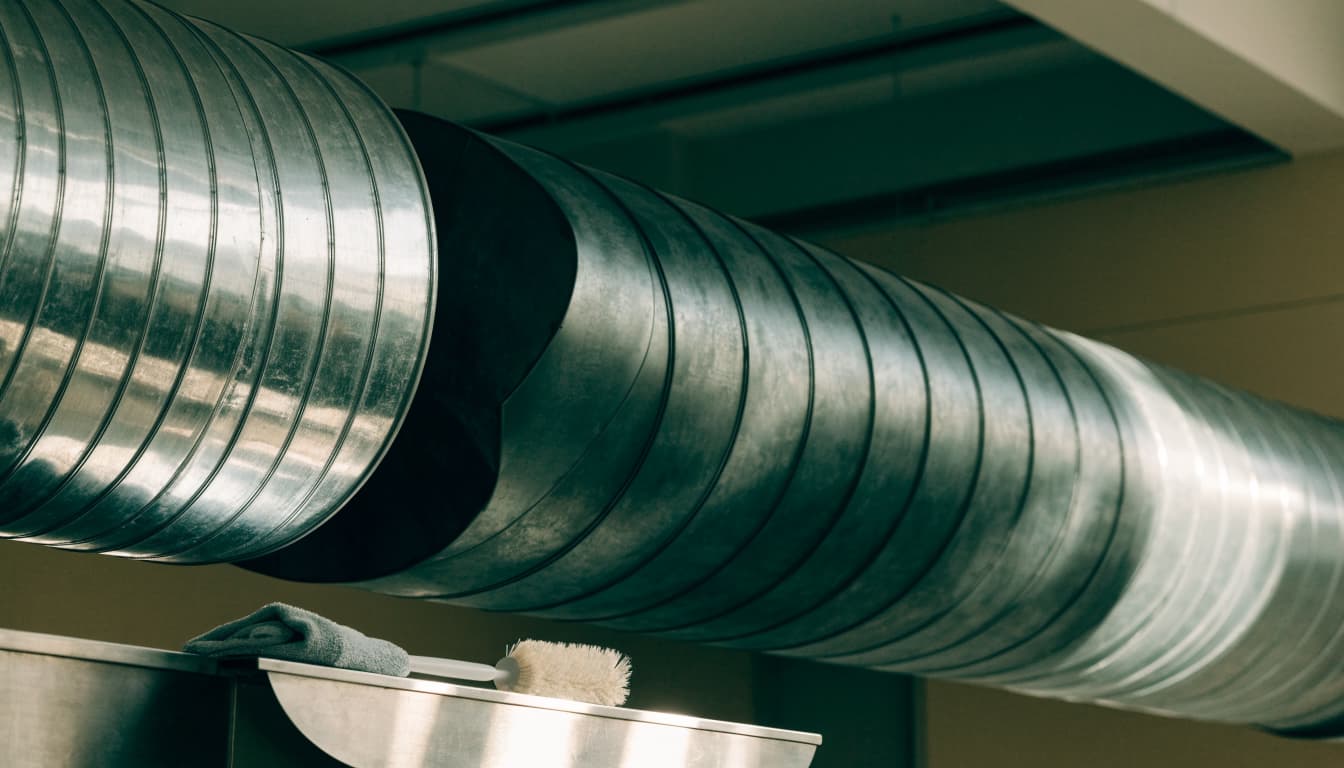
A silver appearance alone doesn't establish the surface material or whether a coating is present. Painted ducts also vary in their existing condition and decorative finish.
Keep those differences visible in the work plan. Don't treat every exposed run as an identical surface simply because the ducts share the same spiral shape.
Pay attention to changes already present before cleaning begins. Peeling paint, uneven discoloration, and persistent residue deserve separate attention. Trying to make an altered area match the surrounding duct can turn a housekeeping task into finish restoration.
The stopping point matters: removing loose dust doesn't require making every surface look newly installed.
Spiral seams, hangers, and tight spaces
The spiral seam is part of the duct's construction. Branch connections, support straps, and nearby fixtures create additional obstacles along the run.
Don't pry at a seam or move a hanger to gain access. Likewise, avoid treating narrow gaps as places to insert tools into the system.
For areas behind branches or close to the ceiling, access determines the practical limit of the task. If you can't reach a section while maintaining a stable working position, leave it for appropriately equipped help.
A hard-to-reach section needs better access, not more pressure against the duct or its supports.
Build Maintenance Around Visible Conditions
A useful maintenance plan responds to the room and the system. Outdoor grit, open doors, renovation activity, and filter condition all affect dust accumulation.
Use these conditions to organize the next task.
| Visible condition | Appropriate next step |
|---|---|
| Loose dust on accessible exterior surfaces | Include it in the room's surface-cleaning work. |
| Dust following construction or renovation | Address the room cleanup and assess whether debris entered the system. |
| Persistent particles leaving supply openings | Arrange a professional inspection. |
| Dampness, water marks, or recurring moisture | Address the moisture source rather than repeatedly cleaning the surface. |
The important distinction is surface upkeep versus system service . A dusty exterior doesn't create an automatic need for full-system cleaning.
Keep filter care on the equipment manufacturer's maintenance schedule. Don't choose a more restrictive filter solely because the exposed ducts look dusty; the filter must suit the equipment.
EPA guidance doesn't recommend routine duct cleaning for every property. Internal service should respond to documented conditions rather than an arbitrary interval.
Know When Professional Duct Cleaning Fits
Look beyond dust on the outside
Persistent dust from supply registers, visible debris inside accessible ductwork, renovation residue, pest activity, and moisture concerns warrant inspection.
A professional assessment can distinguish removable buildup from a damaged or disconnected duct. Cleaning doesn't repair leaks, restore collapsed sections, or eliminate the source of recurring moisture.
Our guide to what air duct cleaning removes explains those limits. Addressing the actual cause helps prevent repeated cleaning that leaves the underlying problem untouched.
High ceilings, obstructed duct runs, and unsafe working positions also justify professional help, even when the immediate concern is exterior access.
Understand containment and service scope
During internal cleaning, a high-powered vacuum collects debris while technicians loosen material inside selected sections. Suction needs to continue during agitation so debris travels toward collection equipment.
Our explanation of how technicians contain duct debris describes the role of controlled negative pressure.
The work may involve supply and return ducts, registers, grilles, plenums, and accessible connected components. However, detailed coil cleaning, electrical work, refrigerant handling, and repairs require the appropriate HVAC service.
At Adkins Duct Cleaning, we provide air duct cleaning and vacuuming for homes and businesses. If internal contamination warrants service, Get a Free Estimate for air duct cleaning.
Frequently Asked Questions
Does exterior dust mean the ducts are dirty inside?
Exterior dust alone doesn't establish internal contamination. Room activity can deposit dust on the outside without revealing the condition of the air passages. Persistent particles from supply openings or visible internal debris provide a stronger reason for professional inspection.
Can I clean inside through an exposed duct opening?
Don't extend surface cleaning into the system with a household vacuum or improvised tools. Professional internal cleaning depends on access, suitable equipment, and controlled collection. The method also needs to match the duct material and its condition.
Does duct cleaning include the air conditioner?
Duct cleaning and HVAC equipment maintenance overlap in some accessible areas, but they aren't interchangeable services. A cleaning scope may include certain connected components. Detailed coil cleaning, refrigerant work, electrical service, and equipment repairs remain separate tasks requiring qualified HVAC technicians.
What should I do about recurring dampness?
Treat recurring dampness as a moisture problem. Repeated exterior cleaning won't resolve its cause. An HVAC professional can assess condensation or other system concerns, while damaged ductwork may need repair before cleaning can provide a useful result.
Keep the Finish and the Cleaning Scope in Focus
A controlled exposed spiral duct cleaning job starts with safe access, room protection, and a clear stopping point. Keep loose exterior dust separate from finish restoration and internal system contamination.
Protect the surrounding room, leave duct connections intact, and stop when access or condition makes the work unsafe. Cleaning should address the problem you have , without turning a visible surface task into unnecessary ductwork disturbance.