Restaurant HVAC Ducts: When Dust Disrupts Service
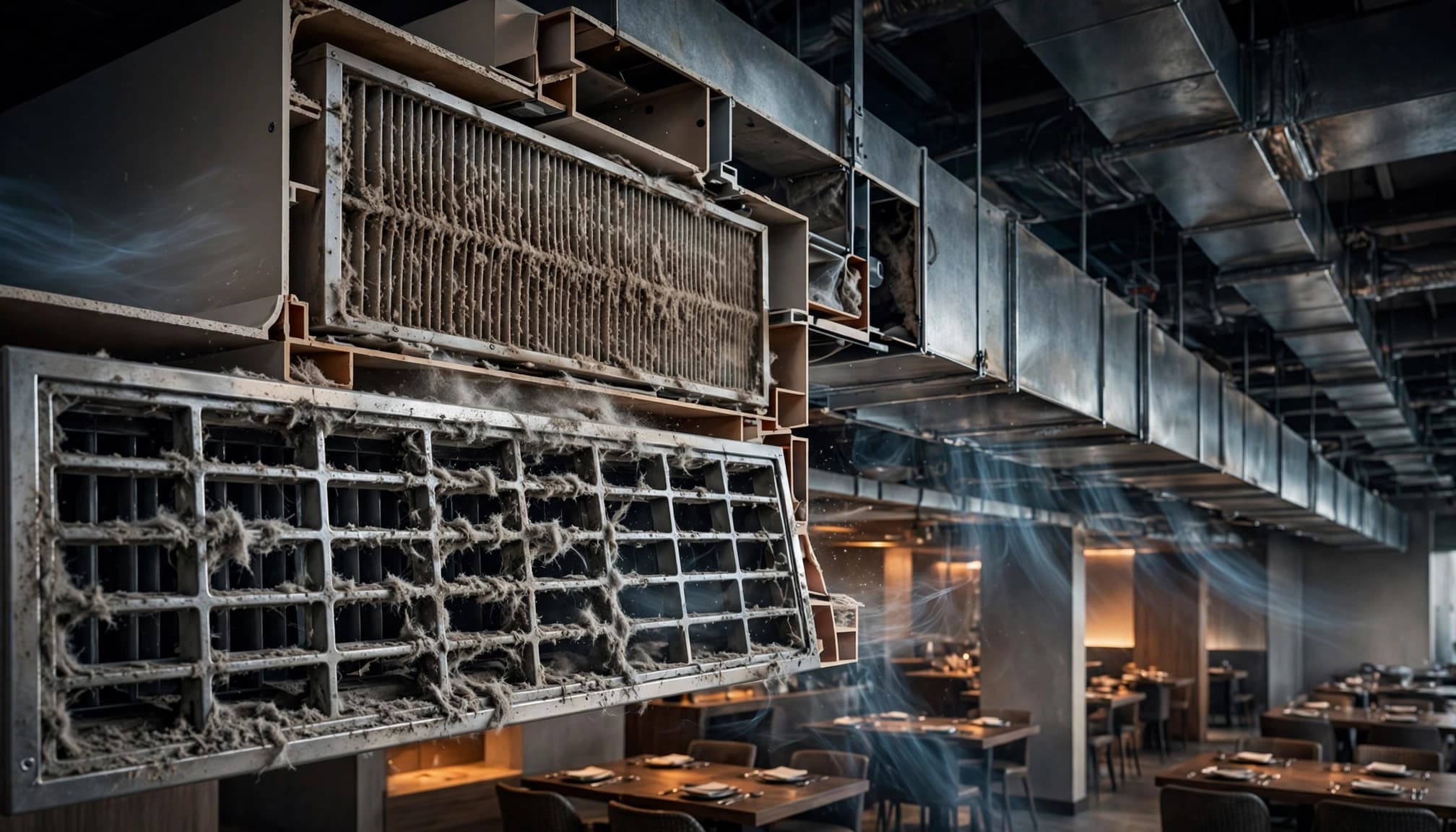
Restaurant HVAC ducts can collect dust, debris, insulation fibers, and residue that affect more than indoor comfort. As buildup increases, airflow may weaken, odors may linger, filters may load quickly, and cooling equipment may run longer to maintain the set temperature.
For restaurant owners and facility managers, the main question isn't whether a vent looks dusty. It's whether the buildup is affecting service, equipment performance, cleanliness, or the guest and staff environment. A condition-based inspection helps separate a real duct problem from a dirty grille, clogged filter, leaking connection, or unrelated odor source.
How restaurant HVAC ducts become a service problem
Commercial kitchens move air through demanding conditions. Doors open often, cooking activity creates particles, and HVAC systems may run for long periods during warm Florida weather. Return-air pathways can pull dust toward the equipment, where it settles along grilles, branches, trunks, plenums, and accessible air-handler components.
Where dust and residue accumulate
Return ducts often collect more settled material because they draw air back toward the air handler. Supply ducts, registers, diffusers, and branch lines can also hold loose dust that later becomes airborne when the system starts or airflow changes.
A complete cleaning may address:
- Supply and return ducts, including main trunks and branch lines
- Registers, grilles, diffusers, and accessible plenums
- The blower compartment and accessible air-handler housing
- Coil surfaces, drain pans, and filter housings when included in the scope
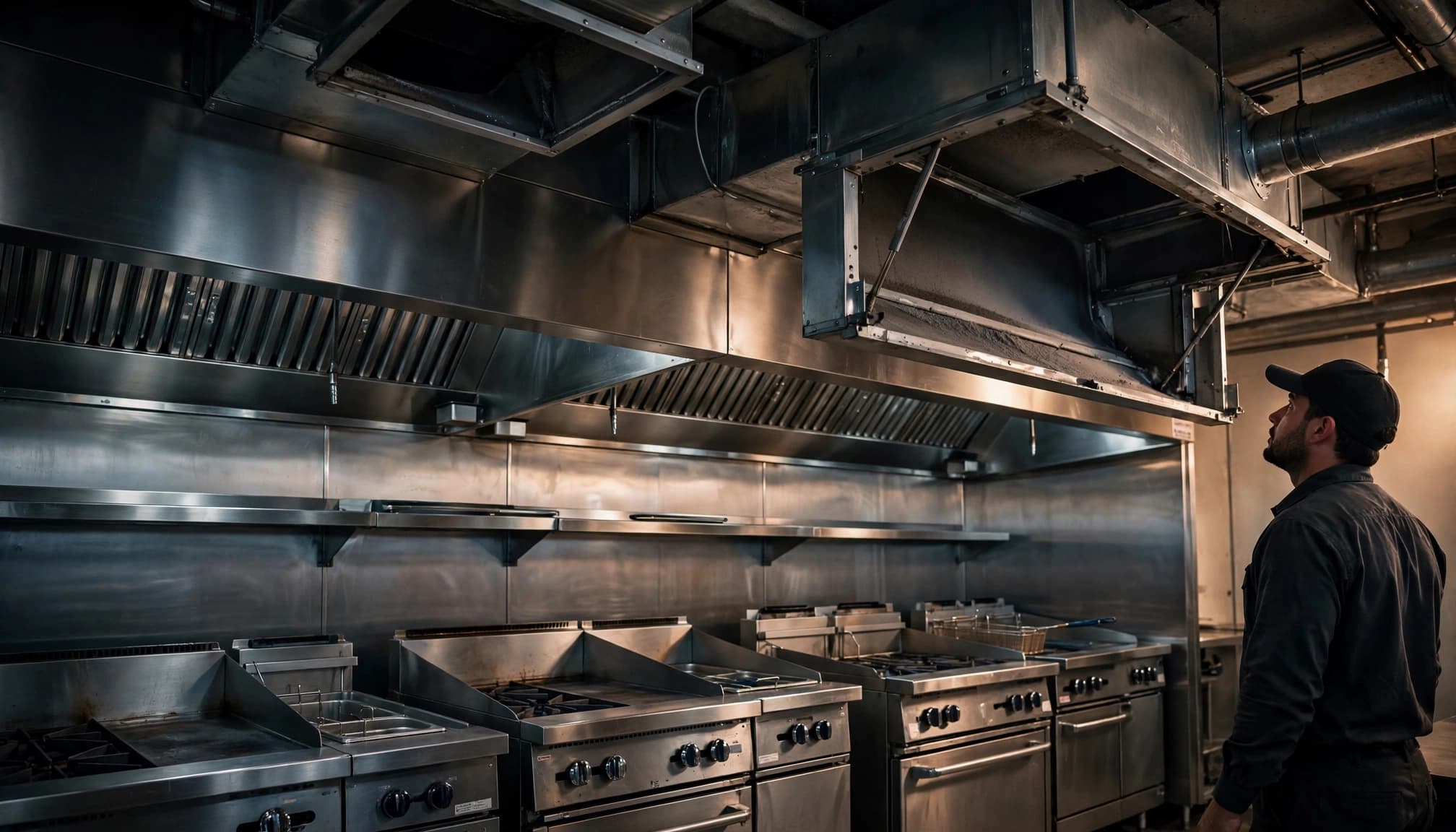
Restaurant HVAC ducts should not be confused with cooking exhaust systems. HVAC ductwork distributes conditioned air, while grease exhaust systems have separate equipment, maintenance needs, and service requirements. Ask the contractor to identify exactly which system the estimate covers.
Why inspection should come first
Visible dust at a vent does not prove that the entire system needs cleaning. The material may come from a dirty grille, poor filtration, gaps around a return, open doors, or dust entering through a leaking connection.
Inspection should also look for wet insulation, condensation, disconnected ducts, crushed sections, damaged liners, pest evidence, and unsafe mechanical conditions. Cleaning removes loose contamination, but it cannot repair a failed duct, stop an active rodent problem, or correct a blower or coil issue.
Signs your restaurant duct system needs attention
One symptom rarely identifies the exact cause. A qualified technician should connect the complaint to what is visible inside the system and to the equipment's condition.
Dust, debris, and fast-loading filters
Watch for dust puffing from supply registers, visible debris inside return openings, or surfaces that become dusty soon after cleaning. A filter that becomes heavily loaded shortly after replacement can also indicate unusual particle entry, poor filtration, or contamination near the return side.
Start with the simple checks. Confirm that the filter fits correctly, matches the equipment requirements, and receives regular attention. Keep return grilles clear of stored items, shelving, and other obstructions.
A filter change protects the system from new particles, but it cannot remove settled contamination inside the ductwork or air handler. If dust continues to enter occupied areas, air duct cleaning for dust and odors may be appropriate after an inspection.
Weak airflow, odors, and uneven comfort
Weak airflow in one dining area may point to a blocked branch, damaged duct, closed damper, or local grille problem. Weak airflow across several zones may involve the filter, blower, coil, return pathway, or larger duct restriction.
Odors need the same careful approach. A stale smell may come from settled dust, a damp air handler, drain-pan problems, wet insulation, a floor drain, or a clogged dryer vent. Cleaning the HVAC ducts will not solve an odor that originates elsewhere.
Persistent musty smells, visible moisture, unusual noise, recurring dust, or a noticeable change in comfort justify professional evaluation. A camera can help inspect areas that are difficult to see, but dark material on a video does not automatically confirm microbial growth.
Duct cleaning and air-handler cleaning are different services
A quote that says "whole system" may still leave important details unclear. Duct cleaning and air-handler cleaning overlap, but they cover different parts of the HVAC system.
What each service covers
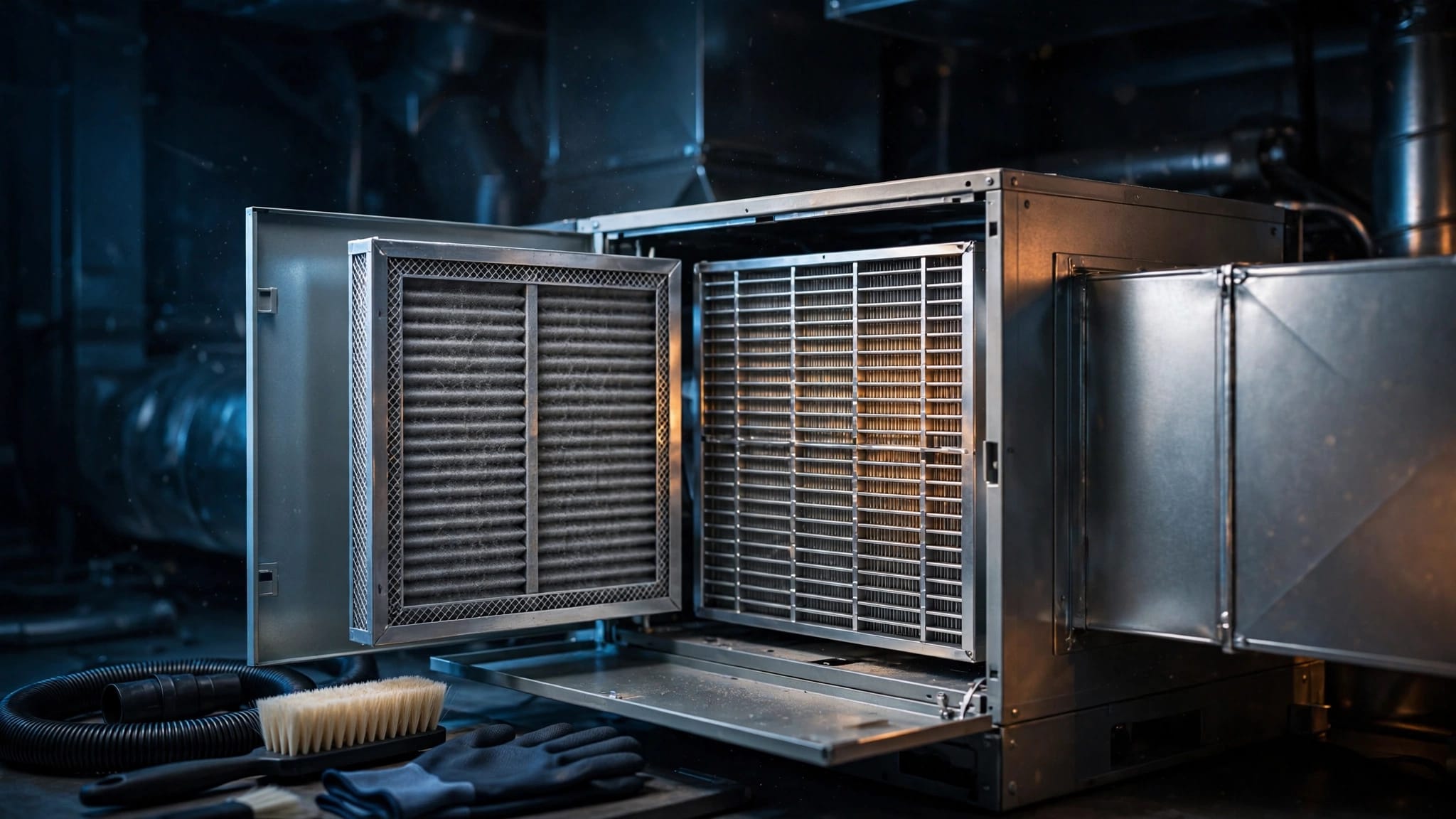
Duct cleaning focuses on the air pathways, including supply runs, return runs, registers, grilles, diffusers, and accessible plenums. Air-handler cleaning focuses on equipment such as the blower compartment, blower wheel, cabinet interior, filter housing, coil area, and drain pan.
The work may require a collection vacuum connected to an appropriate access point. Agitation tools then loosen material inside the duct while the system remains under controlled negative pressure. That pressure helps keep loosened dust moving toward the collection equipment instead of into occupied areas.
Rigid ductwork may tolerate rotary brushes or air tools. Flexible ductwork requires more care because aggressive contact can tear the inner liner or damage the section. A qualified provider should identify the duct material before choosing the cleaning method.
For a clearer comparison, review air handler cleaning versus duct cleaning before approving a service scope.
When treatment or repair comes first
Sanitizers, inhibitors, odor treatments, UV lights, and air purification systems are separate options. They should not appear as automatic add-ons without a reason tied to the inspection.
A microbial treatment cannot replace cleaning when ducts contain heavy dust or debris. It also cannot correct standing water, a leaking drain pan, damaged insulation, or an active moisture source. Learn what air duct microbial treatment is intended to address before approving it.
Active rodents require pest control and exclusion first. If nesting material, waste, or damaged wiring is present, an HVAC professional may need to inspect the blower, coil, drain pan, flexible duct, and electrical areas before cleaning begins. Cleaning alone cannot stop recontamination.
Plan duct service around restaurant operations
Restaurant work requires more coordination than a simple residential appointment. HVAC access may involve a ceiling, kitchen, storage room, roof area, mechanical closet, or dining space that must remain available to staff.
Schedule access, shutdowns, and cleanup
Before the appointment, confirm which HVAC systems will be offline and for how long. Identify access points, ceiling restrictions, security procedures, parking, equipment that must remain protected, and the person who will approve additional work.
The crew should protect food-service areas and finished surfaces, isolate openings as needed, and keep hoses and tools controlled. After cleaning, technicians should reinstall registers, reseal access panels, check the filter, remove coverings, and leave the work area orderly.
Many businesses prefer service after closing. After-hours commercial duct service still requires a clear plan for building access, HVAC controls, weather, parking, and post-service inspection.
Ask for a written scope
Before booking, ask the provider to list the number of HVAC systems, supply runs, return runs, registers, grilles, plenums, and accessible air-handler components included. Clarify whether the coil, blower compartment, drain pan, and filter housing are part of the work or require separate service.
Also ask:
- What method will be used for this duct material?
- How will the crew contain loosened dust?
- What happens if the technician finds wet insulation, pests, or damaged ductwork?
- Will photos document difficult-to-access areas?
- Are repairs, replacement, microbial treatment, or odor treatment priced separately?
These questions help prevent a low-cost vent vacuuming visit from being mistaken for full-system cleaning.
When restaurant duct cleaning is justified
A documented service decision makes more sense than adding duct cleaning to every routine maintenance visit. Strong reasons to request an inspection include visible debris inside accessible duct sections, dust repeatedly blowing from registers, persistent unexplained odors, recent water damage, pest activity, renovation debris, or airflow problems that basic HVAC maintenance has not resolved.
Cleaning may not be necessary when the system is clean, dry, free of visible debris, and operating normally. In that situation, regular filter changes and scheduled HVAC maintenance may be enough. A dirty vent cover can often be removed and cleaned without treating the entire duct network.
The Gulf Coast's humid conditions make moisture checks especially important. If the system has condensation, standing water, or wet insulation, address that source before relying on duct cleaning. For businesses near Fort Myers, Fort Myers HVAC and dryer vent service can address related airflow and vent concerns, while keeping HVAC ducts and dryer vents as separate systems.
Key Takeaways for Restaurant Operators
- Dust at a grille does not prove that every duct needs cleaning, but recurring dust and weak airflow deserve inspection.
- Ask for supply ducts, return ducts, registers, grilles, plenums, and accessible air-handler areas to be listed separately.
- A filter change prevents new particles from entering the equipment, but it does not remove settled duct contamination.
- Cleaning cannot repair disconnected, crushed, leaking, wet, or damaged ductwork.
- Odors may come from the HVAC system, moisture, pests, drains, cooking areas, or dryer vents. Identify the source first.
- Sanitizers and microbial treatments are separate services, not substitutes for source removal.
- Use a qualified HVAC or duct-cleaning professional when access is difficult, flexible ductwork is involved, contamination is extensive, or equipment damage is possible.
If an inspection connects dust or odor problems to the HVAC system, you can Get a Free Estimate for air duct and related vent service.
FAQ
How often should restaurant HVAC ducts be cleaned?
There is no reliable schedule that fits every restaurant. Frequency depends on operating conditions, filtration, building dust, moisture, pest activity, renovation work, and visible buildup. Use inspection findings and system performance rather than adding cleaning automatically to a calendar.
Does cleaning the vents clean the whole HVAC system?
No. Vacuuming visible registers may remove surface dust, but it does not necessarily clean the supply branches, return trunks, plenums, blower compartment, coil area, or drain pan. Ask for a written scope that identifies each included component.
Can dirty ducts increase energy use?
Restricted airflow can make the HVAC system work harder or run longer, especially when a loaded filter, dirty coil, blocked return, or duct restriction is also present. Cleaning may help when buildup is part of the problem, but it cannot correct equipment faults, leaks, or damaged duct sections.
Should a restaurant use a sanitizer after duct cleaning?
Only when the inspection supports it and the product is suitable for the system and intended use. A sanitizer does not replace physical cleaning or moisture correction. Ask where it will be applied, what condition it addresses, and what re-entry or ventilation instructions apply.
Conclusion
Restaurant HVAC ducts become a service problem when dust, debris, moisture, odors, or restrictions begin affecting airflow and equipment operation. The right response starts with inspection, not an automatic cleaning package.
Request a complete written scope, separate duct cleaning from air-handler work, and address pests, leaks, moisture, or damaged materials before cleaning. With evidence-based service and regular filter care, operators can deal with the actual source instead of paying to treat only the most visible symptom.