Should You Clean Ducts After Water Damage in Florida Homes?
Water in ductwork does not always mean you need a full cleaning. In many Florida homes, the right move is a fast inspection first, then cleaning only if the ducts are dry, structurally sound, and free of heavy contamination.
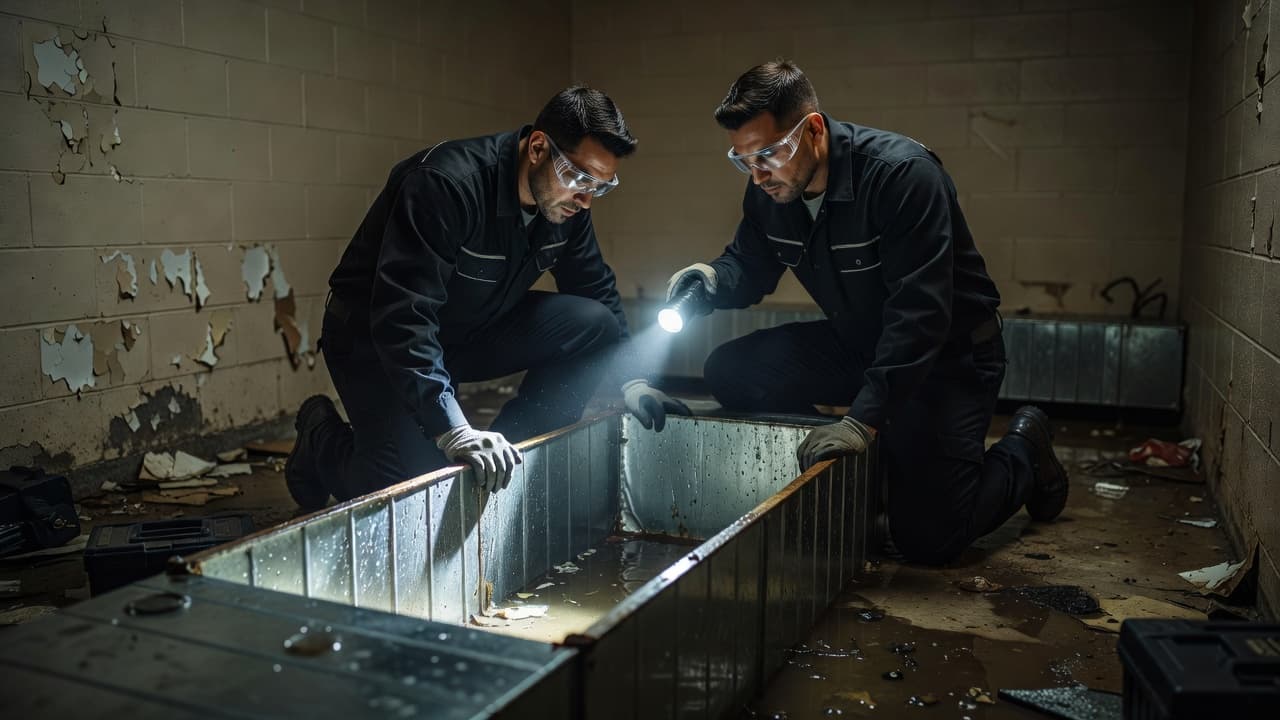
That matters more here because heat and humidity can turn a small leak into a mold problem fast. If the system ran while wet, the air handler may have spread moisture, dirt, and odor through the house.
The short answer for Florida homeowners
No, ducts do not need cleaning after every leak, overflow, or ceiling stain. They need to be checked quickly, because the real question is not whether water got near the HVAC system, but whether it reached the duct material and dried cleanly.
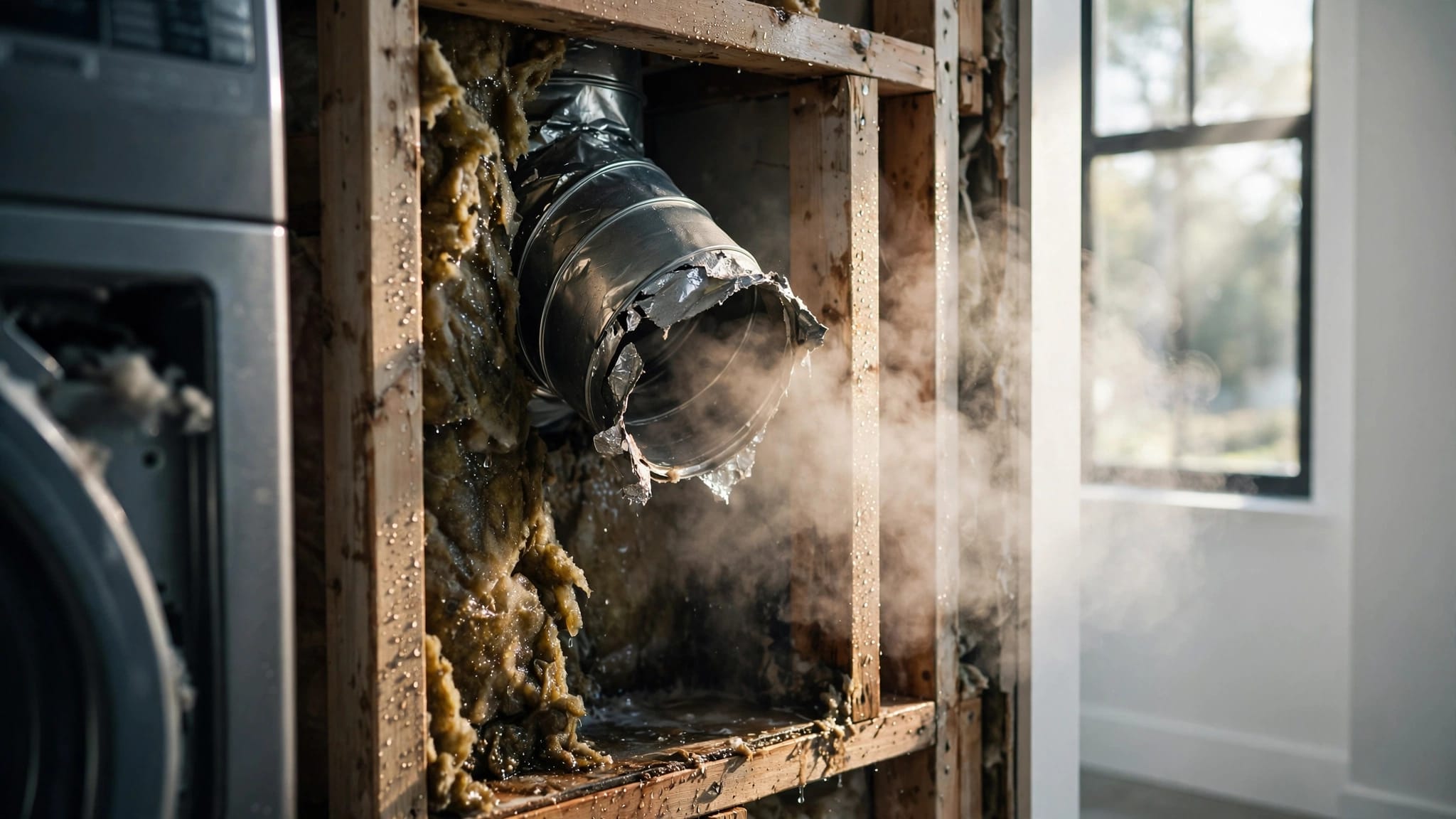
If the ducts stayed dry inside, cleaning may not be needed at all. If only a small amount of clean water touched metal duct surfaces and the area dried fast, a professional may be able to clean the system after the source is fixed. If water soaked insulation, flex duct, or duct board, replacement often makes more sense than trying to scrub a porous material back to normal.
The biggest mistake is waiting. Wet dust clumps, rust starts, and mold can take hold in hidden spots. Once that happens, the system stops acting like an air path and starts acting like a moisture trap.
Know what kind of water reached the ductwork
Clean water, gray water, and black water
The type of water matters as much as the amount. A clean-water leak and a sewage backup are not the same problem, and they should not get the same response.
| Water type | Common source | What it usually means for ducts |
|---|---|---|
| Clean water | Supply line leak, condensation overflow, roof leak with no waste contamination | Dry, inspect, and clean only if the ducts stayed intact and residue remains |
| Gray water | Washer overflow, appliance discharge, lightly dirty floodwater | Cleaning may work on hard surfaces, but soaked insulation and liners often need replacement |
| Black water | Sewage backup, floodwater with waste, storm surge mixed with contamination | Replace porous duct parts, clean only what can be safely restored |
The dirtier the water, the harder it is to save porous duct parts. A metal trunk line may survive a clean-water event, while wet flex duct or duct board often does not. If sewage or floodwater reached the system, treat the ductwork as contaminated until a pro says otherwise.
What to do in the first 24 hours
The first day matters more than the cleaning step. Shut the HVAC system off if water reached the return, supply runs, or air handler closet. Running the fan can move wet dust and spores into rooms that were never touched by the leak.
After that, focus on drying and removal, not guessing.
- Stop the water source and dry the room with a dehumidifier.
- Replace soaked filters once the system is ready again.
- Keep registers clear, but do not open sealed duct sections yourself.
- Watch for sagging flex duct, rust, or a musty smell.
- Schedule an inspection before the system runs again.
That first inspection can tell you whether you're dealing with a dry-out job, a cleaning job, or a replacement job. If the problem started with sweating vents or a dripping register, the moisture source may still be active, and the ductwork will not stay clean until that part is fixed.
When cleaning works and when replacement is smarter
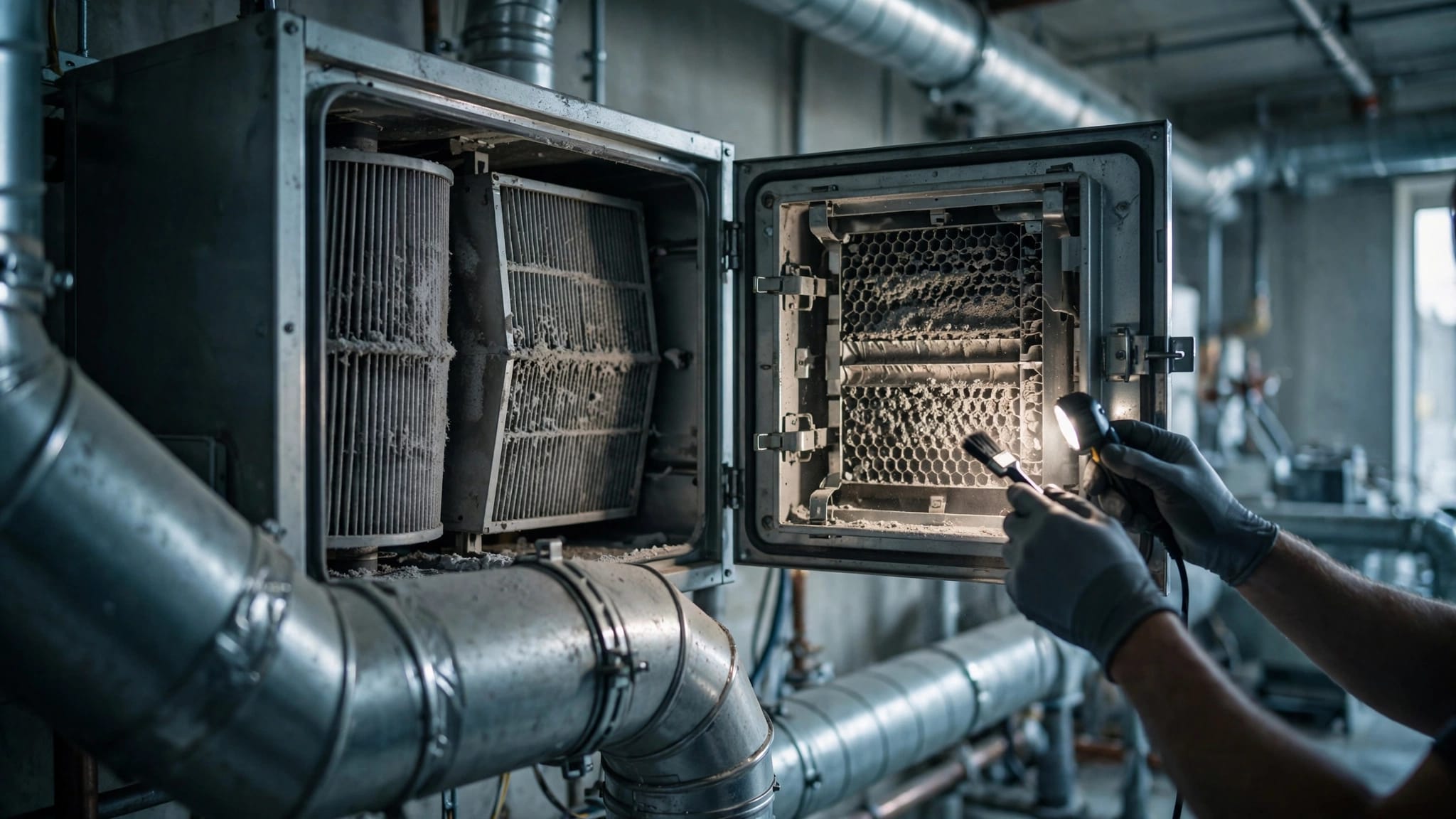
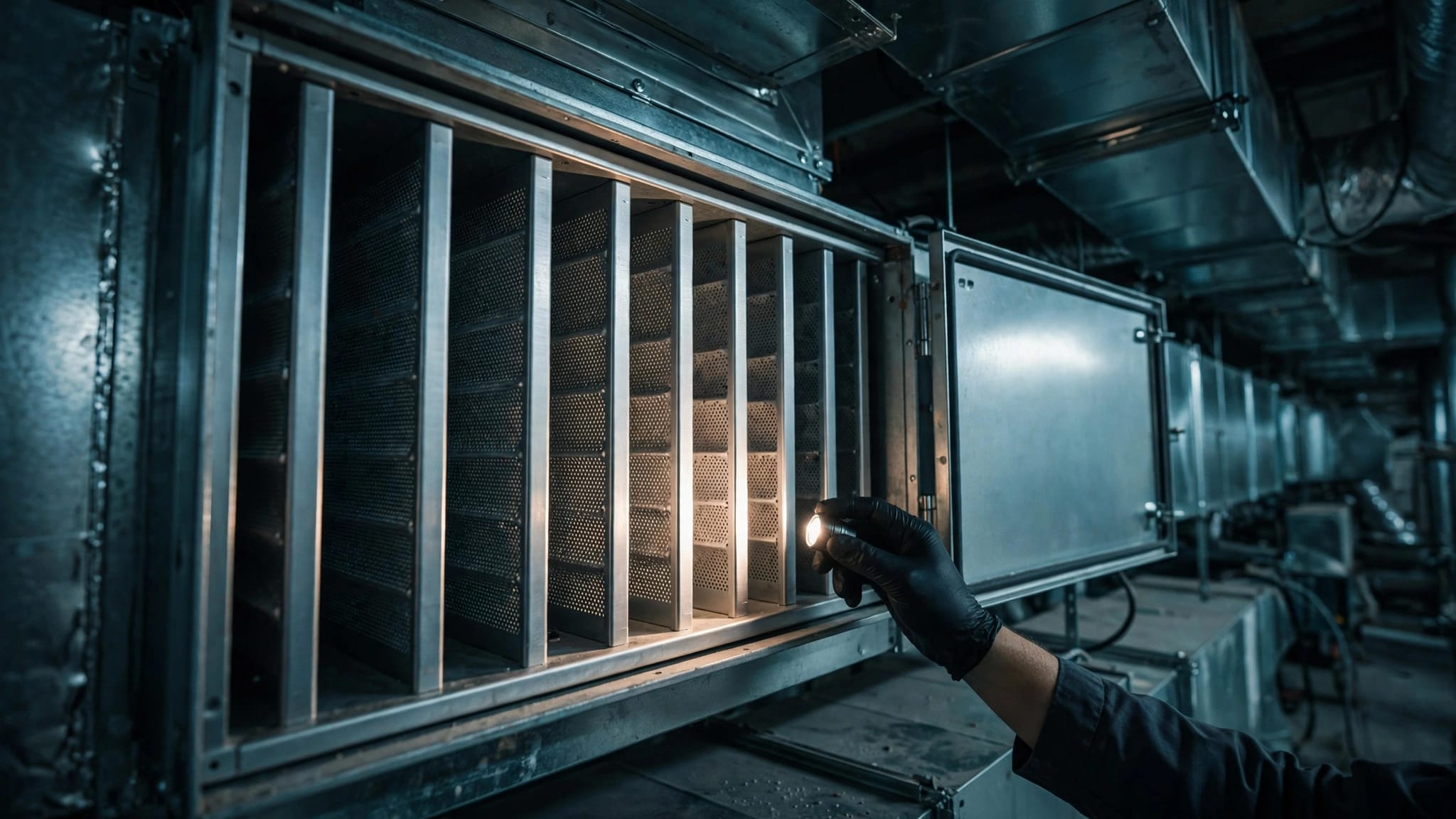
Cleaning works best when the duct walls stayed intact and the water was limited. A good cleaning removes dust, residue, and light microbial growth from hard surfaces. It does not rescue a duct that has soaked up contamination.
If the duct liner is wet, crushed, or holding odor after drying, replacement is usually the better answer.
Sheet metal ducts can often be saved if they dried quickly and don't have rust or mold inside. Flex duct, duct board, and wet insulation are different. They can look fine on the outside while holding moisture inside. Once the core or lining is saturated, cleaning the surface does little.
Collapsed, separated, or mold-covered ducts should be replaced, not patched up with a cleaning wand. A damaged duct also hurts airflow, which makes the system work harder and can spread the problem to other parts of the home.
If you're not sure where your system lands, Get a Free Estimate before you restart the system or seal anything back up.
Why Florida humidity makes the problem worse
Florida homes deal with long stretches of humidity, warm attics, and frequent AC use. That mix keeps damp material from drying quickly. In a closed duct system, moisture can hide in insulation, at joints, or around the coil, where mold can start and odor can linger.
Running the air handler too soon can spread the problem. The fan pulls air across wet surfaces, sends spores through the supply lines, and moves that damp smell into bedrooms and living rooms. The system may also pull humid attic air through loose joints, which adds more condensation.
If you notice sweating registers, water on a vent cover, or stains around ceiling boots, the issue may begin higher up in the system. Why ceiling vents drip water in Florida homes breaks down the common causes. Fixing that moisture source first matters more than any cleaning step.
Florida gives water more chances to linger. That is why a small leak can turn into a bigger duct problem faster than many homeowners expect.
What to remember before you restart the system
Ducts after water damage need inspection, not automatic cleaning. If the ductwork dried fast and stayed intact, cleaning may be enough. If it was flooded, moldy, collapsed, or soaked with sewage or gray water, replacement is often the better call.
The safest move is simple. Stop the moisture, keep the HVAC off until the system is checked, and choose cleaning only when the ducts are dry and salvageable. In Florida, that early decision can make the difference between a short repair and a long-running odor problem.